Wholesale Synthetic Wigs with Custom OEM Services
Contact us directly to request a quote and samples for Wholesale Synthetic Wigs with Custom OEM Services.
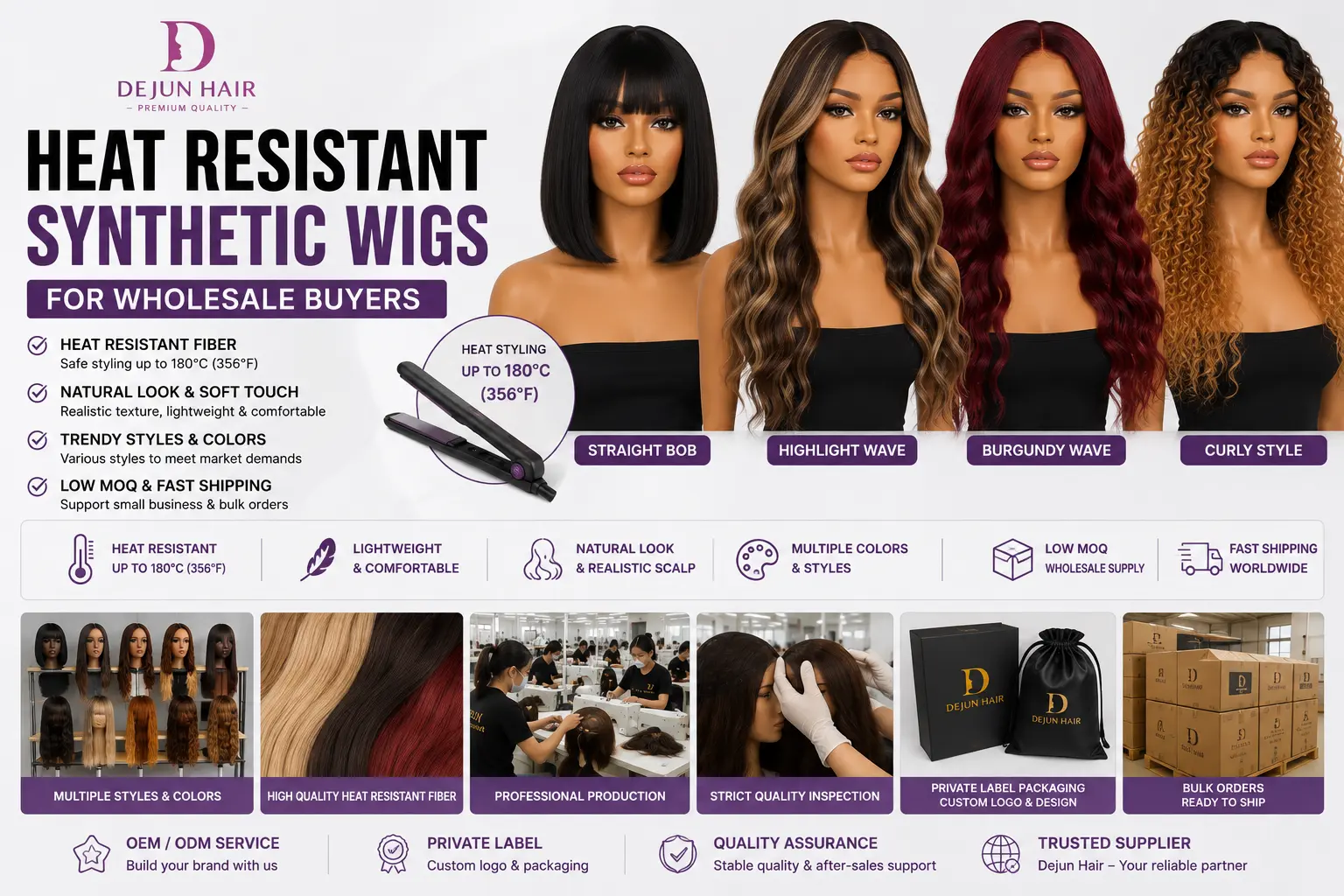
· Heat-resistant synthetic fibers with a natural sheen and soft texture
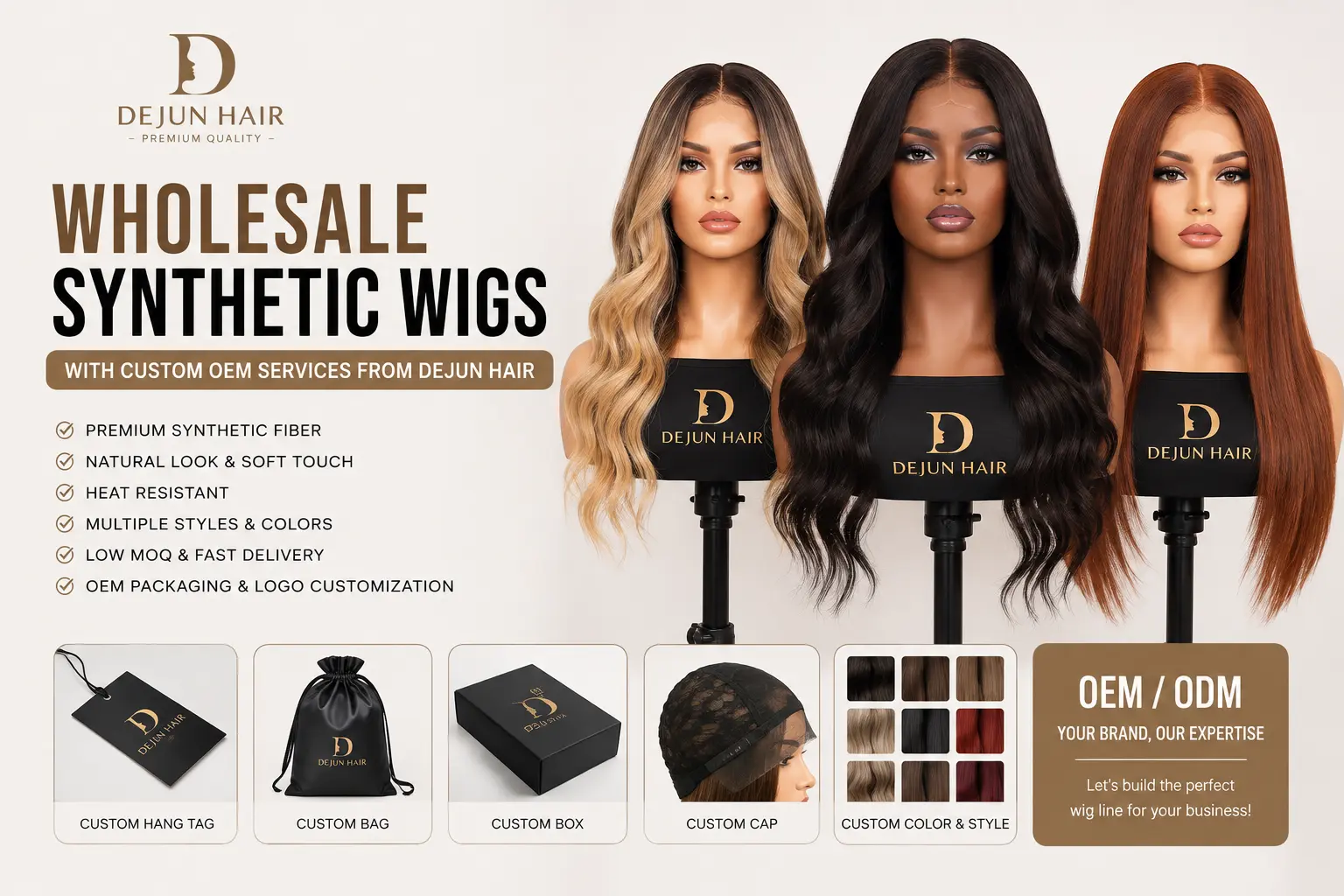
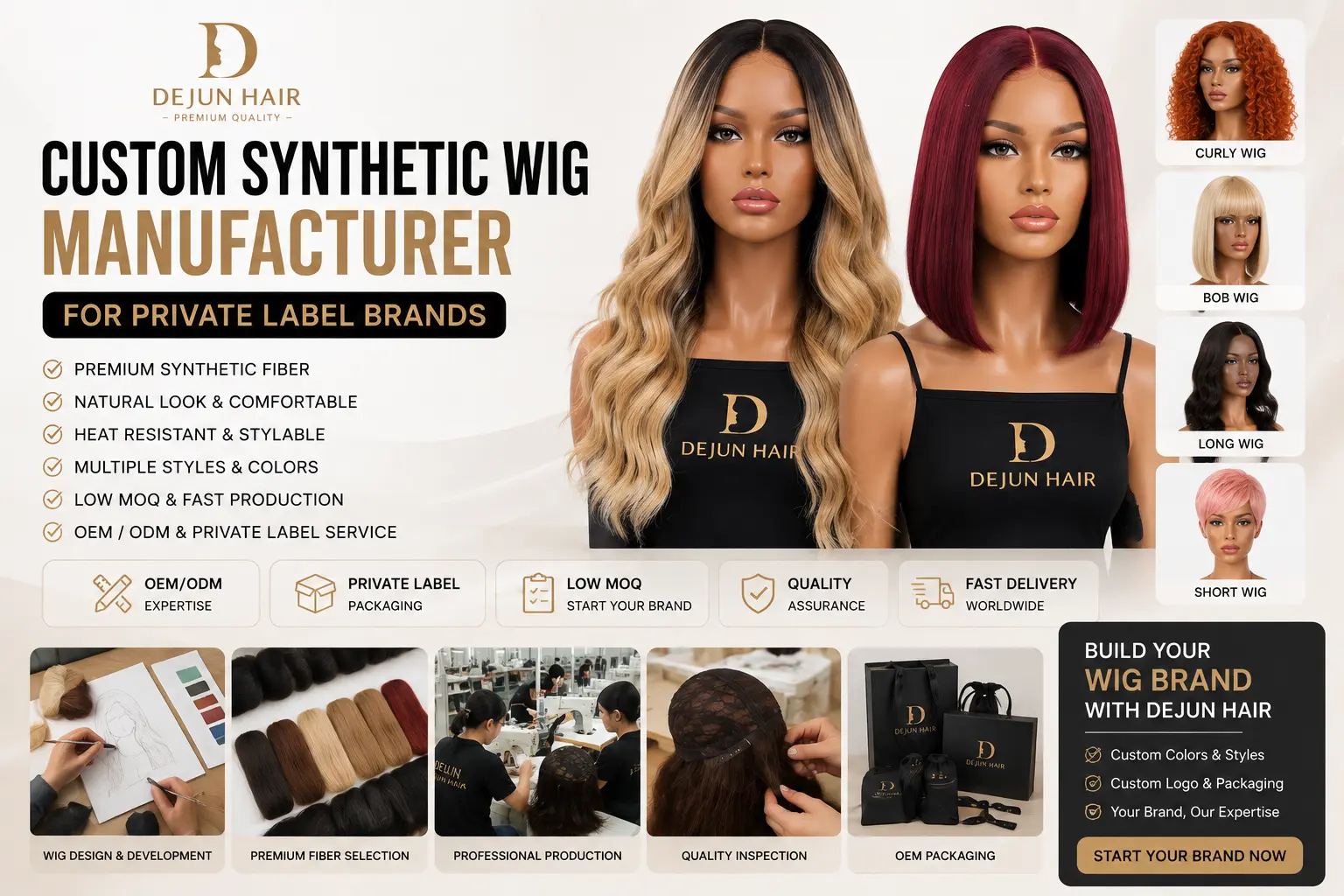
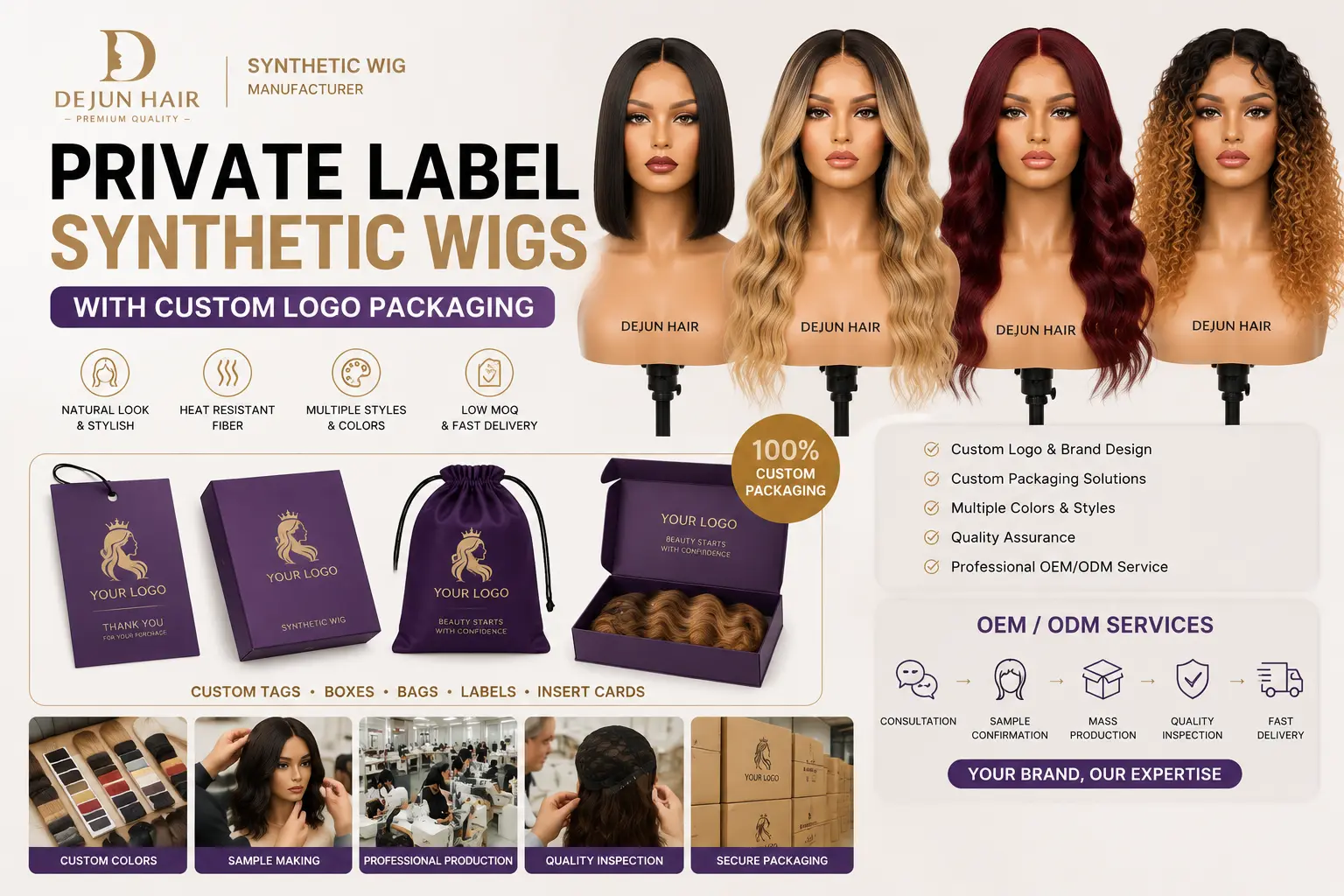
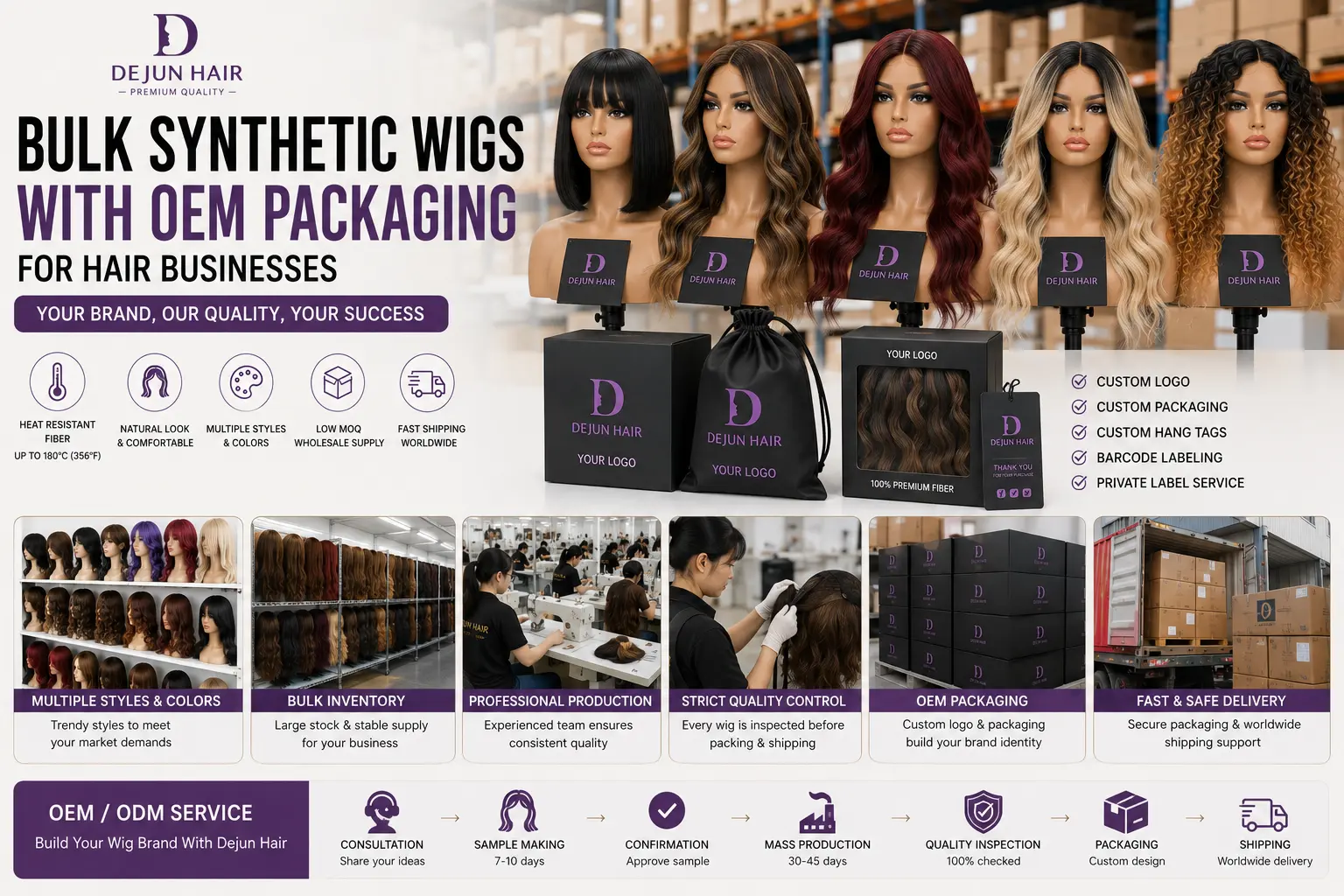
· Comprehensive OEM/ODM services: private labeling, custom packaging, branded tags, and packaging boxes
· Customizable styles, lengths, colors, densities, and cap sizes
· Pre-shaped hairline with baby hair, adjustable straps and comb teeth—no glue required
· Lightweight and breathable, pre-styled—wash and wear
· Low minimum order quantities, free samples, fast sample turnaround (7–14 days), and production lead time (25–45 days)
· Global express shipping
More Information
1. What Are Wholesale Synthetic Wigs with Custom OEM Services?
For wig retailers, beauty supply stores, distributors, salons, and online hair brands, buying ready-made products is only one part of building a competitive wig business. As the market becomes more crowded, many buyers need products that reflect their own brand positioning, customer preferences, and target price range.
This is where wholesale synthetic wigs with custom OEM services become valuable.
Instead of simply purchasing standard wigs from stock, OEM buyers can work directly with a synthetic wig manufacturer to customize important product details such as fiber type, hairstyle, color, cap construction, size, packaging, logo labels, and other specifications.
Dejun Hair is a wig manufacturer based in Shaoyang, Hunan, China, with approximately 20 years of manufacturing experience. We provide both ready-stock Wholesale Synthetic Wigs and OEM/ODM production solutions for overseas wig businesses.
Our manufacturing process covers fiber preparation, cap construction, sewing, styling, finishing, quality inspection, packaging, and warehousing. By controlling these stages within our own production system, we can better support buyers who require consistent specifications across repeat wholesale orders.
Typical Synthetic Wig OEM Options
| Customization Item | Available Options |
|---|---|
| Fiber | Logo labels, hang tags, and branded inserts |
| Style | Straight, curly, wavy, bob, pixie, long styles |
| Color | Natural colors, highlights, ombre, fashion colors |
| Length | Multiple standard and custom lengths |
| Cap Construction | Basic cap, adjustable cap, glueless designs |
| Hair Density | Customized according to style |
| Hairline | Standard or customized natural-looking hairline |
| Branding | Logo labels, hang tags and branded inserts |
| Packaging | OPP bags, custom boxes and private-label packaging |
| Order Type | Ready stock, mixed wholesale or OEM production |
For brands that want to start with affordable ready-made products before developing exclusive designs, our Wholesale Short Synthetic Wigs collection is also suitable for testing different styles, colors, and customer preferences.
2. Common Questions About Custom OEM Synthetic Wigs
Q1: Do I Need a Large MOQ for Custom Synthetic Wig OEM Orders?
Not necessarily.
MOQ depends on the level of customization required.
For standard ready-stock synthetic wigs, buyers can usually start with more flexible quantities and combine different styles or colors. This is particularly useful for small beauty stores, new online sellers, and businesses testing a new market.
For OEM orders involving custom colors, cap structures, fibers, packaging, or exclusive designs, MOQ needs to be evaluated according to the production requirements.
At Dejun Hair, we recommend separating purchasing into two stages:
Market testing → OEM scaling
A new seller can first test several ready-stock products through flexible wholesale orders. After identifying the styles, colors, and price points that perform well, the business can move successful products into OEM production.
This approach can reduce the risk of committing too much inventory to an untested design.
Q2: Can Synthetic Wigs Be Customized with My Own Brand and Packaging?
Yes. Private-label branding is an important part of our synthetic wig OEM service.
Depending on your project requirements, customization can include:
- Brand logo
- Wig labels
- Hang tags
- Packaging bags
- Packaging boxes
- Product information cards
- Care instructions
- Custom colors
- Cap specifications
- Style adjustments
However, successful OEM production should begin with the product itself rather than packaging alone.
For example, an African beauty wholesaler may focus more heavily on affordable fashion colors, durability, and fast-moving styles. A European or North American online wig brand may place greater emphasis on natural-looking fibers, comfortable cap construction, trend-driven colors, and retail presentation.
If your target customers are particularly interested in shorter fashion styles, Wholesale Bob Wigs can also provide useful product-development ideas for building a broader synthetic wig collection.
3. Benefits of Choosing Custom OEM Synthetic Wigs
Build a More Distinctive Wig Brand
Selling the same wigs as many competing stores can make price the main point of comparison.
OEM customization allows businesses to differentiate their products through:
- Exclusive color combinations
- Specific lengths
- Different textures
- Custom cap designs
- Brand packaging
- Private labels
- Market-specific styles
Even relatively small product changes can help a retailer create a more recognizable collection.
Match Products to Your Local Market
Wig preferences are not identical across different markets.
Some African distributors need affordable synthetic wigs with bold colors and practical daily-wear designs. Beauty stores may require short styles that are easy to maintain and carry at accessible retail prices.
Meanwhile, online sellers in Europe and North America may focus more strongly on fashionable colors, natural-looking finishes, heat-resistant fibers, and beginner-friendly construction.
Working directly with a manufacturer makes it easier to adjust product specifications around the customers you actually serve.
Control Purchasing Costs More Effectively
Synthetic wigs allow retailers to introduce more colors and hairstyles without the inventory investment normally required for premium human hair products.
This makes them useful for:
- Start-up wig businesses
- Beauty supply stores
- Social media sellers
- Online wig shops
- Salons
- Regional distributors
Instead of purchasing a large quantity of one design, buyers can begin with selected products and gradually increase quantities based on sales performance.
Create a Consistent Private-Label Product Line
OEM is not simply about putting a logo on a package.
A stronger private-label strategy creates consistency across the product, packaging, and customer experience.
For example, a brand may establish standard requirements for fiber quality, cap size, packaging style, color naming, product labeling, and inspection standards. These specifications can then be applied to future production batches.
This is particularly important for online brands because repeat customers expect the same product specifications when they reorder.
Work Directly with a Factory Source
Working with a direct manufacturer can simplify communication when modifications are required.
At Dejun Hair, production stages including wig construction, styling, inspection, and packaging are managed through our factory supply system. This enables our team to communicate product requirements directly with production personnel rather than passing specifications through multiple intermediaries.
4. How to Develop Custom OEM Synthetic Wigs Step by Step
Step 1: Define Your Target Market
Before requesting an OEM quotation, clearly identify who will buy the finished wigs.
Consider:
- Target country
- Customer age group
- Retail price range
- Preferred wig length
- Popular colors
- Popular textures
- Preferred cap construction
- Online or offline sales channel
For example, a distributor supplying local beauty stores may prioritize cost, durability, and broad style selection. A TikTok-focused online brand may instead prioritize distinctive colors and trend-driven designs.
This information helps the factory recommend appropriate specifications rather than simply quoting a generic product.
Step 2: Select Your Base Synthetic Wig
The next step is choosing a base model.
You may start with:
- Straight synthetic wigs
- Curly synthetic wigs
- Long synthetic wigs
- Short synthetic wigs
- Bob synthetic wigs
- Colored synthetic wigs
- Heat-resistant synthetic wigs
For buyers targeting customers who prioritize easy maintenance and affordable daily wear, Wholesale Short Synthetic Wigs can be a practical starting category.
Starting from an existing base design can also make sampling and product development more efficient than developing every specification from zero.
Step 3: Confirm Fiber and Product Specifications
Once the base model is selected, confirm the technical requirements.
Important specifications may include:
Fiber: standard or heat-resistant synthetic fiber.
Length: short, medium, long, or customized according to the design.
Texture: straight, body wave, curly, deep wave, layered, or other styles.
Color: natural shades, highlights, ombre combinations, or customized fashion colors.
Cap: standard construction, adjustable straps, combs, or glueless designs where applicable.
For fashion-focused retailers, combining synthetic products with Wholesale Bob & Colored Wigs can help create a more diversified collection around short cuts and fashion colors.
Step 4: Develop Your Private-Label Packaging
Packaging should support your positioning rather than simply display a logo.
A budget-focused wholesale brand may need simple packaging that keeps unit costs under control. An online retail brand may require stronger visual presentation for social media content and unboxing experiences.
OEM packaging options can include:
- Custom logo
- Hang tags
- Wig labels
- Product cards
- Care instructions
- Branded bags
- Custom boxes
Keep the same brand identity across your different products so customers can easily recognize your collection.
Step 5: Request and Evaluate a Sample
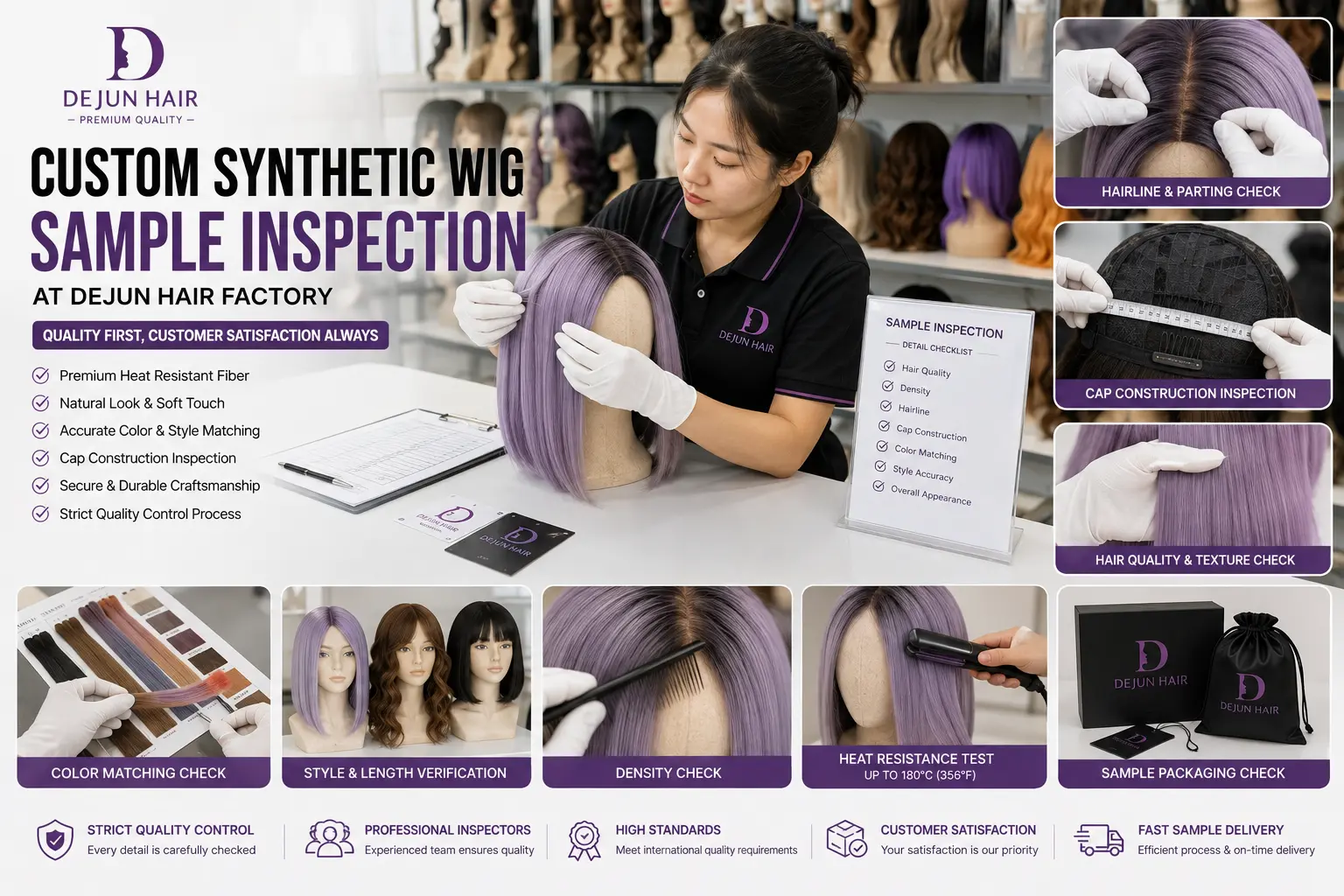
Before bulk production, evaluate a sample whenever substantial customization is involved.
Check:
- Fiber softness
- Fiber appearance
- Color accuracy
- Style consistency
- Cap construction
- Wig size
- Shedding
- Comfort
- Packaging
- Overall finished appearance
Do not evaluate only how the sample looks in a product photo. Consider how it will perform after transportation, unpacking, styling, and customer use.
Record approved specifications so the confirmed sample can serve as a reference for production.
Step 6: Confirm MOQ, Price and Production Requirements
Once the sample and specifications are approved, confirm commercial details before placing the bulk order.
These should include:
- Final specifications
- Quantity
- SKU breakdown
- Color quantities
- MOQ
- Unit price
- Packaging
- Production requirements
- Shipping method
Buyers purchasing several products should also confirm whether mixed styles and colors can be combined within the order.
Step 7: Bulk Production and Quality Inspection
Consistency is especially important in OEM manufacturing.
At Dejun Hair, quality inspection focuses on key factors such as:
- Fiber condition
- Styling consistency
- Cap construction
- Sewing security
- Color consistency
- Product dimensions
- Packaging accuracy
- Finished appearance
For customized orders, the approved sample and confirmed specification sheet should remain the production reference.
This helps reduce differences between the sample and the final bulk shipment.
Step 8: Arrange International Shipping
The final step is selecting an appropriate logistics solution according to order size, destination, delivery requirements, and purchasing schedule.
Dejun Hair has experience supplying customers in African, European, North American, and other international markets.
For overseas buyers, purchasing decisions should consider not only factory production time but also transportation and customs preparation. Planning these factors before production is particularly important for seasonal launches or promotional campaigns.
5. Practical Results of Using OEM Synthetic Wig Services
Case 1: Small Online Seller Tests Products Before Building a Brand
A new online wig seller does not necessarily need to begin with a large fully customized order.
The seller can first purchase mixed synthetic styles, identify which lengths and colors receive stronger customer response, and then convert proven designs into private-label products.
Result: lower initial inventory risk and more informed OEM product development.
Case 2: Beauty Wholesaler Builds a Market-Specific Collection
A regional wholesaler may discover that its customers repeatedly request particular short styles and colors.
Instead of continuously sourcing unrelated ready-made products, the buyer can standardize several successful designs and add custom packaging.
Result: a more consistent product range and clearer brand recognition among repeat wholesale customers.
Case 3: Online Hair Brand Expands from Standard Wigs to Private Label
An established retailer can use existing sales data to identify its best-performing synthetic wig specifications.
The brand can then customize packaging, colors, cap details, and product labeling around those proven styles.
Result: the business moves from selling generic inventory toward building a recognizable private-label wig collection.
Why Work with Dejun Hair for Synthetic Wig OEM Manufacturing?
Choosing an OEM partner requires more than comparing the lowest unit price.
International wig businesses also need to consider manufacturing experience, product consistency, customization capability, MOQ flexibility, communication, production capacity, and export support.
Dejun Hair has approximately 20 years of wig manufacturing experience in Shaoyang, Hunan, China. Our factory supplies both human hair and synthetic wig products and supports ready-stock wholesale as well as OEM/ODM customization.
For buyers developing synthetic wig collections, we can support the process from product selection and specification confirmation through sampling, private-label packaging, bulk production, quality inspection, and international shipping preparation.
Whether you are testing your first branded collection or expanding an established wholesale business, the objective is the same: develop products that fit your market while keeping purchasing risk, quality consistency, and inventory efficiency under control.