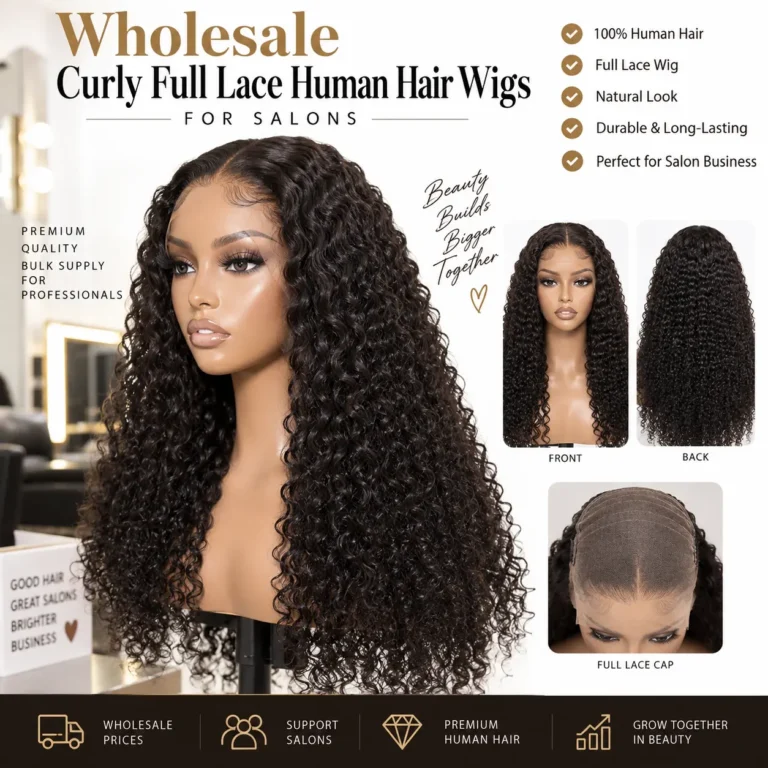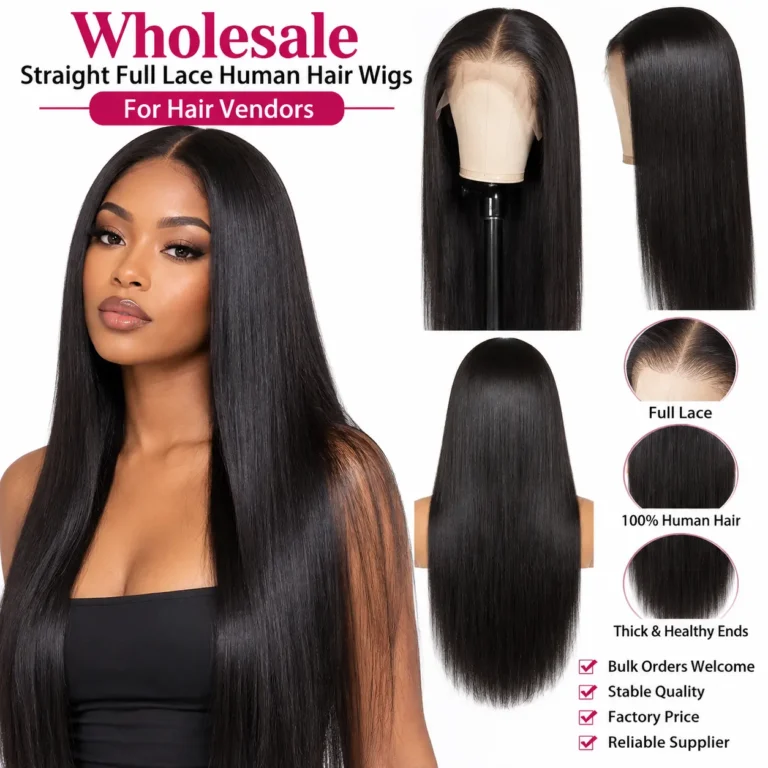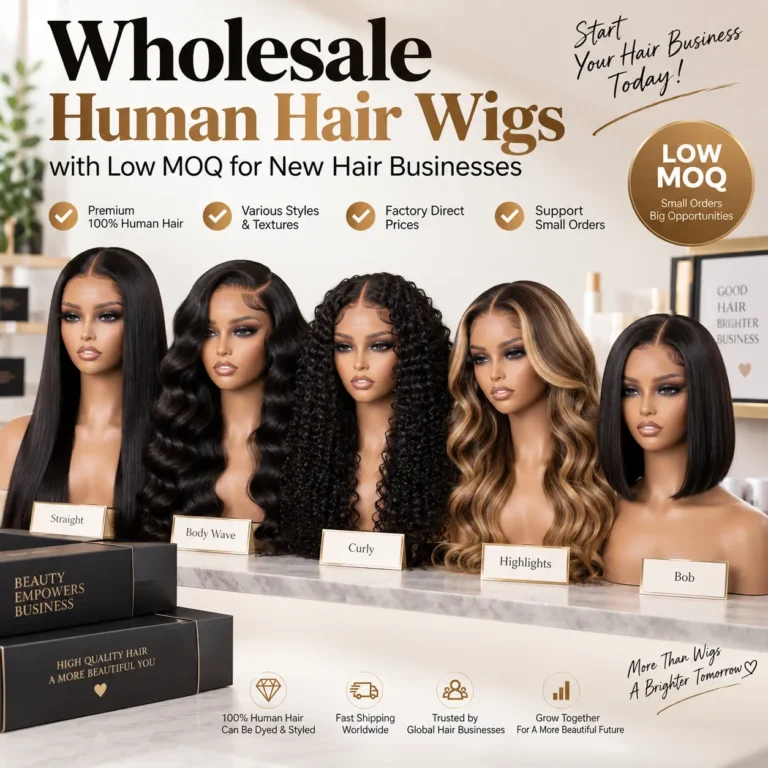
Wholesale 100% Human Hair Full Lace Wigs for Hair Businesses
Contact us for quotes and samples from the highest-quality wholesale suppliers of human hair wigs.
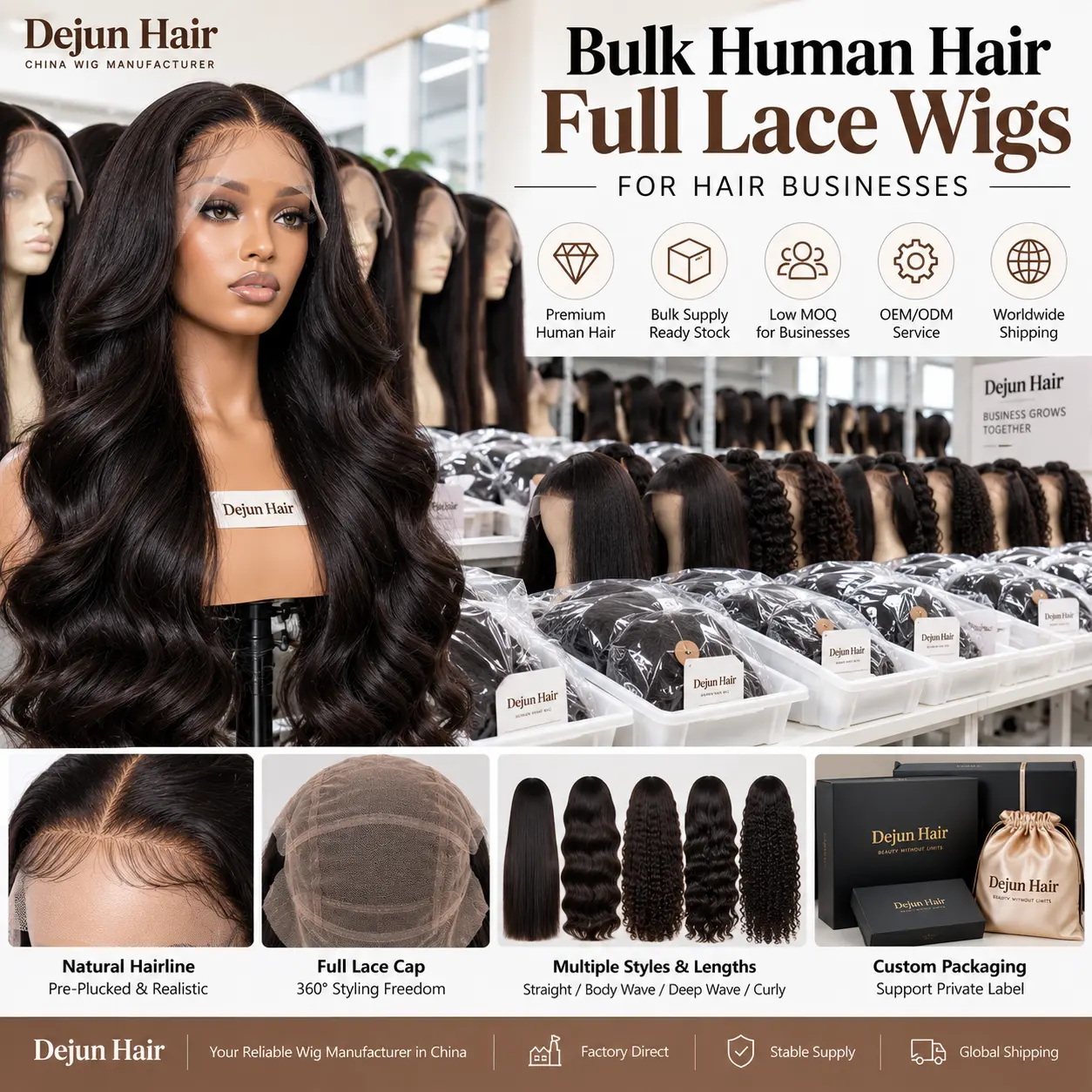
· 100% virgin human hair—smooth, lustrous, and tangle-free
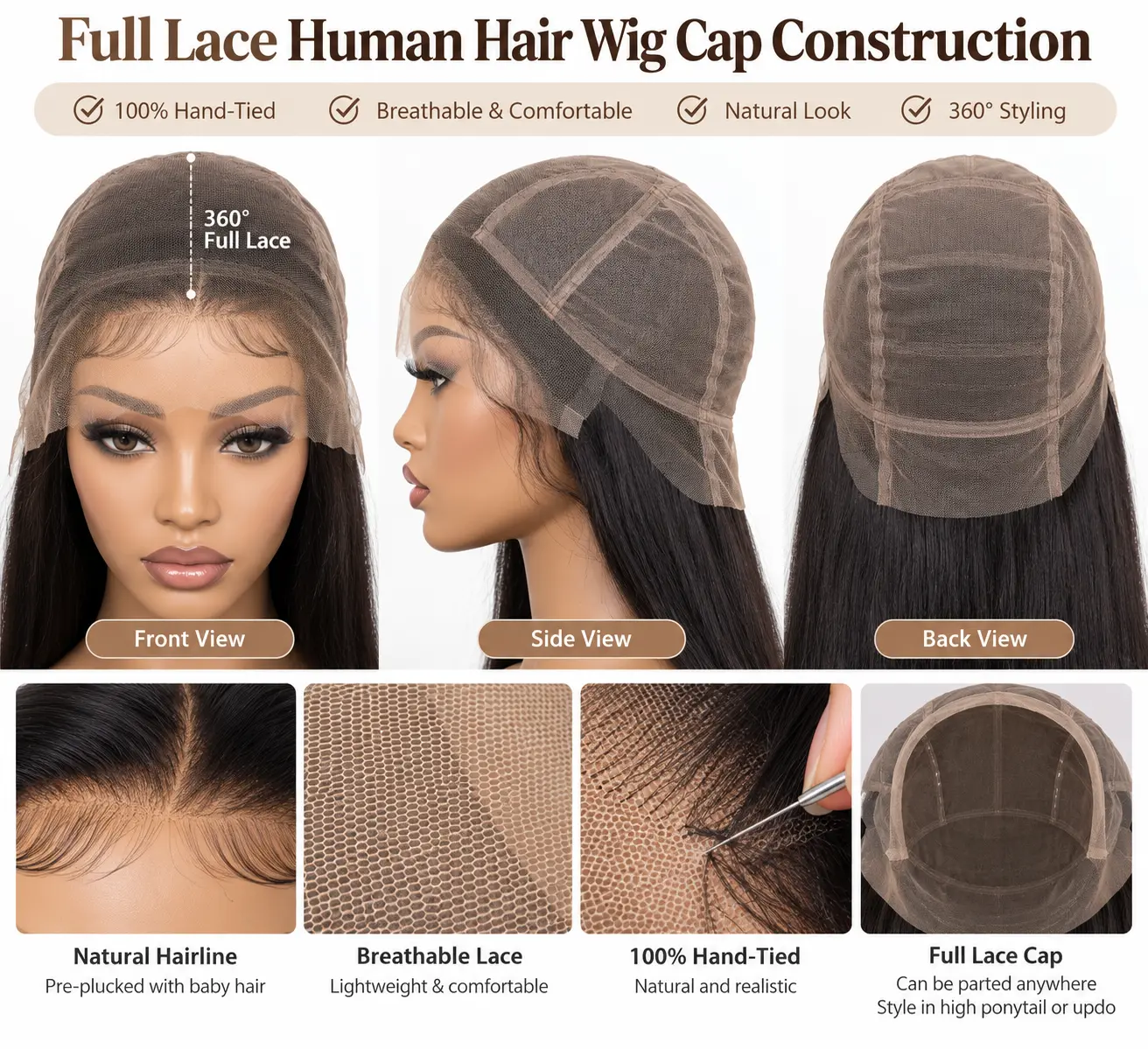
· Full lace cap construction—360° styling freedom, customizable parting, and suitable for high ponytails, buns, and updo styles
· HD lace, pre-plucked hairline, and bleached and dyed knots
· Lightweight cap with adjustable straps and comb teeth; no glue required
· Free samples, fast worldwide shipping
More Information
What Are Wholesale 100% Human Hair Full Lace Wigs?
Wholesale 100% human hair full lace wigs are premium wigs made with real human hair attached to a lace-based cap that provides flexible parting and styling possibilities. Unlike wigs with lace only around the front hairline, full lace construction provides broader lace coverage, allowing wearers to create different parting positions and more versatile hairstyles.
For salons, wig retailers, distributors, and private-label hair brands, these wigs offer a combination of natural appearance, styling flexibility, and premium retail positioning. Buyers comparing different lace constructions can explore our Wholesale Lace Front & Full Lace Wigs collection to evaluate options for different customer groups and price segments.
The use of real human hair is another important factor for professional buyers. Quality human hair can be washed, curled, straightened, and restyled with proper care, giving retailers and salons more flexibility when serving customers with different styling preferences. Businesses looking for additional textures, lengths, densities, and wig constructions can also explore our Wholesale Human Hair Wigs collection.
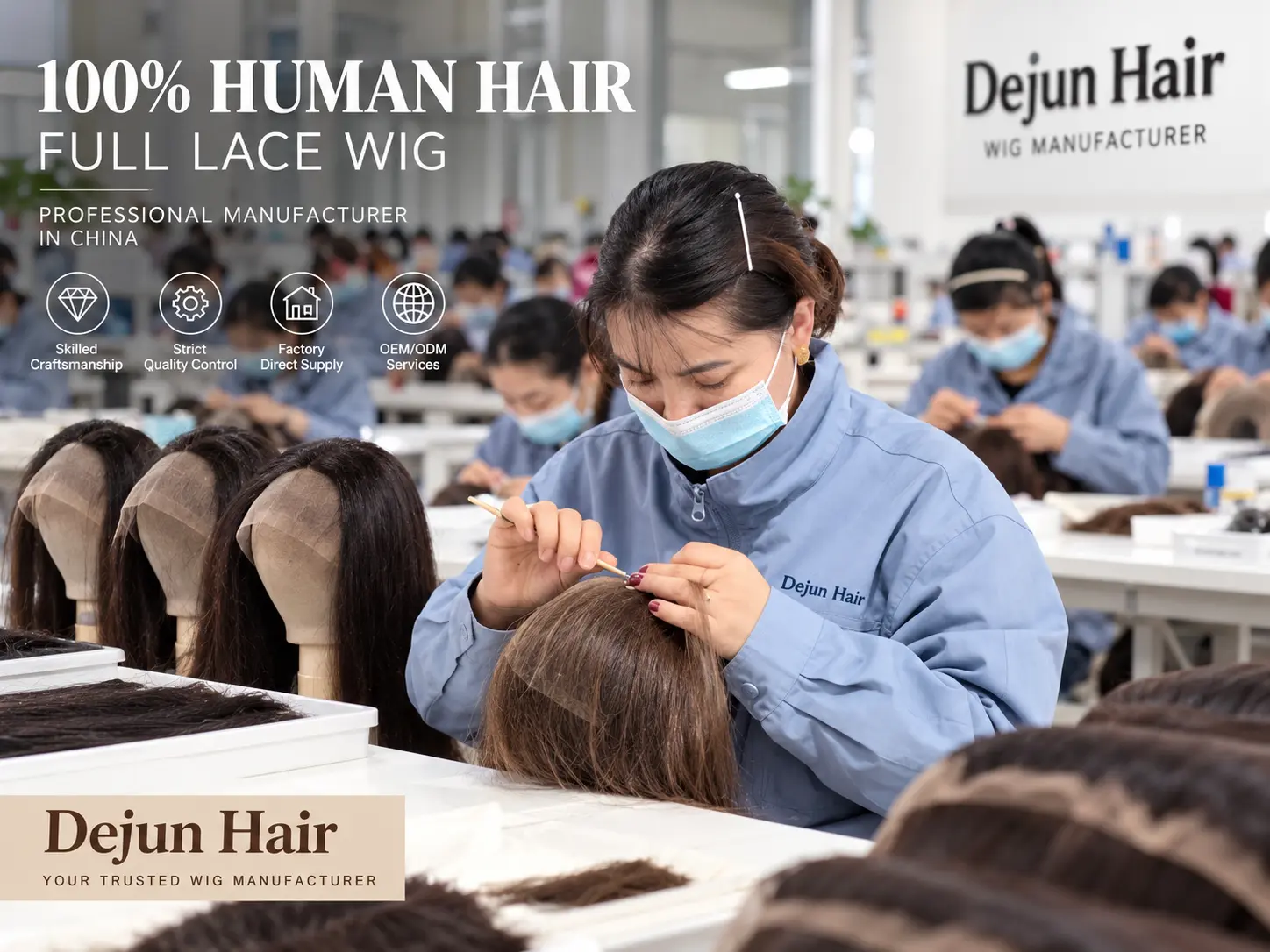
At Dejun Hair, we manufacture human hair and synthetic wigs in our own production facility in Shaoyang, Hunan, China. Our production process covers hair preparation, cap construction, lace sewing, styling, quality inspection, and warehousing. This integrated manufacturing structure helps us maintain more consistent quality standards while supporting both stock wholesale orders and customized OEM/ODM projects.
For B2B buyers, the value of a full lace wig is therefore not limited to appearance. Product consistency, hair quality, cap construction, customization flexibility, MOQ, and reliable replenishment all affect whether a wig can become a sustainable product for a hair business.
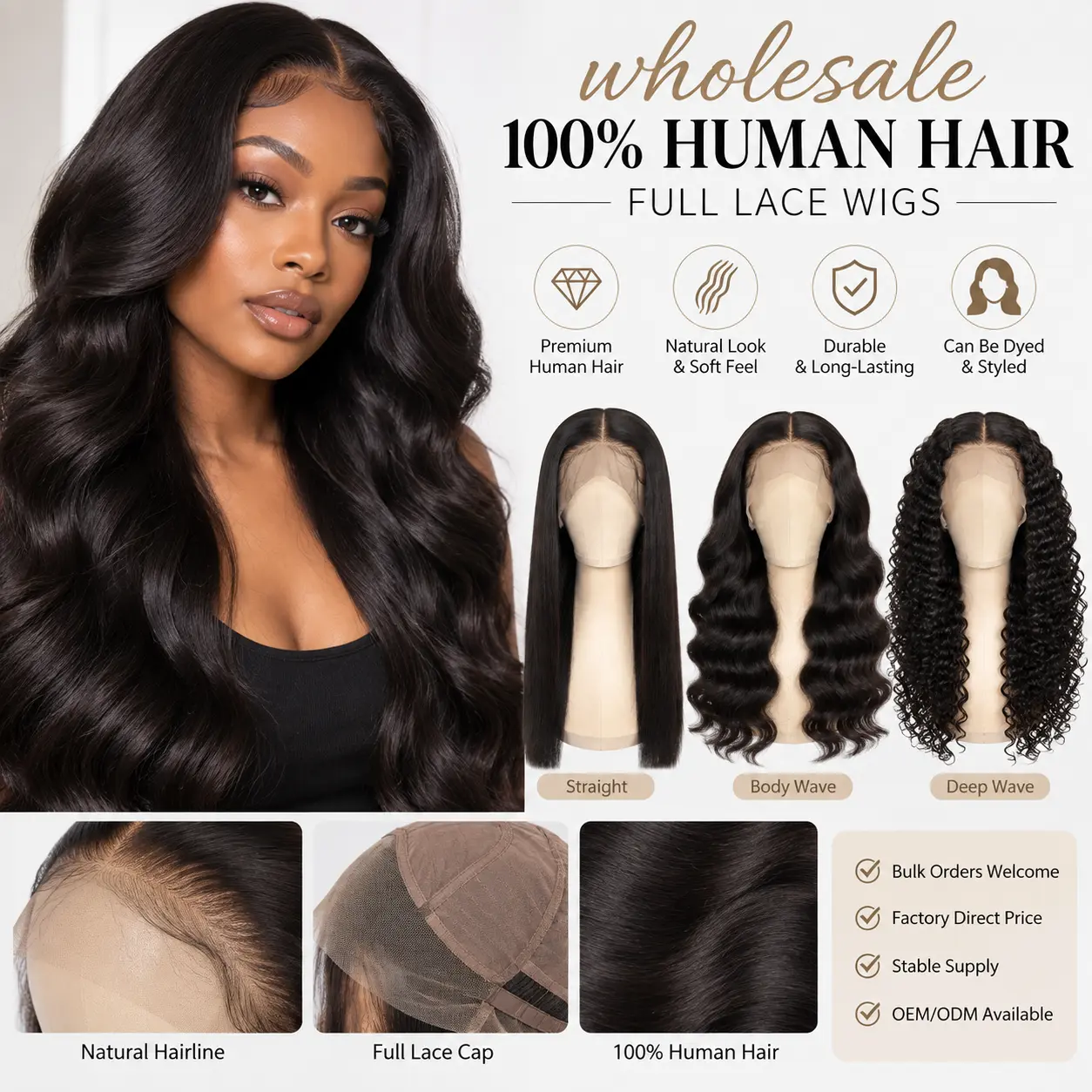
Two Common Questions About Human Hair Full Lace Wigs
What Is the Difference Between a Full Lace Wig and a Lace Front Wig?
The main difference is the amount and position of lace used in the wig cap.
A full lace wig uses lace across most or all of the cap structure, allowing greater flexibility for middle parts, side parts, ponytails, and other styling options. This construction is often preferred for premium wig collections where styling versatility and a natural appearance are major selling points.
Lace front wigs, by comparison, concentrate the lace primarily around the front hairline. For businesses serving customers who want a natural-looking front while maintaining a more accessible price point, Wholesale Lace Front Wigs can complement a full lace collection.
Neither construction is automatically better for every market. A salon serving premium customization clients may place more emphasis on full lace wigs, while a beauty supply store may stock both full lace and lace front options across several price levels.
Can 100% Human Hair Full Lace Wigs Be Customized for Private Labels?
Yes. Full lace wigs are well suited to private-label customization because multiple specifications can be adjusted according to a brand’s target customers.
Depending on the order requirements, buyers can customize factors such as hair length, density, texture, color, cap circumference, lace material, hairline appearance, packaging, logo tags, and other branding details.
For a new hair business, however, it is usually better to validate demand before creating too many customized SKUs. Start with a manageable selection of proven lengths, textures, and densities. Once customer preferences and reorder patterns become clearer, additional private-label specifications can be introduced.
This approach reduces unnecessary inventory pressure while still giving the business room to develop a differentiated product line.
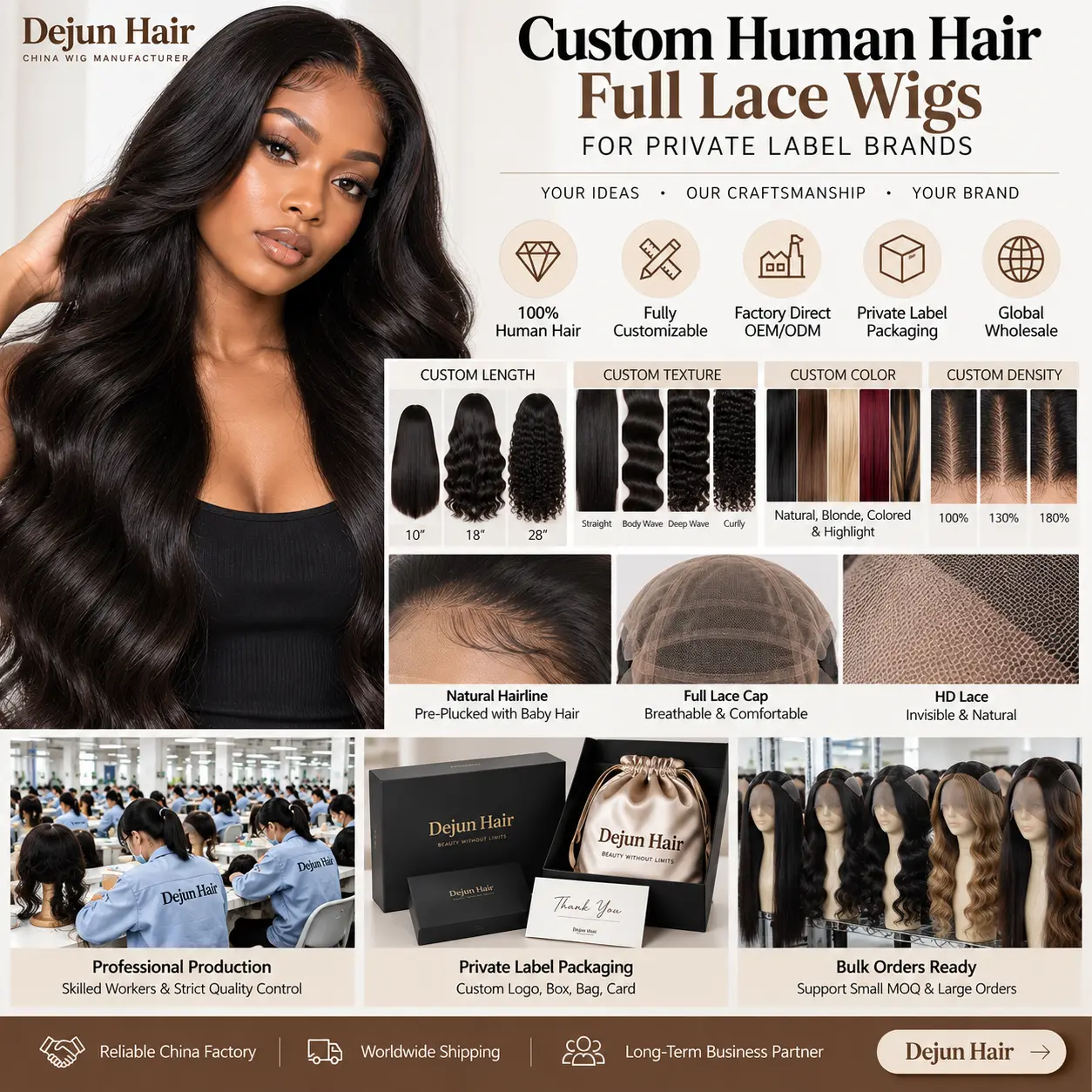
Benefits of Wholesale 100% Human Hair Full Lace Wigs
Premium Product Positioning
Human hair full lace wigs are generally positioned above basic synthetic or conventional cap wigs because customers receive real human hair, more flexible styling, and a more sophisticated lace construction.
This gives salons and retailers an opportunity to build a premium category rather than competing only on low prices.
Flexible Styling for Different Customers
The full lace structure gives wearers more freedom to change their parting and hairstyles. Combined with real human hair, the wig can also be restyled with appropriate heat tools and professional care.
This versatility can be particularly valuable for salons, stylists, and retailers serving customers who frequently change hairstyles.
Broader Product Range for Hair Businesses
Not every customer prioritizes the same features. Some prefer maximum styling flexibility, while others care more about quick installation.
For online stores and salons serving customers who prioritize convenience, adding Wholesale Glueless Wigs alongside traditional full lace wigs can create a more complete product portfolio. Glueless options are particularly useful for customers who want easier daily wear and reduced dependence on adhesive installation.
Private-Label Development Opportunities
Full lace wigs can be differentiated through texture, length, density, lace specifications, cap construction, color, packaging, and branding.
Instead of selling exactly the same configuration as competitors, established retailers can gradually develop products around the preferences of their own customers.
Better Long-Term Supply Planning
For B2B buyers, repeatability is as important as the quality of an individual sample.
A product that sells successfully needs to be reordered with reasonably consistent hair quality, construction, sizing, and appearance. Working directly with an experienced human hair wig manufacturer can give buyers greater control over specifications, production communication, bulk ordering, and long-term replenishment.
How to Source Wholesale Human Hair Full Lace Wigs Step by Step
Step 1: Define Your Target Market
Before requesting quotations, determine who will buy the wigs.
A premium salon, African beauty supply store, independent online wig brand, TikTok seller, and local distributor may require different lengths, densities, textures, price points, and packaging.
Instead of asking only, “How much is a full lace wig?”, prepare a basic sourcing profile that includes:
- Target retail market
- Preferred hair texture
- Popular lengths
- Required density
- Lace preference
- Cap size
- Expected wholesale quantity
- Target price range
- Stock or private-label requirements
A clearer sourcing brief allows the factory to recommend more suitable specifications.
Step 2: Confirm the Human Hair Grade
“Human hair” is a broad description and should not be the only quality criterion used when comparing suppliers.
Ask about hair sourcing, sorting standards, processing, shedding control, tangling performance, color treatment, and expected consistency between production batches.
If your customers expect premium products, request samples before committing to a large order. Evaluate the hair after washing and styling rather than judging it only when the sample first arrives.
Step 3: Select the Appropriate Lace Construction
Full lace construction is useful when styling versatility is an important selling point, but buyers should also consider lace visibility, durability, color, softness, and target-market preferences.
For premium collections focused on less visible lace and a refined hairline appearance, buyers may also evaluate Wholesale HD Full Lace Wigs as a higher-positioned option.
The most expensive lace is not necessarily the right choice for every customer. Product specifications should match the intended retail price and actual consumer expectations.
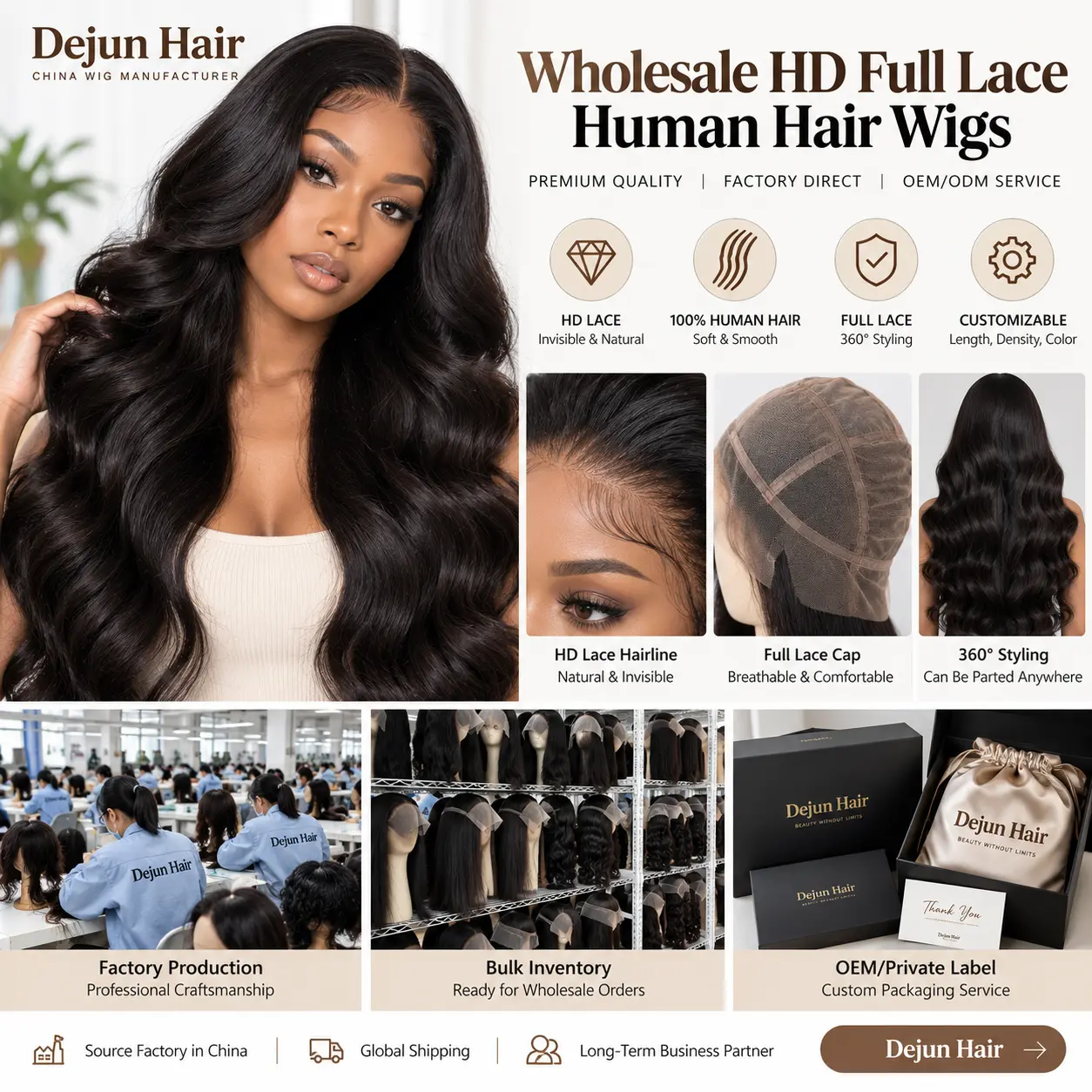
Step 4: Determine Length, Density, Texture, and Cap Size
These specifications have a direct impact on cost, appearance, inventory planning, and customer satisfaction.
Instead of launching too many combinations at once, new businesses can begin with several proven configurations. For example, they may test a few popular lengths in straight, body wave, or curly textures before expanding the range.
Cap sizing also deserves attention. If your local customers frequently report fit problems, discuss circumference and cap construction with the supplier rather than treating cap size as a fixed specification.
Step 5: Evaluate the Manufacturer, Not Just the Sample
A good sample does not automatically guarantee reliable bulk production.
When choosing a supplier, evaluate whether the manufacturer can maintain consistent raw materials, construction standards, inspection procedures, production capacity, and delivery schedules.
Dejun Hair operates an integrated wig production facility covering hair processing, cap making, lace sewing, styling, inspection, and warehousing. Each production batch can be checked for factors such as hair smoothness, construction stability, shedding, color performance, and sizing before shipment.
For wholesalers and growing hair brands, this production consistency can be more valuable than simply choosing the lowest quotation.
Step 6: Test a Small Wholesale Order
New buyers do not always need to begin with a large single-style order.
A mixed trial order can help test several lengths, textures, densities, or constructions while reducing inventory risk. The results can then be used to determine which SKUs deserve larger replenishment orders.
This is particularly useful for new online stores, small salons, and entrepreneurs entering a new geographic market.
Step 7: Develop OEM/ODM Specifications
Once sales data identifies the strongest products, businesses can move from standard wholesale inventory toward customized products.
Hair brands interested in custom full lace wigs wholesale can develop specifications around density, length, texture, color, lace material, cap size, logo tags, private-label packaging, and other brand requirements.
A practical OEM process usually starts with specification confirmation and sampling before moving into bulk production. This reduces misunderstandings and gives the buyer an opportunity to approve important details before a larger order is manufactured.
Step 8: Confirm Quality Inspection Before Shipment
Before bulk shipment, establish clear quality requirements with the supplier.
Important inspection points may include:
- Hair smoothness and consistency
- Shedding and construction security
- Lace condition
- Hairline appearance
- Wig dimensions
- Density
- Length
- Color consistency
- Packaging
- Logo and label accuracy
For customized orders, keeping an approved sample or specification sheet as the production reference can make future reorders more consistent.
Step 9: Plan Shipping and Replenishment
Wholesale sourcing does not end when production is completed.
Ask about production lead times, available inventory, air or sea shipping options, customs documentation, and estimated replenishment cycles. Businesses with fast-moving products should reorder before stock reaches critically low levels.
Dejun Hair has experience supplying overseas B2B customers in African, European, and North American markets and can coordinate different shipping options according to order size, destination, and delivery requirements.
Practical Results for Different Hair Businesses
Result 1: A New Wig Business Tests Demand With a Mixed Order
A startup hair seller may not initially know whether customers prefer 18-inch straight wigs, 24-inch body wave wigs, or longer curly styles.
Instead of purchasing a large quantity of one specification, the business can test several configurations in a smaller mixed order. Sales performance, customer questions, return reasons, and reorder requests then provide useful information for the next purchase.
Practical result: lower initial inventory exposure and better purchasing decisions based on actual customer demand.
Result 2: A Salon Builds a Premium Full Lace Collection
A salon already selling basic wigs may introduce several 100% human hair full lace models for clients who want greater styling flexibility and more premium hair options.
After identifying the best-performing lengths and textures, the salon can maintain regular inventory of those specifications while offering less common configurations as special orders.
Practical result: a clearer premium product tier without requiring excessive inventory across every possible specification.
Result 3: A Growing Hair Brand Moves Into Private Label
An online retailer may begin by purchasing standard wholesale wigs to validate product demand. Once repeat orders show which models consistently sell, the retailer can customize those proven products with its preferred density, lace, cap specifications, logo tags, and packaging.
Practical result: the business moves from generic wholesale inventory toward a more recognizable private-label collection while using actual sales data to guide customization decisions.
Build a More Reliable Full Lace Wig Supply Strategy
Successful wholesale wig sourcing depends on more than finding the lowest unit price.
Hair quality, lace construction, specification consistency, MOQ, customization capability, production capacity, quality inspection, and replenishment reliability all influence long-term profitability.
For new businesses, the practical approach is to test the market with controlled inventory. For established salons, wholesalers, and online hair brands, the next stage is usually to standardize successful specifications and gradually introduce OEM/private-label differentiation.
With more than 20 years of wig manufacturing experience in Shaoyang, Dejun Hair supports both stock wholesale purchasing and customized OEM/ODM production. By combining human hair and synthetic wig manufacturing, flexible order arrangements, quality control, and export experience, we help overseas hair businesses build product ranges around their actual market requirements rather than a one-size-fits-all sourcing model.