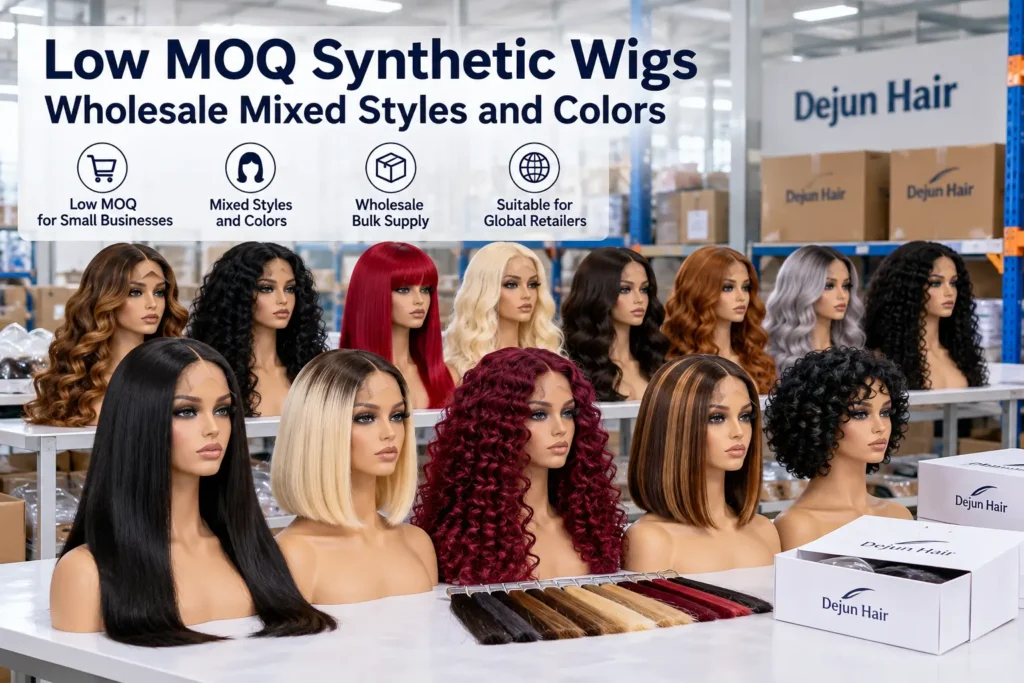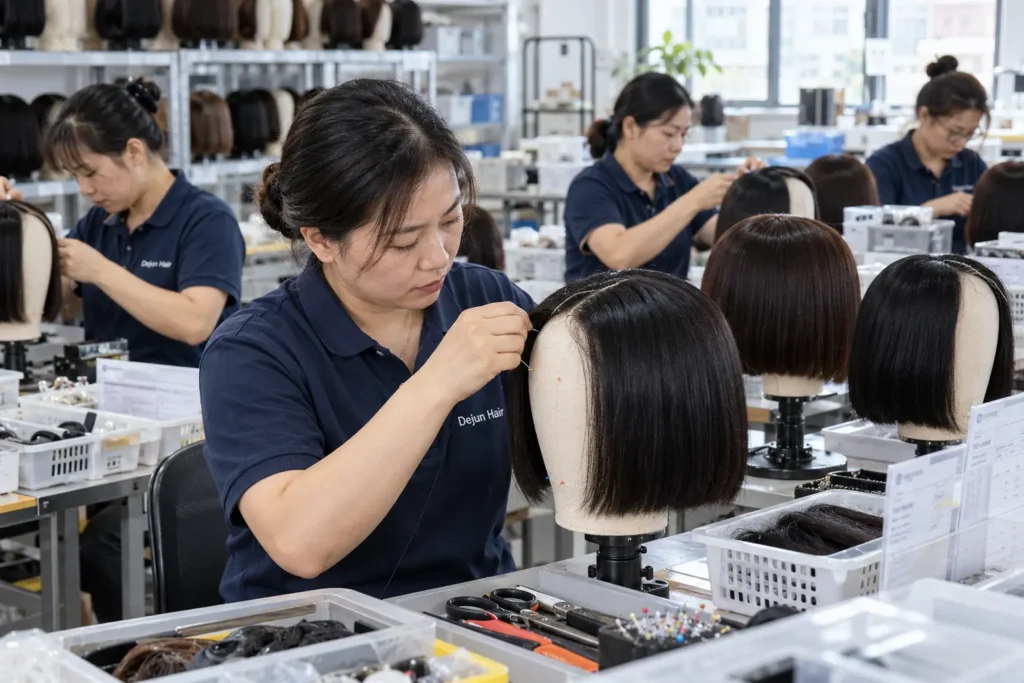
How to Choose Synthetic Wig Styles and Colors for Your Retail Market
Choosing the right synthetic wig styles and colors can make a significant difference in your retail business. Whether you operate a beauty supply store in Africa, an online wig shop in the United States, or a salon in Europe, stocking the wrong hairstyles or colors can lead to slow-moving inventory, unnecessary storage costs, and missed sales opportunities.
Today’s wig customers have different expectations regarding hairstyles, lengths, textures, colors, and prices. Some prefer affordable black bob wigs for everyday wear, while others look for long curly wigs, natural-looking lace fronts, or fashionable blonde and burgundy styles.
For retailers, the challenge is not simply finding attractive wigs. It is identifying which products match local customer demand while maintaining a profitable inventory.
In this guide, Dejun Hair shares practical recommendations for selecting synthetic wig styles, choosing profitable color combinations, planning inventory quantities, and sourcing wholesale synthetic wigs for different retail markets.
1. Why Choosing the Right Synthetic Wig Styles Matters for Retailers
Successful wig retailing starts with understanding your customers rather than following every new hairstyle trend.
A synthetic wig that sells quickly in one market may perform differently in another. Customer preferences depend on purchasing power, lifestyle, climate, fashion influences, and local shopping habits.
For example, customers shopping for affordable everyday hairstyles may prioritize convenience and price. Meanwhile, fashion-focused online shoppers may prefer colorful lace front wigs or longer hairstyles featured in social media videos.
Selecting the right synthetic wig styles helps retailers achieve several important business goals.
Improve Inventory Turnover
Inventory turnover measures how efficiently products sell and are replaced.
When retailers stock hairstyles that match customer preferences, they can reduce the amount of money tied up in unsold products.
For example, a beauty supply store with consistent demand for short black wigs may benefit more from regularly replenishing these products than purchasing large quantities of unfamiliar fashion colors.
Serve Different Customer Groups
A balanced synthetic wig collection should accommodate different customer needs.
Some customers want natural-looking wigs for work or daily activities. Others prefer glamorous curls, long straight hairstyles, or bold colors for special occasions.
Offering several carefully selected styles allows retailers to reach different customer segments without creating unnecessary inventory complexity.
Reduce Purchasing Risks
Buying too many variations at once can create financial pressure, particularly for small businesses.
Instead of stocking every available style, retailers should begin with a manageable product range and expand based on actual sales.
Working with a supplier offering wholesale synthetic wigs in different lengths, textures, and colors can make this approach easier.
2. Most Popular Synthetic Wig Styles for Retail Businesses
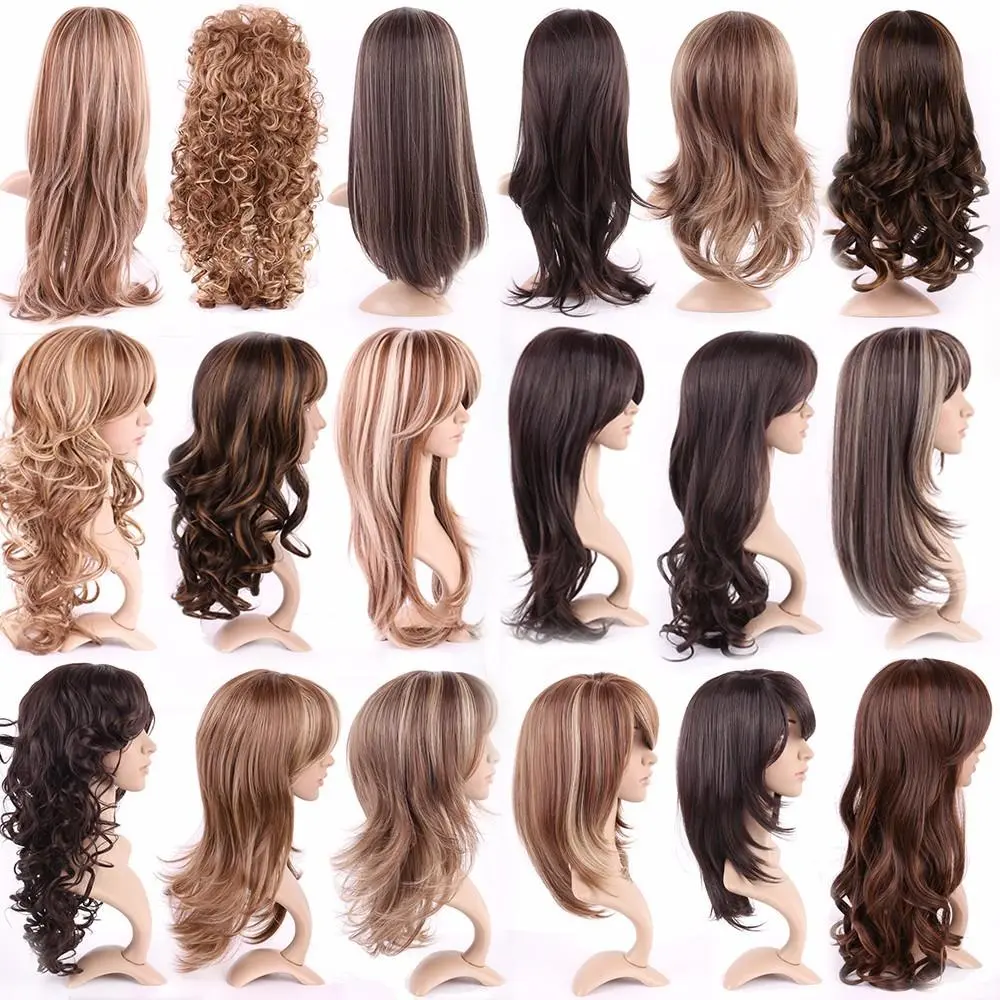
Understanding the major categories of synthetic wigs helps retailers build a practical product assortment.
Different synthetic wig styles offer distinct advantages in appearance, maintenance, pricing, and customer appeal.
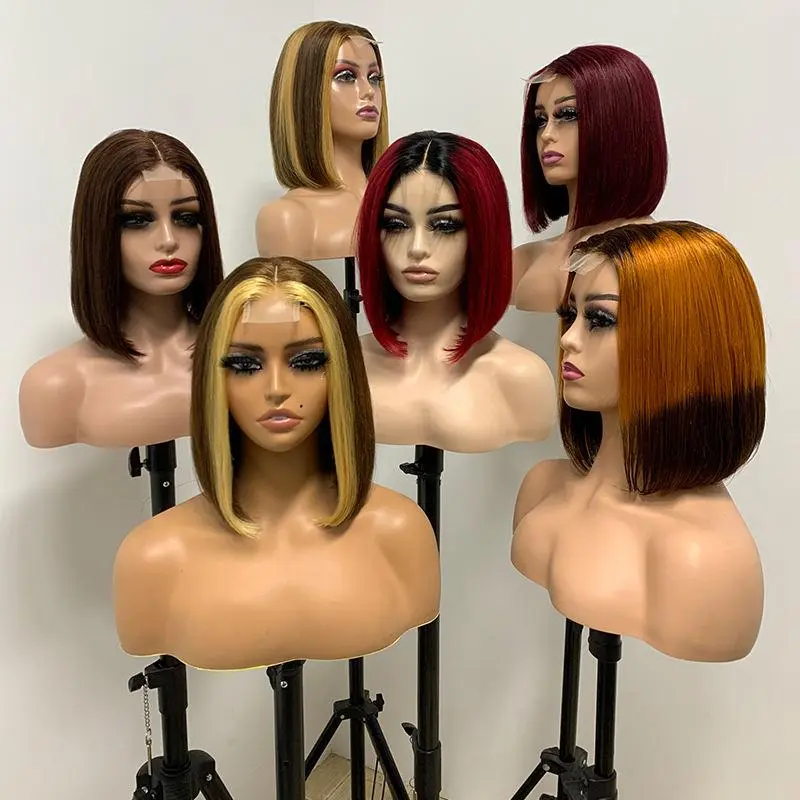
2.1 Synthetic Bob Wig Styles: Practical and Affordable
Synthetic bob wig styles are an excellent starting point for retailers targeting customers who prefer manageable, everyday hairstyles.
Bob wigs typically feature short or medium-short lengths, making them relatively easy to maintain.
Common variations include:
- Straight bob wigs
- Curly bob wigs
- Bob wigs with bangs
- Side-part bob wigs
- Blunt-cut bob wigs
- Colored bob wigs
Shorter styles generally require less fiber than comparable long wigs, although final wholesale pricing also depends on construction and material quality.
For beauty supply stores, synthetic bob wigs can provide accessible price points and straightforward product demonstrations.
Retailers developing affordable short-hair collections can explore wholesale short synthetic wigs in pixie, bob, and other everyday styles.
Retail recommendation: Start with natural black and dark brown bob wigs before expanding into blonde, burgundy, or highlighted variations.
2.2 Curly Synthetic Wig Styles: Volume and Texture
Curly synthetic wig styles appeal to customers who prefer fuller hairstyles and defined textures.
Common options include:
- Loose curly wigs
- Deep curly wigs
- Kinky curly wigs
- Afro curly wigs
- Water wave-inspired textures
- Short curly wigs
One advantage of synthetic curls is that properly manufactured fibers can retain their preset curl patterns without frequent restyling.
However, curl quality varies depending on fiber selection, manufacturing methods, and maintenance.
For retailers serving customers interested in textured hairstyles, curly synthetic wigs can complement straight and bob collections.
Retail recommendation: Test several curl patterns before placing a large order. Customers may prefer loose curls, tight curls, or natural-looking textured styles depending on their individual needs.
2.3 Straight Synthetic Wigs: Versatile Everyday Styles
Straight synthetic wigs offer a clean appearance suitable for many occasions.
They are available in short, medium, and long lengths, with options including middle parts, side parts, bangs, and layered cuts.
For retailers, straight wigs provide several advantages:
- Easy-to-understand product specifications
- Multiple length and color combinations
- Suitable options for everyday and occasion wear
- Straightforward product photography
- Broad styling appeal
Nevertheless, longer synthetic wigs may develop friction-related tangling, particularly around the neckline.
Retailers should evaluate fiber smoothness and maintenance requirements before purchasing long straight wigs in bulk.
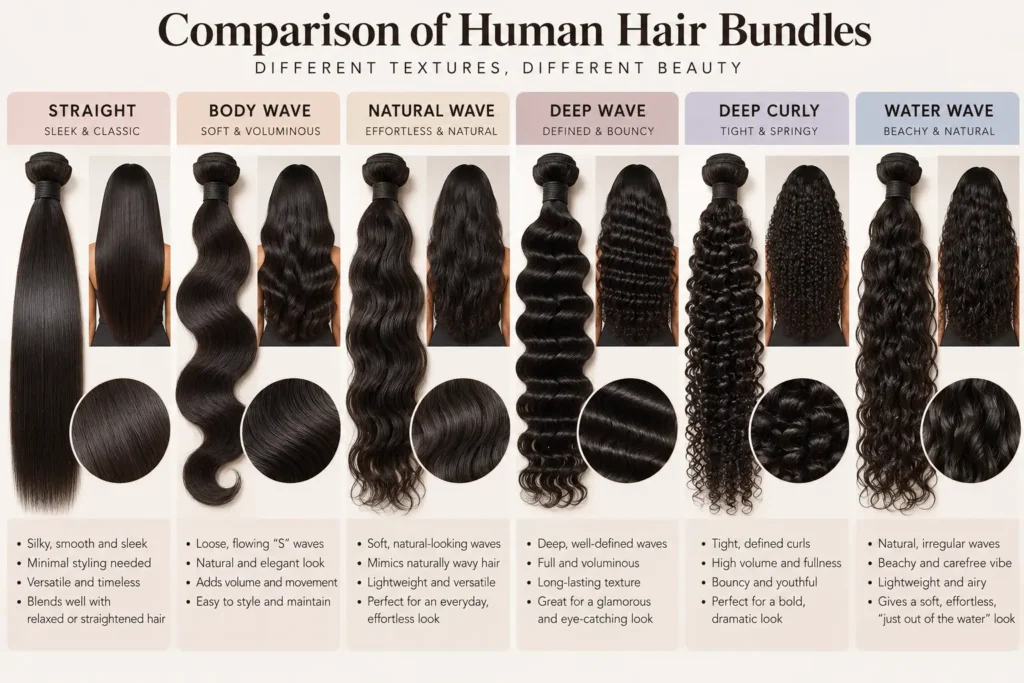
2.4 Wavy Synthetic Wigs: Natural-Looking Movement
Wavy synthetic wigs provide an alternative between straight and curly hairstyles.
Popular variations include body wave, loose wave, and deep wave designs.
These synthetic wig styles can appeal to customers who want movement and volume without tightly defined curls.
For online retailers, wavy wigs can be particularly suitable for product videos because the texture is visible from different angles.
Consider offering medium-length body wave wigs in natural black, brown, and selected highlighted colors.
2.5 Short Synthetic Wig Styles: Convenience and Comfort
Short synthetic wig styles include pixie cuts, cropped curls, layered short wigs, and chin-length hairstyles.
These products are worth considering for customers who prioritize convenient installation and low-maintenance styling.
Short wigs can also be attractive in warmer environments, although comfort depends on cap ventilation, fiber density, and individual preferences—not length alone.
For small retailers, short synthetic wigs offer an opportunity to build an affordable collection with multiple looks.
2.6 Long Synthetic Wig Styles: Fashion and Visual Appeal
Long synthetic wigs are commonly used for glamorous hairstyles, special occasions, and fashion-oriented collections.
Available styles include:
- Long straight wigs
- Long body wave wigs
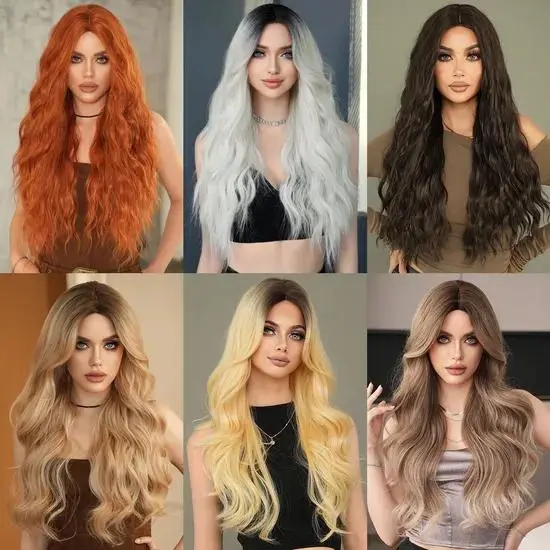
- Long curly wigs
- Layered long wigs
- Long blonde wigs
- Ombre synthetic wigs
Longer wigs can create strong visual appeal in online listings and promotional videos.
However, retailers should consider higher shipping volume, maintenance expectations, and possible tangling.
Retail recommendation: Introduce long synthetic wig styles in controlled quantities and prioritize designs supported by customer inquiries or previous sales.
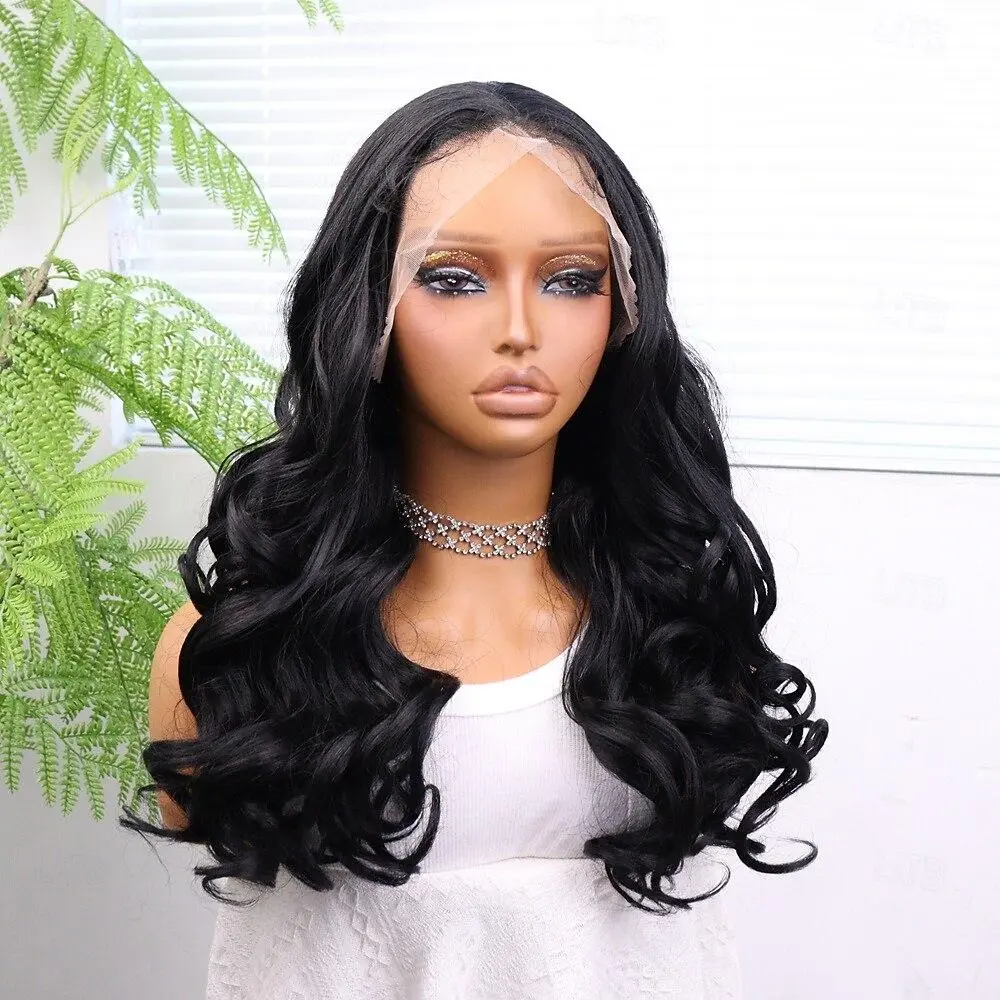
2.7 Synthetic Lace Front Wigs: Natural-Looking Hairlines
Synthetic lace front wigs feature lace construction around the front hairline, creating a more natural-looking appearance when properly fitted and installed.
They can be manufactured in straight, curly, wavy, bob, and long styles.
Compared with basic machine-made wigs, lace front designs may involve higher manufacturing costs because of additional construction requirements.
Retailers should evaluate lace quality, hairline appearance, cap comfort, and fiber consistency.
For stores serving both budget-conscious and appearance-focused customers, synthetic lace front wigs can form a useful mid-range or premium synthetic product category.
3. How to Choose Synthetic Wig Colors for Your Customers
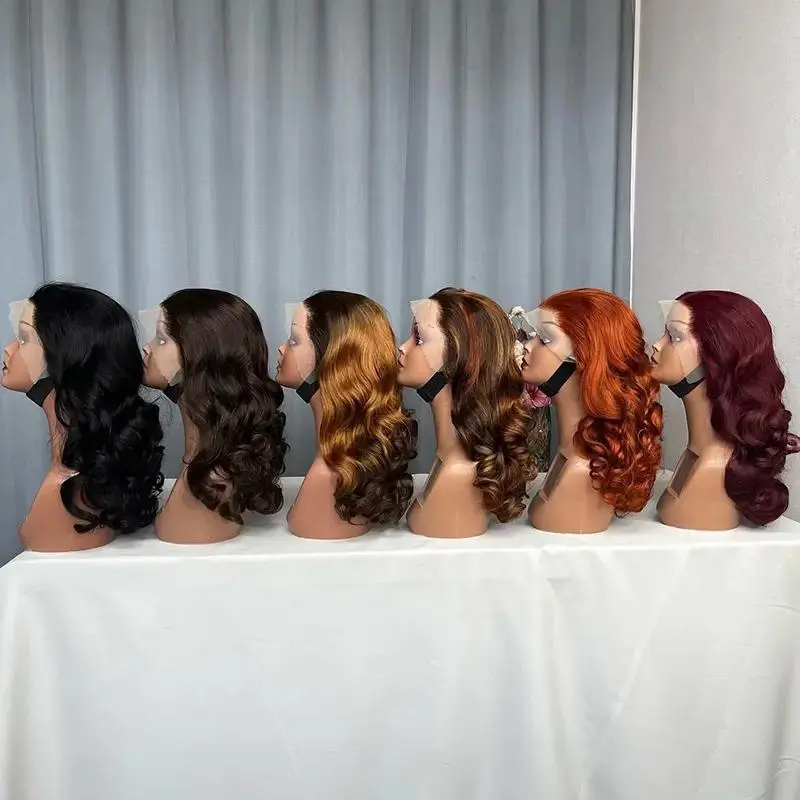
Selecting the right synthetic wig colors is just as important as choosing hairstyles.
A popular wig design may sell poorly if the available colors do not match customer expectations.
For most retailers, the safest approach is to separate core everyday colors from experimental fashion shades.
3.1 Natural Black Synthetic Wigs
Natural black shades are useful starting options for retailers serving customers who prefer understated hairstyles.
Common color codes include:
- #1: Jet Black
- #1B: Off Black
- #2: Dark Brown
Actual color appearance can vary between manufacturers, so sample approval is important.
Natural black wigs work well with bob, curly, straight, and wavy hairstyles.
They can form part of a retailer’s core inventory when supported by local sales data.
3.2 Brown Synthetic Wigs
Brown synthetic wigs provide softer alternatives to black hairstyles.
Common options include dark brown, medium brown, chocolate brown, and highlighted brown.
Brown shades can complement everyday collections and offer customers more subtle color choices.
Retailers should consider undertones because warm and cool brown shades can look noticeably different.
3.3 Blonde Synthetic Wigs
Blonde synthetic wigs suit customers seeking brighter hairstyles.
Popular options to test include:
- Honey blonde
- Golden blonde
- Ash blonde
- Platinum blonde
- Blonde with dark roots
Blonde shades can work particularly well with bob, straight, and wavy synthetic wig styles.
However, blonde demand varies significantly between customer groups.
Rather than assuming every market prefers the same shades, retailers should test blonde variations through small orders and customer feedback.
3.4 Burgundy and Red Synthetic Wigs
Burgundy synthetic wigs offer an alternative for customers who want noticeable color without choosing extremely bright fashion shades.
Options include dark burgundy, wine red, copper red, and brighter red tones.
These colors can complement curly, bob, and layered hairstyles.
Retailers may consider including burgundy wigs in seasonal promotions or fashion-focused collections.
3.5 Ombre Synthetic Wigs
Ombre synthetic wigs feature gradual transitions between colors.
Common combinations include:
- Black to brown
- Dark brown to blonde
- Black to burgundy
- Brown to honey blonde
- Dark roots with highlighted ends
Ombre styles allow customers to experiment with multiple shades in one hairstyle.
For retailers, they can provide product differentiation without requiring completely new wig constructions.
3.6 Fashion-Colored Synthetic Wigs
Fashion colors include pink, blue, purple, silver, and other unconventional shades.
These products may appeal to customers interested in creative styling, cosplay, festivals, or social media fashion.
However, fashion-colored wigs can carry greater inventory risk when demand is uncertain.
Retailers should introduce them through limited collections, preorders, or small mixed-style purchases.
Synthetic Wig Color Selection Guide
| Wig Color | Potential Customer Interest | Suitable Styles | Suggested Inventory Role |
|---|---|---|---|
| Natural Black | Everyday, classic appearance | Bob, curly, straight | Core stock |
| Dark Brown | Natural-looking alternatives | Straight, wavy, bob | Core stock |
| Honey Blonde | Fashion and highlighted looks | Bob, wavy, long | Secondary stock |
| Burgundy | Bold but wearable colors | Curly, bob, layered | Test and seasonal stock |
| Ombre | Multi-tone hairstyles | Wavy, straight, curly | Secondary stock |
| Pink / Blue / Purple | Creative and occasion styling | Bob, long, lace front | Limited test stock |
Important: These recommendations are starting points for assortment planning, not verified global sales rankings. Actual purchasing quantities should reflect each retailer’s sales history and customer demand.
4. Best Synthetic Wig Styles for Different Retail Markets
Choosing synthetic wig styles for different markets requires more than identifying popular hairstyles.
Retailers should consider local customer budgets, distribution channels, climate, and cultural styling preferences.
4.1 Synthetic Wig Styles for African Retail Markets
African wig markets are diverse, and consumer preferences can differ substantially between countries, cities, and retail channels.
For example, a street-level beauty retailer serving price-sensitive customers may require a different assortment from an established salon selling premium lace wigs.
Potential products to test include:
- Affordable short synthetic wigs
- Natural black bob wigs
- Curly and textured synthetic wigs
- Medium-length straight wigs
- Burgundy and highlighted styles
- Beginner-friendly headband wigs
Retailers targeting customers who value easy installation may also consider wholesale synthetic headband wigs.
For importers and distributors, flexible mixed-style purchasing can help identify local bestsellers without committing excessive capital to one hairstyle.
Business tip: Compare sales by location and customer segment. Avoid using one national inventory strategy for every city or store.
4.2 Synthetic Wig Styles for the United States
The United States offers opportunities across beauty supply stores, specialty wig retailers, salons, and online marketplaces.
Customer preferences can differ depending on age, lifestyle, hair texture preferences, and shopping channels.
Retailers may test several collections:
Everyday Collection
Natural black and brown bob wigs, short styles, and medium-length straight wigs.
Textured Collection
Curly, kinky curly, and wavy synthetic wigs for customers seeking different textures and volumes.
Fashion Collection
Blonde, burgundy, ombre, and colorful synthetic wigs for style experimentation.
Lace Front Collection
Synthetic lace front wigs for customers who prioritize realistic-looking hairlines.
Online sellers should evaluate product engagement, customer reviews, and actual conversion rates before expanding inventory.
4.3 Synthetic Wig Styles for European Markets
European retailers should also avoid treating the entire region as one uniform market.
Consumer needs may vary between countries, customer communities, and retail segments.
Potential assortment categories include natural-looking straight wigs, short layered styles, soft waves, and selected blonde or brown colors.
Specialty stores may require different colors, cap constructions, or comfort features from fashion-oriented retailers.
For online businesses, clear product specifications and realistic photographs can help customers understand what they are purchasing.
4.4 How to Adapt Your Product Mix to Local Demand
Instead of relying exclusively on general market trends, retailers should gather information directly from their customers.
Useful sources include:
- Previous sales records
- Customer requests and inquiries
- Frequently returned products
- Local competitor assortments
- Social media engagement
- Seasonal purchasing patterns
For example, if customers repeatedly ask for short burgundy wigs but your store only stocks black bob wigs, a small burgundy test order may reveal an opportunity.
The most reliable retail strategy combines market research with actual sales performance.
5. How to Match Synthetic Wig Styles with Customer Budgets
Retail customers have different spending expectations.
Offering several price levels can help businesses reach more customers while maintaining a manageable assortment.
Budget-Friendly Synthetic Wigs
Entry-level collections may include basic machine-made bob wigs, short wigs, and standard synthetic fibers.
These products can be suitable for price-sensitive customers and first-time wig buyers.
However, low purchase prices should never justify poor construction or inconsistent fiber quality.
Retailers should still inspect cap stitching, fiber shedding, and overall appearance.
Mid-Range Synthetic Wigs
Mid-range products may include improved synthetic fibers, better cap construction, more detailed hairstyles, and selected lace front designs.
These wigs can appeal to customers who want a balance between appearance, comfort, and affordability.
Retailers should compare wholesale costs with customer expectations rather than relying only on supplier descriptions.
Premium Synthetic Wigs
Premium synthetic collections may include selected heat-resistant fibers, more realistic hairlines, refined textures, and customized designs.
Heat-resistant synthetic wigs can offer additional styling flexibility, but they should never be treated as having the same heat tolerance as human hair.
Always confirm the manufacturer’s recommended temperature range before using heated styling tools.
Suggested Product Positioning
| Retail Segment | Recommended Wig Types | Main Selling Point |
|---|---|---|
| Entry-Level | Basic bob, short straight, simple curly | Affordability |
| Mid-Range | Wavy, layered, selected lace front | Appearance and comfort |
| Premium Synthetic | Refined lace front, heat-friendly styles | Construction and styling features |
| Fashion Collection | Blonde, burgundy, ombre, colorful wigs | Style variety |
A balanced assortment allows retailers to serve customers with different budgets without depending entirely on one price category.
6. Synthetic Wig Inventory Planning: Styles, Colors, and Quantities

Effective synthetic wig inventory planning helps retailers balance product variety with financial control.
The goal is not to stock the largest possible selection. It is to maintain enough inventory to meet demand while limiting slow-moving products.
6.1 Start with a Core Product Collection
New retailers should begin with a manageable number of synthetic wig styles.
For example, a business planning an initial order of 100 wigs could test the following assortment.
| Synthetic Wig Style | Suggested Quantity | Inventory Share |
|---|---|---|
| Bob Synthetic Wigs | 25 | 25% |
| Curly Synthetic Wigs | 25 | 25% |
| Straight Synthetic Wigs | 20 | 20% |
| Wavy Synthetic Wigs | 15 | 15% |
| Lace Front Synthetic Wigs | 10 | 10% |
| Fashion / Colored Wigs | 5 | 5% |
| Total | 100 | 100% |
This is an illustrative starting allocation, not an industry sales benchmark.
A retailer serving customers who prefer long curly hairstyles should adjust the percentages accordingly.
6.2 Plan Inventory by Color
After selecting hairstyles, retailers should decide how many colors to stock.
For an initial 100-piece test order, one possible color allocation is:
| Synthetic Wig Color | Suggested Quantity | Inventory Share |
|---|---|---|
| Natural Black | 40 | 40% |
| Dark Brown | 25 | 25% |
| Blonde | 15 | 15% |
| Burgundy | 10 | 10% |
| Ombre | 7 | 7% |
| Other Fashion Colors | 3 | 3% |
| Total | 100 | 100% |
This table represents the same 100 wigs grouped by color, not an additional purchase.
Actual orders must combine the style and color allocations into specific SKUs.
For example, a retailer might purchase 10 black bob wigs, 8 brown bob wigs, 5 blonde bob wigs, and 2 burgundy bob wigs.
The appropriate combination depends on customer demand and supplier availability.
6.3 Avoid Too Many SKUs
A stock keeping unit, or SKU, represents a specific product variation.
For example:
- Black straight bob wig, 12 inches
- Brown straight bob wig, 12 inches
- Blonde straight bob wig, 12 inches
These are three different SKUs.
When retailers combine too many lengths, colors, textures, and cap designs, inventory management becomes more complicated.
A small business may benefit from stocking fewer variations in reasonable quantities rather than purchasing one unit of every available design.
6.4 Monitor Sell-Through Rates
Sell-through rate helps retailers understand how much inventory sells during a particular period.
Sell-Through Rate = Units Sold ÷ Units Available for Sale × 100
For example, if a store has 20 black bob wigs available during a month and sells 15, its sell-through rate is:
15 ÷ 20 × 100 = 75%
If another color sells only 3 out of 20 units, its sell-through rate is 15%.
These results suggest that the retailer should investigate whether the slower-selling color needs a smaller future allocation.
However, purchasing decisions should also consider profit margins, seasonality, and stock availability.
6.5 Create a Practical Reordering System
Retailers should establish reorder points for frequently purchased products.
A basic formula is:
Reorder Point = Average Daily Sales × Replenishment Lead Time + Safety Stock
For example:
- Average daily sales: 2 wigs
- Replenishment lead time: 15 days
- Safety stock: 10 wigs
Reorder point:
2 × 15 + 10 = 40 wigs
Under these assumptions, the retailer should consider placing a replenishment order when the inventory position reaches approximately 40 units.
Inventory position should account for stock already ordered and outstanding customer commitments.
For international buyers, replenishment planning should include production time, shipping time, customs clearance, and potential delays.
7. How to Buy Wholesale Synthetic Wigs in Mixed Styles and Colors
For retailers, selecting attractive products is only part of the purchasing process.
The supplier’s minimum order quantity, product consistency, customization capabilities, and delivery arrangements also influence profitability.
7.1 Choose a Supplier Offering Mixed Style Wig Orders
Mixed style wig orders allow retailers to combine several hairstyles, lengths, or colors within one purchase.
For example, a retailer may want:
- 20 black bob wigs
- 15 brown curly wigs
- 10 blonde straight wigs
- 10 burgundy wavy wigs
- 5 ombre lace front wigs
This creates a 60-piece mixed assortment.
Compared with ordering 60 identical wigs, a mixed assortment allows the retailer to test several product categories.
However, suppliers may apply different minimum quantities to each SKU, color, or customized design.
Always confirm the mixing rules before placing an order.
7.2 Understand Minimum Order Quantities
MOQ refers to the minimum quantity a supplier accepts for an order.
MOQ requirements can differ between ready-stock products and customized manufacturing.
Ready-Stock Wholesale Orders
Existing inventory may support lower minimum quantities and faster dispatch.
Custom Color Orders
Special colors may require additional production preparation and minimum quantities.
OEM/ODM Orders
Custom caps, branded packaging, labels, or unique hairstyles may involve separate minimum order requirements.
Retailers should ask suppliers to clarify whether the MOQ applies to the total order, individual styles, or specific colors.
7.3 Request Samples Before Bulk Purchasing
Product samples help retailers evaluate quality before committing to larger orders.
Important inspection points include:
- Synthetic fiber softness
- Natural-looking shine
- Tangling resistance
- Hair shedding
- Cap stitching
- Color accuracy
- Hair density
- Lace construction
- Packaging quality
For curly wigs, inspect curl consistency and shape retention after appropriate washing.
For long wigs, pay particular attention to tangling around the ends and neckline.
For lace front wigs, evaluate the hairline appearance and lace durability.
7.4 Compare Total Landed Costs
Wholesale unit price alone does not determine purchasing profitability.
Retailers should calculate the total cost of getting products into their inventory.
Total Landed Cost = Product Cost + Freight + Import Duties + Applicable Taxes + Other Import Expenses
For example, a low-priced wig may become less competitive if shipping costs are high or the order requires expensive packaging.
Buyers should compare suppliers using consistent product specifications and shipping terms.
7.5 Consider OEM and Private Label Options
Retailers building their own brands may benefit from OEM/ODM manufacturing services.
Customization options can include:
- Brand logo printing
- Private label packaging
- Custom hang tags
- Selected wig colors
- Different cap sizes
- Customized hairstyles
- Specific fiber and construction requirements
Private labeling can help businesses develop a recognizable product collection rather than selling only generic merchandise.
However, retailers should confirm customization costs, sample requirements, production lead times, and MOQ before approving an order.
8. Common Mistakes When Choosing Synthetic Wigs for Resale
Even experienced retailers can encounter inventory problems when purchasing unfamiliar synthetic wig styles.
Understanding common mistakes can help businesses reduce unnecessary costs.
Mistake 1: Following Trends Without Testing Demand
A hairstyle receiving significant attention on social media does not automatically guarantee strong local sales.
Retailers should use small test orders to determine whether online interest translates into purchases.
Mistake 2: Stocking Too Many Fashion Colors
Bright colors can attract attention, but excessive quantities may create slow-moving inventory.
Start with a limited selection and expand when customer demand is demonstrated.
Mistake 3: Choosing Products Based Only on Price
The cheapest synthetic wig is not always the most profitable.
Poor-quality fibers, inconsistent colors, or weak cap construction can increase customer complaints and returns.
Mistake 4: Ignoring Customer Feedback
Customer feedback provides valuable information about comfort, length, density, and styling preferences.
Retailers should record recurring requests and use them when planning future purchases.
Mistake 5: Ordering Too Much of One Style
Large purchases may reduce unit costs, but they also increase inventory exposure.
Unless demand is well established, mixed-style orders can provide a more flexible purchasing strategy.
Mistake 6: Failing to Plan Replenishment
A popular wig that repeatedly sells out may result in lost revenue.
Retailers should track bestsellers and reorder early enough to accommodate manufacturing and international shipping.
9. Why Work with a Synthetic Wig Manufacturer for Retail Supply?
Choosing a reliable supplier is essential for maintaining consistent product quality and inventory availability.
For overseas retailers, working directly with an experienced synthetic wig manufacturer can provide advantages in product selection, customization, and production coordination.
Factory-Direct Supply
Dejun Hair is a wig manufacturer based in Shaoyang, Hunan, China, with approximately 20 years of local manufacturing experience.
Our production operations cover fiber processing, wig cap construction, sewing, styling, quality inspection, and packaging.
This factory-direct model allows us to coordinate product specifications and quality requirements without relying entirely on outside trading intermediaries.
Multiple Synthetic Wig Styles
We supply synthetic wigs in different lengths, textures, colors, and constructions.
Our product range includes short wigs, bob wigs, curly wigs, straight wigs, wavy wigs, and selected lace front designs.
Retailers can explore our wholesale synthetic wigs collection to compare available styles for their target markets.
Flexible Wholesale Purchasing
We understand that small retailers and established distributors have different purchasing requirements.
Dejun Hair supports low-MOQ ready-stock purchasing arrangements, mixed-style orders, and customized production subject to product specifications and order requirements.
This flexibility helps businesses test new synthetic wig styles before committing to larger quantities.
OEM/ODM Customization
For retailers developing their own brands, we provide customization options involving colors, hairstyles, caps, labels, and packaging.
Buyers can discuss sample development and production requirements before confirming bulk orders.
Quality Control and International Shipping
Our production process includes inspections of fiber appearance, shedding, color consistency, cap construction, and product dimensions.
We also assist international buyers with shipping arrangements and relevant export documentation.
Shipping methods, delivery times, and import requirements depend on the destination and selected logistics service.
For businesses looking for a long-term China wig factory, manufacturing consistency and responsive communication are important considerations alongside wholesale pricing.
10. Frequently Asked Questions About Synthetic Wig Styles and Colors
What are the most popular synthetic wig styles for retail stores?
Bob, curly, straight, wavy, short, and lace front wigs are common product categories worth evaluating. The best-selling styles depend on each retailer’s customers, price positioning, and local demand.
What are the best synthetic wig colors for resale?
Natural black and dark brown can provide practical starting options for everyday collections. Blonde, burgundy, ombre, and fashion colors can be tested according to customer preferences and sales performance.
Are synthetic bob wigs good for small retail businesses?
Yes. Synthetic bob wigs can be suitable for small businesses because they are available in multiple styles, colors, and price ranges. Retailers should evaluate local demand and product quality before purchasing large quantities.
How many synthetic wig styles should a new retailer stock?
There is no universal requirement. A small retailer might begin with four to six style categories and a limited number of colors, then expand based on sell-through rates and customer feedback.
Can I order wholesale synthetic wigs in different colors?
Yes. Some manufacturers, including Dejun Hair, support mixed-style and mixed-color wholesale orders. Available combinations and minimum quantities depend on stock availability and customization requirements.
Are heat-resistant synthetic wigs better for resale?
Heat-resistant synthetic wigs may appeal to customers who want additional styling flexibility. However, they can cost more than standard synthetic wigs and must be styled within the manufacturer’s specified temperature limits.
How can retailers reduce slow-moving synthetic wig inventory?
Retailers can reduce inventory risks by testing new styles in small quantities, monitoring sales performance, limiting experimental colors, and adjusting future purchases according to customer demand.
Can synthetic wig manufacturers provide private label packaging?
Yes. Manufacturers offering OEM/ODM services may provide customized packaging, brand labels, hang tags, and selected product modifications. Minimum order quantities and additional costs should be confirmed before production.
Conclusion: Build a Synthetic Wig Collection That Matches Your Market
Choosing the right synthetic wig styles and colors is essential for building a sustainable wig retail business.
Rather than purchasing every available hairstyle, retailers should focus on understanding their customers, selecting a balanced assortment, and monitoring actual sales performance.
Bob, curly, straight, wavy, and lace front wigs can serve different customer needs, while natural colors and selected fashion shades provide opportunities for product differentiation.
Effective inventory planning, flexible wholesale purchasing, and reliable supplier relationships can help businesses reduce purchasing risks and respond more quickly to changing demand.
Looking for Wholesale Synthetic Wigs in Different Styles and Colors?
Dejun Hair supplies factory-direct synthetic wigs for beauty supply stores, salons, online retailers, and international distributors.
We support mixed-style wholesale orders, flexible MOQ arrangements, OEM/ODM customization, and international shipping assistance.
Contact Dejun Hair to request our synthetic wig catalog, available color options, MOQ information, sample details, and a wholesale quotation tailored to your retail market.
Industry reference resources for wholesale wig sourcing:

Dejun Hair
Direct from Chinese Wig Factories | One-Stop Wholesale Supplier of Wigs for International Trade.