Private Label Synthetic Wigs: OEM, Packaging & Bulk Ordering Guide
Starting your own wig brand is an exciting business opportunity, but finding the right manufacturer can be challenging. Many wig business owners struggle with high minimum order quantities, limited customization options, inconsistent product quality, and expensive branded packaging.
For small businesses and established distributors alike, these challenges can make launching a profitable wig collection more complicated than expected.
Private label synthetic wigs offer a practical solution for businesses that want to sell customized wigs under their own brand without investing in manufacturing facilities.
By working directly with a reliable synthetic wig manufacturer, businesses can customize wig styles, colors, packaging, and branding while maintaining better control over product quality and purchasing costs.
However, successful private label manufacturing requires more than simply adding a logo to an existing wig.
You need to understand OEM and ODM manufacturing, customization options, minimum order quantities, sample approval, production timelines, and quality-inspection procedures.
This guide explains how to source private label synthetic wigs, develop branded collections, and manage bulk orders efficiently.
Whether you operate a beauty supply store, online wig business, salon, or wholesale distribution company, this guide will help you make informed purchasing decisions.
1. What Are Private Label Synthetic Wigs?
Private label synthetic wigs are synthetic hair wigs manufactured by a supplier and sold under another company’s brand name.
Instead of selling generic products, businesses can create their own product identity through customized packaging, labels, colors, styles, and other specifications.
For example, a beauty supply store may purchase synthetic bob wigs from a manufacturer and sell them using its own logo, branded packaging boxes, and product labels.
This approach allows retailers to establish recognizable product collections without investing in manufacturing equipment.
For businesses exploring additional branding opportunities, working with an experienced supplier of private label wigs can provide opportunities to expand into both synthetic and human hair collections. This approach helps retailers develop a consistent brand identity while offering different products for different customer budgets.
Private Label vs. OEM vs. ODM Synthetic Wigs
Although these terms are often used interchangeably, they represent different manufacturing arrangements.
| Manufacturing Model | Description | Best For |
|---|---|---|
| Private Label | Existing wig products sold with customized branding | Small wig brands and retailers |
| OEM Synthetic Wigs | Wigs manufactured according to buyer-provided specifications | Established brands with specific product requirements |
| ODM Synthetic Wigs | Manufacturer-developed products that buyers can select and customize | Businesses seeking faster product development |
For example, a retailer may select an existing curly synthetic wig and request custom packaging. This is a typical private label arrangement.
An established brand may provide specific requirements for wig density, cap construction, fiber type, and color combinations. This is closer to OEM manufacturing.
An ODM synthetic wig manufacturer may offer existing designs that buyers can adapt to their target markets.
Understanding these differences helps buyers choose the right manufacturing model.
2. Why Start a Private Label Synthetic Wig Business?
Private label manufacturing offers several advantages for wig retailers, distributors, and emerging beauty brands.
Build a Recognizable Wig Brand
Selling generic products makes it difficult to differentiate your business from competitors.
Custom branded synthetic wigs allow you to develop a consistent brand identity through product presentation, packaging, and customer experience.
For example, an online wig retailer can introduce a branded collection featuring everyday bob wigs, fashionable colored wigs, and curly styles.
Consistent branding helps customers recognize the collection across different sales channels.
Reduce Manufacturing Investment
Building a wig factory requires substantial investment in machinery, skilled workers, production facilities, and raw materials.
Private label manufacturing eliminates the need for businesses to manage these operations directly.
Instead, retailers can focus on product selection, marketing, customer service, and sales.
Offer Affordable Products
Synthetic wigs generally have lower material costs than comparable human hair wigs.
This makes them attractive for price-sensitive retail markets and customers who enjoy changing hairstyles frequently.
For businesses targeting affordable fashion wig categories, wholesale synthetic wigs provide a practical foundation for developing branded product collections. Retailers can select different styles, lengths, and colors according to their target customers while controlling purchasing costs.
Expand Your Product Collection
A reliable manufacturer can supply multiple styles, lengths, and colors.
This allows businesses to test new products and expand successful collections without changing suppliers.
However, buyers should evaluate demand before investing in large quantities of unfamiliar styles.
3. What Can You Customize for Private Label Synthetic Wigs?
One of the biggest advantages of custom synthetic wigs wholesale is the ability to adapt products to specific markets.
The available customization options depend on the manufacturer’s production capabilities, order quantity, and product design.
Synthetic Hair Fiber
Synthetic wigs are manufactured using different types of artificial hair fibers.
Common options include:
- Standard synthetic fibers for affordable fashion wigs.
- Heat-resistant synthetic fibers designed for limited heat styling.
- Premium synthetic fibers developed for improved appearance and texture.
Businesses targeting customers who prefer flexible styling options may consider heat-resistant synthetic wigs. These products are designed to tolerate limited heat styling within the manufacturer’s recommended temperature range, making them suitable for selected fashion wig collections.
Heat resistance should always be confirmed with the manufacturer.
Not all synthetic fibers tolerate the same temperatures, and excessive heat can permanently damage the hair.
Businesses should request written styling instructions and verify the recommended temperature range through sample testing.
Wig Styles and Textures
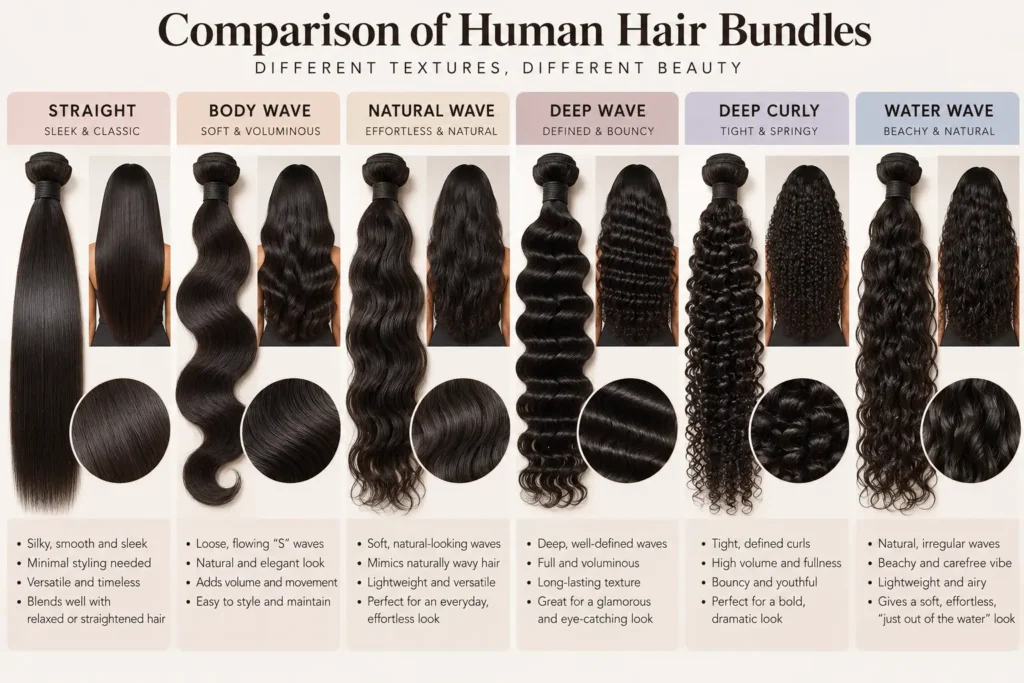
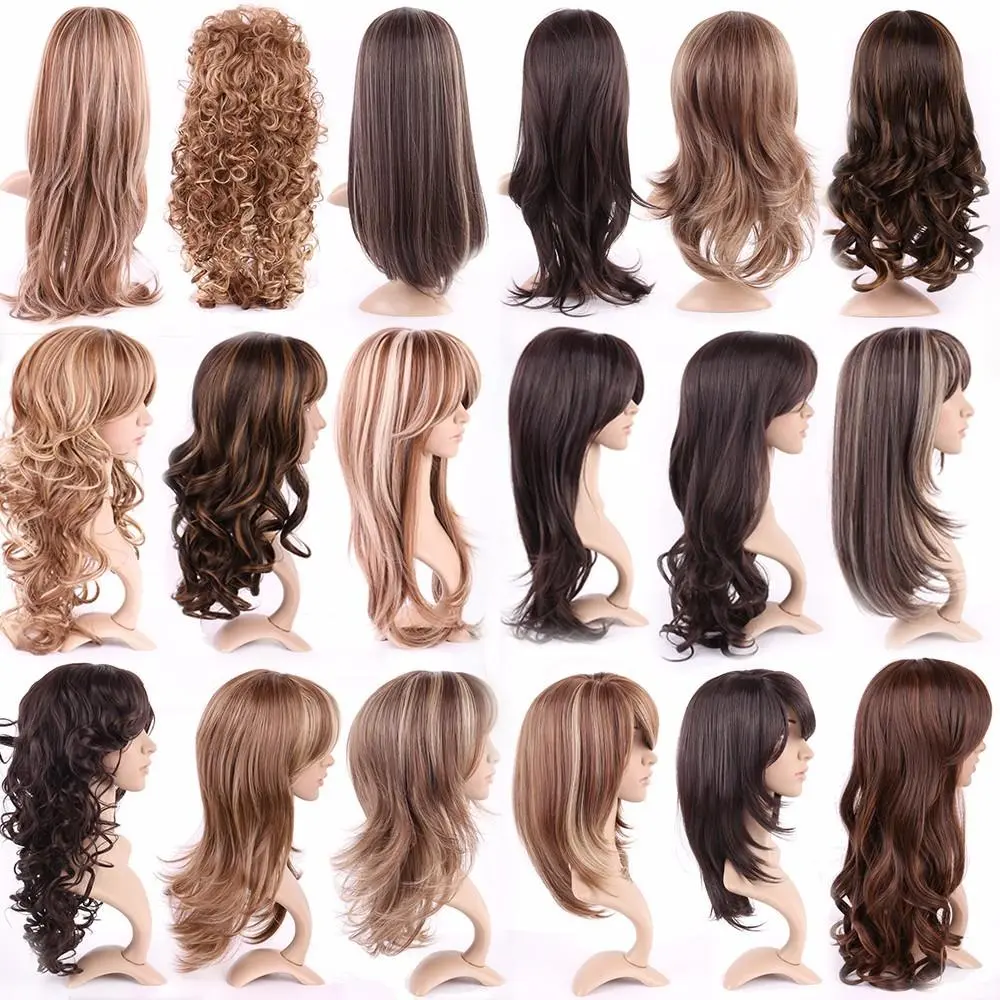
Popular customization options include straight, body wave, deep wave, curly, kinky curly, and bob styles.
Manufacturers may also offer different cap constructions, including basic machine-made caps and lace front designs.
The appropriate construction depends on your target customers, retail price range, and styling requirements.
Custom Wig Colors
Color customization is especially valuable for fashion-focused wig brands.
Common options include natural black, dark brown, blonde, burgundy, highlighted colors, and ombre combinations.
Custom synthetic wig colors can also be developed according to approved color samples or manufacturer color charts.
However, buyers should remember that color appearance can vary under different lighting conditions.
Always approve physical samples before mass production.
Length, Density, and Cap Size
Depending on the product construction, manufacturers may customize wig length, hair density, cap circumference, and adjustable components.
For example, a brand targeting customers who prefer lightweight everyday wigs may request a moderate-density bob collection.
Other brands may prefer fuller curly styles for customers seeking more volume.
The important consideration is maintaining consistent specifications across production batches.

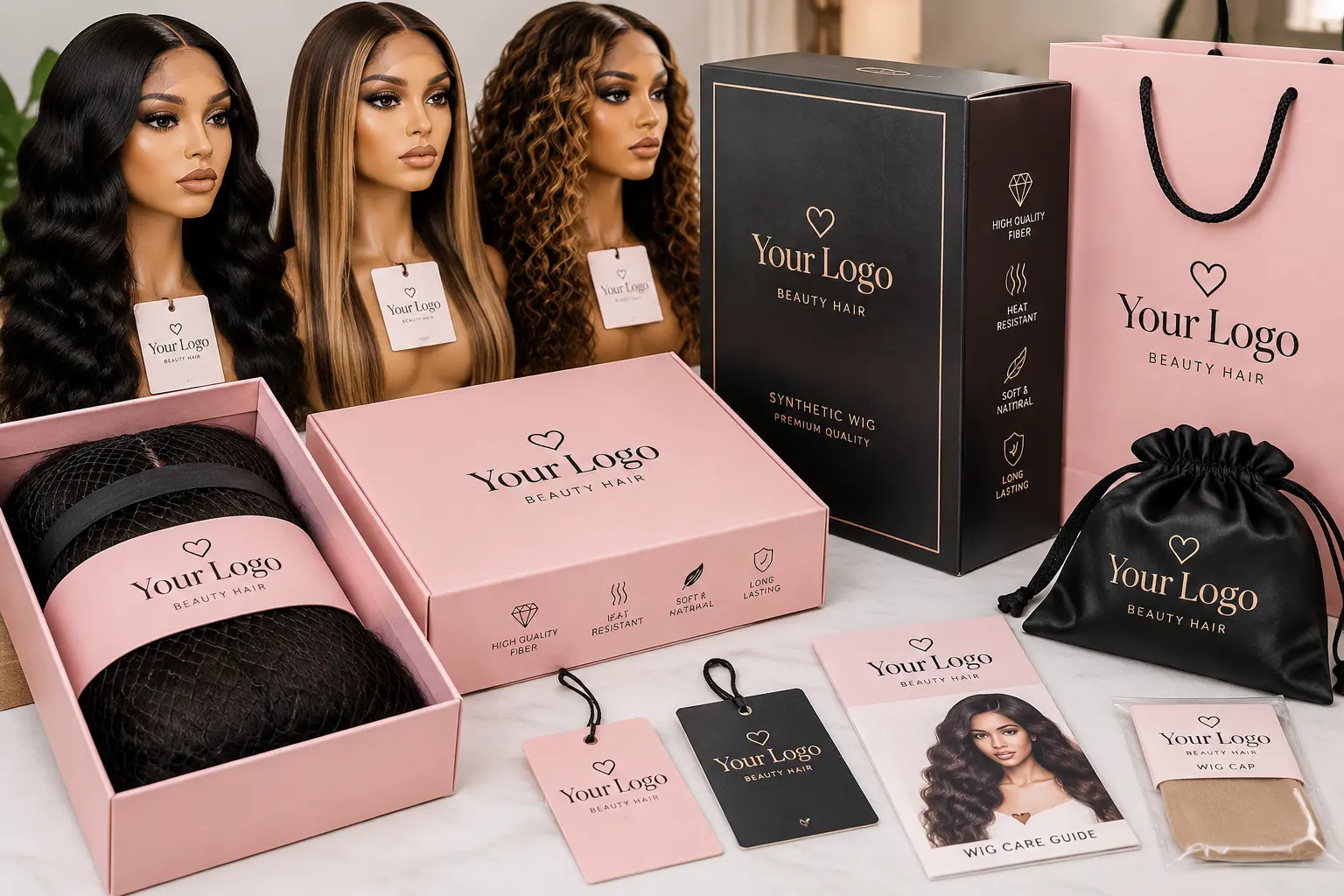
4. Custom Packaging and Logo Options for Synthetic Wig Brands
Custom packaging is an important part of developing private label synthetic wigs.
Packaging protects products during transportation while helping customers recognize your brand.
Custom Wig Packaging Boxes
Branded wig packaging boxes can include:
- Printed company logos.
- Brand colors and graphics.
- Product names and specifications.
- Care instructions.
- Barcode or SKU labels.
Different packaging materials and printing methods affect costs and minimum order quantities.
Businesses should select packaging based on their retail positioning and shipping requirements.
For example, lightweight packaging may help online sellers control fulfillment costs, while more elaborate boxes may suit premium retail collections.
Custom Wig Labels and Logo Tags
Custom wig labels can be attached to packaging, product cards, or other suitable components.
These labels may display the brand name, product style, length, color, and relevant care information.
Wig logo tags and branded inserts can also support consistent presentation.
Branded Care Cards
A care card is particularly useful for synthetic hair wigs.
It can explain washing procedures, detangling methods, drying instructions, and heat-styling restrictions.
Clear instructions help customers maintain their wigs correctly and may reduce avoidable complaints.
Packaging Compliance
Before approving packaging, confirm the labeling requirements in your destination market.
Requirements may vary depending on the product, country, and sales channel.
Buyers should also ensure that brand names, logos, and packaging artwork do not infringe third-party intellectual property rights.
For businesses ordering wholesale synthetic wigs with custom packaging, it is usually more efficient to finalize packaging specifications before bulk production begins.
5. How to Choose the Right Synthetic Wig Styles for Your Brand
Choosing attractive styles is important, but successful product selection should be based on customer demand and sales channels.
Different markets may prefer different combinations of price, length, texture, and color.
Synthetic Lace Front Wigs
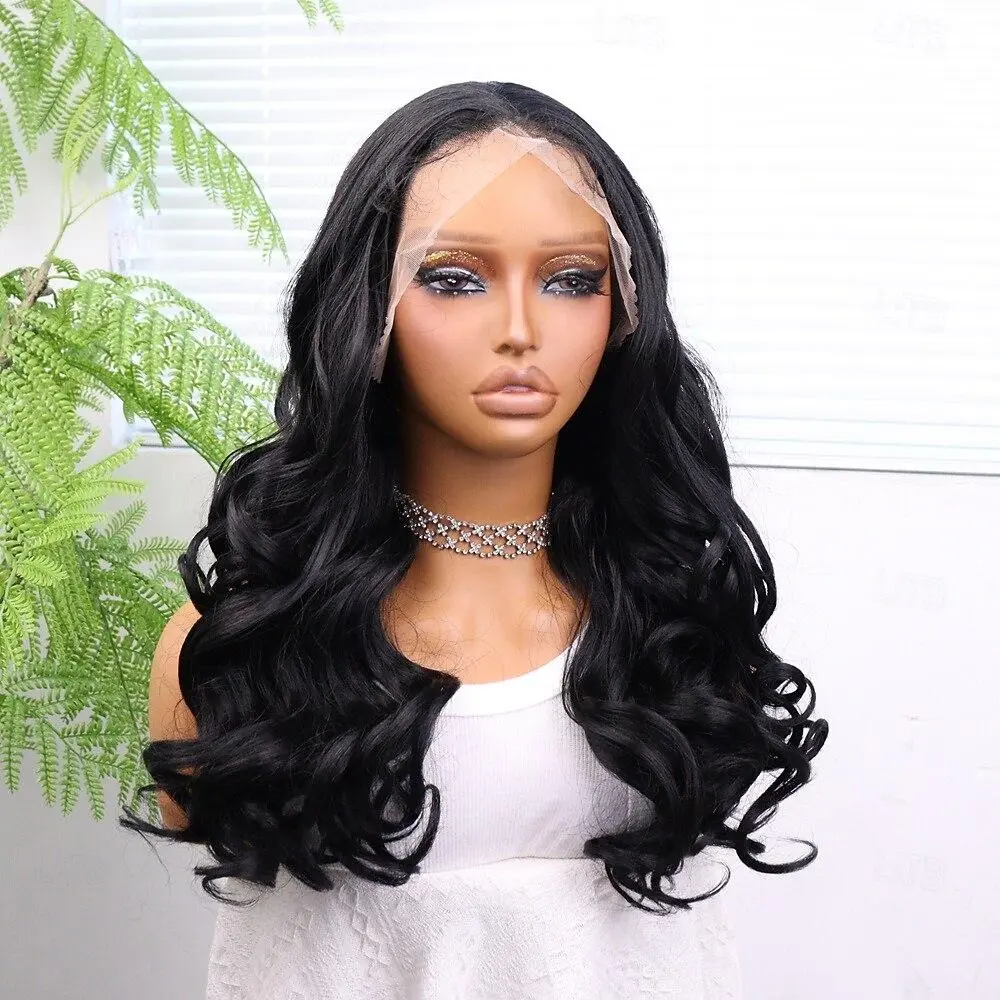
For customers who prioritize a natural-looking hairline, synthetic lace front wigs are worth considering. These wigs combine synthetic fibers with lace front construction, offering an alternative to basic machine-made wigs.
They are suitable for customers who prioritize appearance and styling flexibility.
However, lace construction and finishing quality can significantly affect wholesale pricing.
Synthetic Bob Wigs
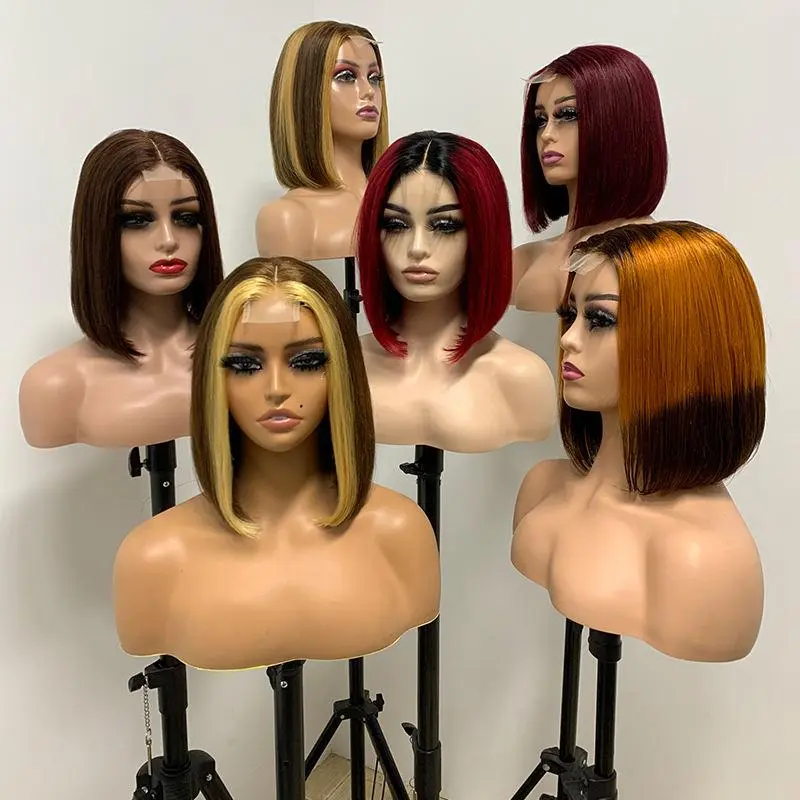
Meanwhile, synthetic bob wigs are practical choices for everyday wear and fashion-focused collections. Their manageable lengths and variety of available colors make them suitable for beauty supply stores, salons, and online wig retailers.
They are available in straight, curly, blunt-cut, and colored variations.
For new brands, bob wigs can be useful for building a focused collection with multiple color options.
Curly Synthetic Wigs
Curly wigs offer volume and distinctive textures.
They can appeal to customers who prefer full hairstyles without spending time on daily curling.
Buyers should test fiber softness, curl consistency, and tangling resistance before ordering in bulk.
Colored Synthetic Wigs
Colored synthetic wigs are suitable for fashion-oriented customers and promotional collections.
Retailers may consider burgundy, blonde, highlighted, and other colors based on local demand.
However, ordering too many unfamiliar colors can increase inventory risk.
Recommended Product Selection Strategy
For a new private label collection, consider starting with a limited assortment of proven styles.
For example, a retailer might test straight bob wigs, curly wigs, and selected lace front designs before introducing additional variations.
Use customer feedback, sample testing, and actual sales results to guide future purchases.
6. Private Label Synthetic Wigs MOQ: How Many Should You Order?
Minimum order quantity is one of the most important considerations when sourcing private label synthetic wigs wholesale.
MOQ refers to the minimum number of products a manufacturer requires for an order.
However, MOQ can vary significantly depending on the customization requirements.
Stock Wigs with Custom Packaging
Using existing wig styles generally requires less product development than creating completely new designs.
Some manufacturers may allow buyers to combine different stock styles or colors within one order.
However, custom packaging suppliers may have separate printing minimums.
OEM Synthetic Wigs
OEM synthetic wigs usually involve more detailed production requirements.
Custom colors, specialized cap constructions, unique textures, or new designs may require higher quantities.
Manufacturers need to consider raw material purchasing, production setup, and manufacturing efficiency.
Low MOQ Private Label Synthetic Wigs
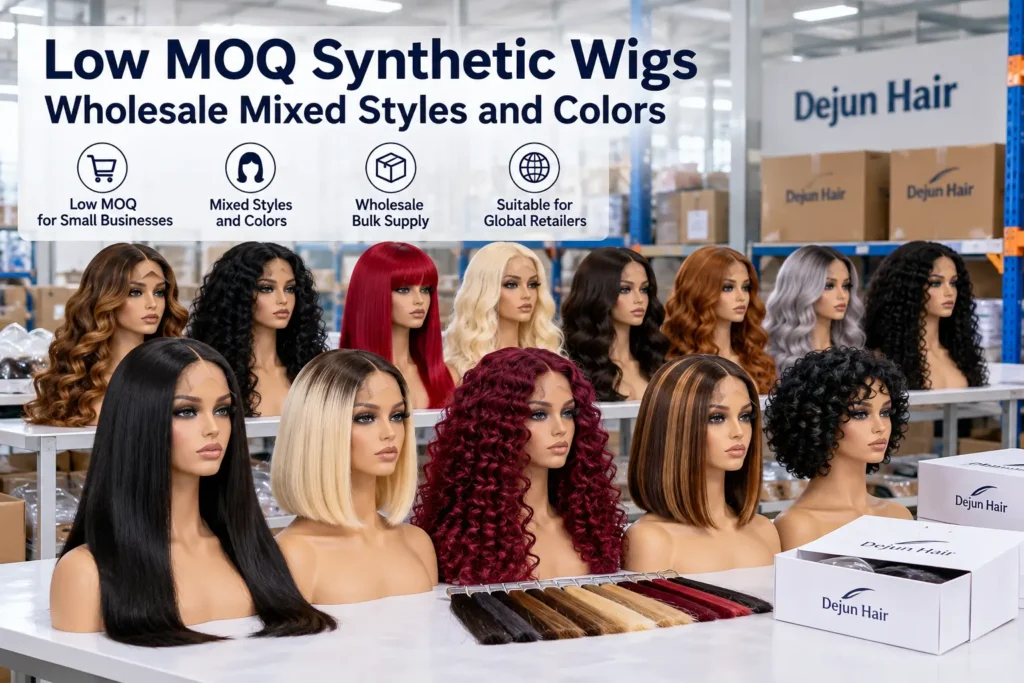
If you are launching a new wig brand with a limited budget, understanding low MOQ synthetic wigs wholesale options can help you test different products before committing to larger orders. Small-batch purchasing and mixed-style orders, where available, can reduce initial inventory risks and provide useful customer feedback.
Small businesses should ask suppliers whether they support:
- Sample orders.
- Mixed-style wholesale orders.
- Existing products with custom labels.
- Small-batch packaging customization.
- Gradual increases in order quantity.
At Dejun Hair, we support flexible wholesale purchasing arrangements and discuss customization requirements according to individual projects.
Buyers should confirm the applicable MOQ for each style, color, and packaging specification before placing an order.
How to Reduce Your Initial Order Risk
Instead of launching too many styles simultaneously, start with a manageable collection.
Focus on products that match your customers’ purchasing preferences.
Once you identify successful styles, you can increase quantities and negotiate pricing based on actual demand.
7. How to Order Private Label Synthetic Wigs from a Manufacturer
Understanding the ordering process helps buyers avoid unnecessary delays and costly mistakes.
A typical synthetic wig OEM manufacturing project follows several stages.
Step 1: Define Your Product Requirements
Prepare a clear purchasing brief that includes:
- Wig styles and textures.
- Fiber requirements.
- Length and color options.
- Cap construction.
- Branding requirements.
- Packaging preferences.
- Estimated order quantity.
- Destination country.
The more detailed your requirements, the easier it becomes for the manufacturer to prepare an accurate quotation.
Step 2: Request an OEM Quotation
Contact a private label synthetic wig manufacturer and provide your specifications.
Ask for a quotation that separates product costs, customization charges, packaging expenses, and shipping estimates.
Also confirm MOQ, payment terms, sample costs, and estimated production schedules.
Step 3: Review Samples
Sample approval is a critical stage.
Inspect the fiber texture, wig construction, color accuracy, fit, and overall appearance.
If custom packaging is included, review the packaging prototype or printed sample when available.
Document any required changes before approving mass production.
Step 4: Confirm Production Specifications
Once the sample is approved, finalize the purchase order.
The agreement should identify product specifications, quantities, approved colors, packaging details, quality expectations, and delivery terms.
Written confirmation helps prevent misunderstandings.
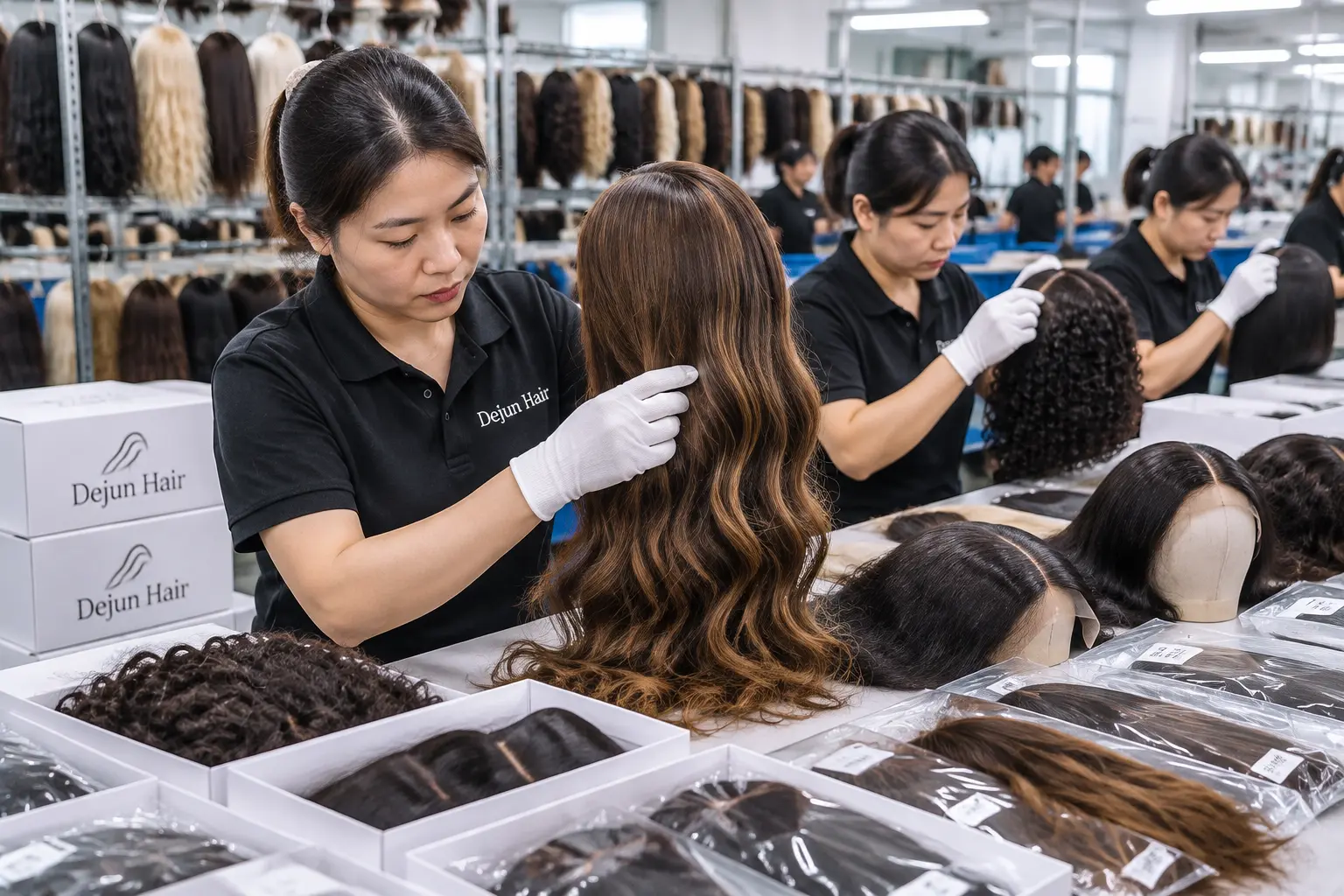
Step 5: Bulk Production
During production, the manufacturer processes the materials, constructs the wigs, completes styling, and prepares the products for inspection.
Production time depends on order quantity, material availability, customization complexity, and factory scheduling.
Avoid relying on generic delivery promises without confirming the actual production plan.
Step 6: Quality Inspection
Before shipment, verify that the finished products match the approved specifications.
Inspection should cover product appearance, construction, dimensions, color consistency, labeling, and packaging.
Step 7: International Shipping
Discuss available shipping methods with your supplier.
Express delivery and air freight may suit smaller or time-sensitive orders, while sea freight may be more economical for suitable larger shipments.
Buyers should calculate total landed costs, including freight, duties, taxes, and customs-related expenses where applicable.
8. Private Label Synthetic Wig Pricing: What Affects the Cost?
Private label synthetic wig pricing depends on several factors.
Understanding these cost drivers helps buyers compare quotations accurately.
| Pricing Factor | How It Affects Wholesale Cost |
|---|---|
| Synthetic Fiber | Fiber quality and performance influence material costs |
| Wig Length | Longer wigs generally require more fiber |
| Hair Density | Higher density increases material consumption |
| Cap Construction | Lace and specialized construction can increase labor costs |
| Custom Colors | Specialized color development may increase production costs |
| Packaging | Custom printing and premium materials add expenses |
| Order Quantity | Larger quantities may improve production efficiency |
| Shipping | Freight costs depend on shipment size, route, and service |
Compare Total Costs, Not Just Unit Prices
A low unit price does not always mean a lower purchasing cost.
For example, a supplier may offer inexpensive wigs but charge separately for packaging, labels, samples, and international shipping.
Another manufacturer may provide a more comprehensive quotation.
Compare suppliers using the same product specifications and delivery terms.
Ask About Tiered Wholesale Pricing
For recurring bulk wig orders, ask whether the manufacturer offers quantity-based pricing.
However, avoid purchasing excessive inventory simply to reach a lower unit price.
The potential savings should be balanced against storage costs and unsold stock.
9. How to Check the Quality of Custom Synthetic Wigs
Quality control is essential for protecting your brand reputation.
Customers purchasing branded wigs expect consistent quality across different orders.
Before approving bulk custom synthetic wigs, evaluate the following areas.
Fiber Quality
Check whether the fibers feel consistent, maintain their intended texture, and resist excessive tangling during normal handling.
For heat-resistant products, follow the manufacturer’s recommended styling temperature during testing.
Cap Construction
Inspect stitching, elastic components, adjustable straps, and overall cap stability.
For lace front products, examine lace attachment and hairline finishing.
Shedding and Tangling
Gently comb the wig using an appropriate tool.
Some loose fibers may appear during initial handling, but excessive shedding or persistent tangling may indicate quality problems.
Color Consistency
Compare production samples against the approved color reference.
Check products under consistent lighting conditions to identify noticeable differences.
Packaging Inspection
Verify that packaging matches the approved artwork.
Check logo placement, printed information, product labels, and packaging condition.
Establish Written Quality Standards
Before approving bulk production, buyers should establish clear product inspection requirements. For a more detailed evaluation process, explore our guide on synthetic wig quality inspection, which covers fiber quality, cap construction, shedding, tangling, color consistency, and other important factors to examine before purchasing in bulk.
A reliable synthetic wig factory should be able to discuss inspection procedures and product acceptance criteria.
For larger orders, buyers may also arrange independent pre-shipment inspections.
Clear quality expectations help reduce disputes and protect long-term supplier relationships.
10. How to Choose a Reliable Private Label Synthetic Wig Manufacturer
Selecting the right manufacturing partner is just as important as choosing the right products.
A reliable synthetic wig manufacturer should offer more than competitive prices.
Verify Manufacturing Capabilities
Working directly with an experienced synthetic wig manufacturer can help businesses communicate customization requirements, coordinate sample development, and manage production quality more efficiently.
Before selecting a supplier, buyers should evaluate manufacturing capabilities, MOQ flexibility, sample quality, export experience, and after-sales support.
Ask whether the supplier operates its own production facility or works through external factories.
Direct manufacturers may provide better visibility into production processes and customization feasibility.
However, manufacturing ownership alone does not guarantee quality.
Always evaluate actual samples and production performance.
Evaluate OEM/ODM Experience
A suitable synthetic wig private label supplier should understand product development, customization, packaging, and wholesale order management.
Ask for examples of available customization options and discuss whether the factory can meet your requirements.
Confirm MOQ Flexibility
For small businesses, flexible ordering arrangements can be particularly valuable.
Ask whether different styles can be combined and whether branding can be applied to existing products.
Review Communication and After-Sales Support
Reliable communication helps prevent production mistakes.
Choose a supplier that provides clear specifications, realistic delivery estimates, and documented solutions for verified manufacturing defects.
Assess Export Experience
International buyers should also consider the supplier’s familiarity with overseas shipping and export documentation.
This is particularly important for businesses importing wigs into African, European, and North American markets.
11. Why Work with Dejun Hair for Private Label Synthetic Wigs?
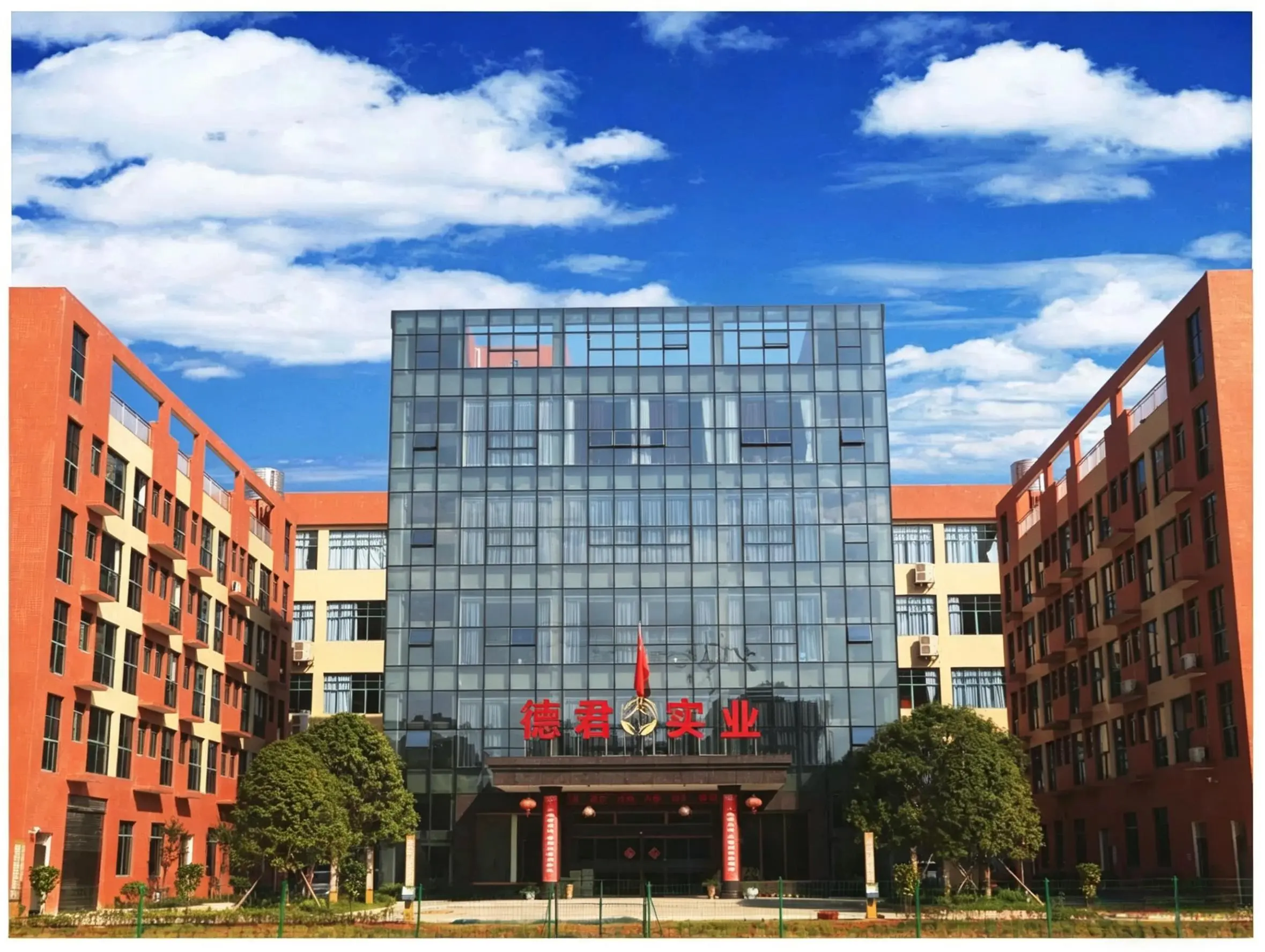
Dejun Hair is a wig manufacturer based in Shaoyang, Hunan Province, China, with approximately 20 years of local manufacturing experience.
We specialize in supplying human hair and synthetic wig products to international wholesale customers.
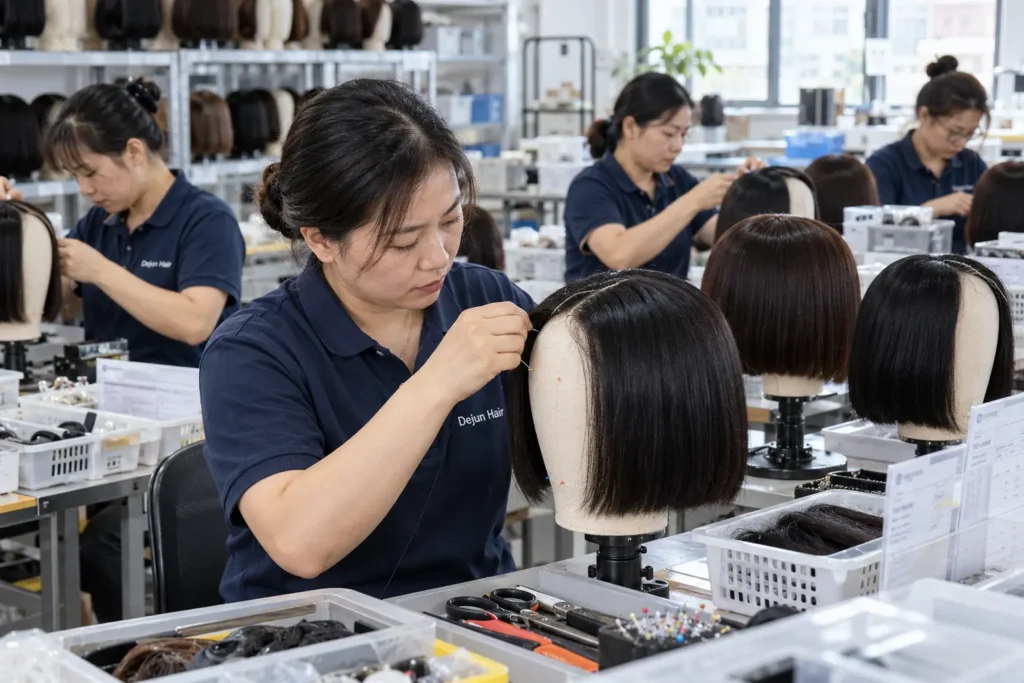
Our manufacturing operations cover hair processing, wig cap construction, lace sewing, styling, quality inspection, and warehousing.
OEM/ODM Customization Support
We work with overseas businesses seeking customized wig styles, colors, lengths, cap specifications, and branded packaging.
Customers can discuss logo printing, product labels, packaging design, and sample development according to their requirements.
Flexible Wholesale Purchasing
We understand that small retailers and established distributors have different purchasing needs.
Dejun Hair supports stock wholesale orders and discusses mixed-style purchasing and custom MOQ arrangements based on product availability and project requirements.
Product Category Coverage
Our product range includes synthetic wigs, heat-resistant styles, bob wigs, colored fashion wigs, and various human hair products.
This allows buyers to explore different product categories through one manufacturing partner.
Quality Control and Export Support
Our production process includes checks covering fiber condition, construction, color consistency, and product dimensions.
We also assist overseas buyers with shipping coordination and relevant export documentation.
For businesses seeking a private label wig supplier in China, the goal is to establish a dependable supply relationship that supports both initial product launches and future growth.
12. Frequently Asked Questions About Private Label Synthetic Wigs
Q1. Can I put my own logo on synthetic wigs?
Yes. Many manufacturers offer custom packaging, product labels, and branded inserts.
Available branding methods depend on the wig construction and packaging requirements.
Q2. What is the MOQ for private label synthetic wigs?
MOQ varies according to product style, customization complexity, and packaging requirements.
Existing stock wigs with basic branding may offer more flexibility than fully customized OEM designs.
Contact your manufacturer for a project-specific MOQ quotation.
Q3. Can small businesses order private label synthetic wigs?
Yes. Private label wigs for small businesses can be sourced through sample orders, existing product selections, and flexible wholesale arrangements where available.
Starting with a limited collection can help reduce inventory risk.
Q4. Can I customize synthetic wig colors and lengths?
Yes. Many manufacturers support color and length customization.
However, available options depend on fiber type, product construction, production feasibility, and order quantity.
Q5. How long does private label synthetic wig production take?
Production schedules vary according to order size, product complexity, material availability, and packaging requirements.
Buyers should confirm sample development and bulk production timelines before placing an order.
Q6. How do I start a private label wig business?
Begin by identifying your target customers and selecting suitable wig styles.
Then find a manufacturer, request samples, develop your branding, confirm MOQ and pricing, and test your products before expanding into larger wholesale orders.
Conclusion: Start Your Private Label Synthetic Wig Business with the Right Manufacturer
Building a successful private label synthetic wig business requires careful product selection, reliable manufacturing, consistent quality, and a clear understanding of purchasing costs.
Whether you are launching your first branded collection or expanding an established wholesale business, the right OEM/ODM manufacturing partner can simplify product development and improve supply chain coordination.
Before placing a bulk order, confirm your customization requirements, packaging specifications, MOQ, sample approval procedures, quality standards, and shipping arrangements.
Looking for a reliable manufacturer for private label synthetic wigs?
Dejun Hair provides synthetic wig wholesale supply, OEM/ODM customization, branded packaging support, and flexible purchasing solutions for international businesses.
Contact Dejun Hair to discuss your private label wig project, request an OEM quotation, explore customization options, or confirm sample availability and minimum order quantities.
Industry reference resources for wholesale wig sourcing:
Dejun Hair
Direct from Chinese Wig Factories | One-Stop Wholesale Supplier of Wigs for International Trade.