Lace Front vs Full Lace Wigs: Which Is Better for Wholesale Buyers?
For a consumer, choosing between a lace front wig and a full lace wig may come down to appearance, styling preferences, and budget. For a wholesale buyer, however, the decision is more complicated. You also need to consider purchasing cost, target customers, inventory turnover, retail price, customization options, and profit potential.
This is why the lace front vs full lace wigs comparison matters for wig wholesalers, salon owners, beauty supply stores, and online wig sellers. A product that offers more lace or greater styling flexibility is not automatically the better product for your business. The right choice depends on what your customers are willing to pay for and how quickly you expect the inventory to sell.
As an experienced wig manufacturer serving overseas B2B buyers, we have found that successful sourcing decisions are usually based on a balance of product quality, market positioning, cost, and repeat-sale potential.
In this guide, we compare lace front vs full lace wigs for wholesale from a business perspective, including construction, natural appearance, styling flexibility, durability, wholesale cost, customer positioning, and profitability.
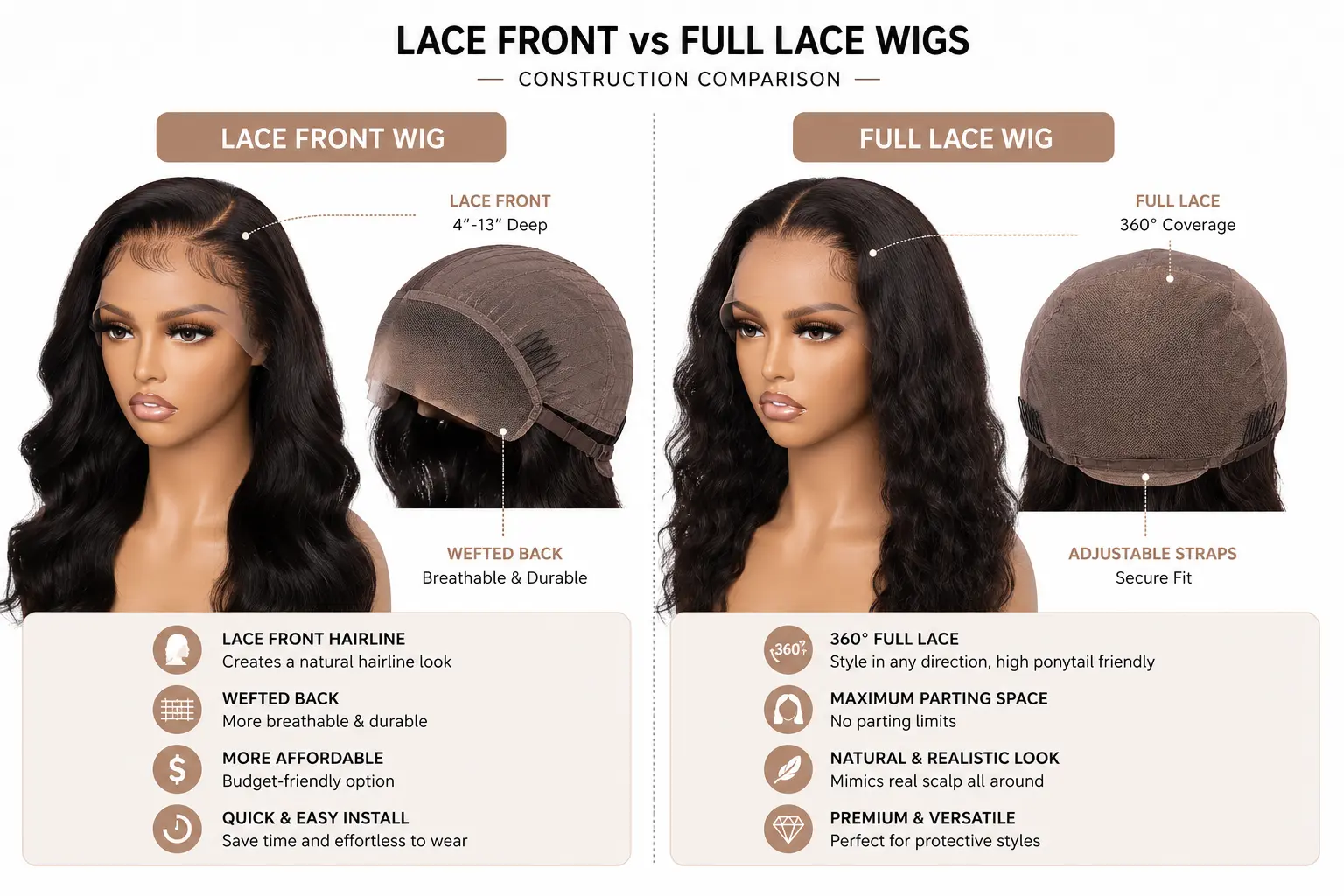
What Is a Lace Front Wig?
A lace front wig uses lace primarily across the front section of the cap. Hair is attached to this lace area to create a natural-looking frontal hairline, while the remaining part of the wig normally uses a different cap construction.
For wholesale buyers, lace front wigs are especially important because they offer a practical balance between natural appearance, production cost, and retail affordability.
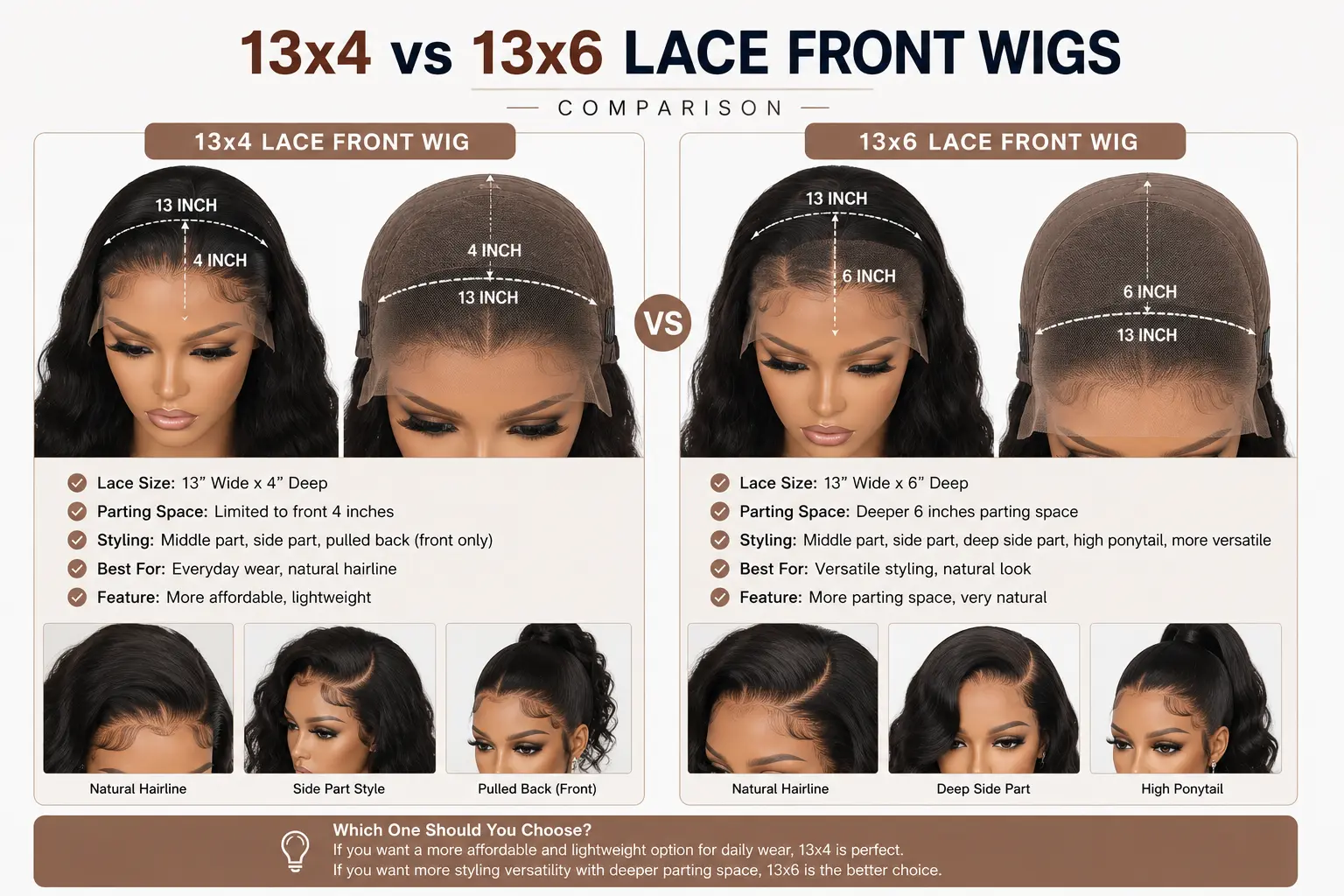
Common specifications include 13×4 lace front wigs and 13×6 lace front wigs.
A 13×4 lace front typically provides approximately 13 inches of coverage across the front with about 4 inches of parting depth, while a 13×6 construction provides additional depth for more flexible frontal styling. Exact construction can vary by manufacturer and wig design, so buyers should always confirm specifications when requesting samples or quotations.
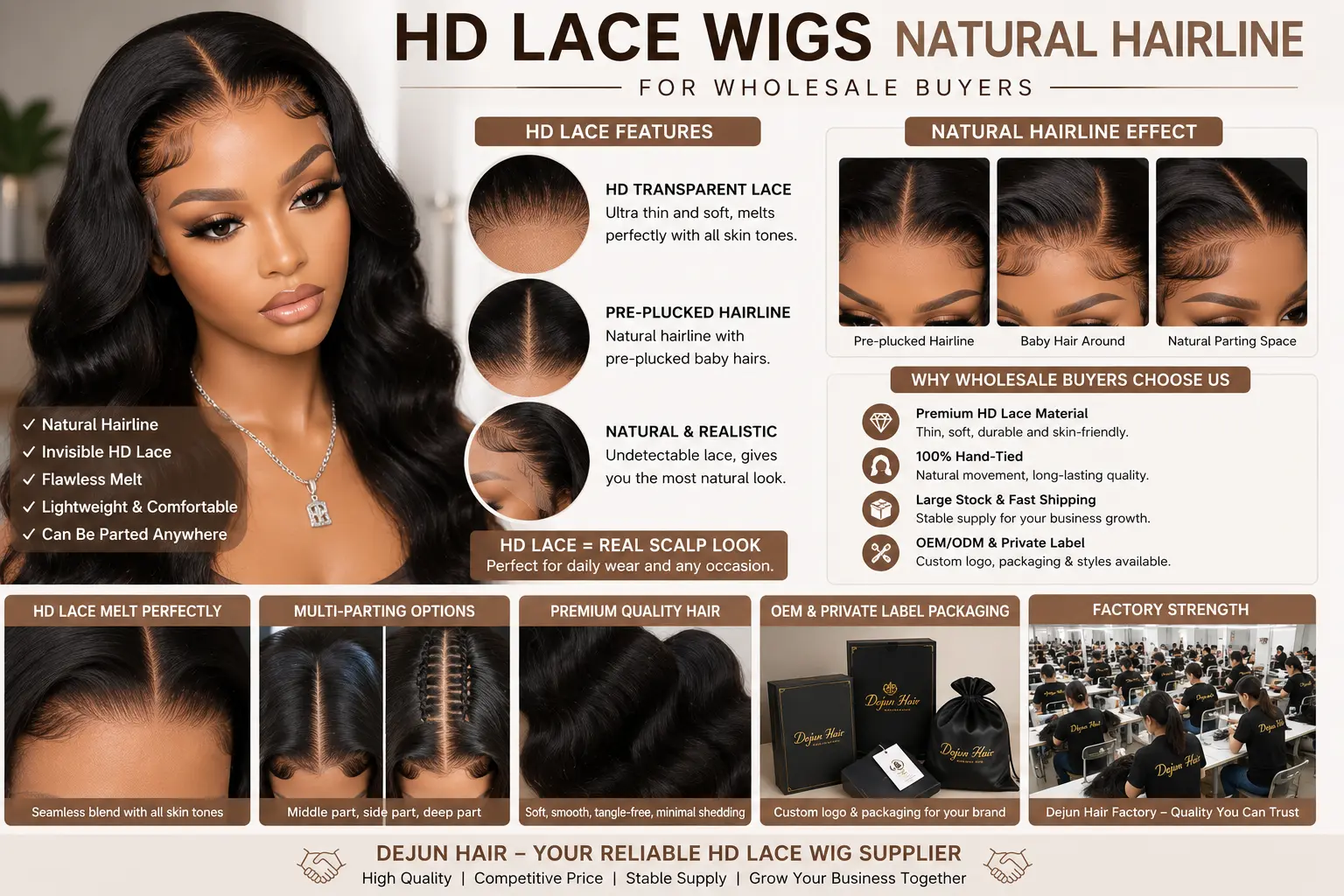
Lace front wigs can also be produced with different lace materials and colors. For premium product lines, buyers may consider HD lace or other fine lace options designed to blend more naturally with the wearer’s skin.
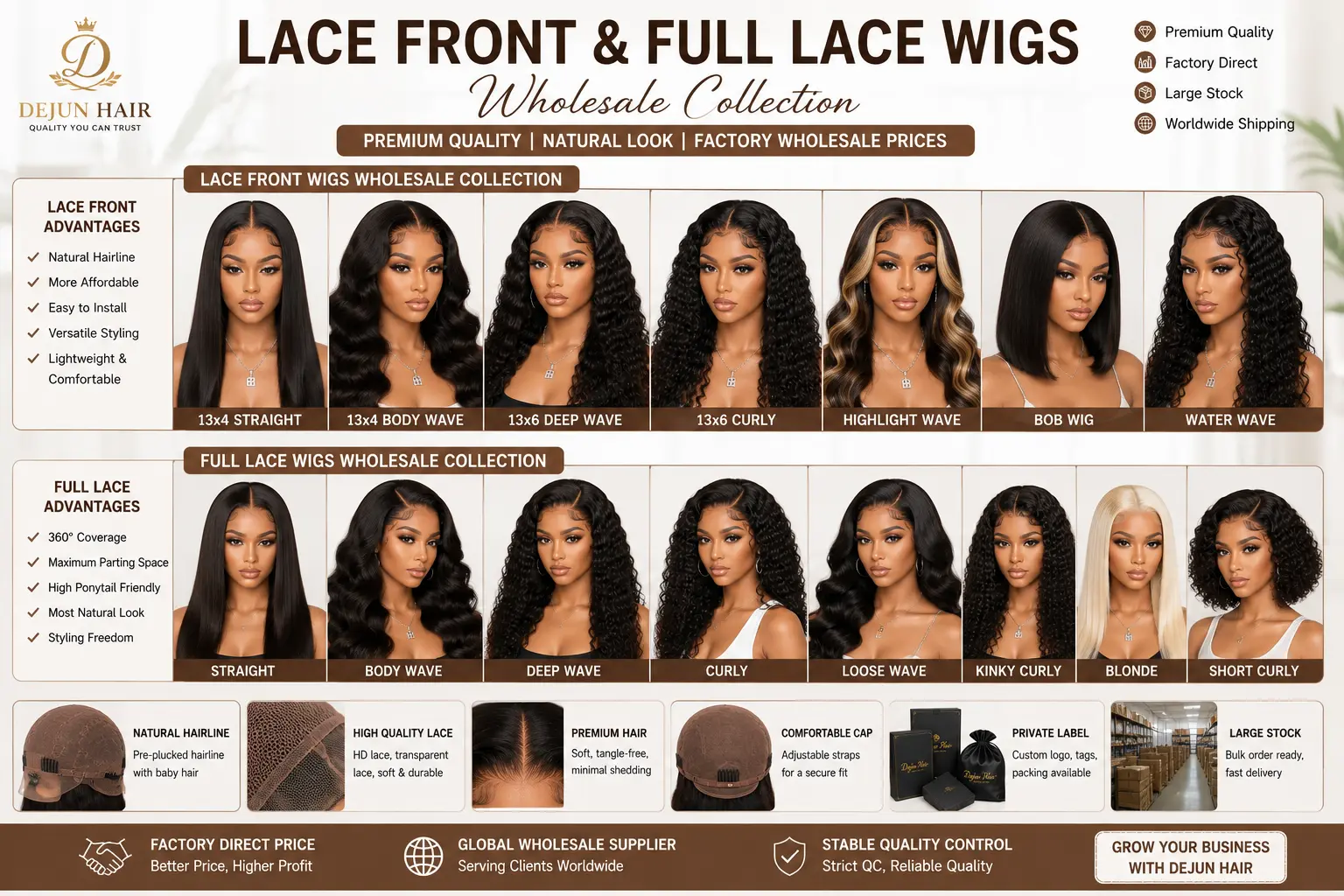
For wholesalers and retailers serving a broad customer base, wholesale lace front wigs can provide an attractive combination of appearance, affordability, and product variety.
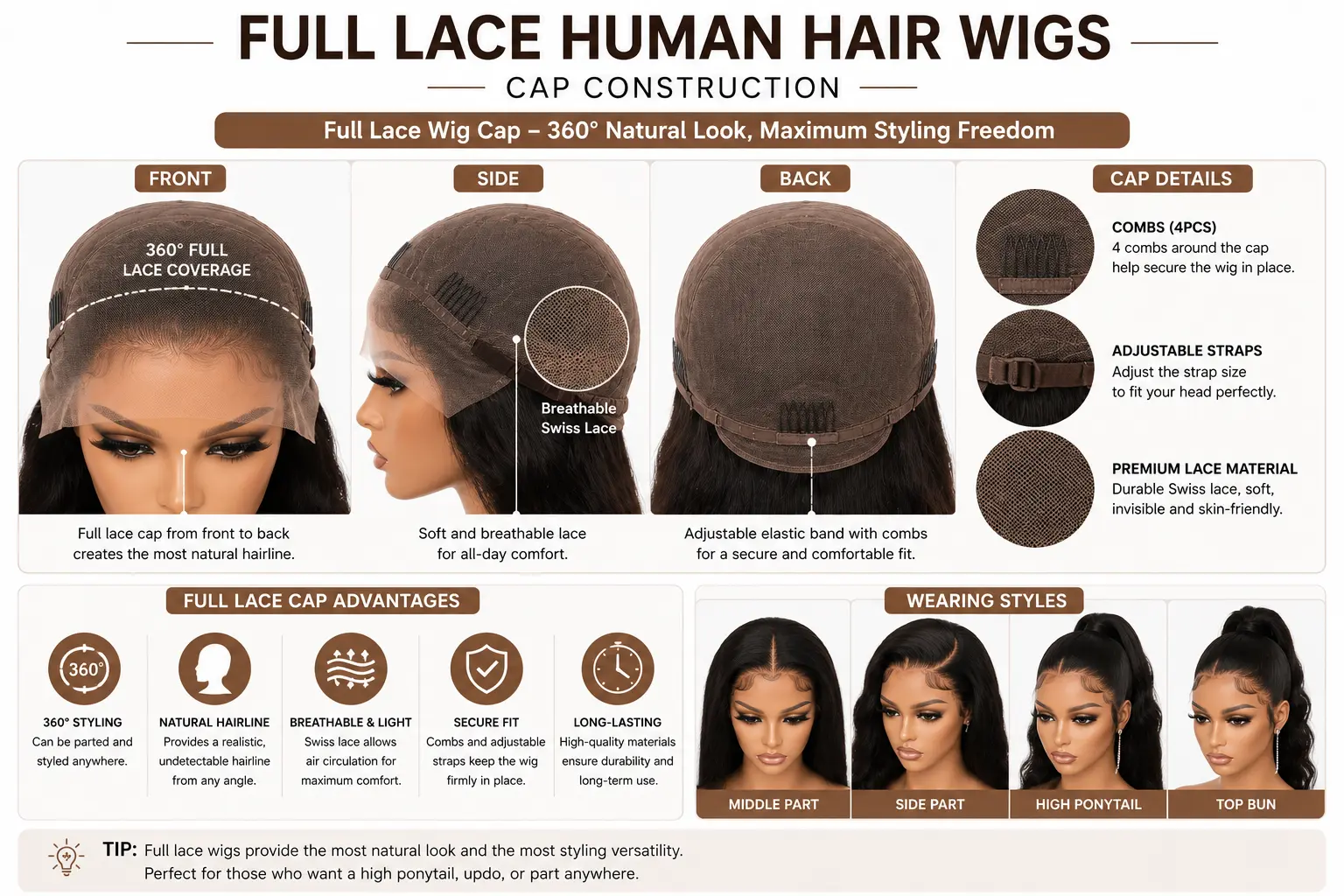
What Is a Full Lace Wig?
A full lace wig uses lace across most or all of the wig cap rather than limiting it to the frontal area. Hair is individually attached across the lace base, creating greater freedom in how the wig can be parted and styled.
This construction is one of the main reasons why full-lace human-hair wigs are generally positioned as premium products.
Depending on the construction, wearers can have greater flexibility to create different parts, updos, and certain ponytail styles. The hair also has more freedom of movement across different areas of the cap.
However, these benefits come with a trade-off.
Full lace construction requires more lace and considerably more labor than many lace front designs. When other specifications such as hair quality, length, density, and color are comparable, this usually results in a higher manufacturing and wholesale cost.
For buyers considering full lace wigs wholesale, the question is therefore not simply whether full lace is better. The more important question is whether your target customers value these additional features enough to support the higher retail positioning.
Lace Front vs Full Lace Wigs: What Is the Main Difference?
The fundamental difference between lace front and full lace wigs is the amount and placement of lace.
A lace front wig concentrates the lace construction around the frontal area, while a full lace wig provides lace coverage across substantially more of the cap.
From a wholesale perspective, that structural difference affects far more than appearance.
| Factor | Lace Front Wig | Full Lace Wig |
|---|---|---|
| Lace Coverage | Primarily frontal area | Most or all of the cap |
| Natural Hairline | Very natural with quality workmanship | Very natural |
| Parting Flexibility | Depends on lace size | Greater flexibility |
| Updo/Ponytail Options | More limited | More flexible |
| Production Labor | Lower | Higher |
| Wholesale Cost | Generally lower | Generally higher |
| Retail Positioning | Mass to premium | Primarily premium |
| Potential Customer Base | Broad | More targeted |
| Inventory Investment | Generally lower | Generally higher |
| Best Business Role | Core/volume product | Premium product |
The table highlights an important point for wholesale buyers: more lace does not automatically mean a better purchasing decision.
The right construction is the one that matches your customer’s needs and your business model.
Lace Coverage and Cap Construction
Lace coverage directly affects styling flexibility and production cost.
With a standard lace front wig, the lace creates the visible frontal hairline while the back portion uses a more structured cap. This allows manufacturers to create a realistic frontal appearance without requiring the labor involved in constructing an entire lace cap.
Within this category, buyers will frequently encounter both 13×4 lace front wigs and 13×6 lace front wigs.
A 13×4 option can be suitable for customers who prioritize a natural frontal appearance while keeping the product at an accessible price point. A 13×6 wig offers deeper parting space and may therefore support a more premium retail position.
Full lace construction extends this flexibility much further.
However, wholesalers should compare the complete specification rather than lace size alone. Two wigs described as “13×6,” for example, may still differ significantly in lace quality, hair quality, knotting, density, hairline workmanship, cap fit, and overall finishing.
This is why sample inspection remains essential before bulk ordering.
Which Looks More Natural: Lace Front or Full Lace?
Full lace wigs are often described as the more natural option because lace surrounds a larger portion of the cap. That description, however, can be misleading when buyers use it as the only quality standard.
A well-made lace front wig can create an extremely natural frontal appearance.
Several factors influence the final result:
- Lace material and color
- Knot size and workmanship
- Pre-plucked hairline
- Hair density around the front
- Hair quality
- Bleached knot options
- Lace-to-skin blending
- Installation and styling
For example, premium HD lace wigs wholesale may appeal to retailers whose customers place a high value on an undetectable-looking frontal hairline.
Full lace offers an advantage when customers want natural-looking styling from more directions across the cap. But if most of your customers primarily care about the frontal hairline, paying for full lace construction may not always produce a proportional increase in perceived retail value.
Wholesale buyers should therefore remember one important rule:
Lace coverage is not the same thing as overall wig quality.
Hair quality, knotting, cap construction, density consistency, and finishing can be just as important.
Styling Flexibility: Where Full Lace Wigs Have the Advantage
Styling flexibility is one of the clearest advantages of full lace construction.
Because hair is attached across a much larger lace area, full lace wigs generally allow more freedom for different parting directions and hairstyles. Depending on the specific cap design and installation, this can include updos and ponytail styles that are more difficult to achieve naturally with a standard lace front construction.
Lace front wigs still offer considerable styling flexibility around the front, especially with a deeper 13×6 frontal.
For a retailer, however, greater styling flexibility only creates value when customers understand it and are willing to pay for it.
A premium salon specializing in customized installations may be able to sell full lace products effectively. A price-sensitive beauty supply store may find that customers prefer the balance offered by lace front wigs.
In other words:
More styling flexibility does not automatically mean faster inventory turnover.
That distinction is critical when comparing lace front wigs vs full lace wigs for a wig business.
Lace Front vs Full Lace Wigs Wholesale Price
Wholesale price is often one of the biggest deciding factors.
Full lace wigs normally cost more to manufacture because they require additional lace and labor-intensive ventilation or knotting work. But lace coverage is only one component of the final quotation.
The wholesale price of human hair lace wigs can also depend on:
- Hair source and grade
- Remy, virgin, or other hair specifications
- Hair length
- Wig density
- Straight, body wave, curly, or other textures
- Natural or customized color
- Lace material
- Lace dimensions
- Knotting requirements
- Cap construction
- Hairline customization
- Packaging
- Order quantity
This is why comparing quotations based only on a product name such as “full lace wig” or “13×6 wig” can lead to incorrect purchasing decisions.
A professional buyer should request comparable specifications from each lace wig supplier.
More importantly, evaluate landed cost and potential return, not just factory unit price.
For example, Product A may have a lower purchase price but generate more returns because of shedding, inconsistent density, or poor construction. Product B may cost slightly more but provide stronger customer satisfaction and repeat purchases.
The cheapest quotation is not necessarily the most profitable one.

Which Is More Durable for Wholesale Customers?
There is no reliable rule that says a lace front wig or full lace wig will always last longer simply because of its construction type.
Durability depends on several variables.
Hair quality is important, but so are lace strength, knotting workmanship, stitching, cap construction, installation method, washing frequency, heat styling, chemical processing, and customer maintenance.
Full lace also needs careful handling because fine lace can be delicate.
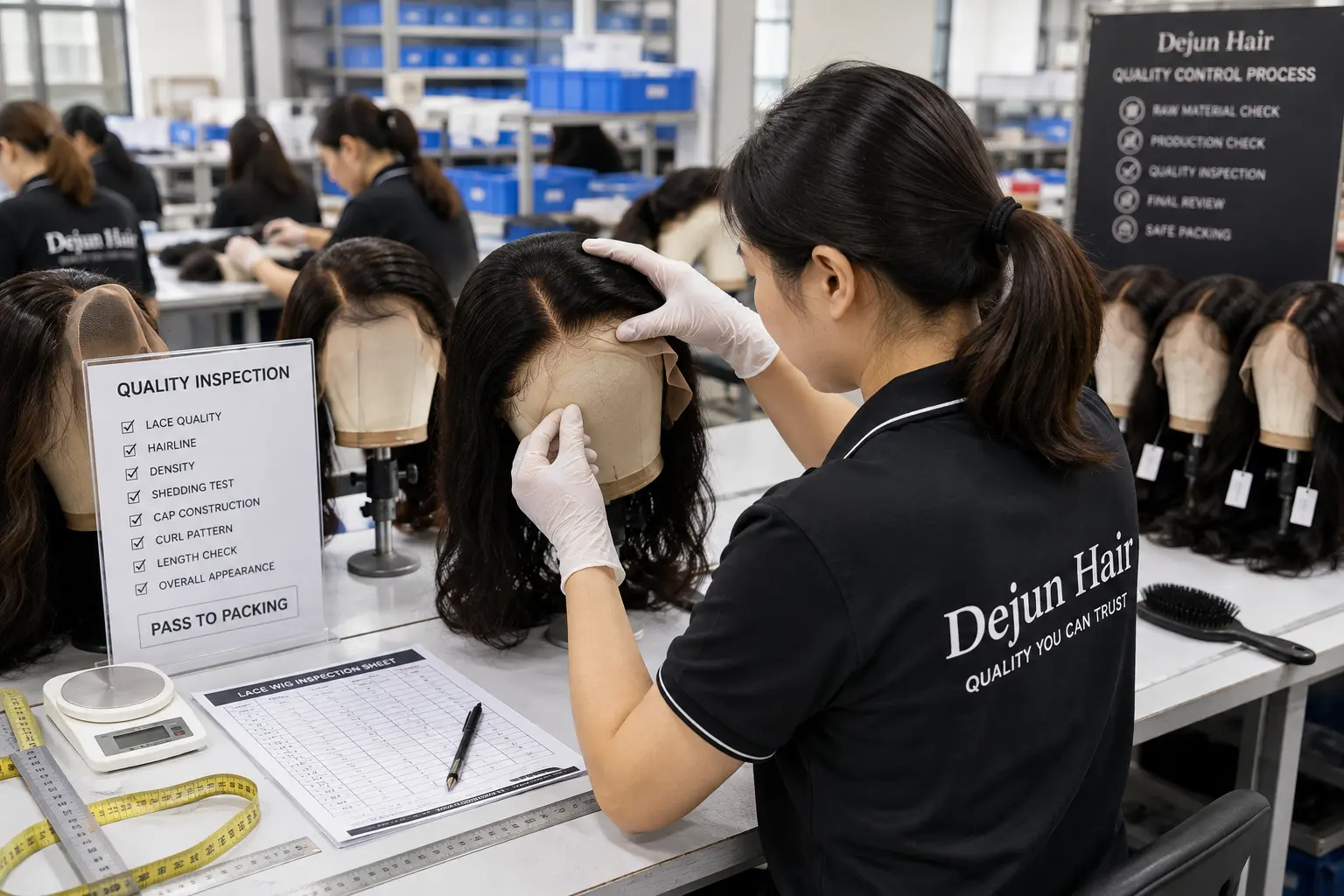
For wholesalers, the best way to evaluate durability is to test representative samples before committing to a large order. Examine the wig after brushing, washing, styling, and normal handling rather than judging it only when it first comes out of the package.
Buyers who need a more detailed inspection process should also review our guide on how to check lace front wig quality before placing a bulk order.
Which Has Better Profit Potential for a Wig Business?
There is no universal winner in terms of profit margin.
The more useful question is how each product fits into your inventory strategy.
Lace Front Wigs: Volume and Faster Turnover
Lace front wigs can work particularly well as core inventory because they combine an attractive hairline with a wholesale price that is generally more accessible than comparable full lace products.
They may be suitable for:
- Beauty supply stores
- Local wig wholesalers
- African distributors
- Salons
- Independent online stores
- Social media wig sellers
- New hair businesses
A wider range of customers may be able to afford them, which can support faster inventory turnover.
Retailers can also create multiple price tiers by offering different hair grades, lengths, densities, lace sizes, and lace materials.
Full Lace Wigs: Premium Positioning
Full lace wigs serve a different role.
Their higher construction cost means retailers generally need customers who understand and value their benefits. They can work well for premium salons, custom wig businesses, high-end online brands, and retailers serving customers who prioritize styling flexibility.
The unit selling price may be higher, but the upfront inventory investment is also higher.
Therefore, profit should not be evaluated from markup percentage alone.
Consider:
Gross profit per unit × realistic sales volume × inventory turnover.
A product with a large theoretical margin is not attractive if it remains unsold for months.
Who Should Buy Lace Front Wigs Wholesale?
For many B2B buyers, lace front wigs are a logical starting point.
They offer broad style flexibility and can be produced across multiple commercial price levels. Buyers can vary the product through length, texture, density, lace dimensions, color, hair quality, and cap construction.
This makes them particularly useful for businesses that want to build a diverse catalog without moving entirely into premium full lace pricing.
Buyers targeting convenience-focused consumers can also explore glueless wigs wholesale alongside traditional lace front products. Glueless designs can help retailers serve customers looking for easier installation, comfortable wear, and ready-to-wear solutions without relying heavily on adhesive.
For a new wig business with limited purchasing capital, starting with proven lace front specifications and testing different styles through smaller mixed orders can be less risky than investing heavily in premium products immediately.
Who Should Buy Full Lace Wigs Wholesale?
Full lace wigs wholesale make more sense when the retailer already understands its premium customer segment.
They may be particularly relevant for businesses serving consumers who value:
- Greater styling flexibility
- More flexible parting
- Premium wig construction
- Customized styling
- High-end human hair
- Professional salon services
A premium retailer may also use full lace products to differentiate its catalog from lower-priced competitors.
However, before increasing inventory, test actual demand.
For smaller businesses, a few carefully selected full lace styles may be more commercially sensible than maintaining large quantities across every length, texture, and color.
Should You Stock Lace Front Wigs, Full Lace Wigs, or Both?
For many wholesale buyers, the best answer to “Should I buy lace front or full lace wigs wholesale?” is not necessarily one or the other.
A tiered inventory strategy can be more effective.
Use lace front wigs as the core product line for customers seeking a balance between appearance, versatility, and price. Then use full lace wigs as a premium tier for customers who want greater styling flexibility and are prepared to pay more.
For example, a retailer could structure its wig collection as:
Entry/Mid Tier: Standard lace front wigs
Mid/Premium Tier: 13×6 or HD lace front wigs
Premium Tier: Full lace human hair wigs
This gives customers a clearer reason to trade up while allowing the business to serve multiple price segments.
The same principle applies to a broader wholesale human hair wigs strategy: inventory should reflect actual customer demand rather than simply offering the most expensive construction available.
For smaller wholesalers and new sellers, mixed orders can be especially useful. Testing several specifications in smaller quantities provides real sales data before committing more capital to one product category.
What to Check Before Ordering Lace Wigs in Bulk
Whether you choose lace front or full lace construction, never place a large order based only on catalog photos.
Confirm the specifications and test samples first.
A practical wholesale inspection should cover:
- Hair type and quality — Confirm exactly what hair specification you are purchasing.
- Lace material — Ask about lace type, color, strength, and appearance.
- Lace dimensions — Verify whether the product is 13×4, 13×6, full lace, or another construction.
- Density — Confirm the required density and inspect whether distribution is consistent.
- Cap size — Make sure sizing matches your target customers.
- Knots — Check knot size, security, and appearance.
- Hairline — Inspect the shape, density transition, and pre-plucking if requested.
- Shedding — Brush and wash samples to observe excessive shedding.
- Tangling — Test the hair before and after washing.
- Color consistency — Especially important for repeat orders and customized colors.
- MOQ — Ask whether different styles can be mixed within the order.
- Samples — Confirm sample availability before mass production.
- Lead time — Separate stock-order timing from customized production timing.
- Packaging — Confirm bags, boxes, labels, and other branding requirements.
- Quality control — Understand how the factory inspects finished wigs.
Consistency deserves special attention.
One excellent sample is not enough if the factory cannot reproduce the same specification across hundreds or thousands of units.
OEM and Custom Lace Wig Options for Wholesale Buyers
Customization can help wholesalers move away from direct price competition.
Instead of selling the same generic product available from many retailers, businesses can develop custom lace wigs based on their target market.
Common OEM/ODM options include:
- Custom logo
- Branded packaging
- Hang tags
- Custom cap size
- Density selection
- Hair length
- Hair texture
- Custom colors
- Lace type
- Lace dimensions
- Hairline customization
- Pre-plucking
- Private-label packaging
When working with an OEM lace wig manufacturer, provide detailed specifications rather than simply asking for “the best quality.”
For example, specify the desired hair type, length, density, lace construction, lace color, cap size, texture, packaging, target quantity, and target market.
Clear specifications make sampling, quotation comparison, and quality control significantly easier.
How to Choose a Reliable Lace Wig Supplier
Product selection is only half of a successful wholesale sourcing strategy. Supplier capability determines whether the same quality can be maintained when orders grow.
When evaluating a wholesale wig manufacturer, consider the following areas.
Production capability: Does the supplier manufacture wigs directly, and can it handle your expected order quantity?
Material control: How does the factory classify and inspect human hair before production?
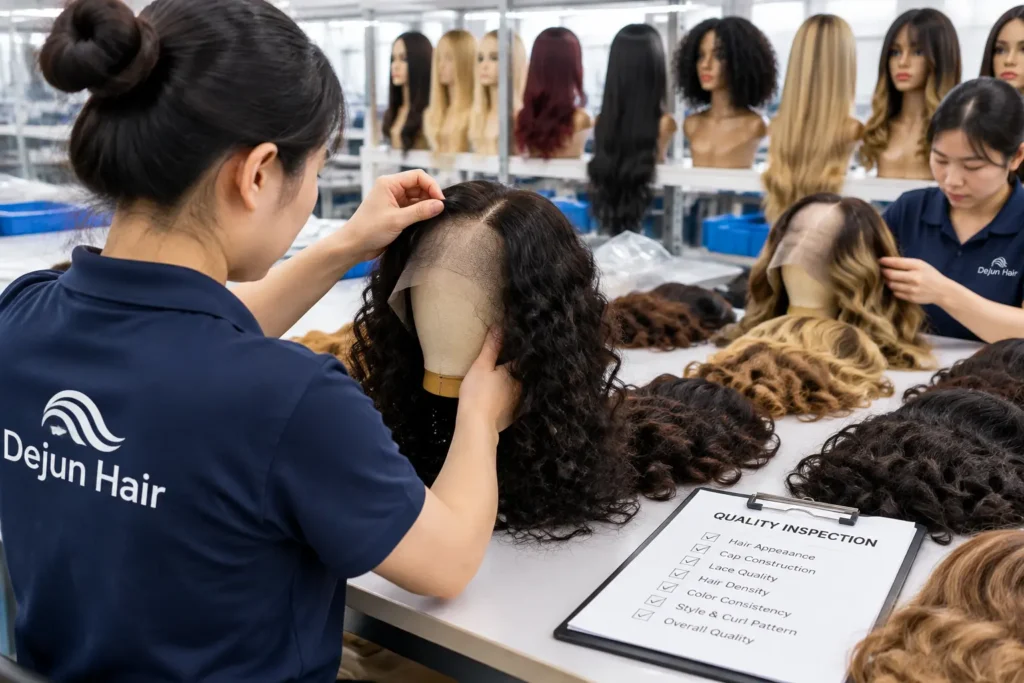
Quality consistency: Are finished wigs inspected for hair quality, shedding, construction, size, color, and workmanship?
MOQ flexibility: Can smaller buyers start with lower quantities or mixed styles?
OEM/ODM capability: Can the factory customize specifications, packaging, labels, and product designs?
Sampling: Can you evaluate representative products before placing a large order?
Production capacity: Can the supplier support larger repeat orders if your business grows?
Export experience: Does the supplier understand documentation and shipping requirements for your destination market?
After-sales support: What happens if a verified manufacturing defect is found?
At Dejun Hair, our experience manufacturing wigs for overseas B2B customers has shown that repeat-order consistency is just as important as the quality of the first sample. A wholesale buyer should evaluate the supplier’s entire production and inspection process—not only the appearance of one finished wig.
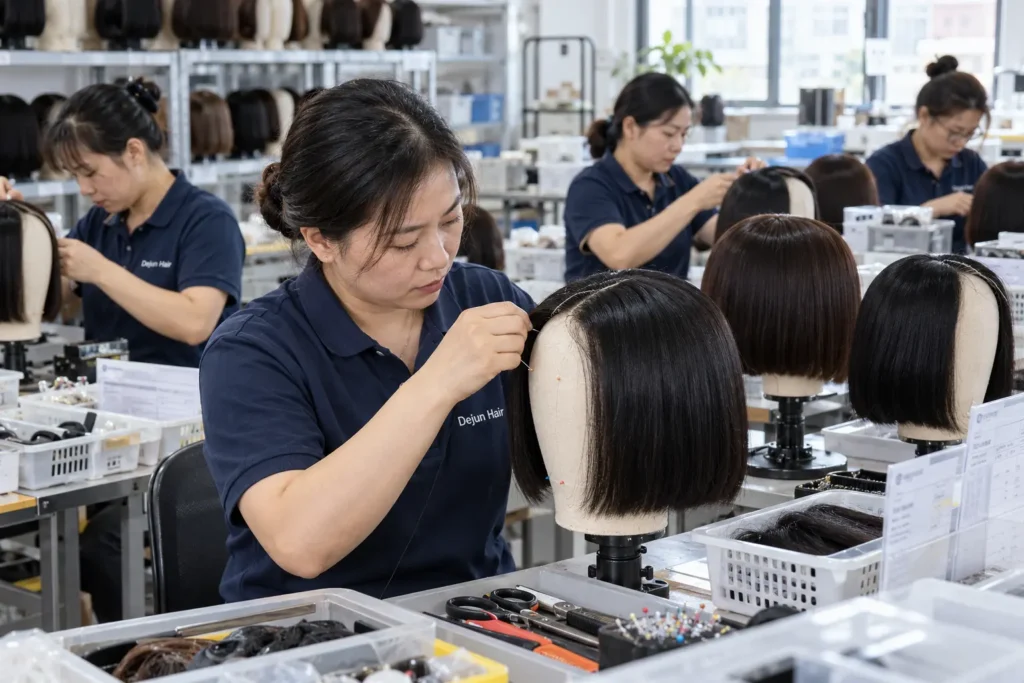
With an integrated production process covering hair preparation, cap construction, lace work, styling, quality inspection, and warehousing, we focus on giving wholesale buyers more control over specifications while supporting both stock purchasing and OEM/ODM projects.
Final Verdict: Lace Front or Full Lace Wigs for Wholesale?
So, which is better: lace front or full lace wig for a wholesale business?
Neither is universally better.
Choose lace front wigs when your priority is broader market demand, a more accessible purchasing cost, diverse product options, and potentially faster inventory turnover.
Choose full lace wigs when you serve premium customers who value greater styling flexibility and are willing to pay for a more labor-intensive construction.
Stock both when you want to create multiple price tiers and serve both mainstream and premium customers.
The most important lesson from the lace front vs full lace wigs comparison is that wholesale purchasing should be based on your target market—not on the assumption that a more expensive construction will automatically generate more profit.
Before placing a large order, test samples, define your specifications, calculate your landed cost, estimate realistic retail demand, and evaluate whether your supplier can maintain consistent quality across repeat orders.
For wholesalers, salons, beauty supply stores, and online wig businesses looking for wholesale lace front wigs, full lace wigs, or customized human hair wig programs, Dejun Hair supports stock orders, mixed purchasing, sample evaluation, and OEM/ODM customization for different overseas markets.
Contact our team with your target wig type, length, density, lace specification, quantity, and destination market to discuss a wholesale or private-label solution.
Frequently Asked Questions About Lace Front vs Full Lace Wigs
What is the difference between lace front and full lace wigs?
The main difference is lace coverage. A lace front wig uses lace primarily around the frontal hairline, while a full lace wig uses lace across most or all of the cap. Full lace construction generally provides greater styling flexibility but also requires more labor and usually has a higher wholesale cost.
Which is better, lace front or full lace wig?
It depends on the customer’s needs. Lace front wigs are often more practical for broad retail markets because they combine a natural frontal appearance with a more accessible price. Full lace wigs can be better for premium customers who prioritize advanced styling flexibility.
Are full lace wigs more expensive than lace front wigs?
Generally, yes, when hair quality, length, density, and other specifications are comparable. Full lace wigs require more lace and labor-intensive construction. However, final wholesale prices also depend on hair quality, length, density, color, lace material, customization, and order quantity.
Should I buy lace front or full lace wigs wholesale?
If you target a broad customer base or are building a new wig business, lace front wigs can provide a practical core inventory. If you serve premium customers, adding full lace wigs can expand your higher-end offering. Many businesses can benefit from stocking both at different price tiers.
Are 13×6 lace front wigs better than 13×4 wigs?
Not necessarily. A 13×6 lace front generally provides deeper frontal parting space than a 13×4, but the best choice depends on customer demand, target retail price, hair quality, lace quality, and styling expectations. Wholesale buyers should compare complete specifications rather than lace dimensions alone.
Are full lace wigs better for premium wig businesses?
They can be. Full lace wigs offer features that can support premium positioning, particularly greater styling flexibility. However, retailers should confirm that their customers understand these benefits and are willing to pay the higher retail price before investing heavily in inventory.
Can I order custom lace wigs with my own brand?
Yes. Wig manufacturers with OEM/ODM capabilities can typically customize elements such as logo, packaging, hang tags, density, length, texture, color, lace material, cap size, and hairline specifications. Available options and MOQs should be confirmed with the manufacturer before ordering.
What should I check before ordering human hair lace wigs in bulk?
Check hair quality, lace material, lace dimensions, density, cap size, knotting, hairline workmanship, shedding, tangling, color consistency, sample quality, MOQ, production lead time, packaging options, and quality-control procedures. Testing representative samples before bulk ordering can significantly reduce sourcing risk.
Google official and wholesale wig factory industry reference links:

Dejun Hair
Direct from Chinese Wig Factories | One-Stop Wholesale Supplier of Wigs for International Trade.