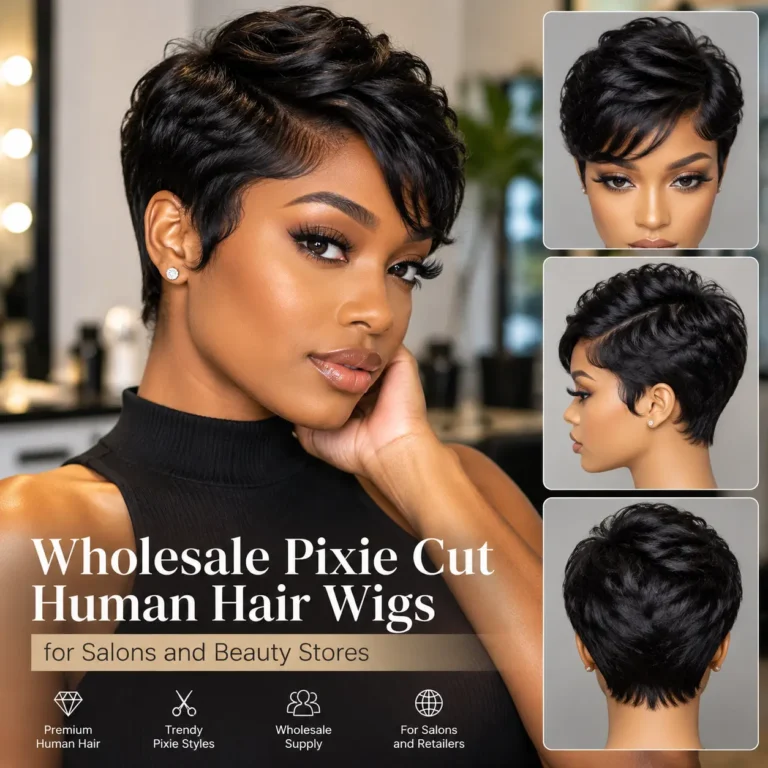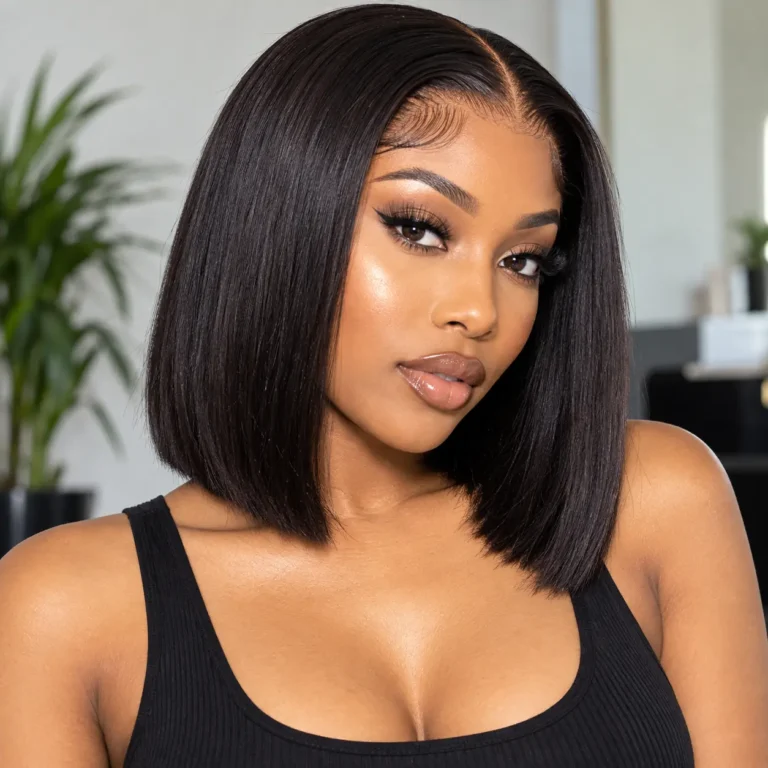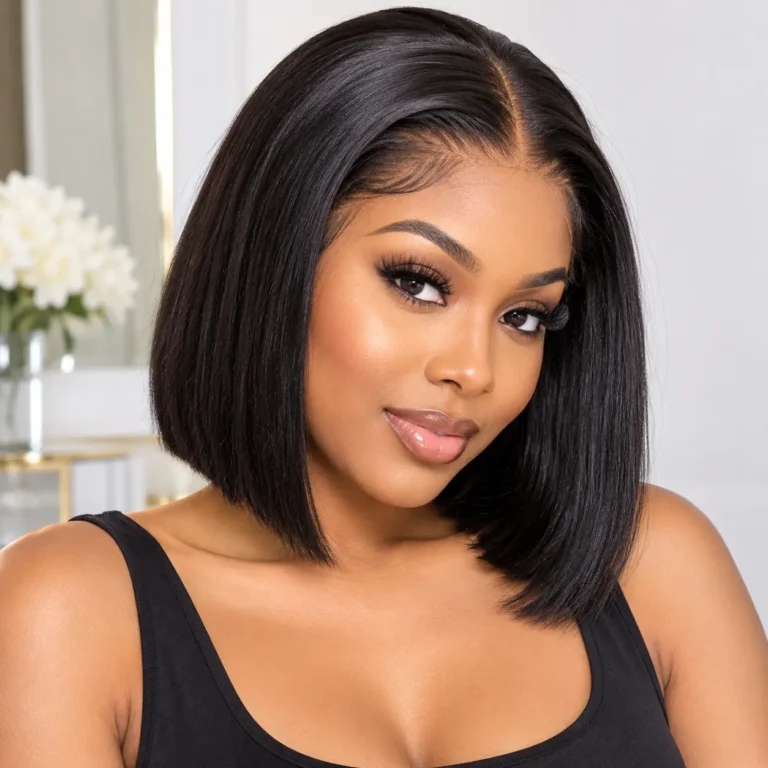
Wholesale Colored Human Hair Wigs for Salons & Hair Businesses
Contact us directly for quotes and samples of Wholesale Colored Human Hair Wigs.
· 100% virgin human hair—smooth, shiny, and tangle-free
· Vibrant colors: ombre, burgundy, blue, pink, purple, honey gold, platinum, and custom shades
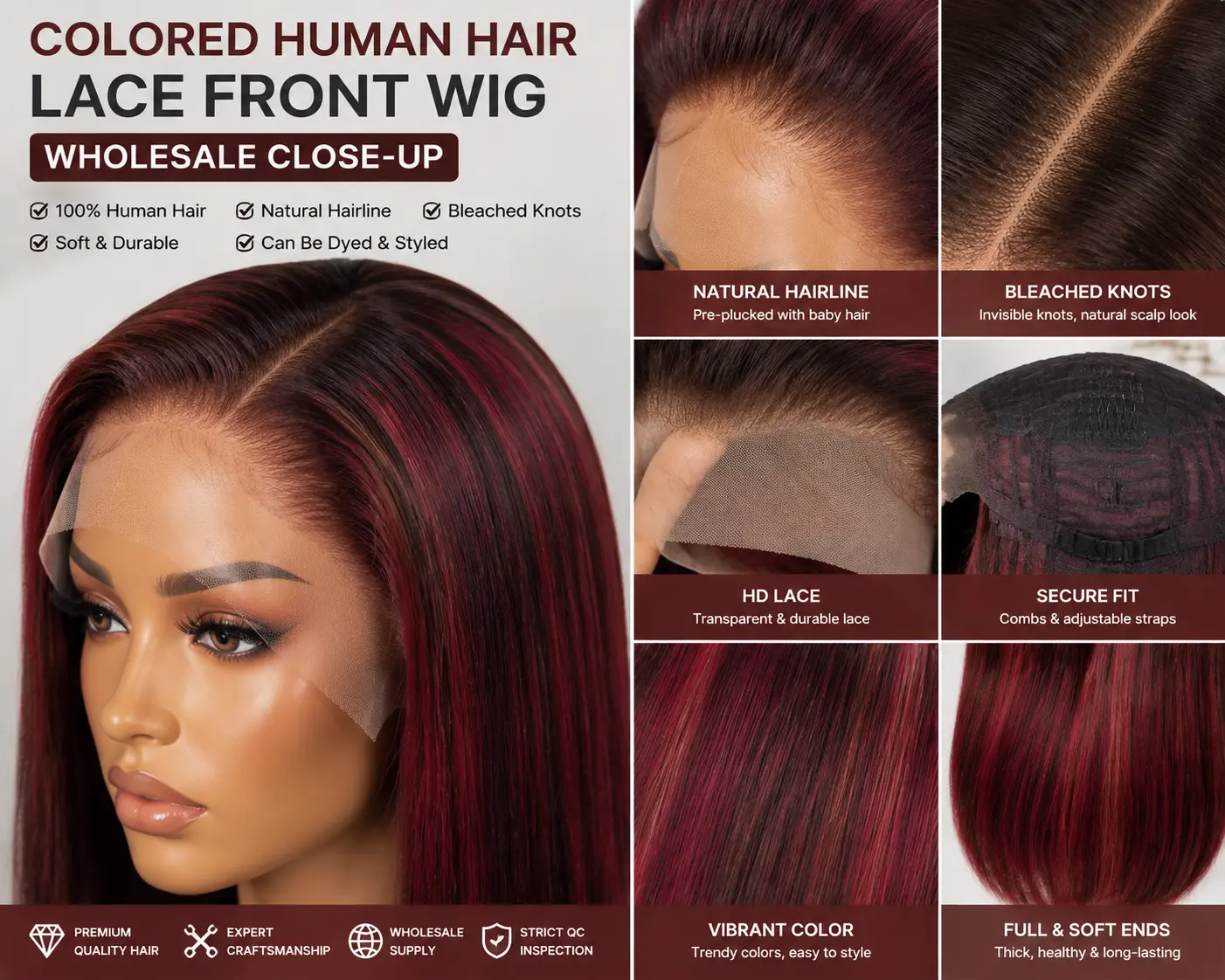
· Lace front with pre-thinned hairline; bleached and dyed knots with baby hair
· Flexible parting: center part, side part, or free-form part
· Lightweight and breathable; can be dyed and heat-styled
· Textures: straight, natural waves, deep waves, curls, tight straight
· Lengths: 10–30 inches+, density: 150%–250%
· Free samples, worldwide express shipping
More Information
Colored wigs are no longer limited to seasonal fashion collections. For salons, beauty supply stores, online wig sellers, and independent hair brands, colored human hair wigs can help build a more differentiated product range and serve customers looking for ready-to-wear shades without having to bleach or dye a wig themselves.
At Dejun Hair, we manufacture wholesale colored human hair wigs for overseas B2B buyers who need flexible specifications, consistent color production, and private-label customization. Our factory in Shaoyang, Hunan has approximately 20 years of local wig manufacturing experience, covering hair processing, wig-cap construction, lace sewing, coloring, styling, inspection, and packing.
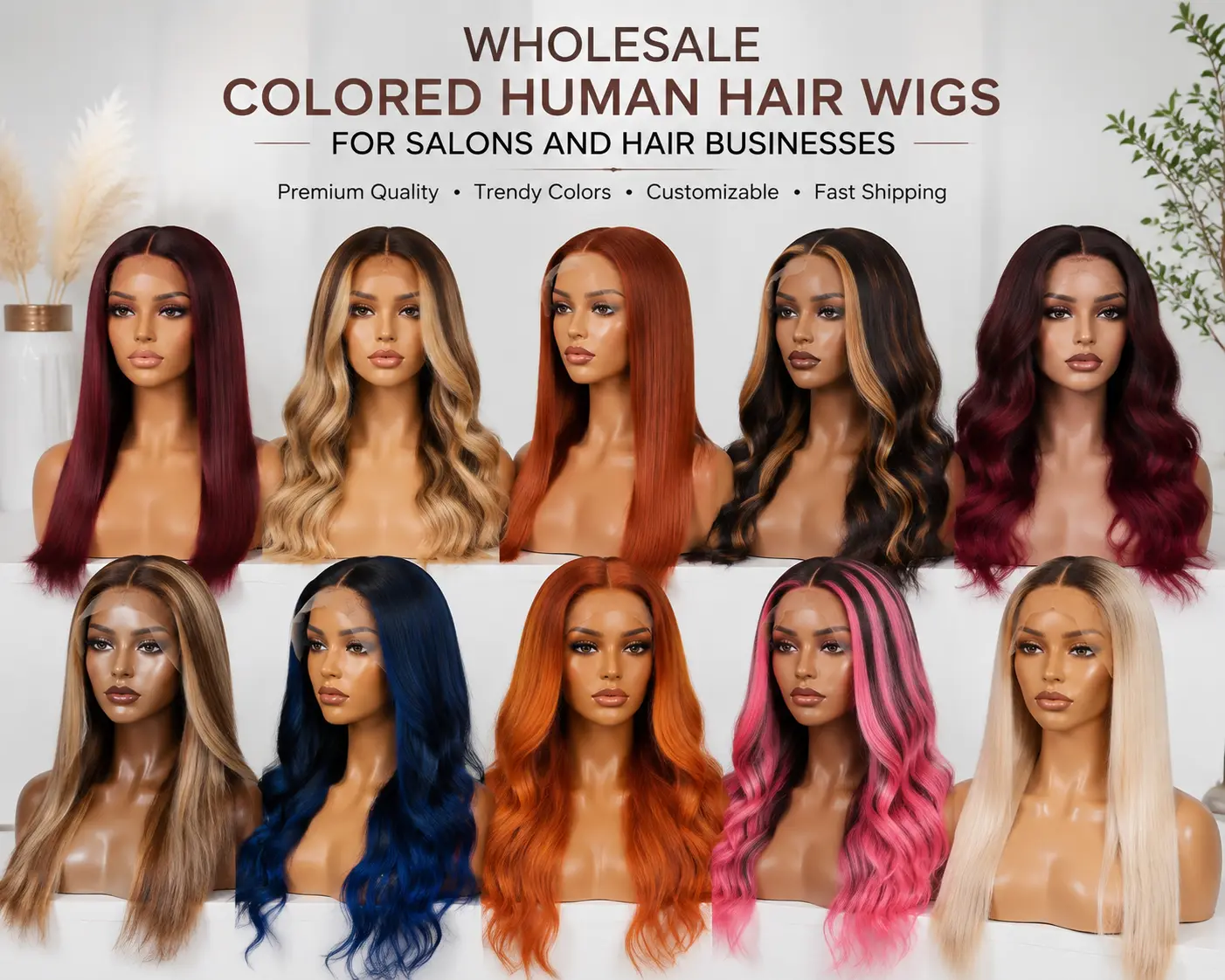
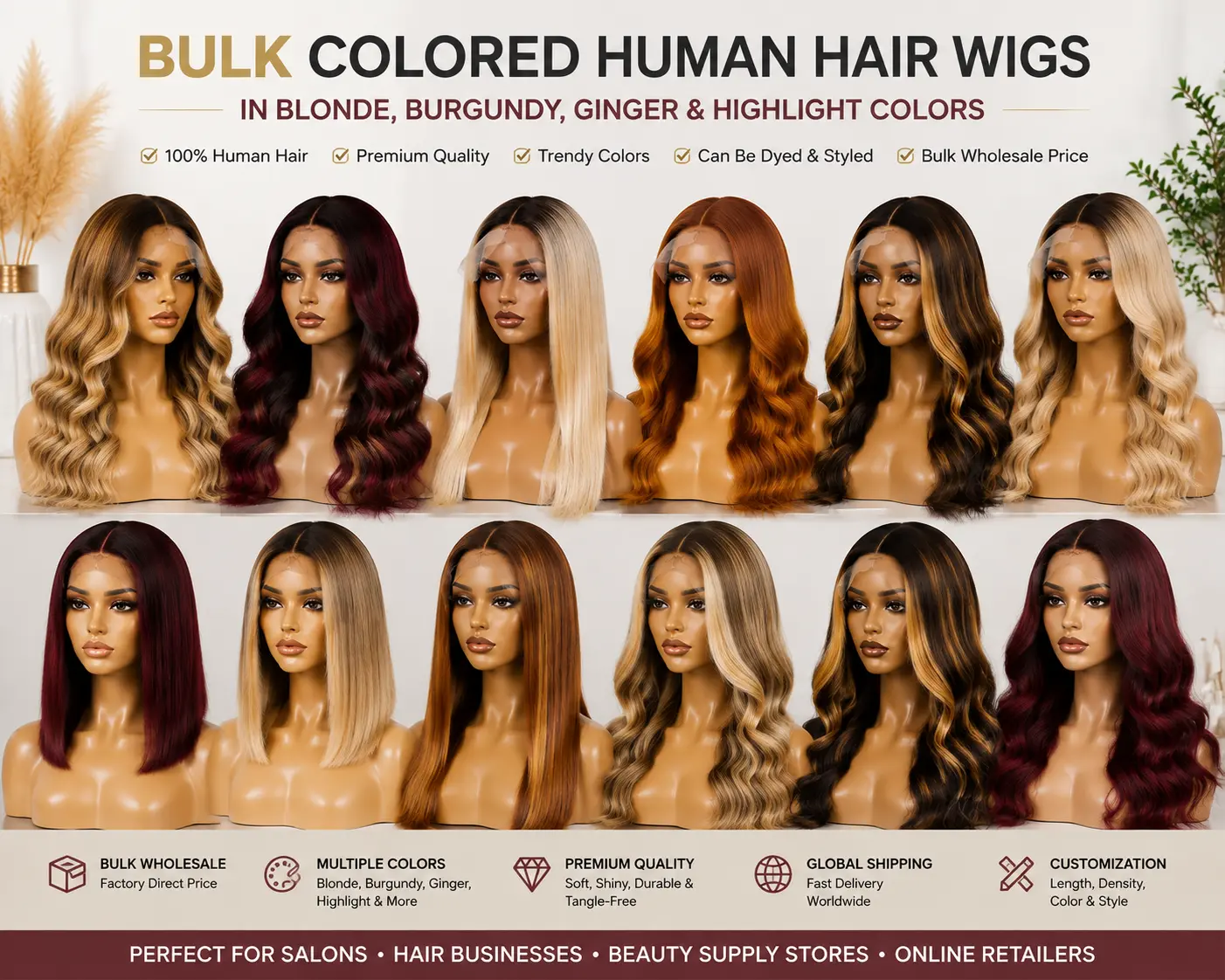
Buyers can source natural shades, blonde tones, burgundy, ginger, highlights, ombre combinations, and other custom colors according to their target market.
For businesses that also sell short hairstyles and fashion colors, our Wholesale Bob & Colored Wigs collection provides additional options for building a coordinated inventory rather than sourcing each style from unrelated suppliers.
Part 1: What Are Wholesale Colored Human Hair Wigs?
To understand how to source colored wigs effectively, it helps to separate the term into three parts: wholesale, colored, and human hair wigs.
Wholesale
Wholesale colored wigs are manufactured and supplied primarily for B2B buyers rather than individual consumers.
Typical buyers include:
- Hair salons
- Beauty supply stores
- Wig boutiques
- Online hair stores
- Social media hair sellers
- Regional wig distributors
- Private-label hair brands
For these businesses, purchasing directly from a wig factory can provide more flexibility in quantities, specifications, packaging, and repeat-order production.
Dejun Hair supports both stock purchasing and OEM/ODM orders. For buyers testing a new market, mixed-style orders and lower starting quantities can reduce inventory pressure before moving into larger-volume purchasing.
Colored
“Colored” can cover much more than a single solid shade.
A wholesale collection may include:
- 1B natural black
- #2 and #4 brown
- #27 honey blonde
- #30 auburn
- #99J burgundy
- #613 blonde
- Ginger and copper
- Piano highlights
- Face-framing highlights
- Ombre colors
- Two-tone combinations
- Custom color matching
This variety allows salons and retailers to build collections around different customer groups instead of relying only on natural black wigs.
Businesses concentrating specifically on shorter fashion styles can also combine colored long wigs with wholesale bob wigs to create different price points and styling options within the same collection.
Human Hair Wigs
The main advantage of human hair is styling flexibility.
Compared with standard synthetic fibers, quality human hair wigs can generally be curled, straightened, washed, restyled, and professionally recolored when the hair condition and previous processing allow it.
This makes colored human hair wigs wholesale particularly suitable for salons and premium hair businesses whose customers expect more styling freedom.
Buyers who want a broader selection beyond fashion colors can also explore wholesale human hair wigs covering natural shades, different textures, lace constructions, and lengths.
Part 2: Common Questions About Wholesale Colored Human Hair Wigs
Question 1: Which colors should a salon or wig retailer order first?
The best starting assortment depends on the customer base.
For a new retailer, ordering large quantities of many fashion colors at once can create unnecessary inventory risk. A better approach is to divide the first purchase into core colors and test colors.
Core colors may include:
1B / #2 / #4 / #27 / #30 / #99J / #613
Then add smaller quantities of trend-driven options such as ginger, copper, piano highlights, balayage, or custom ombre combinations.
African-market wholesalers may prioritize strong fashion colors, burgundy, blonde, highlighted, and ombre styles alongside natural shades. European and North American online sellers may also test dimensional highlights, balayage, rooted blonde, and face-framing color combinations.
The key is not simply choosing the most fashionable color. It is matching color inventory with your actual sales channel and customer profile.
Question 2: Can colored human hair wigs be customized for a private-label brand?
Yes.
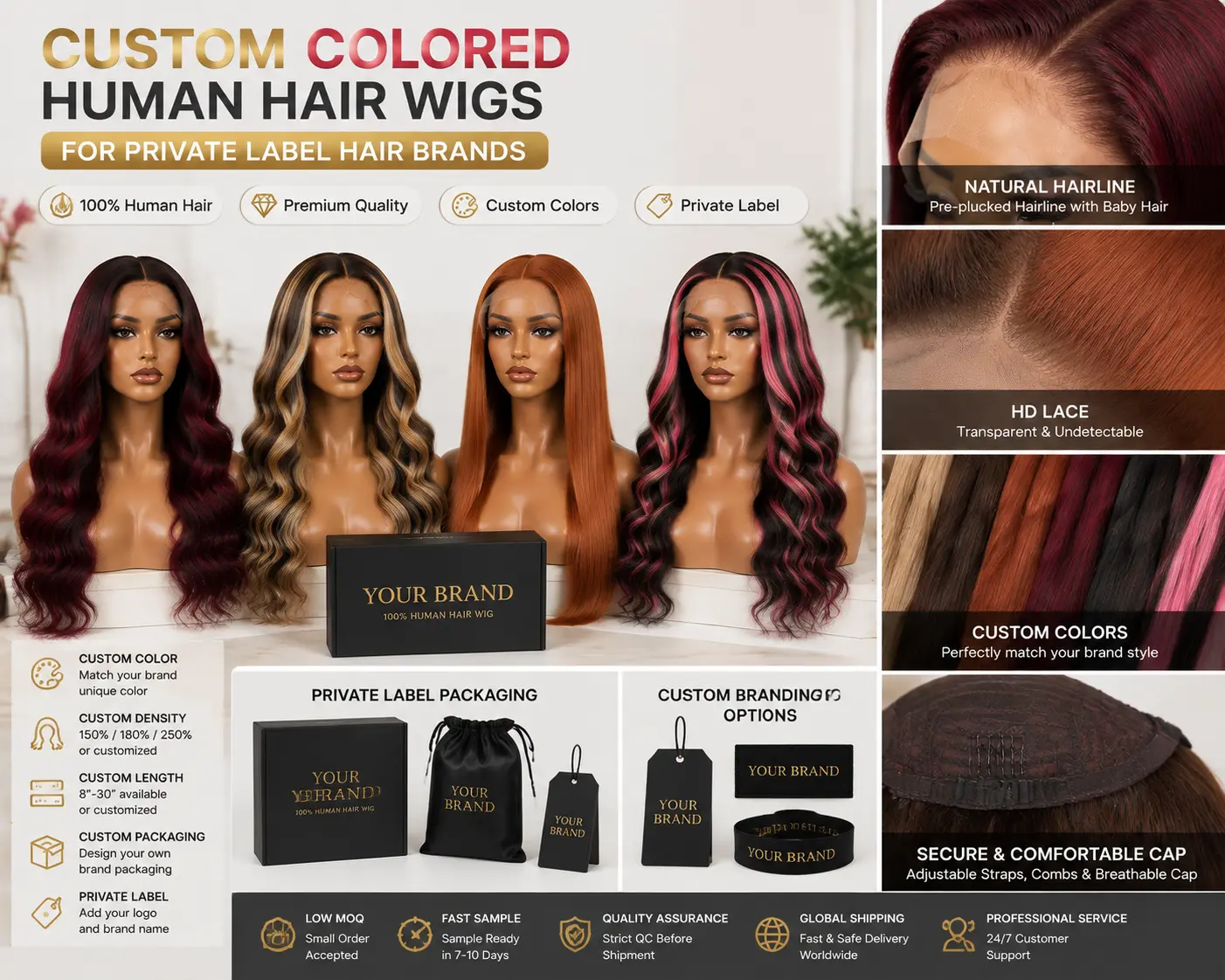
OEM production is particularly useful when a business wants to differentiate itself from competitors selling similar ready-stock wigs.
Depending on order requirements, customization can include:
- Hair color
- Color combinations
- Length
- Density
- Hair texture
- Lace material
- Lace size
- Cap circumference
- Hairline construction
- Packaging
- Logo
- Hang tags and labels
For brands focusing on convenience and beginner-friendly installation, colored styles can also be developed alongside wholesale glueless wigs, allowing the brand to combine fashion colors with easier wearability.
Part 3: Benefits of Wholesale Colored Human Hair Wigs
1. Create a More Distinctive Product Collection
Natural black wigs remain an essential inventory category, but relying entirely on similar black styles can make it difficult for a retailer to stand out.
Colored wigs introduce visible differentiation.
A salon can merchandise collections around blonde, burgundy, ginger, highlighted, or ombre looks. Online stores can also use color variation to create more visually distinctive product pages and social media content.
This is especially valuable for Instagram and TikTok-oriented hair sellers, where visual differentiation can influence product discovery.
2. Give Customers Ready-to-Wear Color Options
Bleaching and coloring human hair requires time, skill, and additional cost.
A professionally manufactured colored wig gives the customer a finished shade without requiring them to perform the complete coloring process after purchase.
For salons, this can reduce preparation time while allowing stylists to focus on installation, cutting, and final styling.
3. Expand the Average Order Opportunity
A wider color assortment gives existing customers more reasons to purchase additional wigs.
For example, a customer who already owns a natural black straight wig may later purchase a burgundy body wave, blonde bob, or highlighted curly wig for a different look.
Retailers can therefore treat color as an assortment strategy rather than merely a product specification.
4. Support Brand Differentiation Through OEM Production
Private-label businesses do not always need to compete with unique wig constructions.
Sometimes differentiation can come from a carefully selected color palette.
A hair brand could develop, for example:
- Three signature highlight combinations
- A seasonal ginger collection
- A blonde collection
- A burgundy collection
- A short colored bob series
Businesses developing a bob-focused range can combine these products with wholesale colored human hair bob wigs so that color positioning remains consistent across short and long styles.
5. Offer Higher Styling Flexibility Than Standard Synthetic Options
Human hair is generally the better choice when the target customer values natural movement, styling flexibility, and premium positioning.
However, not every retail customer needs human hair.
Businesses serving more price-sensitive consumers may complement their premium human hair range with wholesale colored synthetic wigs, creating both entry-level and higher-value color collections.
Part 4: How to Source Wholesale Colored Human Hair Wigs Step by Step
Step 1: Define Your Target Customer
Before selecting colors, define who will actually purchase the wigs.
A salon, an African beauty supply wholesaler, and a TikTok wig seller may require very different inventories.
Consider:
| Buyer Requirement | Recommended Direction |
|---|---|
| Everyday salon customers | Natural brown, burgundy, subtle highlights |
| Fashion-focused customers | Ginger, blonde, copper, bold colors |
| Online wig stores | Mix of core and trending shades |
| Premium hair boutiques | Dimensional highlights and custom colors |
| Price-sensitive stores | Human hair + synthetic color assortment |
| Private-label brands | Custom color palette + branded packaging |
Start from customer demand and work backward to product specifications.
Step 2: Choose the Hair Quality
Color processing puts additional stress on human hair, particularly when producing lighter shades.
For this reason, hair quality becomes especially important for blonde and heavily processed colors.
Before bulk purchasing, evaluate:
- Hair softness
- Strand consistency
- Dryness at the ends
- Tangling
- Shedding
- Color uniformity
- Odor after washing
- Performance after heat styling
At Dejun Hair, raw materials are graded before production so different hair-quality levels are not treated as interchangeable products.
Buyers requiring premium collections can request suitable virgin human hair specifications according to the target color and finished product positioning.
Step 3: Build a Balanced Color Assortment
Avoid ordering equal quantities of every shade.
A more practical starting structure is:
Core inventory:
Natural black, brown, burgundy, blonde
Secondary inventory:
Ginger, copper, highlights, ombre
Testing inventory:
Trend-driven and market-specific colors
This structure allows a retailer to maintain reliable sellers while testing new demand with less inventory exposure.
For stores that already sell natural-colored products, adding wholesale colored wigs through the broader bob and colored wig collection can also help organize purchasing around a dedicated fashion-color category.
Step 4: Select Wig Construction
Color alone does not determine whether a wig will sell.
Buyers should also select the construction according to the retail price and customer installation habits.
Common options include:
- Lace front wigs
- HD lace wigs
- Glueless wigs
- Closure wigs
- Bob wigs
- Full lace wigs
For customers prioritizing a realistic front hairline and flexible styling, wholesale lace front wigs can be a strong companion category to colored human hair wigs.
A supplier capable of producing multiple constructions also makes it easier to maintain consistent colors across a broader collection.
Step 5: Determine Length and Density
Instead of stocking every possible specification, build combinations around your customers’ most common preferences.
Typical options may include:
| Specification | Available Direction |
| Length | Short, medium, and long options |
| Density | 130%, 150%, 180%, 200% or customized |
| Texture | Straight, body wave, deep wave, curly, water wave |
| Lace | Standard transparent lace / HD lace |
| Cap Size | Standard or customized |
| Color | Stock colors/custom matching |
| Packaging | Factory packing / private label |
For first orders, concentrate inventory in proven combinations and use smaller quantities for experimental specifications.
Step 6: Request Samples Before Scaling
Color consistency should be checked physically whenever possible.
A sample allows buyers to inspect the wig under different lighting conditions and evaluate whether the actual product matches photographs or color references.
During sample evaluation, check:
- Color consistency from roots to ends
- Hair condition after coloring
- Lace appearance
- Hairline workmanship
- Shedding
- Tangling
- Cap construction
- Density
- Washing performance
- Heat-styling performance
A successful sample can then become the reference standard for repeat production.
Step 7: Confirm Color Standards for Repeat Orders
One common B2B problem is receiving a repeat order that does not closely match the previous batch.
For important custom colors, confirm a physical or documented color reference before production.
The supplier should understand which characteristics must remain consistent, including:
- Root color
- Highlight placement
- Color depth
- Ombre transition
- Overall tone
- Hair texture
- Finished styling
This is particularly important for brands that use the same product photography across multiple inventory cycles.
Step 8: Add Private-Label Packaging
Once a product has proven demand, packaging can be upgraded.
OEM options can include:
- Logo printing
- Custom boxes
- Hang tags
- Wig labels
- Care cards
- Barcode labels
- Product specification stickers
New businesses do not necessarily need expensive custom packaging on their first order.
Testing the product first and upgrading packaging after confirming sales can reduce initial investment.
Step 9: Confirm Quality Control Before Shipment
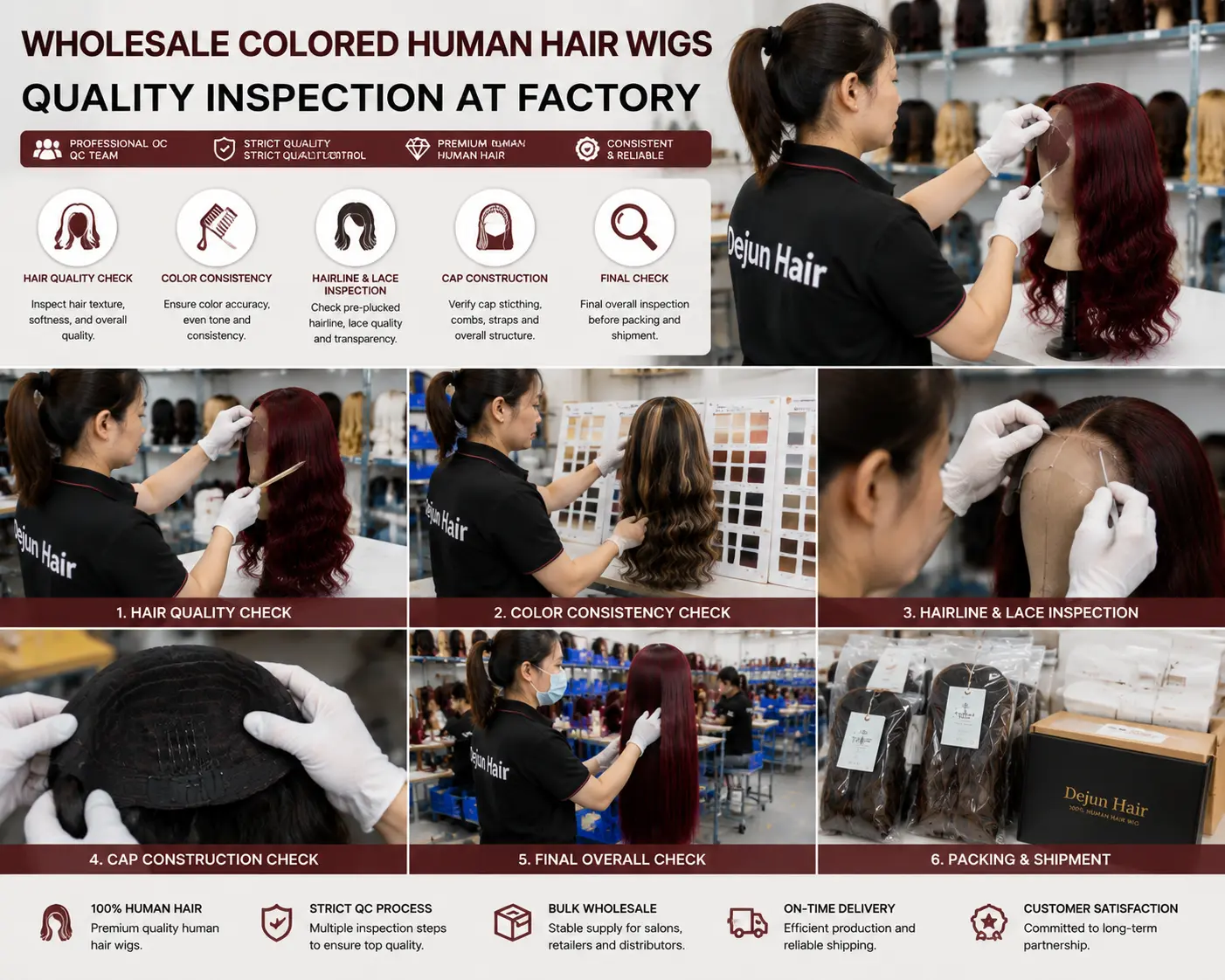
Bulk colored wig orders should be inspected before dispatch.
At Dejun Hair, production and quality control are managed through an integrated factory workflow covering hair processing, cap construction, lace sewing, styling, inspection, and warehousing.
Important inspection points include:
- Correct color
- Correct length
- Density
- Hair smoothness
- Lace condition
- Cap dimensions
- Hair attachment
- Colorfastness
- Packaging
- Order quantity
This is especially important when one shipment contains multiple colors and specifications.
Step 10: Plan Shipping Around Your Sales Cycle
Do not wait until inventory is nearly exhausted before placing the next order.
For repeat sellers, establish reorder points according to average monthly sales and production/shipping lead times.
Dejun Hair works with overseas buyers shipping to African, European, and North American markets and can assist with commonly required shipping and customs documentation.
For larger orders, buyers can compare air and sea freight based on cost, urgency, and inventory requirements.
Part 5: Practical Results for Different Hair Businesses
Scenario 1: Salon Expanding Beyond Natural Black Wigs
A salon that mainly carries natural black wigs may introduce a controlled colored collection rather than purchasing dozens of shades immediately.
For example, it could begin with burgundy, #27, #30, #613, ginger, and highlighted wigs in its most popular lengths.
After several sales cycles, slow colors can be removed while stronger performers receive larger reorder quantities.
Practical result: the salon develops a broader visual product range while keeping experimental inventory under control.
Scenario 2: Online Wig Store Building a Social-Media Collection
An online hair seller may use distinctive colors to create stronger visual content.
Instead of listing ten nearly identical black wigs, the seller can photograph ginger, burgundy, blonde, piano-highlight, and ombre variations across straight, body-wave, curly, and bob constructions.
Practical result: one underlying wig category can generate multiple visually differentiated products and marketing assets for the store.
Scenario 3: Private-Label Brand Developing Signature Colors
A growing hair brand may identify two or three color combinations that consistently perform well and turn them into signature products.
After testing samples, the buyer can standardize the color formula, density, length range, lace specification, cap construction, and packaging.
Practical result: the business moves from selling generic inventory toward a more recognizable private-label collection while keeping production specifications repeatable.
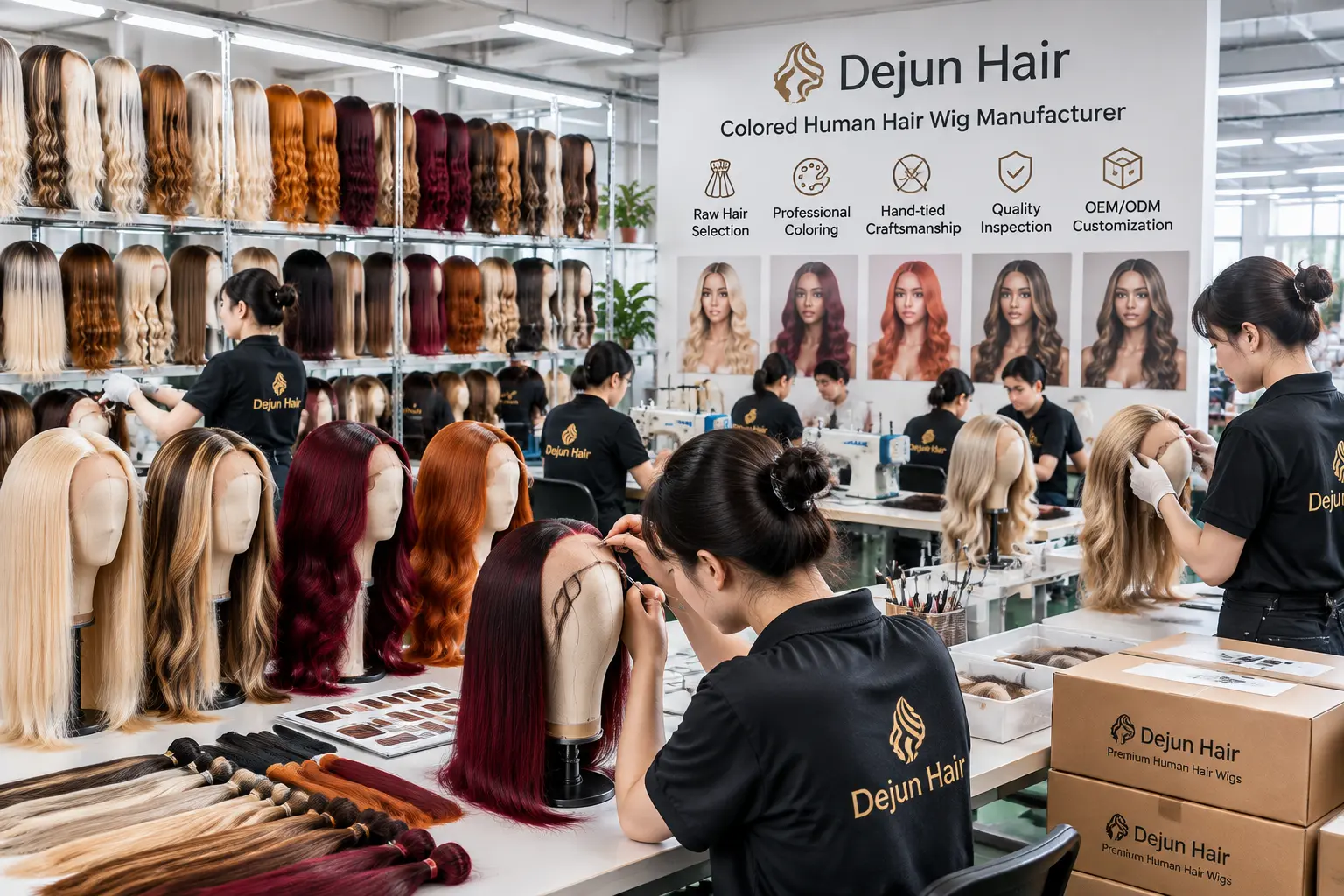
Why Work With an Experienced Colored Wig Manufacturer?
Colored human hair wigs require more than simply applying dye to finished hair.
Raw-hair selection, bleaching control, color consistency, hair condition, cap construction, styling, and final inspection all influence the finished product.
Dejun Hair is a Shaoyang-based wig manufacturer with approximately 20 years of local manufacturing experience. Our production capabilities cover both human hair and synthetic wig categories, allowing B2B buyers to consolidate multiple product types with one supplier.
We support:
- Stock wholesale orders
- Flexible mixed orders
- Negotiable MOQ for customized products
- Human hair and synthetic wigs
- Custom colors
- Custom lengths and densities
- Lace customization
- Cap-size customization
- OEM logo and packaging
- Sample development
- Bulk international orders
For salons, distributors, online wig stores, and private-label brands, the goal should not simply be finding the lowest unit price. A more sustainable sourcing strategy balances product quality, MOQ, customization capability, repeat-order consistency, delivery capacity, and after-sales support.
That approach helps turn wholesale colored human hair wigs into a repeatable product category rather than a one-time fashion purchase.