Wholesale Premium Human Hair Wigs for Beauty Supply Stores
Contact us directly for quotes and samples of our Wholesale Premium Human Hair Wigs.
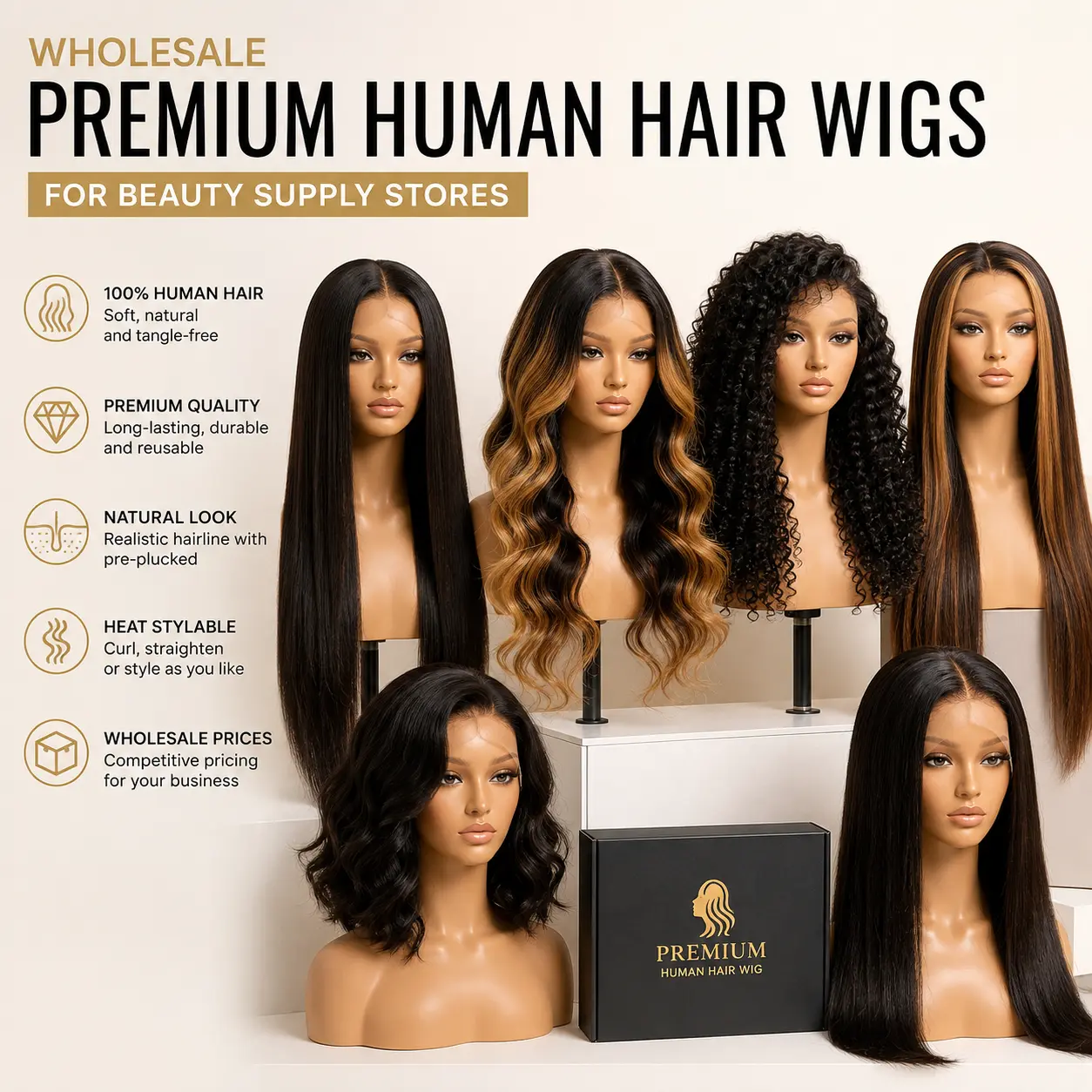
· 100% virgin human hair — cuticles aligned in the same direction, untreated, sourced from a single individual, smooth, lustrous, and tangle-free
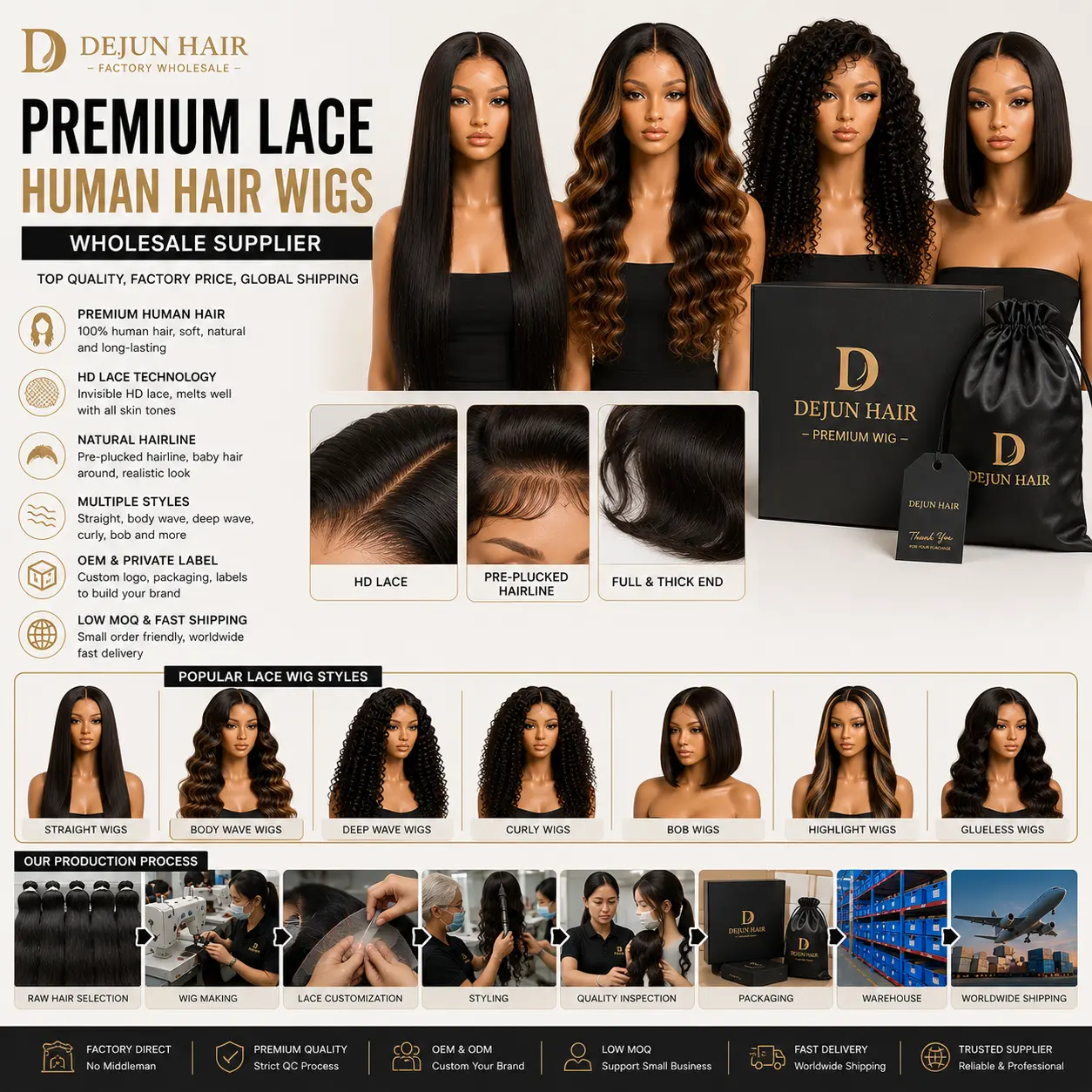
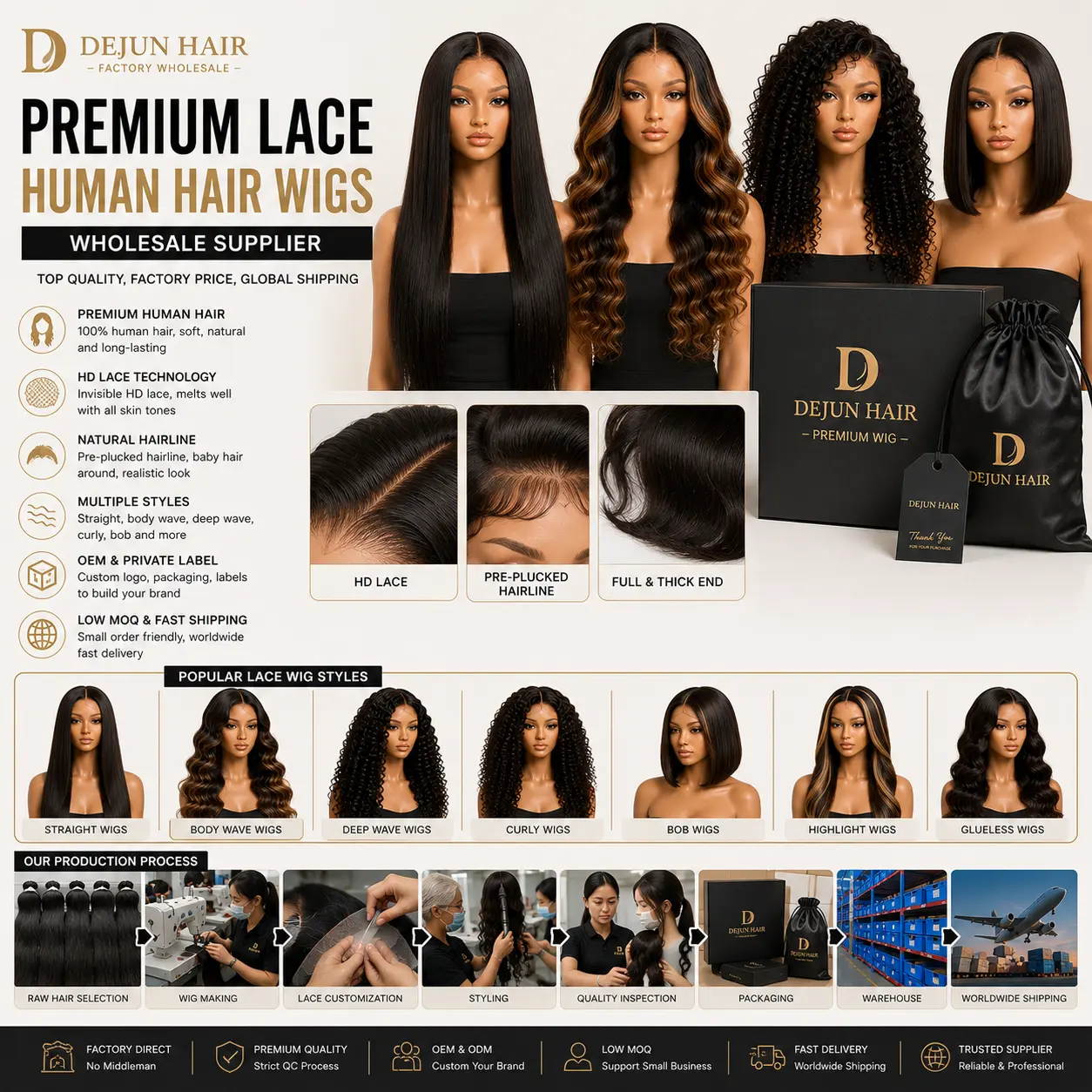
· HD Swiss lace front, pre-thinned hairline, bleached and dyed knots with baby hair
· Grade 10A–12A premium virgin hair — soft, lustrous, and durable
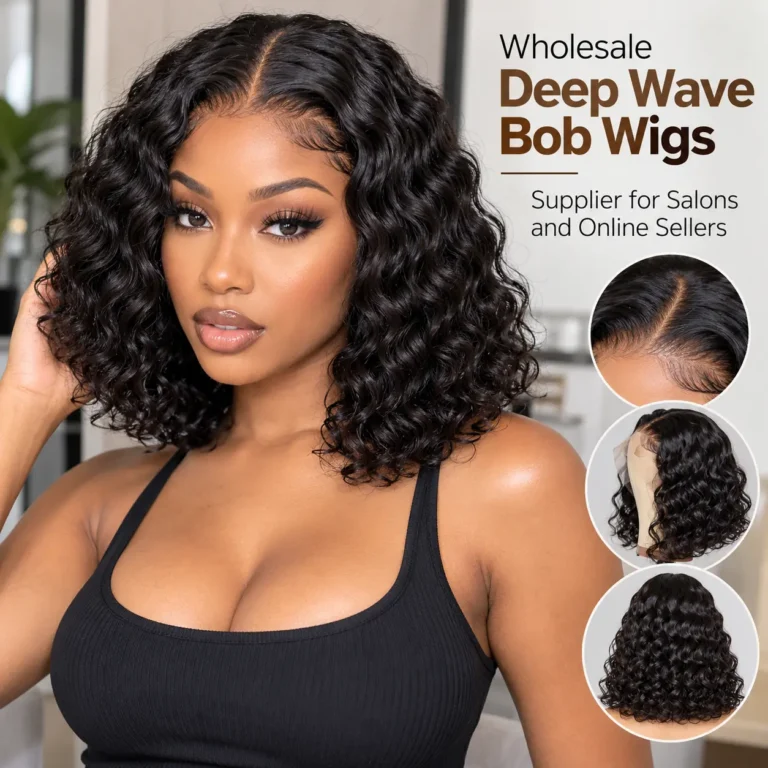
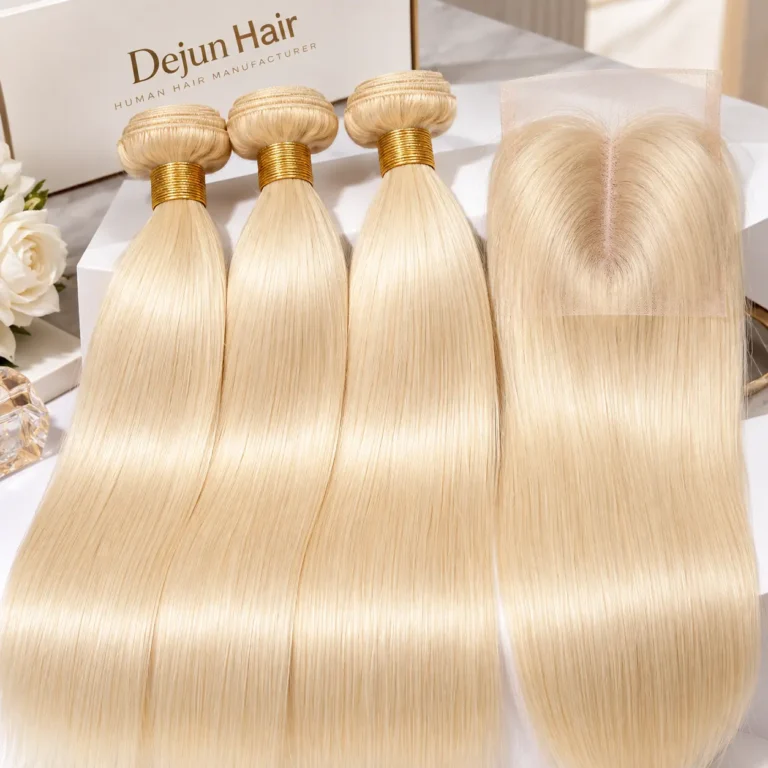
· Textures: Straight, natural waves, deep waves, curls, tight straight
· Flexible parting: center part, side part, or free-form part
· Hand-tied or machine-woven cap, lightweight and breathable
· Can be dyed, bleached, and heat-styled
· Lengths: 10–30 inches+, density: 150%–250%
· Free samples, worldwide express shipping
More Information
Beauty supply stores need more than attractive wig styles. They need products that can maintain consistent quality across repeated orders, cover different consumer preferences, leave sufficient retail margin, and arrive on time when inventory needs to be replenished.
This is why wholesale premium human hair wigs for beauty supply stores have become an important product category for retailers serving customers who expect natural appearance, styling flexibility, comfortable cap construction, and longer product life.
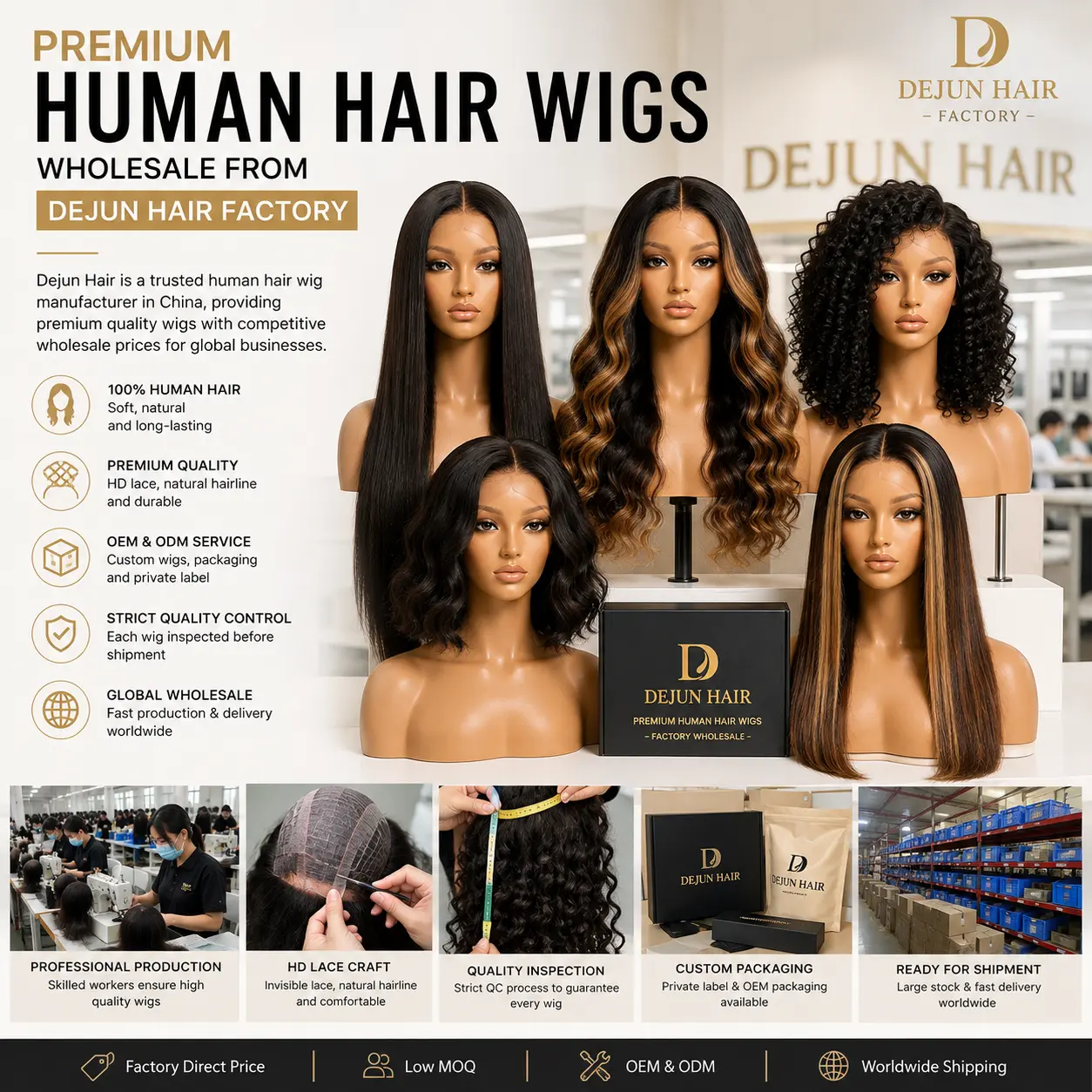
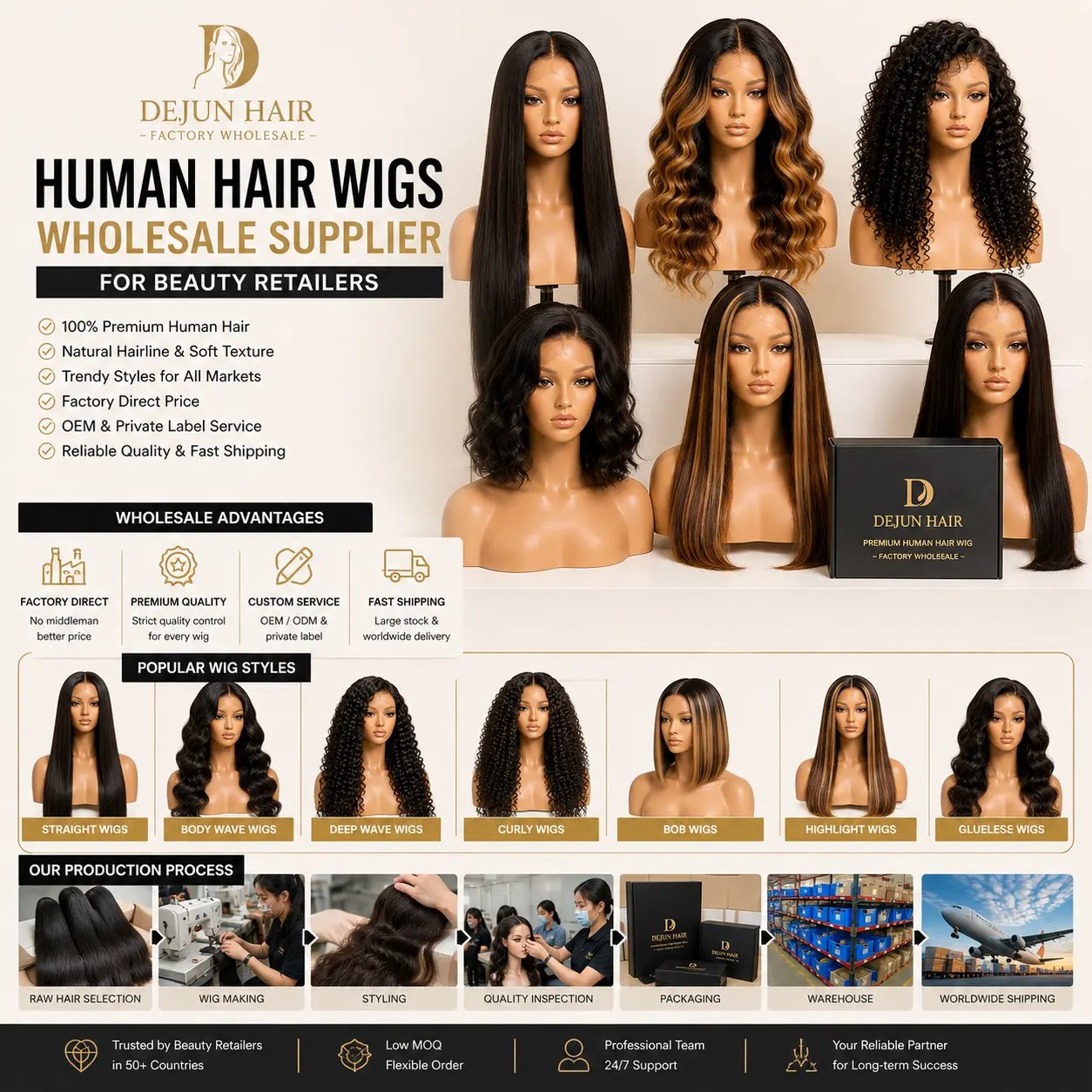
Dejun Hair is a wig manufacturer based in Shaoyang, Hunan, China, with approximately 20 years of local wig manufacturing experience. Our production system covers hair processing, cap construction, lace sewing, styling, quality inspection, packaging, and warehousing.
For retailers looking to build or expand their premium wig inventory, our broader Wholesale Human Hair Wigs collection offers multiple options across price points, textures, lengths, lace constructions, and customer groups.
Part 1: What Are Wholesale Premium Human Hair Wigs for Beauty Supply Stores?
The term can be understood through four key concepts: wholesale purchasing, premium quality, human-hair construction, and beauty-supply store requirements.
Wholesale Human Hair Wigs
Wholesale purchasing is different from buying individual retail wigs.
Beauty supply stores normally need multiple lengths, textures, colors, densities, and cap constructions within one inventory order. A suitable wholesale supplier therefore needs to support not only larger quantities but also flexible product combinations.
For many stores, a mixed order can be more useful than purchasing a large quantity of only one SKU.
For example, one stocking order may include:
- Straight human hair wigs
- Body wave wigs
- Deep wave wigs
- Curly wigs
- Lace front wigs
- Glueless wigs
- Bob wigs
- Natural black and colored wigs
This allows a beauty store to cover several consumer preferences without putting too much inventory capital into one style.
What Does “Premium” Mean for Human Hair Wigs?
For B2B buyers, premium should not simply mean a higher price.
A premium human hair wig should demonstrate measurable improvements in areas such as:
- Hair softness and consistency
- Hair direction and cuticle quality
- Reduced tangling
- Controlled shedding
- Natural luster
- Reliable density
- Secure cap construction
- Consistent lace workmanship
- Color stability
- Restyling performance
Raw material grading is especially important.
At Dejun Hair, human hair materials are classified according to quality requirements rather than treating all hair as the same grade. This helps differentiate regular processed hair, Remy-type hair, and higher-grade virgin hair solutions according to the buyer’s market and target price.
Human Hair Versus Synthetic Hair
Human hair wigs occupy a different position from synthetic wigs in a beauty supply store.
Human hair can generally provide greater flexibility for washing, heat styling, curling, straightening, and professional customization. The movement and texture can also provide a more natural appearance for customers seeking premium products.
Synthetic products, meanwhile, remain useful for price-sensitive and fashion-oriented customers.
For retailers carrying both categories, a tiered assortment often works better than relying entirely on one material.
Why Beauty Supply Stores Have Different Requirements
Beauty supply retailers have to think beyond the appearance of a single sample.
They need to consider:
- Whether the same quality can be reproduced in the next shipment
- Whether popular lengths can be restocked quickly
- Whether multiple SKUs can be combined in one order
- Whether the supplier accepts lower opening quantities
- Whether packaging can carry the retailer’s own branding
- Whether defective items can be handled efficiently
- Whether the product can generate acceptable retail margins
That makes supplier consistency just as important as wig appearance.
Part 2: Common Questions About Premium Human Hair Wig Wholesale
Question 1: How Can a Beauty Supply Store Judge Whether a Human Hair Wig Is Really Premium?
Do not evaluate a supplier only from catalog photos.
A better sourcing process is to inspect samples and compare them using the same criteria.
Start with the hair itself.
Run your fingers through the wig from roots to ends and check whether the texture changes noticeably. Look for excessive short hairs, unusual coating, inconsistent ends, or abnormal artificial shine.
Next, test basic handling.
Wash and air-dry the sample according to the recommended care procedure. A supplier’s sample may look excellent immediately after factory styling, but the real quality becomes clearer after washing and restyling.
You should also inspect:
- Hairline workmanship
- Knot security
- Lace condition
- Cap stitching
- Density distribution
- Hair shedding
- Color consistency
- Hair ends
- Overall construction
For lace-based premium products, beauty supply stores can also compare dedicated Wholesale Lace Front Wigs to decide whether standard lace, transparent lace, or HD lace better matches their target customer segment.
The objective is not necessarily to buy the most expensive wig. It is to identify the quality level that best matches your retail positioning.
Question 2: Should Beauty Supply Stores Start With a Large Wholesale Order?
Not necessarily.
For a new supplier or new product category, a smaller mixed trial order is usually more practical.
Instead of committing heavily to one specification, stores can test several combinations of:
- Texture
- Length
- Density
- Lace construction
- Cap type
- Color
Sales data can then show which combinations deserve deeper inventory.
For example, a retailer may discover that customers prefer convenient ready-to-wear products rather than traditional installation methods. In this situation, expanding into Wholesale Glueless Wigs may make more commercial sense than simply adding more conventional lace wigs.
Dejun Hair supports flexible wholesale arrangements for in-stock products and negotiable MOQs for customized orders, helping stores test product demand before increasing purchasing volume.
Part 3: Benefits of Wholesale Premium Human Hair Wigs for Beauty Supply Stores
1. Build a Higher-Value Product Category
Premium human hair wigs allow beauty supply stores to serve customers who are willing to spend more for natural appearance, versatility, and better overall construction.
Instead of competing only on low prices, retailers can create different product tiers.
For example:
Entry Level: affordable synthetic wigs
Mid Range: standard human hair wigs
Premium: lace, virgin hair, HD lace, glueless, or customized human hair wigs
This makes it easier to serve customers with different budgets within the same store.
2. Greater Styling Flexibility
A major commercial advantage of human hair is styling versatility.
Depending on the hair grade and treatment, customers may be able to:
- Straighten the hair
- Curl the hair
- Wash and restyle it
- Create different parting styles
- Professionally customize the hairline
- Apply appropriate coloring techniques
This allows one product to meet more than one styling requirement.
Stores targeting customers interested in highly natural frontal construction can also offer specific products such as 13×4 HD lace front straight human hair wigs alongside standard human hair wigs.
3. Better Opportunities for Repeat Business
Repeat purchases are critical for beauty supply businesses.
When buyers know that a particular wig line has consistent texture, density, cap fitting, and color, future purchasing decisions become easier.
Consistency is especially important in wholesale supply because a good first sample means little if the next production batch is significantly different.
Dejun Hair controls multiple manufacturing stages internally, including hair preparation, cap production, lace work, styling, inspection, and warehousing, allowing quality standards to be monitored throughout production.
4. Flexible Inventory Planning
Not every beauty store needs hundreds of pieces of a single wig.
Smaller stores and growing distributors frequently benefit from mixed purchasing.
A mixed order allows buyers to combine products such as:
- 12–18 inch everyday wigs
- 20–26 inch premium long wigs
- Straight and body wave textures
- Curly and deep wave textures
- Lace front styles
- Glueless styles
- Bob styles
- Selected fashion colors
Retailers targeting short, fashion-led products can additionally explore Wholesale Bob & Colored Wigs instead of concentrating all inventory in long natural-color products.
This approach spreads inventory risk across multiple customer preferences.
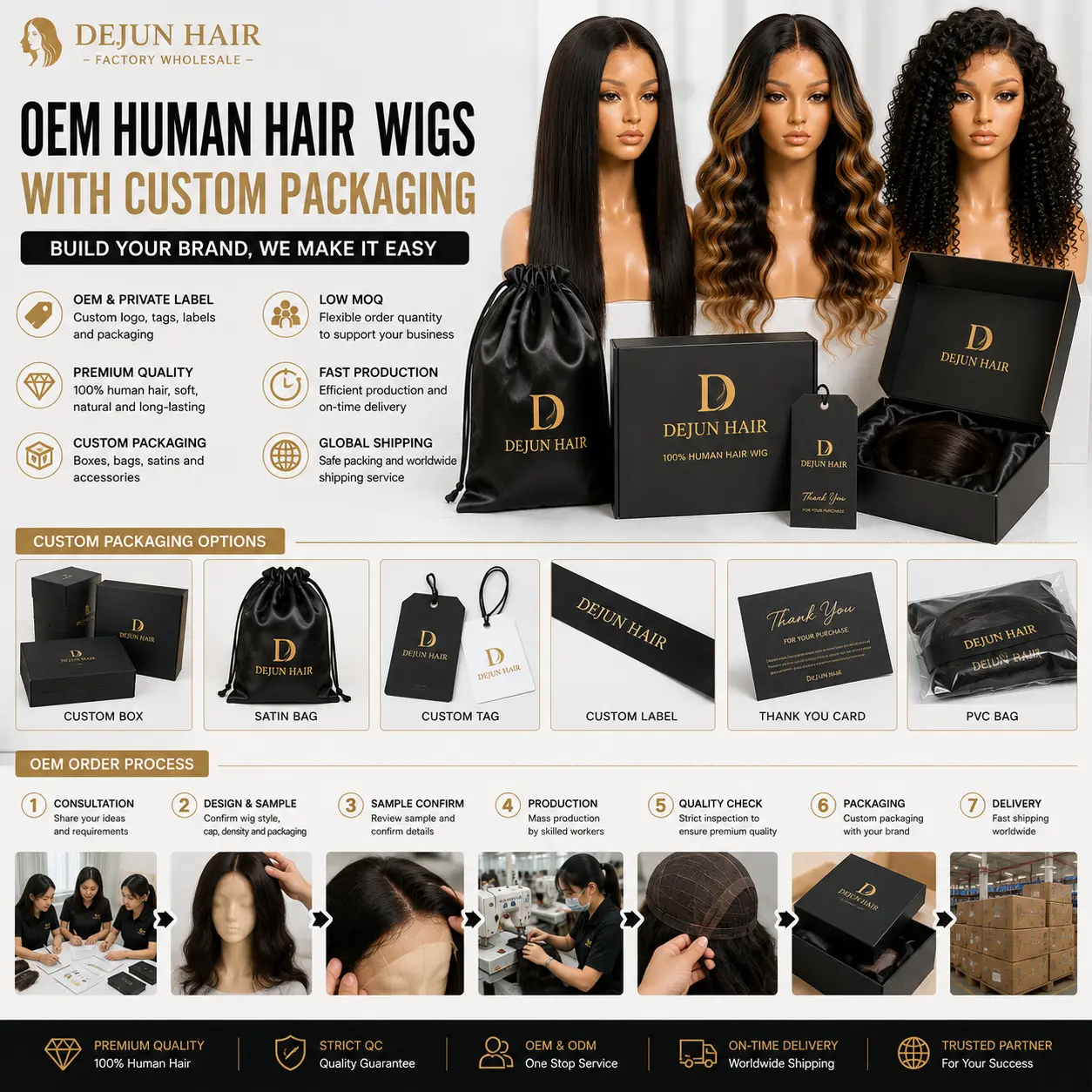
5. Private Label Opportunities
For beauty stores building their own brands, the wig itself is only one part of the retail product.
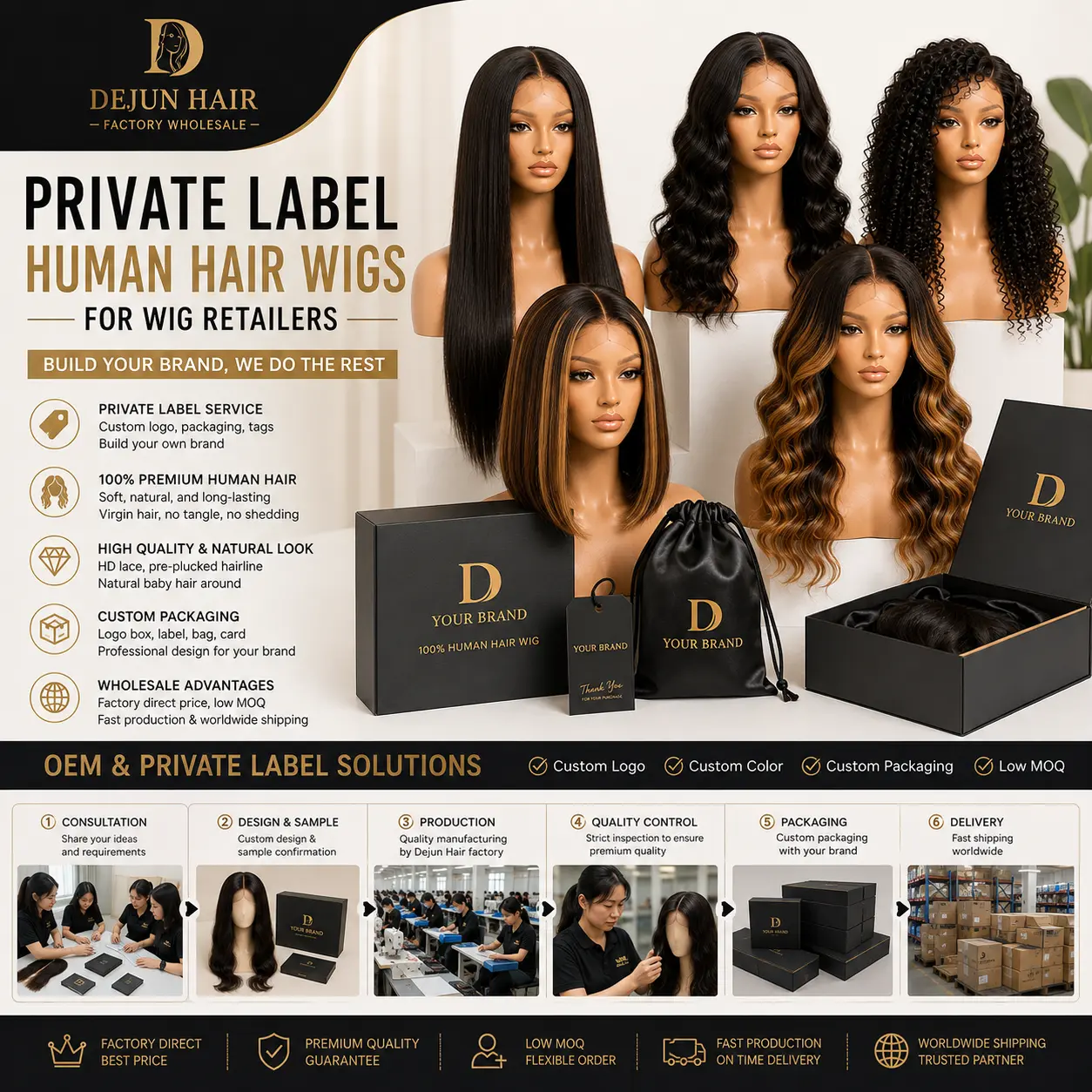
Dejun Hair can support OEM and private-label requirements including:
- Logo customization
- Packaging
- Hang tags
- Product labels
- Wig specifications
- Density
- Length
- Cap circumference
- Lace material
- Custom colors
- Sample development
This allows retailers to gradually move from simply reselling generic products toward developing recognizable private-label collections.
6. Factory-Direct Supply
Working with a source manufacturer can simplify communication between product requirements and production.
Dejun Hair operates its own wig manufacturing facilities in Shaoyang, Hunan.
Rather than sourcing finished products entirely through intermediaries, our production chain covers major processes from hair preparation and cap construction to styling, inspection, and packing.
For B2B buyers, this helps provide greater flexibility when discussing specifications, order combinations, customization, and repeat production.
Part 4: How to Source Premium Human Hair Wigs for a Beauty Supply Store
A structured purchasing process can significantly reduce sourcing mistakes.
Step 1: Define Your Target Retail Customer
Start with your customer rather than the factory catalog.
Ask:
Who purchases wigs from your store?
What is their typical retail budget?
Do they prefer everyday wigs or premium installations?
Are natural colors dominant, or do fashion colors sell well?
Do customers prefer lace installation or ready-to-wear glueless construction?
Different stores should build different inventory structures.
A beauty supply store serving professional stylists may prioritize lace construction and customization, while a neighborhood retailer may need more beginner-friendly and fast-moving styles.
Step 2: Build a Starter SKU Matrix
Avoid selecting products randomly.
Build a purchasing matrix covering several variables.
| Product Factor | Suggested Options | Purchasing Consideration |
|---|---|---|
| Hair Type | Human Hair / Virgin Hair | Match quality to target retail price |
| Texture | Straight / Body Wave / Deep Wave / Curly | Start with proven local preferences |
| Length | Short / Medium / Long | Mix lengths to reduce inventory concentration |
| Density | 130% / 150% / 180% / Custom | Select according to style and customer preference |
| Lace | Standard / Transparent / HD | Match realism to retail positioning |
| Cap | Lace Front / Glueless / Other | Consider installation difficulty |
| Color | Natural Black / Brown / Highlight / Custom | Natural colors are safer for opening inventory |
| Branding | Standard / Private Label | Customize after product validation |
| Order Type | Stock / OEM | Use stock for testing and OEM for scaling |
A diversified starter matrix gives you more useful sales data than ordering many pieces of one specification.
Step 3: Compare Samples
Request representative samples before significant bulk purchasing.
However, do not simply compare how samples look when they arrive.
Use a consistent test procedure.
Hair Test
Check:
- Smoothness
- Texture consistency
- Natural movement
- Hair ends
- Unusual coating
- Excessive shedding
Washing Test
Wash the wig and examine:
- Texture recovery
- Tangling
- Shedding
- Shape
- Hair movement after drying
Construction Test
Inspect:
- Cap stitching
- Elastic components
- Lace attachment
- Knots
- Hairline
- Density distribution
Styling Test
When appropriate for the hair grade, test:
- Straightening
- Curling
- Restyling
Keep written records so different suppliers and production batches can be compared objectively.
Step 4: Confirm MOQ and Mixed-Order Rules
MOQ should be discussed before detailed customization begins.
Ask clearly:
- MOQ per style
- MOQ per color
- MOQ per length
- Mixed-order policy
- Private-label MOQ
- Packaging MOQ
- Sample cost
- Restocking requirements
A low total MOQ may still be difficult if the supplier requires a high minimum quantity for every individual color or length.
For beauty supply stores, SKU-level flexibility is often more important than simply advertising “low MOQ.”
Step 5: Confirm OEM and Private Label Requirements
If you plan to sell under your own brand, create a written specification sheet.
It should define:
- Hair type
- Texture
- Length
- Density
- Lace size
- Lace material
- Cap circumference
- Hair color
- Hairline requirements
- Packaging
- Logo position
- Hang tag
- Label information
Approve the product sample and packaging sample before mass production.
This reduces misunderstanding and helps maintain consistency during repeat orders.
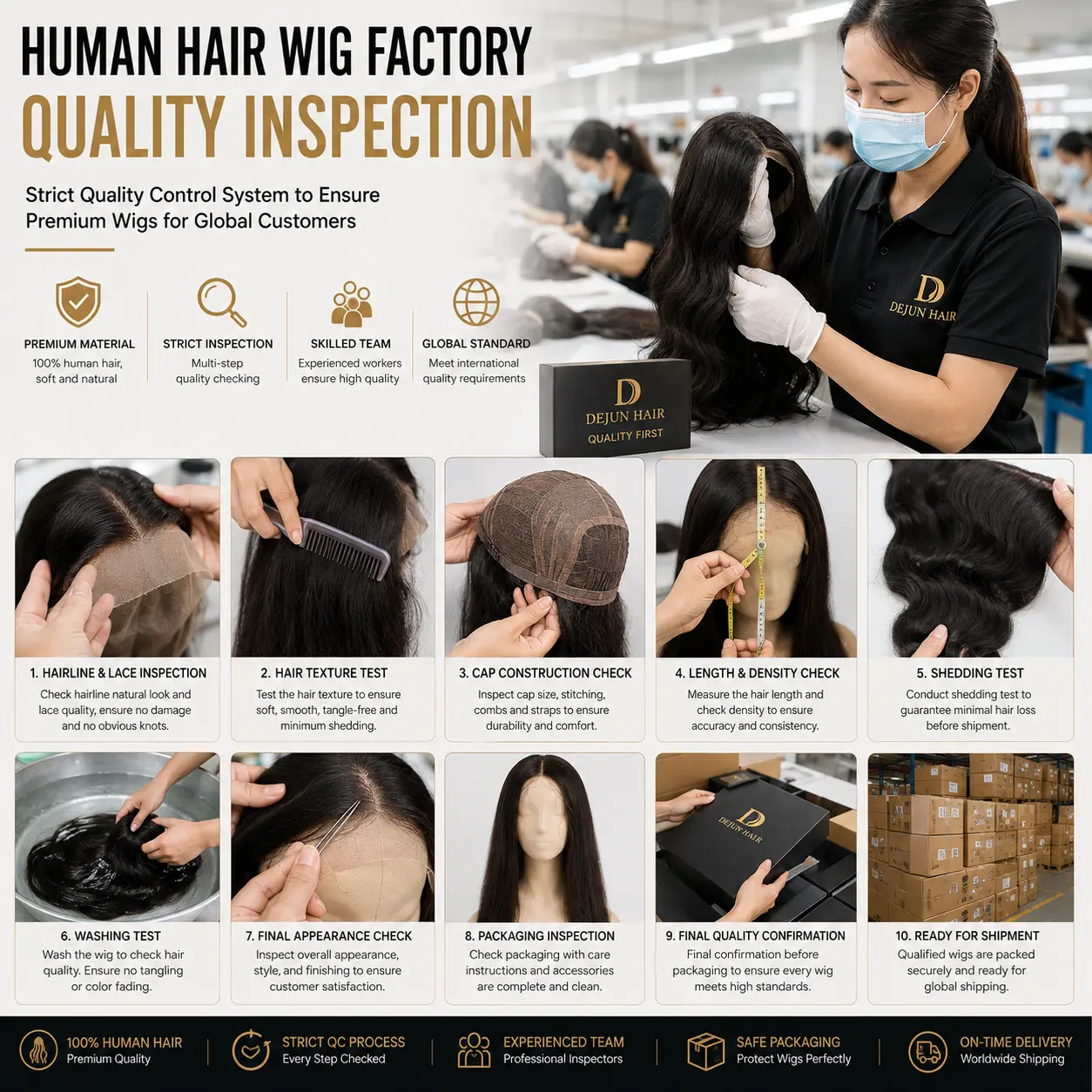
Step 6: Establish Quality Inspection Standards
Wholesale buyers should agree on acceptable quality standards before shipment.
Inspection can include:
- Correct SKU
- Hair quality
- Length
- Density
- Cap dimensions
- Stitching
- Lace
- Hairline
- Color
- Packaging
- Label accuracy
- Visual defects
At Dejun Hair, wigs pass multiple checks involving hair condition, construction, color, dimensions, and finished-product appearance before entering the warehouse or shipping process.
Step 7: Plan Replenishment Before Products Sell Out
Beauty supply stores should not wait until the final units have sold before reordering.
Track sales velocity by:
- Style
- Length
- Texture
- Color
- Price range
Divide products into fast-moving, stable, and slow-moving groups.
Fast-moving SKUs can receive deeper replenishment orders, while slower products should remain in smaller quantities.
This gradually turns the first mixed order into a more accurate inventory strategy.
Step 8: Scale the Winning SKUs
After several sales cycles, use actual sell-through data to determine which products deserve expansion.
Winning products can then be developed through:
- More lengths
- Additional densities
- New colors
- Premium lace upgrades
- Custom packaging
- Exclusive specifications
- Private-label branding
Instead of launching dozens of customized products immediately, this test-and-scale model reduces purchasing risk.
Part 5: Practical Results for Beauty Supply Businesses
The following examples illustrate the type of operational improvements beauty supply businesses can target when using a structured wholesale strategy. They are practical scenarios rather than guaranteed financial outcomes.
Example 1: A Small Beauty Supply Store Expands Premium Inventory
A small store initially carries only a limited range of standard wigs.
Rather than investing heavily in one premium product, the owner introduces a mixed trial order consisting of straight, body wave, curly, lace front, and glueless human hair wigs.
After several selling cycles, the owner identifies the combinations with the highest customer interest and increases inventory only for those SKUs.
Practical Result
The store gains a broader premium product range while limiting the risk of overstocking untested styles.
Example 2: A Retailer Develops a Private-Label Wig Collection
An established beauty supply store already knows which lengths and textures sell consistently.
Instead of continuing to sell only generic packaging, the retailer selects several proven SKUs and develops customized packaging, labels, and product specifications.
Practical Result
The retailer creates a more consistent brand presentation and gains greater control over product positioning rather than competing entirely on identical generic products.
Example 3: A Multi-Store Distributor Improves Replenishment
A distributor supplying several beauty stores finds that every location sells different lengths and textures at different speeds.
The distributor begins tracking sales by SKU and divides purchasing into core replenishment inventory and smaller test inventory.
Practical Result
Fast-moving products receive priority production and replenishment, while new styles are tested in lower quantities before being expanded.
This reduces dependence on guesswork and creates a more data-driven wholesale purchasing system.
Why Work With Dejun Hair?
Beauty supply stores need suppliers that understand B2B purchasing rather than simply selling individual wigs.
Dejun Hair provides a complete human hair and synthetic wig manufacturing system for overseas wholesalers, beauty stores, salons, distributors, online wig sellers, and private-label brands.
Our manufacturing capabilities include:
- Approximately 20 years of wig production experience
- Own production facilities in Shaoyang, Hunan, China
- Human hair and synthetic wig production
- Hair processing
- Cap construction
- Lace sewing
- Styling and finishing
- Quality inspection
- Warehouse management
- Flexible wholesale orders
- Mixed SKU purchasing
- OEM/ODM development
- Private-label packaging
- International shipping support
For a beauty supply store, the objective should not simply be finding the cheapest human hair wig.
The more sustainable approach is to build a product line with consistent quality, appropriate MOQ, reliable replenishment, controlled inventory risk, and specifications matched to real customer demand.
A reliable factory relationship makes that process easier to scale.