How to Start Selling Colored Wigs Online: A Wholesale Guide for Beauty Entrepreneurs
Selling wigs online can look simple from the outside: choose attractive products, build an online store, post videos on social media, and start taking orders. In reality, one of the biggest challenges for a new beauty entrepreneur is deciding what to stock, how much to buy, and where to source reliable products without tying up too much cash in inventory.
This is especially important when selling colored human hair wigs. Customers may love blonde, burgundy, ombre, balayage, highlighted, or fashion-colored wigs, but demand can vary significantly by market, season, price range, and social media trends. Buying too many colors too early can leave you with slow-moving inventory, while inconsistent color or poor hair quality can quickly damage a new brand’s reputation.
A better approach is to start with a focused product range, test demand, work with a flexible supplier, and scale the styles that actually sell.
This guide explains how beauty entrepreneurs can start selling colored wigs online—from choosing products and finding a wholesale supplier to setting prices, building a private label, marketing products, and gradually scaling the business.
Is Selling Colored Wigs Online a Good Business Opportunity?
Colored wigs have one important advantage for online beauty businesses: they are highly visual products.
A natural black wig can sell because of its hair quality, lace, density, or styling. A colored wig can offer all of those features while also creating an immediate visual impact. A honey-blonde balayage, burgundy bob, or highlighted body-wave wig can stand out in a TikTok video, Instagram Reel, product advertisement, or online store collection.
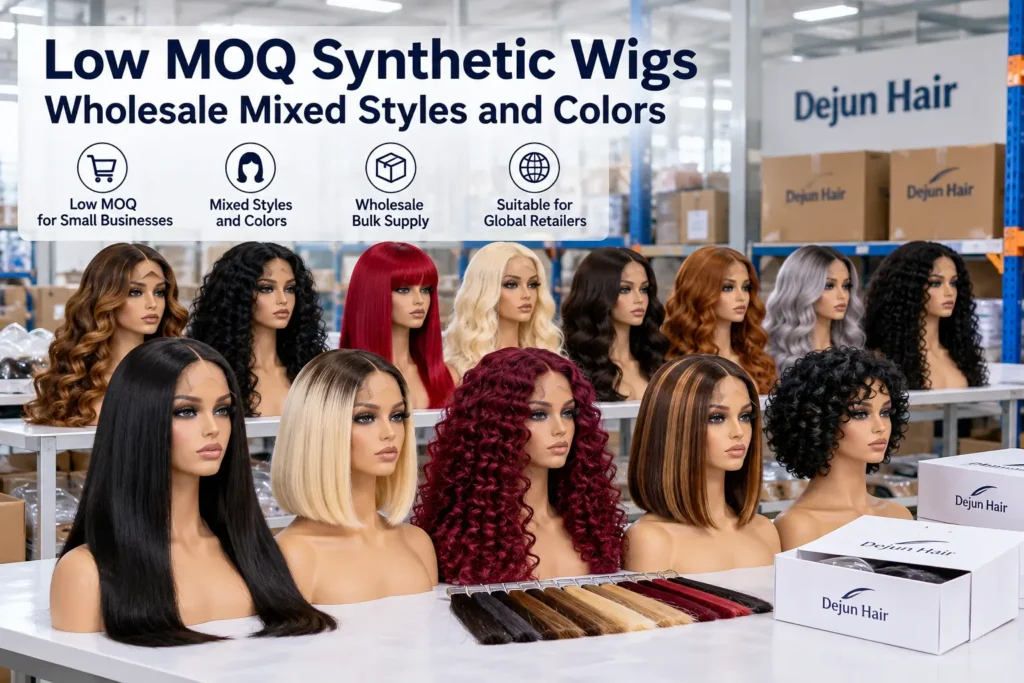
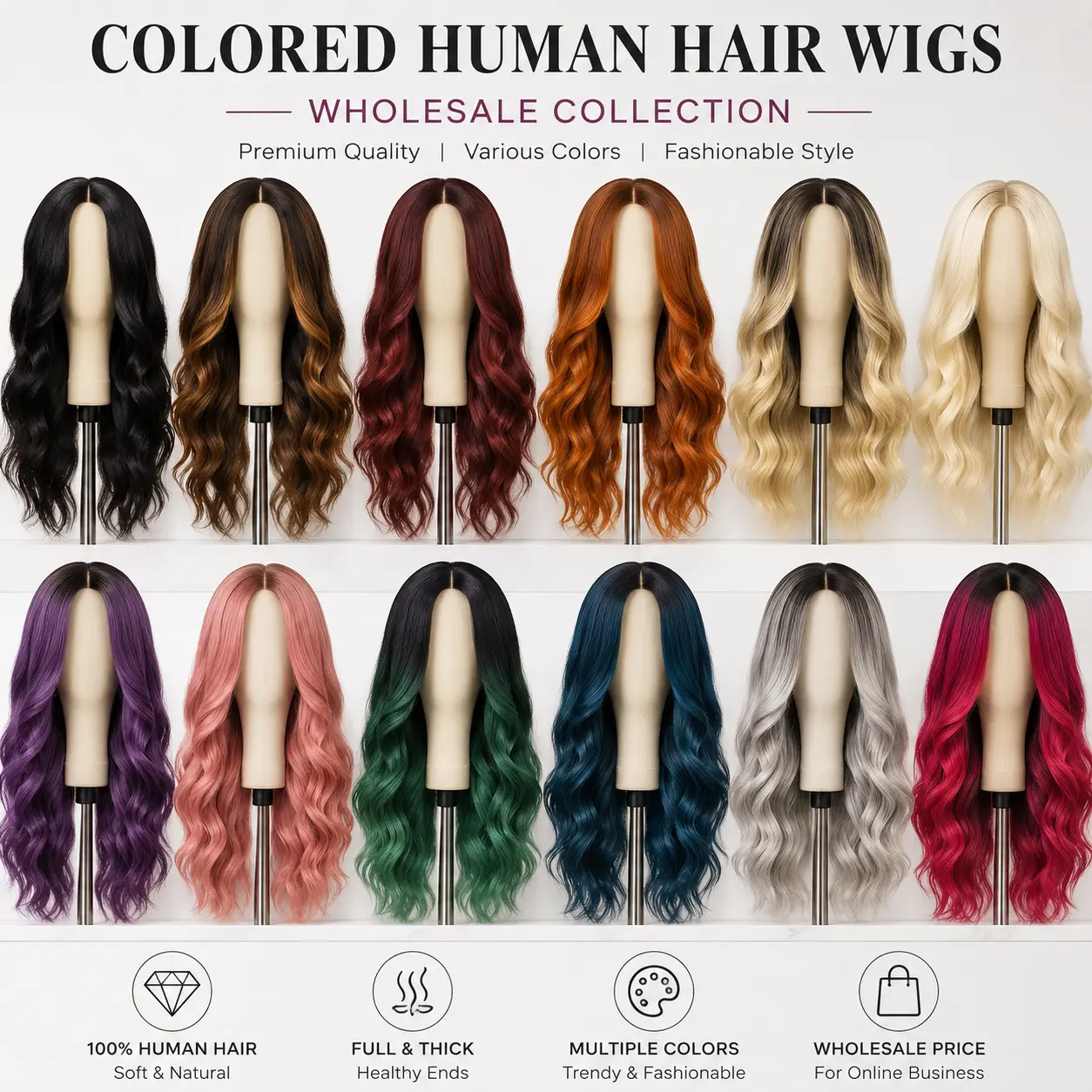
Color also gives retailers more ways to segment their inventory. Instead of selling one style in only natural shades, businesses can develop collections around different customer preferences, including:
- 613 and platinum blonde
- Honey blonde and brown
- Burgundy and 99J
- Ombre and highlighted colors
- Balayage styles
- Copper and red tones
- Pastel colored wigs
- Multi colored wigs
For buyers planning their next product range, reviewing current colored wigs wholesale market trends can also help identify changing color preferences, popular wig constructions, and sourcing opportunities before committing to inventory.
However, more choices do not automatically mean more profit.
For a new seller, the goal should be to identify a small number of commercially promising colors and test them before expanding. This is particularly important when sourcing colored human hair wigs, which usually require more initial investment than lower-cost synthetic products.
Step 1: Define Your Target Customer Before Buying Wigs
One of the most common startup mistakes is choosing wigs according to personal taste instead of customer demand.
Before contacting a supplier, answer three questions:
Who is my target customer? What price can she comfortably pay? Where will she discover and buy my products?
A salon serving local customers may need a different inventory strategy from a TikTok-focused beauty brand. Likewise, a distributor selling affordable wigs in an African market may have different product priorities from a premium online store targeting customers in the United States or Europe.
For example, an online store targeting fashion-conscious consumers might test honey blonde, balayage, highlighted brown, burgundy, and 613 blonde. A seller targeting customers who frequently change hairstyles may also consider shorter colored bob wigs and easy-to-wear glueless designs.
The important point is to define your market before placing a wholesale order.
You can use competitor stores, social media comments, customer questions, local salon feedback, keyword research, and your own previous sales data to build an initial shortlist.
Do not ask, “Which colors look best?”
Ask, “Which colors are my customers most likely to pay for?”
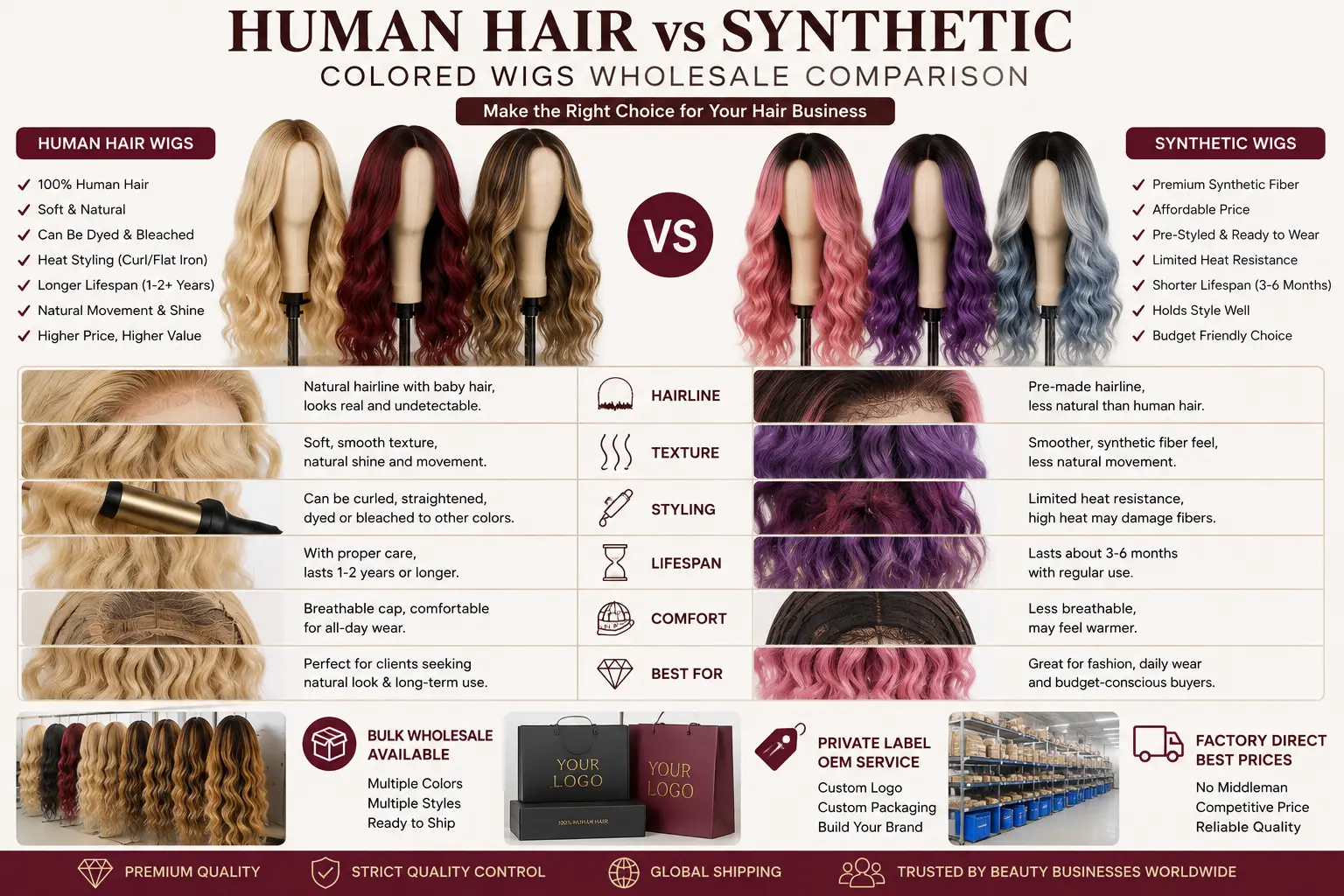
Step 2: Choose Between Human Hair and Synthetic Colored Wigs
New beauty entrepreneurs often need to decide whether to start with human hair, synthetic hair, or a combination of both.
Neither category is automatically right for every business.
Colored Human Hair Wigs
Colored human hair wigs are generally better suited to customers who value natural movement, styling flexibility, premium appearance, and longer-term wear. Depending on the hair quality and processing, they can also support a higher retail price.
They are particularly suitable for businesses positioning themselves in the mid-range or premium segment.
However, the purchasing cost is higher, making quality control especially important. Color processing can affect the condition of human hair, so buyers should evaluate softness, tangling, shedding, color consistency, lace workmanship, density, and overall construction before committing to a large order.
Synthetic Colored Wigs
Synthetic wigs can provide a lower-cost entry point and make it easier to experiment with fashion colors. High-temperature synthetic fibers also offer more styling possibilities than basic fibers, although performance still differs from human hair.
For price-sensitive markets, synthetic products can help retailers offer affordable colored wigs without requiring the same inventory investment as premium human hair products.
Consider a Tiered Product Strategy
You do not necessarily have to choose only one material.
A practical online store can build three pricing levels:
| Product Tier | Example | Business Role |
|---|---|---|
| Entry | Synthetic colored wigs | Affordable, trend-driven purchases |
| Mid-range | Standard colored human hair wigs | Mainstream customers |
| Premium | Virgin human hair colored lace wigs | Higher-value customers |
This structure allows a retailer to serve different budgets while learning which customer segment produces the strongest repeat sales.
Step 3: Choose the Best Colored Wigs to Sell Online
A new business does not need 30 colors and 20 constructions on launch day.
Too many SKUs divide your purchasing budget and make inventory management more difficult. Instead, build a focused opening collection.
A useful approach is to separate products into core colors and trend colors.
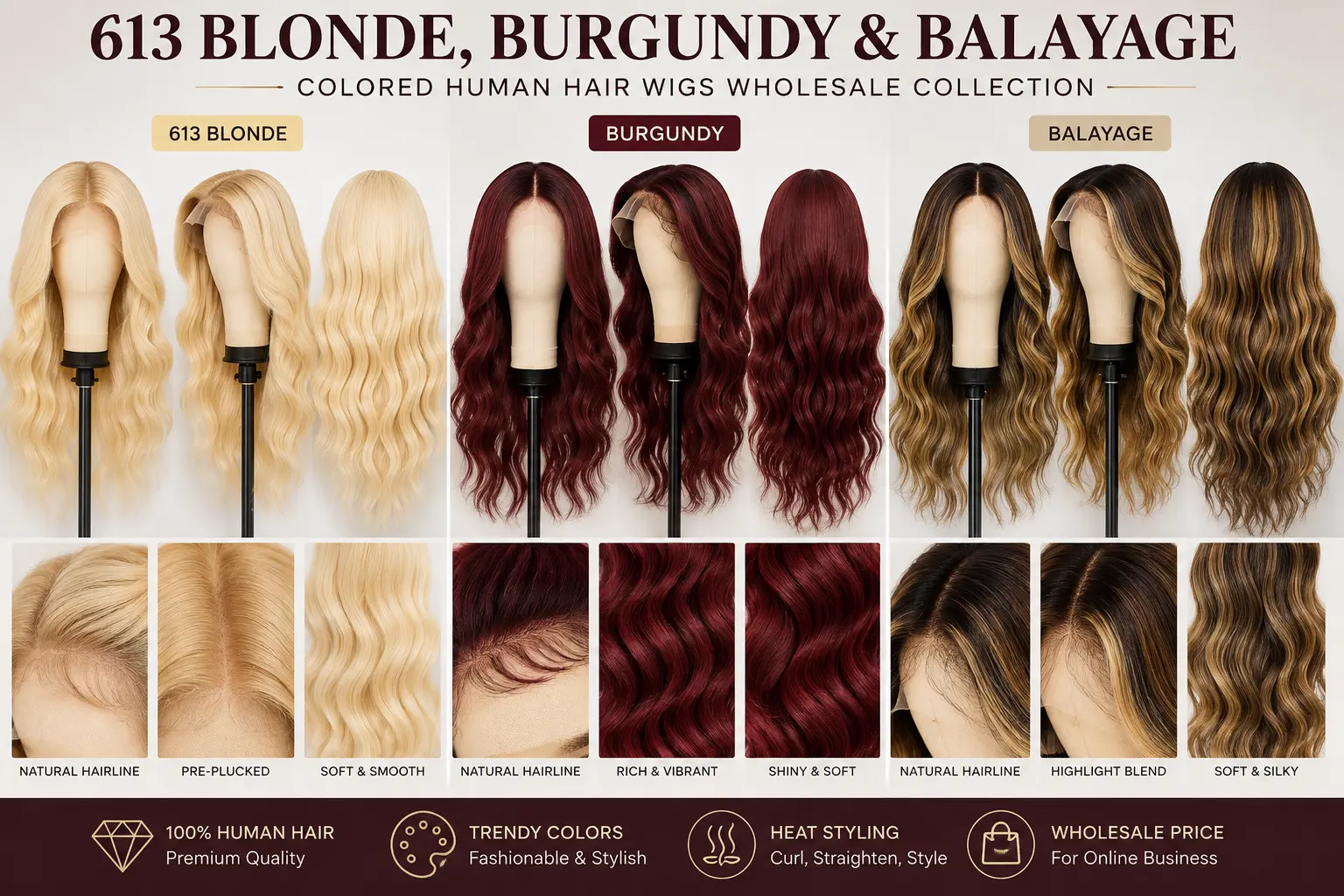
Core colors may include 613 blonde, brown, burgundy/99J, and popular highlighted combinations. Trend colors might include copper, balayage, ash blonde, pastel shades, or other colors gaining traction in your market.
Then combine these colors with proven wig constructions and hairstyles, such as:
- Bob wigs
- Straight wigs
- Body-wave wigs
- Colored lace front wigs
- Glueless wigs
- Long layered wigs
For example, instead of buying ten completely different fashion colors, a startup might test a smaller assortment such as a 613 blonde straight wig, burgundy bob, honey-blonde body wave, highlighted brown glueless wig, and balayage lace-front style.
The exact combination should depend on your customer rather than a universal “best seller” list.
Another useful strategy is to separate traffic products from profit products. An eye-catching multi colored wig might generate social engagement, while a more wearable highlighted brown or blonde human hair wig could generate more consistent orders.
The most visually exciting product and the most profitable product are not always the same.
Step 4: Find a Reliable Colored Wigs Wholesale Supplier
Once you know what you want to sell, supplier selection becomes one of the most important decisions in the business. If human hair products will be a core part of your collection, understanding how to source wholesale human hair wigs can help you compare hair quality, pricing, MOQ, customization options, and production capabilities more effectively.
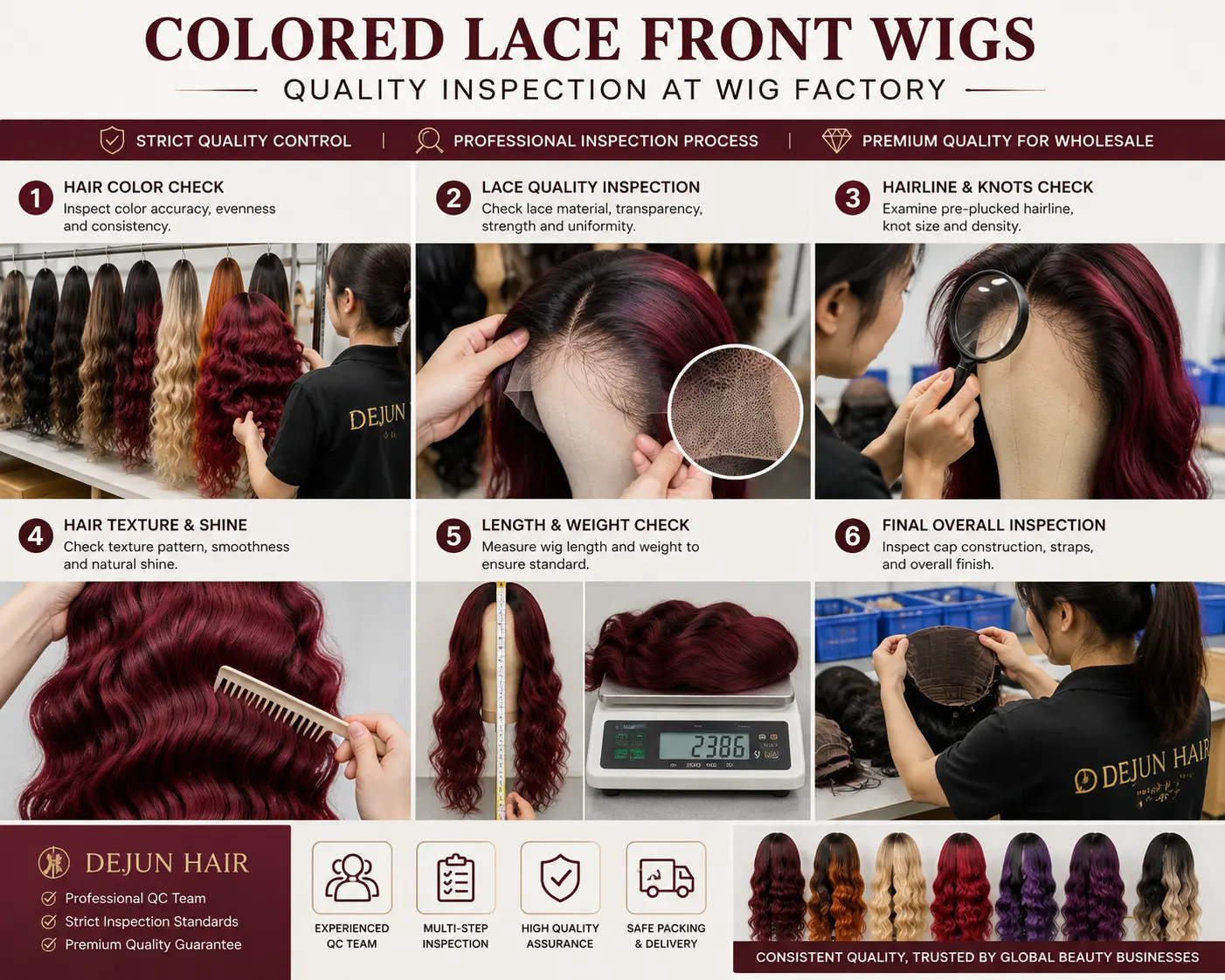
When searching for where to buy colored wigs in bulk, avoid comparing factories only by the lowest unit quotation. A lower purchase price means little if the second shipment arrives in a different shade, the hair tangles quickly, or the supplier cannot replenish your best-selling SKU.

Before selecting a colored wigs supplier for an online store, evaluate the following areas:
1. Hair Material and Quality
Ask the supplier to explain what hair is being used rather than relying only on broad terms such as “premium.”
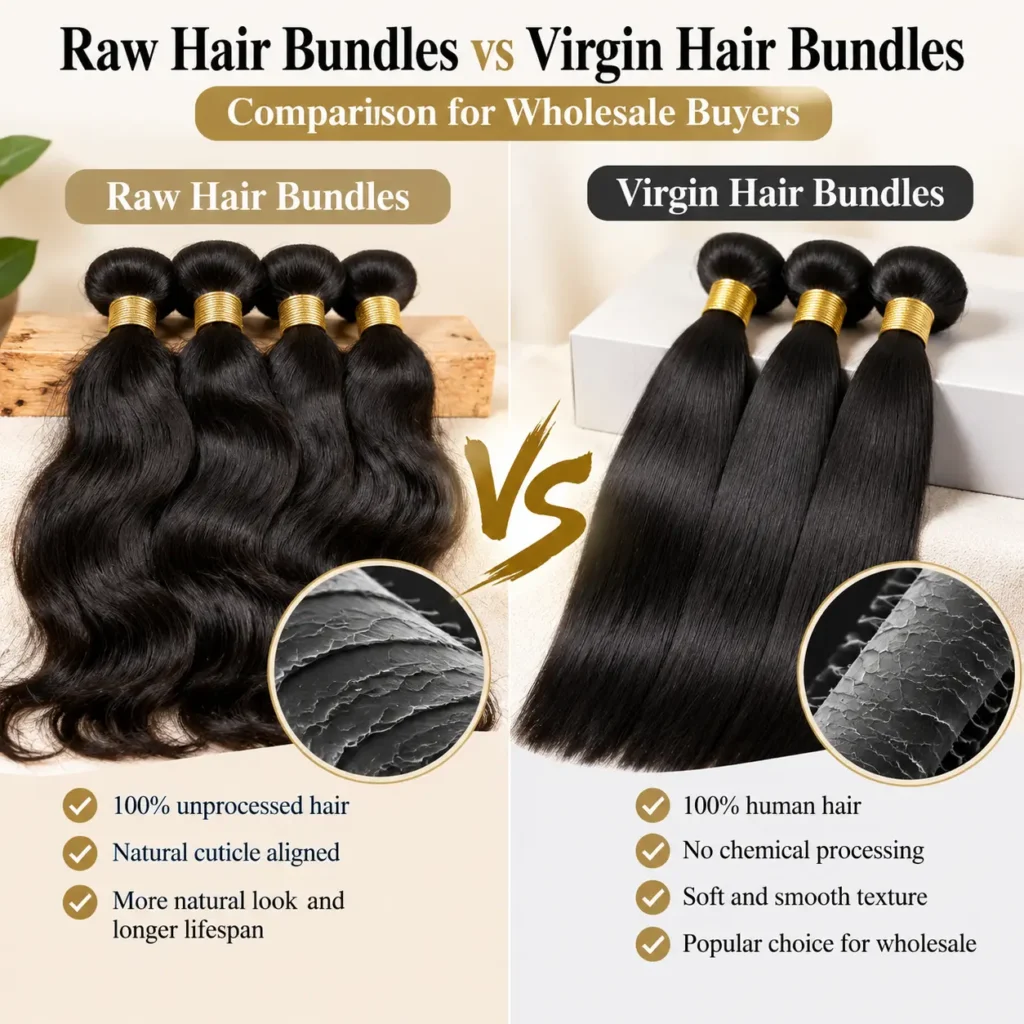
For human hair products, understand whether the range includes standard human hair, Remy hair, virgin hair, or other defined grades. More importantly, compare physical samples and establish the quality specification you expect for repeat orders.
2. Color Consistency
Color is particularly important in this category.
Ask whether the factory can maintain reasonable consistency between production batches. If customers reorder a popular blonde, burgundy, or balayage style, significant color variation can lead to complaints and returns.
3. MOQ and Mixed Orders
For wholesale colored wigs for a small business, flexibility can be more valuable than the lowest possible price.
Ask whether you can mix:
- Different colors
- Different lengths
- Different textures
- Different wig constructions
A mixed order lets a new retailer test more demand without buying a large quantity of every SKU.
4. Sampling
Whenever possible, evaluate samples before scaling.
Check hair texture, shedding, tangling, density, lace, cap construction, stitching, color accuracy, and appearance after basic washing and styling.
For human hair products, a sample test is much less expensive than discovering a quality problem after hundreds of units have arrived.
If you are sourcing human hair products for the first time, learning how to check human hair wig quality before bulk ordering can help you evaluate hair authenticity, shedding, tangling, lace workmanship, density, and overall construction more systematically.
5. Production and Replenishment
Your first order is only part of the supplier relationship.
Ask what happens when one color unexpectedly becomes your bestseller. A reliable wig manufacturer should be able to explain stock availability, production lead times, bulk capacity, and repeat-order procedures clearly.
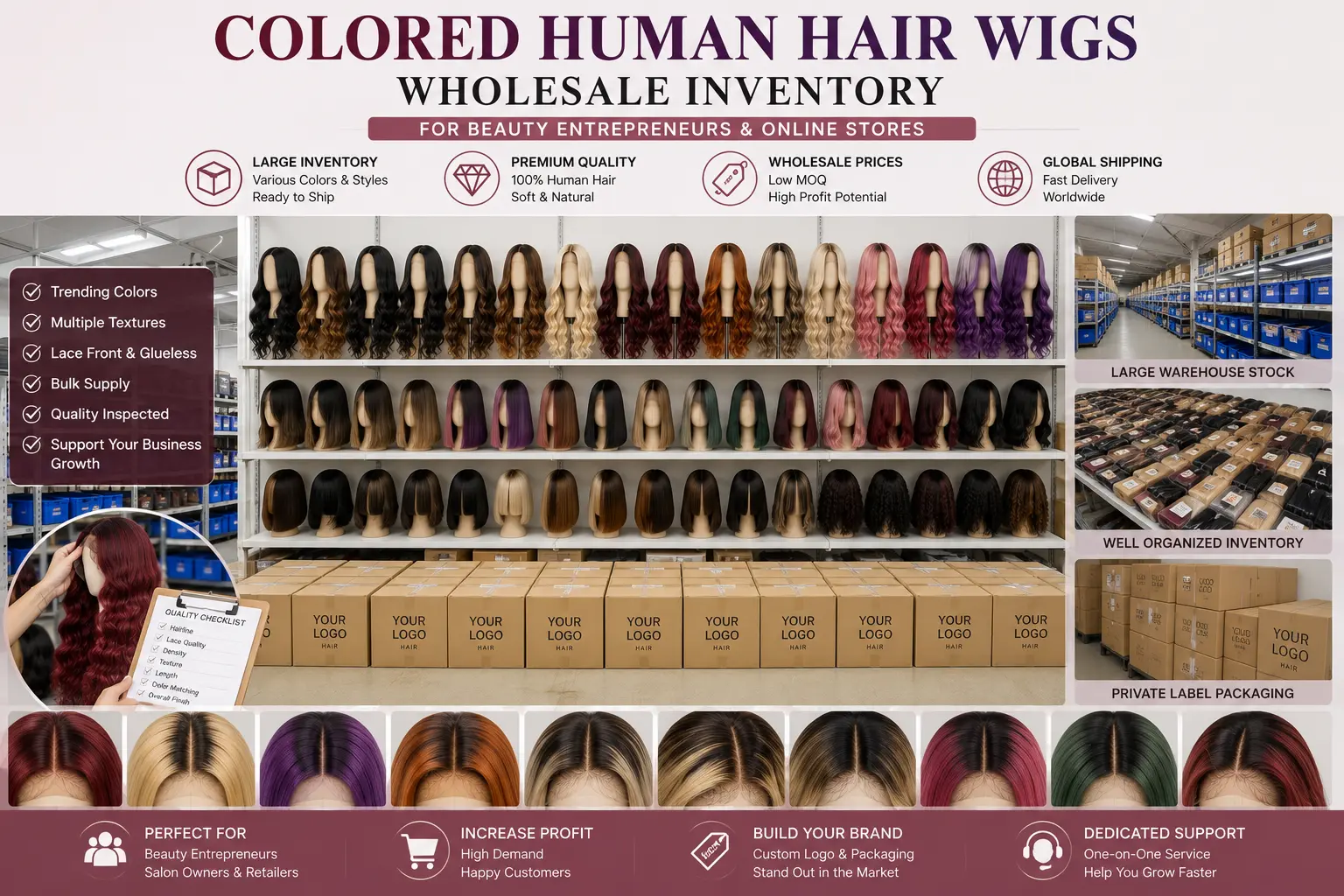
At Dejun Hair, our experience as a manufacturer has shown us that new wholesale buyers often benefit more from a flexible testing strategy than from immediately chasing the lowest bulk price. A smaller mixed order can provide real market data before the buyer commits to larger quantities.
Step 5: Start Small and Test the Market
For a first wholesale order, think in terms of:
Test → Measure → Reorder → Scale
Suppose you have identified five promising colors and three wig constructions. Rather than purchasing large quantities of all 15 combinations, select the combinations with the strongest commercial logic and order limited quantities where your supplier’s MOQ permits.
Then track:
- Which colors receive the most product-page visits?
- Which products receive the most social media engagement?
- Which colors convert into paid orders?
- Which lengths sell best?
- Which products have the highest return rate?
- What questions do customers repeatedly ask?
- Which products generate repeat orders?
This turns your first inventory into market research.
If 613 blonde gets strong engagement but highlighted brown generates more purchases, your next order should reflect sales data rather than social engagement alone.
This is why flexible MOQ and mixed wholesale orders are especially valuable to startup retailers.
Step 6: Calculate Pricing and Profit Before You Place a Bulk Order
Another common mistake is calculating profit using only the factory price.
Your actual product cost is closer to:
Product cost + packaging + international shipping + import-related costs + payment fees + fulfillment = landed cost
After the product is sold, you may still have:
- Advertising costs
- Influencer commissions
- Platform fees
- Payment processing fees
- Customer service expenses
- Returns and exchanges
- Discounts
- Local delivery costs
Imagine that a wig costs $45 from the supplier and another $10 per unit in packaging, freight, import-related expenses, and fulfillment. Your landed cost is approximately $55.
If the retail price is $110, the $55 difference is not necessarily your net profit. Marketing, transaction fees, returns, and other operating expenses still need to be deducted.
Before deciding where to buy colored wigs in bulk, create a target cost range based on the retail price your market can support.
This reverses the typical sourcing process.
Instead of asking:
“What is the cheapest wig I can buy?”
Ask:
“What quality can I reliably source at a cost that supports my target retail price and margin?”
That question usually leads to better long-term purchasing decisions.
Step 7: Use Private Label and Custom Color Wigs to Build Your Brand
Once your product-market fit becomes clearer, you can move beyond simply reselling generic inventory.
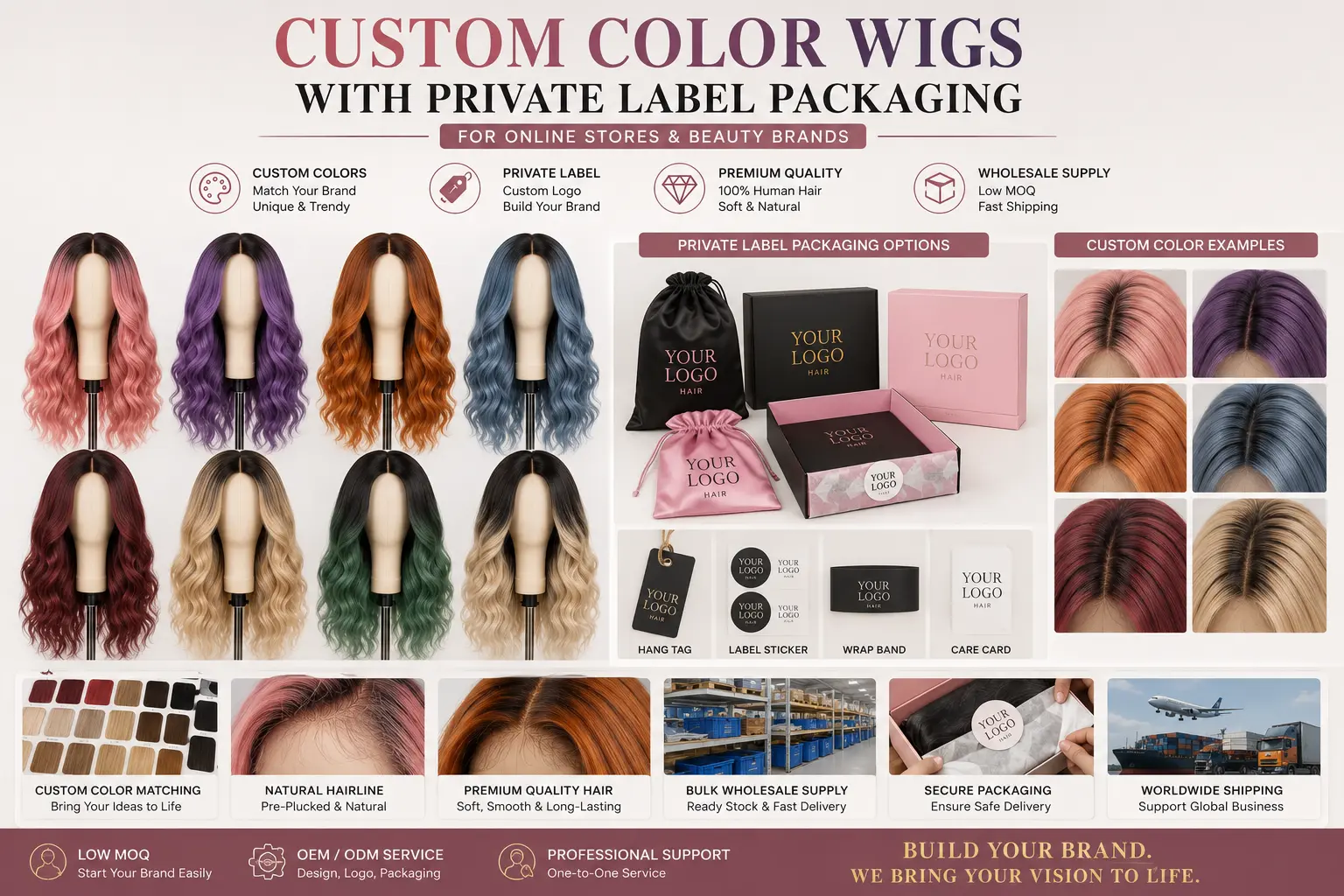
Private labeling may include:
- Custom logo
- Wig boxes
- Hang tags
- Satin bags
- Care cards
- Branded labels
- Custom packaging
- Customized cap, density, length, or lace specifications
A manufacturer with OEM/ODM capabilities may also help develop custom color wigs based on your target market.
This can be particularly useful after you identify a winning style.
For example, if a honey-blonde glueless wig becomes one of your strongest products, you could work with your manufacturer to refine the root color, length range, density, lace, packaging, or other specifications and turn it into a recognizable product within your own brand.
Private labeling should therefore be viewed as more than putting a logo on a box.
The long-term goal is to develop a product customers can associate specifically with your business.
For a startup, however, customization should be gradual. Test the underlying product first. Once demand is proven, invest more heavily in packaging and deeper OEM specifications.
Step 8: Create Product Content That Shows the Real Color
Online customers cannot touch the wig before purchasing it, which makes content part of your product quality experience.
This is particularly important for colored lace front wigs and other multi-tone products because the same shade can appear different under studio lights, indoor lighting, sunlight, or different camera settings.
A strong product page should consider showing:
- Front view
- Side view
- Back view
- Hairline and lace close-up
- Texture close-up
- Indoor lighting
- Natural daylight
- Hair movement
- Styling demonstration
For ombre, balayage, highlighted, pastel, and multi colored wigs, close-ups are especially useful because customers want to understand how tones transition through the hair.
Avoid excessive editing that makes the product color unrealistic. A highly polished image may generate a click, but inaccurate color representation can generate a return.
For online wig brands, accurate visual expectations are part of customer service.
Step 9: Choose Sales Channels That Match Your Business Model
You do not need to sell everywhere immediately.
Independent Online Store
A Shopify or other independent website gives you greater control over branding, customer data, product presentation, content marketing, and long-term SEO.
It is particularly useful if your goal is to build a recognizable beauty brand rather than depend entirely on a third-party marketplace.
TikTok
Colored wigs are naturally suitable for short-form video.
Content can include transformations, color reveals, styling tutorials, lace demonstrations, “three ways to style” videos, packaging videos, and before-and-after content.
Trend-driven products such as pastel colored wigs can attract attention, while more commercial colors can be used to convert that attention into sales.
Instagram can work well for hairstyle inspiration, Reels, customer photos, influencer partnerships, and visually consistent brand collections.
Salon Plus Online Sales
Salon owners can combine physical fitting and styling with online reorders. This can be particularly effective because the first in-person experience helps customers understand their preferred cap, length, color, and style.
Start with the channel where you understand your customer best, then expand as your sales process becomes repeatable.
Step 10: Scale Your Colored Wig Business With a Stable Supply Chain
The supplier that works for your first 20 units must ideally also be able to support you when you need 200, 500, or more.
As sales increase, your priorities may change.
At startup, you may care most about MOQ.
After finding a bestseller, you may care more about replenishment speed.
As you build your brand, you may need OEM packaging and exclusive specifications.
As order volume grows, you may care more about production capacity, batch consistency, shipping coordination, and wholesale pricing tiers.
This is why a long-term supplier should be evaluated as part of your business infrastructure—not simply as a source of products.
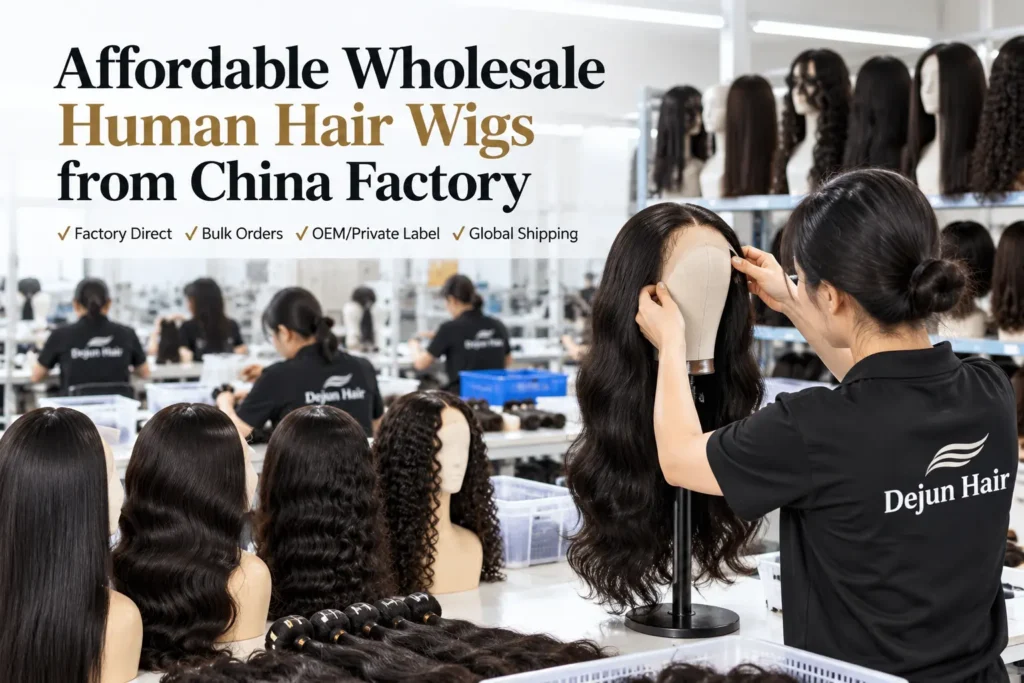
Dejun Hair has operated as a wig manufacturer in Shaoyang, Hunan, for approximately 20 years, with production covering human hair and synthetic wig categories. For overseas wholesale customers, we support mixed wholesale purchasing as well as OEM/ODM options including packaging, labels, logo branding, cap specifications, density, length, and lace customization.
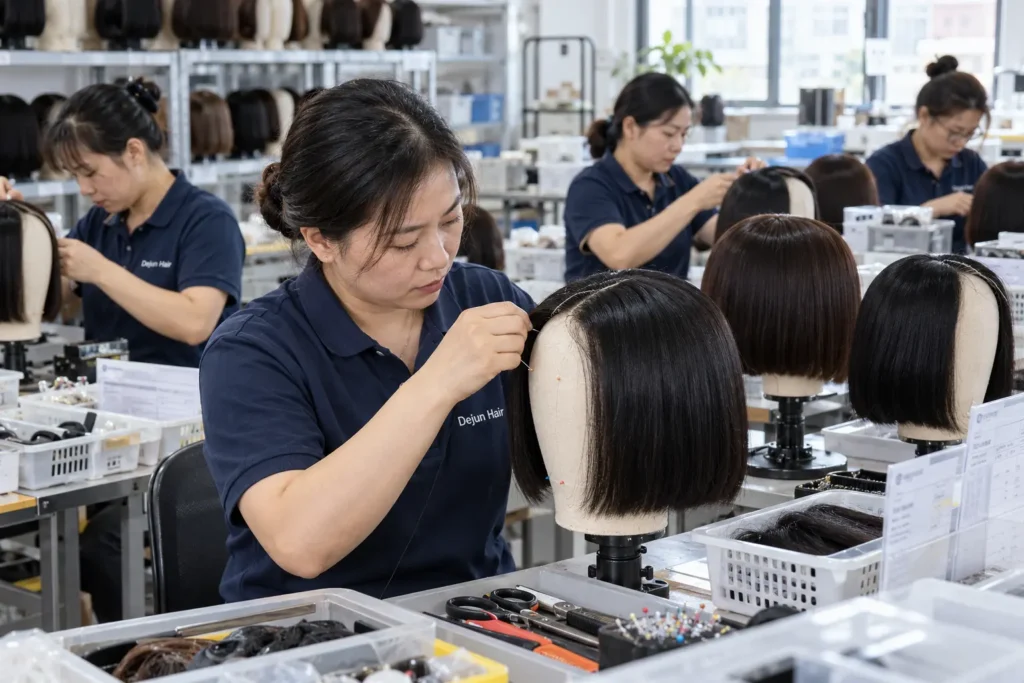
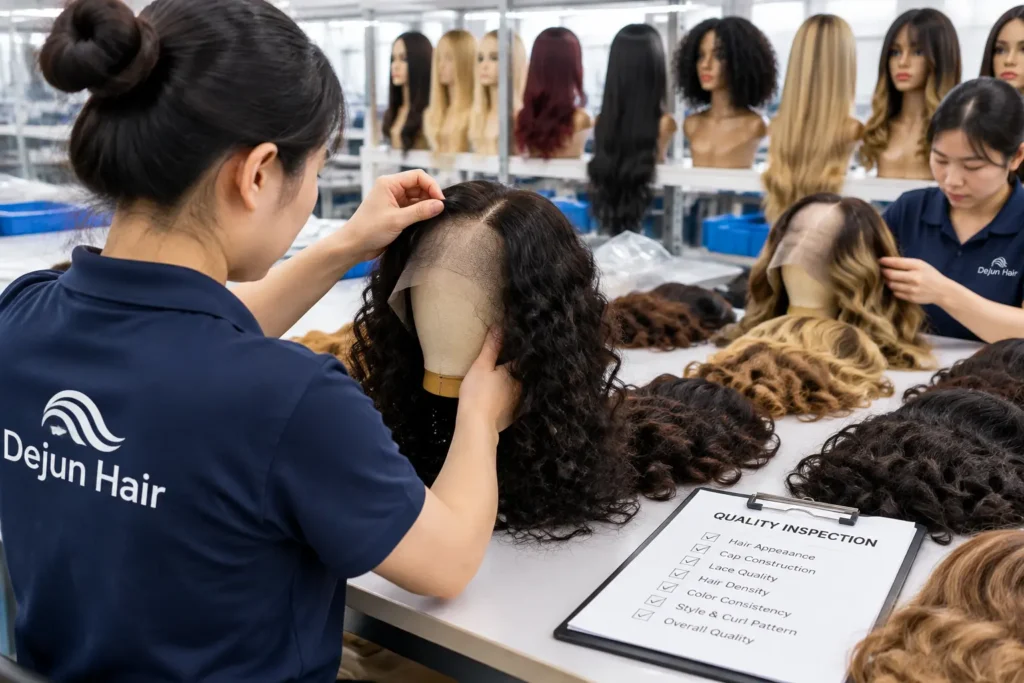
Our production process covers hair preparation, cap construction, lace work, styling, inspection, and warehousing. For colored products in particular, quality checks should pay close attention to hair condition, construction, shedding, sizing, and color performance before shipment.
For growing beauty businesses, the objective is simple: your supplier should make scaling easier, not create a new problem every time sales increase.
Common Mistakes to Avoid When Starting a Colored Wig Business
Even an attractive product category can become difficult to manage if the initial sourcing strategy is wrong.
New sellers should especially avoid:
- Buying too many SKUs at once. More variety increases inventory pressure before you know what sells.
- Choosing products based only on social media popularity. Views and likes do not always translate into purchases.
- Selecting a supplier only by price. Poor consistency can cost more through returns and damaged customer trust.
- Skipping sample testing. This is especially risky for colored human hair products.
- Ignoring landed cost. Freight, packaging, marketing, and returns affect real profitability.
- Customizing too early. Validate demand before investing heavily in packaging or unique specifications.
- Failing to plan replenishment. A bestseller that cannot be restocked consistently can become a missed opportunity.
The strongest startup strategy is usually not to make the biggest first order. It is to make the most informative first order.
Conclusion: Start Focused, Learn Fast, and Scale What Sells
Starting an online colored wig business does not require launching with every color, texture, length, and lace option available.
A more sustainable approach is:
Know your customer → Choose a focused product range → Test samples → Start with manageable inventory → Measure real sales → Reorder winning products → Build your brand → Scale with a reliable supplier.
For businesses selling colored human hair wigs, product quality and color consistency become especially important because customers are paying for both the appearance of the shade and the performance of real human hair.
Start with products your target market is likely to buy, not simply the largest catalog your budget allows. Use early orders to collect data, refine your assortment, and identify the colors and constructions that deserve more inventory.
If you are planning to launch or expand a colored wig business, Dejun Hair supports wholesale buyers with colored human hair wigs, synthetic wigs, mixed-order sourcing, sample evaluation, and OEM/private-label customization. Contact our team to discuss your target market, preferred colors, order quantity, and customization requirements before planning your first or next wholesale order.
Frequently Asked Questions (FAQ)
Is selling colored wigs online profitable?
It can be profitable when sellers control landed costs, avoid excessive inventory, select colors based on actual customer demand, and maintain enough margin for marketing, returns, and operating expenses.
What are the best colored wigs to sell online?
Popular starting options can include 613 blonde, honey blonde, burgundy/99J, highlighted brown, ombre, and balayage. However, the best selection depends on your target market, price range, and sales channel.
How many colored wigs should I buy for my first wholesale order?
There is no universal quantity. New sellers should generally prioritize a manageable mixed order across a limited number of colors and styles rather than purchasing large quantities of every SKU.
Where can I buy colored wigs in bulk?
Look for a manufacturer or wholesale supplier that can provide samples, clear hair specifications, consistent coloring, flexible MOQ or mixed orders, repeat production, quality inspection, and OEM/private-label support.
Are human hair or synthetic colored wigs better for an online business?
Human hair is generally suited to mid-range and premium positioning, while synthetic wigs can provide lower-cost, trend-driven options. Some retailers carry both to cover different customer budgets.
Can I put my own brand on wholesale colored wigs?
Yes. OEM/private-label manufacturers may offer custom logos, boxes, hang tags, wig bags, labels, cap specifications, densities, lengths, lace options, and custom colors. MOQ requirements vary by customization level.
Google official and wholesale wig factory industry reference links:

Dejun Hair
Direct from Chinese Wig Factories | One-Stop Wholesale Supplier of Wigs for International Trade.