How to Check the Quality of Synthetic Wigs Before Buying in Bulk
Buying synthetic wigs in bulk can look straightforward: compare styles, colors, prices, and minimum order quantities, then select a supplier. In practice, however, synthetic wig quality can vary significantly between suppliers—and sometimes even between different production batches from the same source.
For wholesalers, beauty supply stores, salon owners, importers, and online wig sellers, a quality problem becomes much more expensive after hundreds of units have arrived. Excessive shedding, tangling, uneven density, weak cap construction, inconsistent colors, or fibers that cannot tolerate the promised styling temperature can quickly lead to customer complaints, returns, and unsold inventory.
That is why professional buyers should evaluate more than appearance before purchasing wholesale synthetic wigs in volume. A proper inspection should cover the synthetic fiber, shedding, tangling, density, cap construction, hairline, heat resistance, color consistency, workmanship, and—most importantly—consistency between the approved sample and bulk production.
This guide explains how to check synthetic wig quality before placing a bulk order and how to use sample testing to identify a reliable long-term supplier.
Why Synthetic Wig Quality Matters for Wholesale Buyers
Synthetic wigs are often selected because they can provide fashionable styles, consistent shapes, multiple colors, and accessible price points without the higher purchasing cost associated with human hair.
However, a lower wholesale price should not automatically mean accepting poor quality.
For a retailer, the real cost of a wig includes more than its factory price. A low-cost unit can become expensive if it creates returns, negative reviews, replacement costs, or damaged customer relationships.
Quality requirements also depend on your target market. A beauty supply store selling affordable everyday wigs may prioritize durability, attractive styles, and competitive prices. An online wig brand may place more emphasis on natural-looking hairlines, camera-friendly fiber, packaging, and color consistency. A salon may pay closer attention to cap comfort, fit, and styling performance.
Therefore, the goal of a synthetic wig quality inspection is not simply to find the most expensive product. It is to determine whether the product consistently meets the quality level promised to your customers.
1. Check the Quality of the Synthetic Wig Fiber
The fiber is one of the first things buyers should inspect because it determines much of the wig’s appearance, touch, movement, and maintenance requirements.
When evaluating high-quality synthetic wigs, run your fingers through several sections of the sample. The fiber should feel reasonably smooth and consistent from the roots toward the ends. Watch for unusually rough sections, excessive stiffness, or major differences between different areas of the wig.
Next, evaluate the shine.
Some synthetic fiber naturally has more sheen than human hair, but excessive plastic-like shine can make a wig appear inexpensive. The best result depends on your market and price category, but the appearance should match the product positioning you intend to advertise.
Do not evaluate the fiber under only one light source. Check it in daylight and indoor lighting and, if you sell online, photograph or record the wig under the lighting normally used for your product content.
You should also compare multiple samples of the same specification. One excellent sample does not prove production consistency.
For wholesale buyers, the best quality synthetic wig fiber is ultimately the fiber that delivers the appearance, softness, durability, styling performance, and price appropriate for the intended retail market.
2. Test Shedding Before Placing a Bulk Order
Some loose fibers can occur with a new wig, especially after packaging and initial brushing. Persistent or heavy shedding, however, may indicate problems with construction or fiber attachment.
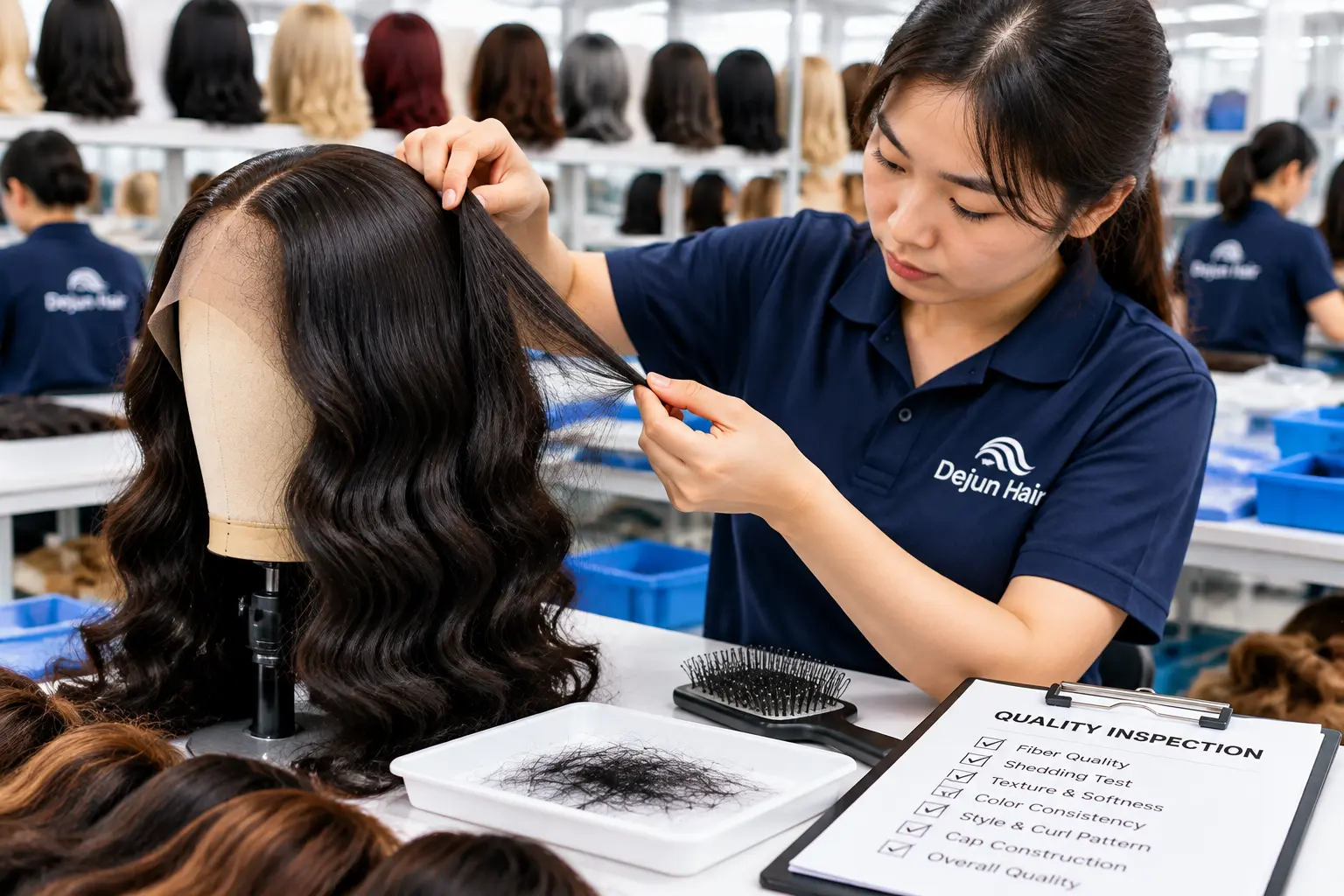
A basic synthetic wig shedding test can include finger-combing the wig several times, brushing it gently with an appropriate wig brush, and applying light—not aggressive—tension to different sections.
Pay particular attention to the crown, sides, nape, and areas around seams or tracks.
Instead of asking whether a wig sheds at all, compare how much shedding occurs across several identical samples. This gives you a better indication of production consistency.
If one unit performs well while another identical sample sheds noticeably more, discuss the variation with the manufacturer before approving a bulk order.
For B2B purchasing, consistency is often more important than a single perfect sample.
3. Check Tangling and Fiber Friction
Tangling is particularly important for long synthetic wigs, curly styles, high-density products, and popular everyday styles such as wholesale bob wigs, which are widely purchased by salons and beauty retailers because of their easy-maintenance design.
Start by checking whether your fingers or a suitable wig comb can move through the hair without repeatedly catching. Then pay close attention to the ends and nape.
The nape deserves special attention because it is exposed to friction from clothing and movement during wear.
For a more realistic synthetic wig sample quality check, do not inspect the wig for only five minutes after removing it from the package. Handle it repeatedly, place it on a mannequin head, brush it according to the recommended care method, and simulate normal movement.
If possible, repeat the evaluation after several days.
The objective is not to expect synthetic fiber to behave exactly like human hair. Instead, determine whether its performance is acceptable for its price point and intended use.
4. Inspect Wig Density and Hair Distribution
Density is another area where product photos can be misleading.
A wig may look full from the front but have insufficient fiber around the crown, sides, or back. Uneven distribution can also expose the cap or tracks when the customer moves the hair.
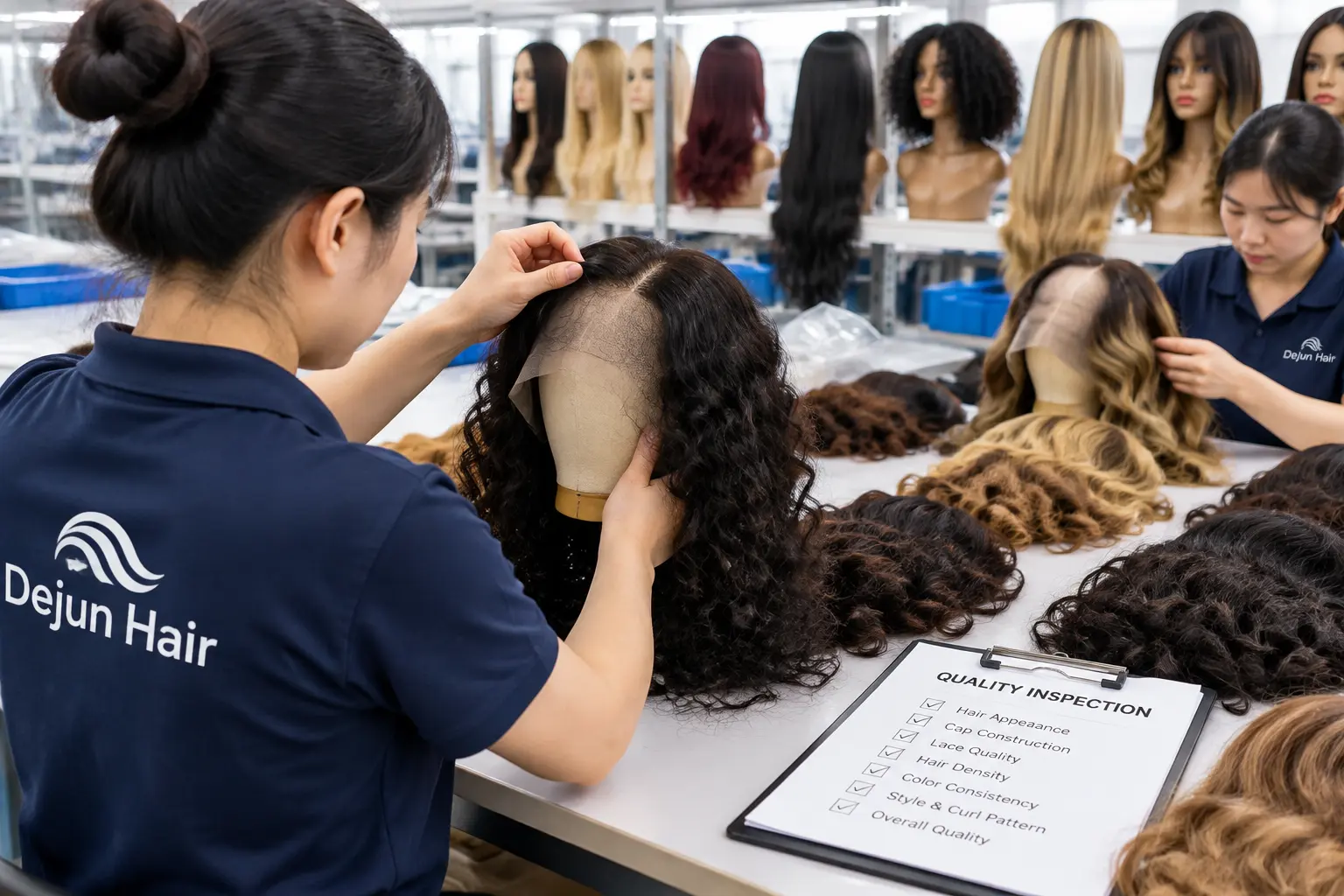
To check synthetic wig density, place the sample on a mannequin head and inspect it from the front, back, sides, and top.
Separate the fiber in several areas and look for:
- Visible gaps or exposed tracks
- Uneven fullness
- Overly heavy sections
- Thin crown or side areas
- Poor balance between the hairline and the rest of the wig
Density should also be appropriate for the style. A short pixie wig and a long curly wig do not require identical fiber distribution.
For bulk orders, compare several units with the same SKU. The key question is not only, “Is this sample full enough?” but also, “Can the factory reproduce this density consistently across my order?”
5. Inspect the Synthetic Wig Cap Quality
Even attractive fiber cannot compensate for poor wig cap construction.
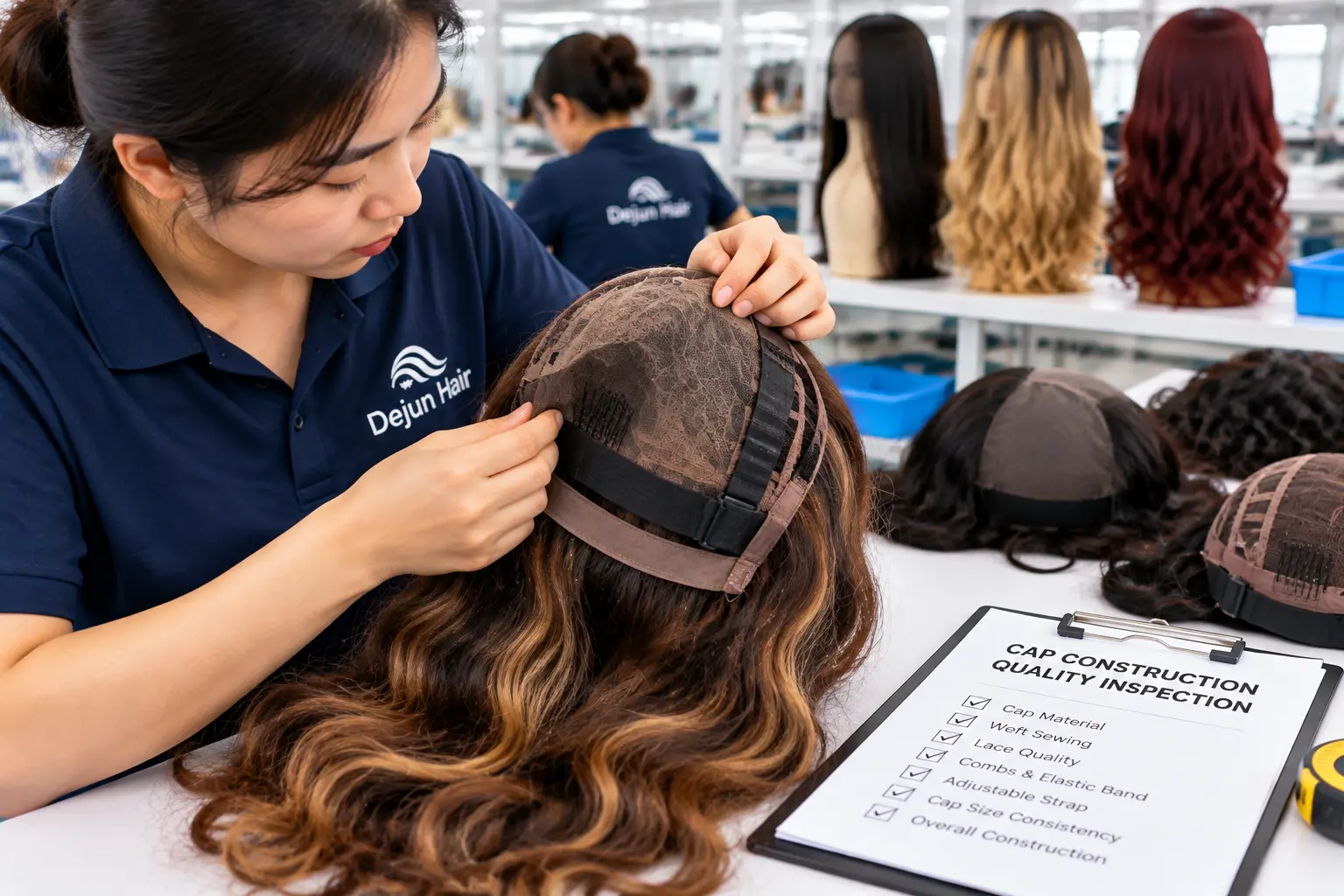
Turn the sample inside out and inspect the cap carefully. Check the stitching, elastic material, adjustable straps, combs or clips, weft attachment, lace connection points, and overall symmetry.
A good synthetic wig cap quality inspection should include several practical questions.
Does the cap hold its shape? Are the seams secure? Are adjustable straps firmly attached? Do the combs feel stable? Are there rough edges or exposed components that could affect comfort? Is the cap size consistent with the specification provided by the supplier?
Stretch components gently rather than aggressively. The purpose is to simulate normal use, not deliberately destroy the sample.
If your customers live in warmer markets or wear wigs for long periods, cap breathability and weight may also be important purchasing considerations.
This is particularly relevant for African distributors, salon customers, and beauty supply stores selling wigs for frequent everyday use.
6. Evaluate the Hairline and Lace Quality
For standard machine-made synthetic wigs, buyers should inspect how naturally the front section frames the face.
For synthetic lace front wigs, the inspection should go further.
Check the lace for softness, flexibility, color, and consistency. Examine how the fibers are ventilated or attached around the front and whether the transition from the hairline to the main wig construction appears natural.
A hairline that is excessively dense and perfectly straight can create an artificial appearance. Depending on the target market, buyers may prefer a softer or pre-thinned front.
Also inspect the lace attachment points. Poor stitching or weak connections between lace and the rest of the cap can create durability problems.
If you are purchasing lace styles in multiple colors or designs, inspect more than one SKU. Construction performance can vary when different materials or production methods are involved.
7. Perform a Heat Resistance Test Carefully
“Heat-resistant synthetic fiber” is a useful selling feature, but buyers should never assume that all heat-resistant fibers tolerate the same temperature.
Before testing, ask the supplier for the recommended temperature range for that specific fiber.
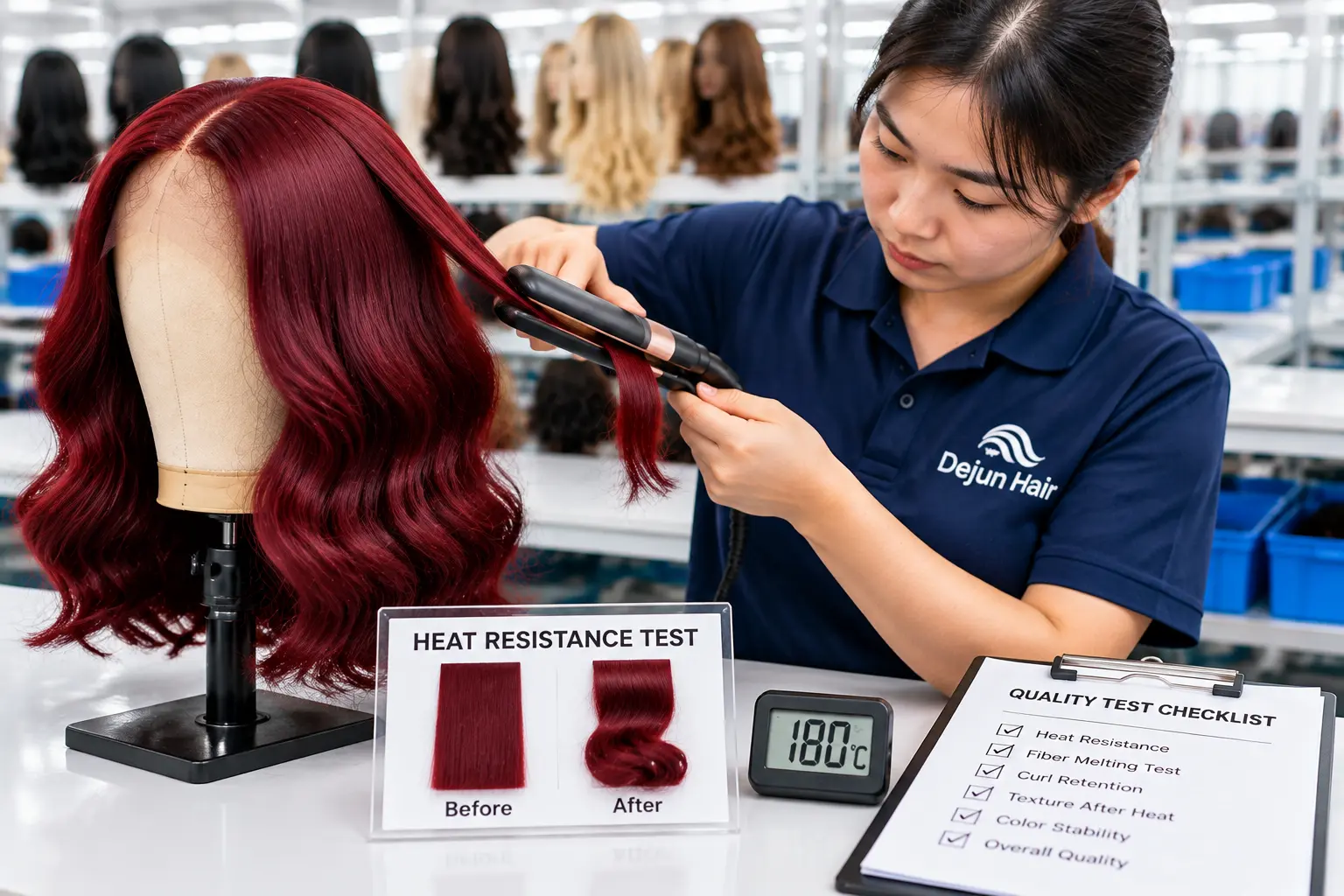
Then select a small, inconspicuous section of the sample. Start conservatively and follow the manufacturer’s instructions rather than immediately applying high heat.
During a heat-resistant synthetic wig test, watch for warning signs such as fiber melting, hardening, excessive frizzing, deformation, or an unexpected change in texture.
More importantly, clarify what “heat resistant” means for the product you are buying. Heat tolerance does not necessarily mean the wig can be treated like human hair or repeatedly exposed to high temperatures.
If styling flexibility is an important part of your retail promise, define the acceptable performance before mass production and make sure your customer-facing instructions match the tested product.
8. Check Color Accuracy and Batch Consistency
Color is especially important for synthetic products because customers often expect the wig they receive to closely match product photos, videos, or previously purchased units.
Evaluate the sample under multiple lighting conditions.
For natural colors, check whether the tone is consistent throughout the wig. For ombré, highlighted, rooted, or fashion colors, inspect the transition between shades.
When buying in bulk, batch consistency is even more important than the beauty of a single sample.
Ask your supplier how color references are controlled during production. If you are developing a private-label collection, retain an approved physical sample or agreed color reference for comparison.
This becomes particularly important when reordering successful SKUs months later. Your customers may notice if a bestselling shade changes significantly between shipments.
9. Inspect Overall Workmanship
After checking individual components, inspect the entire wig as a finished retail product.
Look for loose threads, uneven tracks, exposed wefts, poorly secured combs, damaged lace, inconsistent cutting, uneven curls, unfinished ends, stains, odors, labeling errors, or packaging damage.
Then compare several samples side by side.
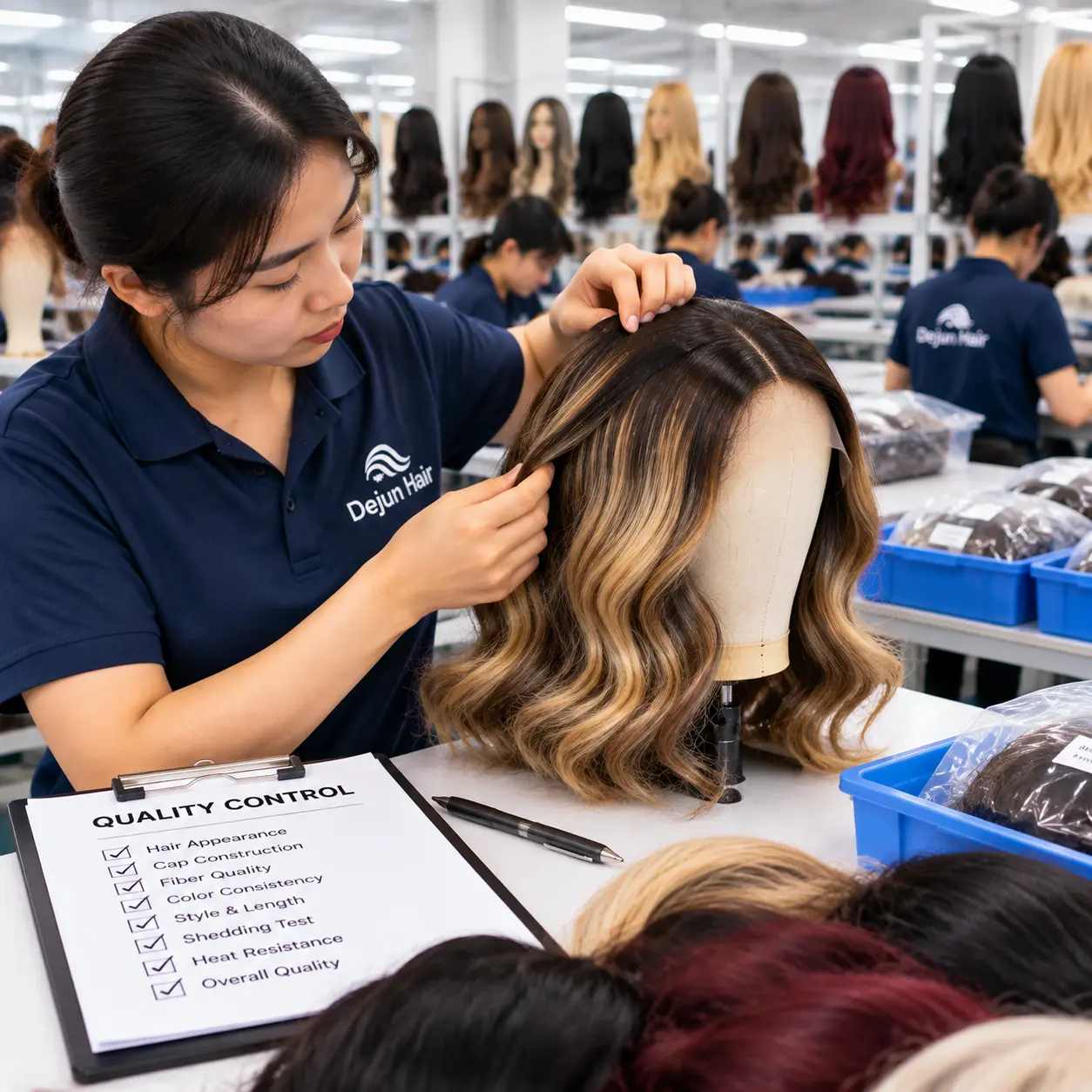
For a wholesale buyer, wig quality control should focus on repeatability. A factory may be able to make one attractive showroom sample. Your business needs a supplier capable of reproducing the approved specifications across tens, hundreds, or thousands of pieces.
Create a written specification sheet for important SKUs. Include details such as fiber type, length, color, cap size, construction, density or fullness requirement, accessories, labels, packaging, and any agreed workmanship standards.
This gives both buyer and manufacturer a clearer reference when checking bulk production.
10. Order Samples Before Buying Synthetic Wigs in Bulk
One of the safest ways to reduce sourcing risk is to test samples before committing to a large bulk wig order.
Do not select samples only by appearance.
Choose products that represent the range you actually plan to sell. For example, if your first order includes wholesale short synthetic wigs, long straight wigs, curly styles, lace fronts, and multiple fashion colors, testing only one short black wig tells you very little about the quality of the other categories.
A stronger sampling plan may include different:
- Lengths
- Textures
- Colors
- Cap constructions
- Fiber types
- Lace and non-lace designs
If your target market includes price-sensitive retailers, you can also compare products at different quality levels rather than automatically requesting the supplier’s most expensive sample.
Dejun Hair, for example, supplies both human hair and synthetic categories and supports sample evaluation before larger wholesale orders. For buyers building an affordable product line, reviewing actual samples from a wholesale synthetic wigs collection before scaling the order provides a much clearer basis for purchasing decisions.
After receiving the samples, create a scorecard and evaluate every SKU using the same criteria.

Synthetic Wig Quality Inspection Checklist for Wholesale Buyers
| Inspection Item | What to Check | Common Warning Signs |
|---|---|---|
| Synthetic fiber | Softness, shine, consistency, movement | Excessive plastic shine, rough fiber |
| Shedding | Finger-combing and gentle brushing | Persistent heavy shedding |
| Tangling | Ends, nape, long sections | Rapid matting or repeated catching |
| Density | Crown, sides, back, overall balance | Thin areas or exposed tracks |
| Cap | Seams, straps, combs, elasticity | Loose stitching or weak attachments |
| Hairline | Density and transition | Very dense or unnatural front |
| Lace | Softness, attachment, consistency | Rough lace or weak seams |
| Heat resistance | Performance within supplier guidance | Melting, hardening, deformation |
| Color | Shade and distribution | Noticeable inconsistency |
| Workmanship | Cutting, tracks, seams, finishing | Loose threads or exposed wefts |
| Packaging | Labels and protection | Incorrect SKU or poor protection |
| Batch consistency | Compare identical units | Significant unit-to-unit variation |
Using the same checklist for every supplier makes comparison more objective.
How to Evaluate a Synthetic Wig Supplier’s Quality Control
Sample inspection tells you about the products you received. Supplier evaluation tells you whether the company is likely to reproduce that quality when your order becomes larger.
Ask potential suppliers how they control fiber materials, cap construction, styling, colors, finished-product inspection, and packaging.
You should also ask how defective products are identified and handled.
A reliable wholesale wig supplier should be able to explain its production and inspection process clearly instead of responding only with general claims such as “best quality.”
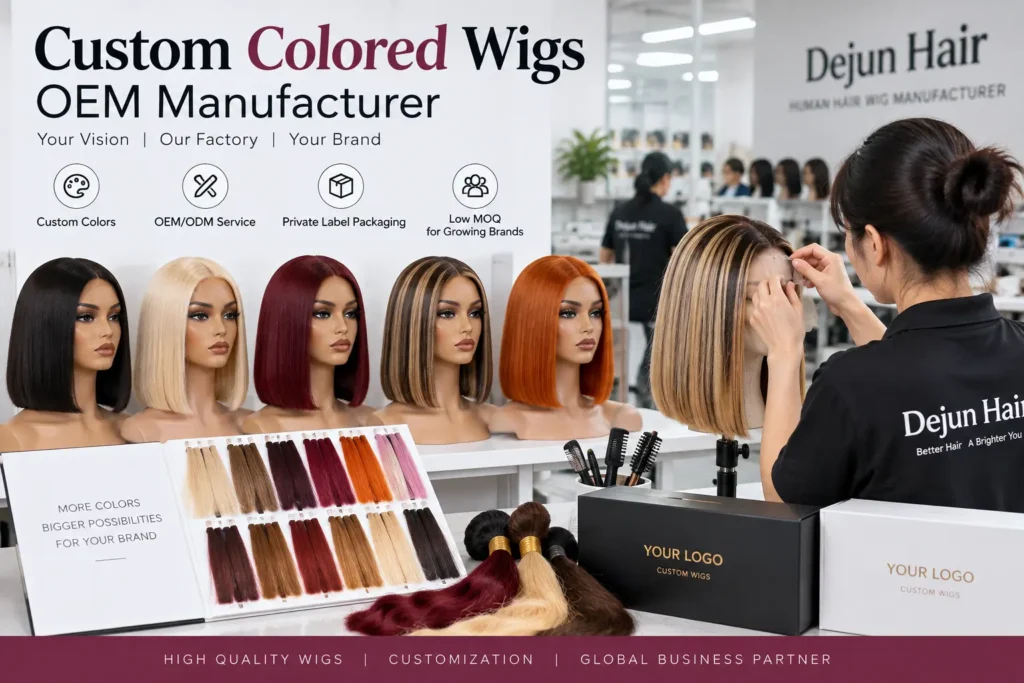
For OEM orders, documentation becomes even more important. If you are ordering custom OEM synthetic wigs, confirm specifications before production, including the fiber, color, length, cap design, logo, tags, packaging, and acceptable quality criteria.
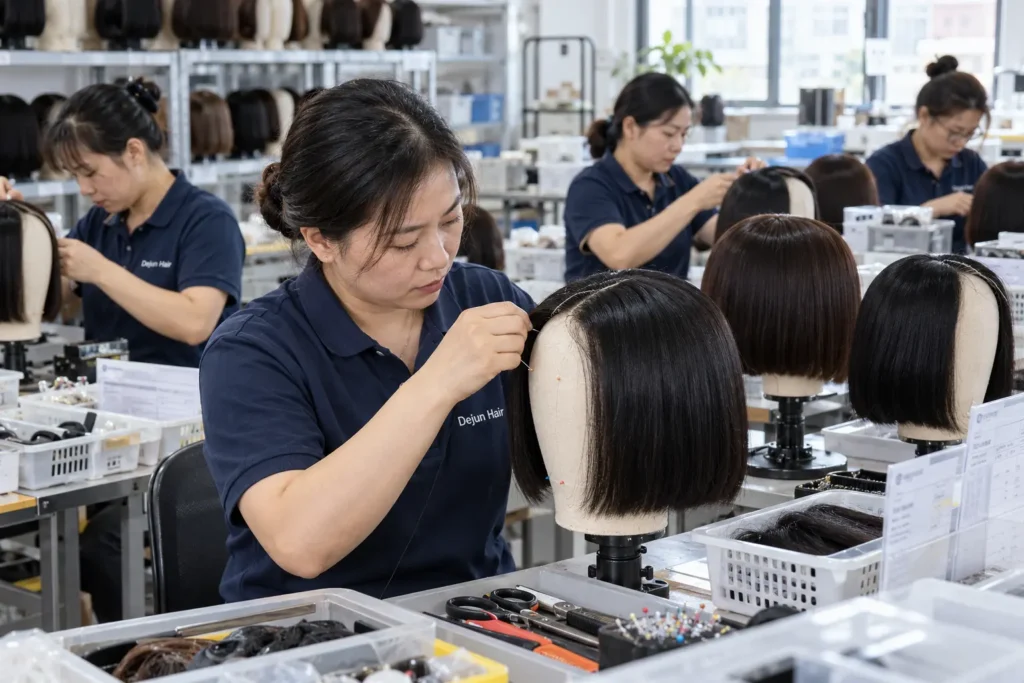
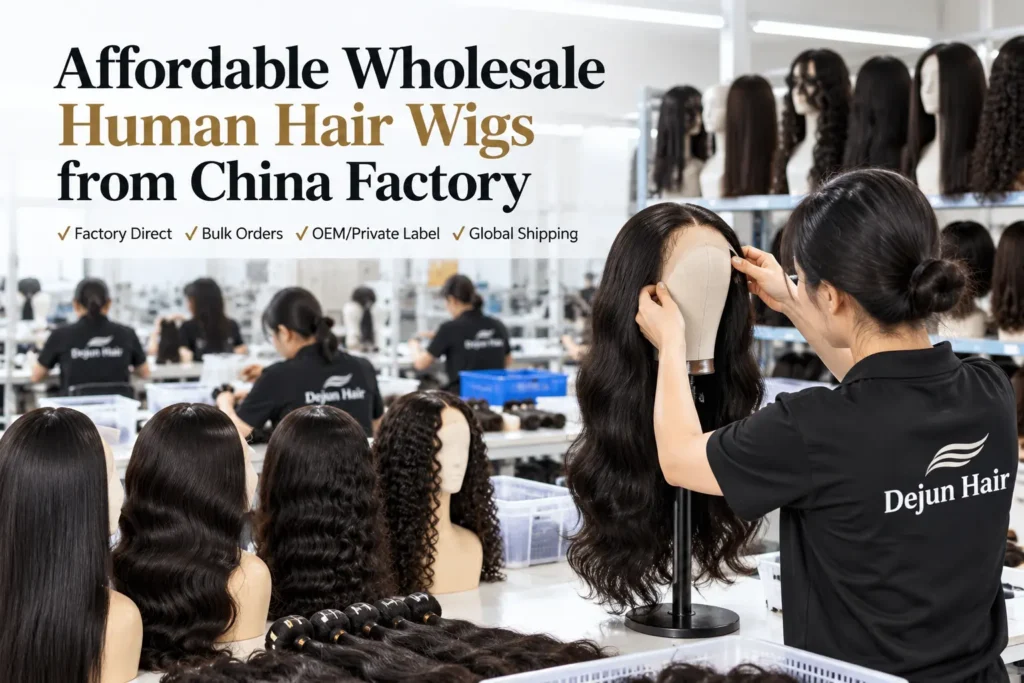
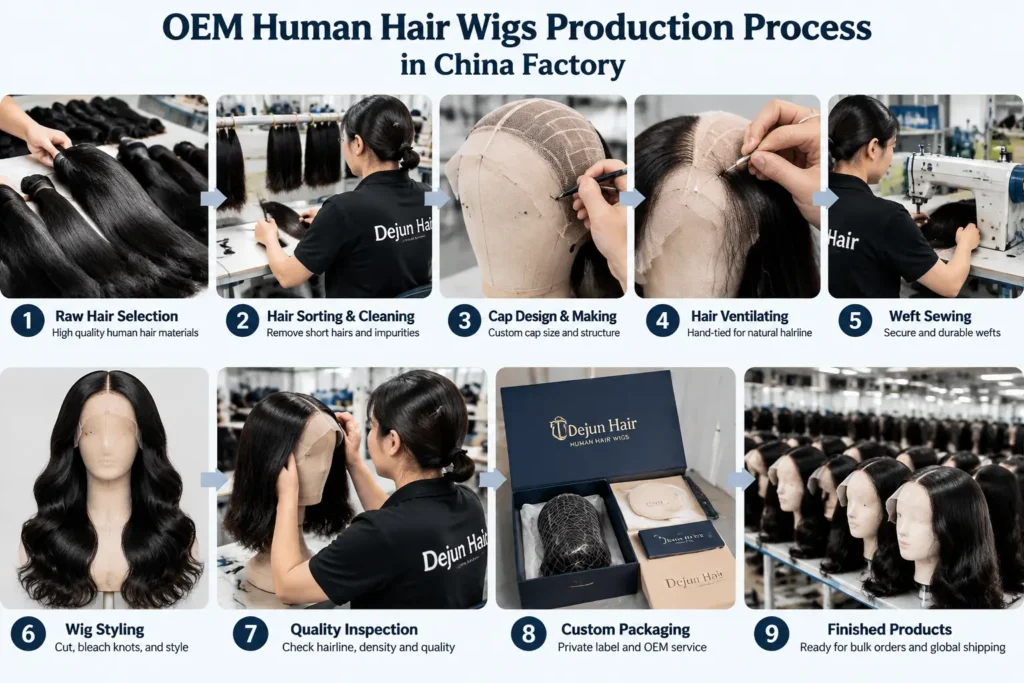
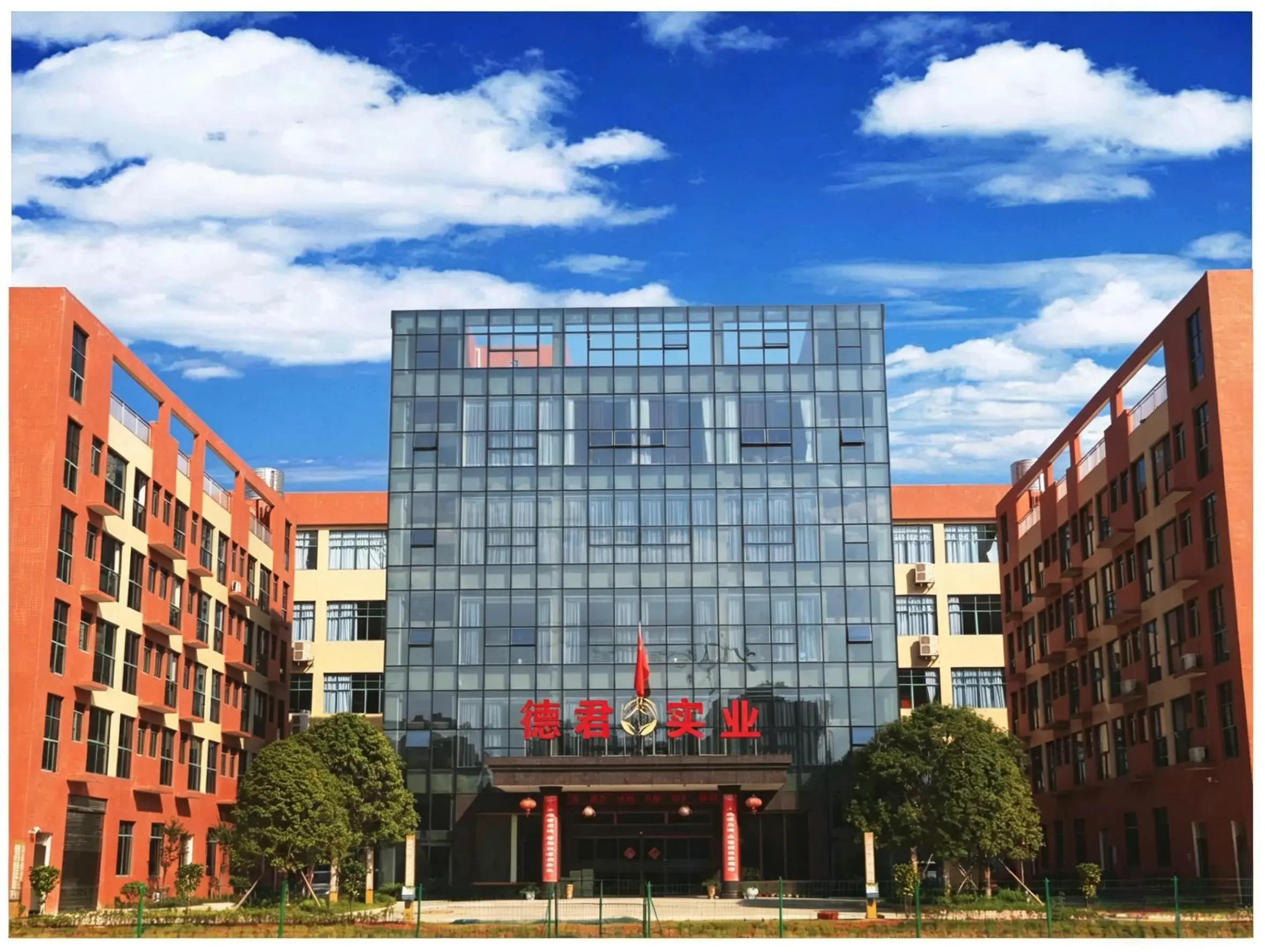
At Dejun Hair’s Shaoyang production facility, the manufacturing workflow covers fiber processing, cap construction, styling, inspection, and packaging. This type of integrated production setup allows quality requirements to be checked at several stages rather than only after the wig has been completed.
Buyers should still verify performance through samples. Factory capability and sample testing should complement each other.
Common Mistakes When Buying Wholesale Synthetic Wigs
The first common mistake is choosing a supplier based almost entirely on price. Factory price matters, especially in competitive retail markets, but the cheapest unit is not necessarily the lowest-cost product after returns, complaints, and damaged inventory are considered.
The second mistake is approving a large order from photos or videos alone. Visual content can help shortlist styles, but it cannot fully demonstrate fiber feel, cap comfort, shedding, tangling, or construction strength.
Another mistake is testing only one unit. If possible, compare multiple samples, particularly for important or high-volume SKUs.
Buyers should also avoid assuming that every production batch will automatically match the first sample. Keep your approved sample and specification details as references for future orders.
Finally, clarify the supplier’s defective-product and after-sales policy before placing the order—not after a problem occurs.
Questions to Ask a Synthetic Wig Supplier Before Bulk Ordering
Before choosing a supplier, ask practical questions such as:
- What type of synthetic fiber is used?
- Is the fiber heat resistant, and what temperature range is recommended?
- What cap constructions are available?
- Can I order samples before bulk production?
- Can different styles and colors be mixed in one wholesale order?
- What is the MOQ for stock products and customized products?
- How do you control color and construction consistency between batches?
- What quality inspections are performed before shipment?
- What happens if defective products are found after delivery?
- Do you provide OEM or private-label customization?
- Can the logo, hangtags, packaging, cap size, density, color, and other specifications be customized?
- What is the production lead time for repeat and custom orders?
These answers can help distinguish a supplier that sells wigs from a wholesale wigs factory that can support a long-term wholesale program.
Frequently Asked Questions
Final Thoughts: Inspect Quality Before You Scale Your Order
Checking synthetic wig quality before bulk purchasing is not complicated, but it should be systematic.
Start with the fiber. Test shedding and tangling. Inspect density, cap construction, hairline, lace, heat resistance, color, and workmanship. Then compare multiple samples and determine whether the supplier can reproduce the approved specification consistently.
Most importantly, treat sample approval as part of your purchasing process rather than an optional extra.
For wholesalers, beauty supply stores, salons, distributors, and online sellers, a small investment in synthetic wig quality inspection before ordering can help prevent much larger inventory problems later.
Dejun Hair has 20 years of wig manufacturing experience in Shaoyang, China, supplying both human hair and synthetic wig categories for overseas businesses. We support ready-stock wholesale, mixed orders, sample evaluation, and OEM/private-label customization for buyers with different order sizes.
If you are preparing a new synthetic wig collection or comparing suppliers, request samples and specifications first. Test the products against your market requirements, confirm the quality standard, and then scale your order with greater confidence.
Industry reference resources for wholesale wig sourcing:
Dejun Hair
Direct from Chinese Wig Factories | One-Stop Wholesale Supplier of Wigs for International Trade.