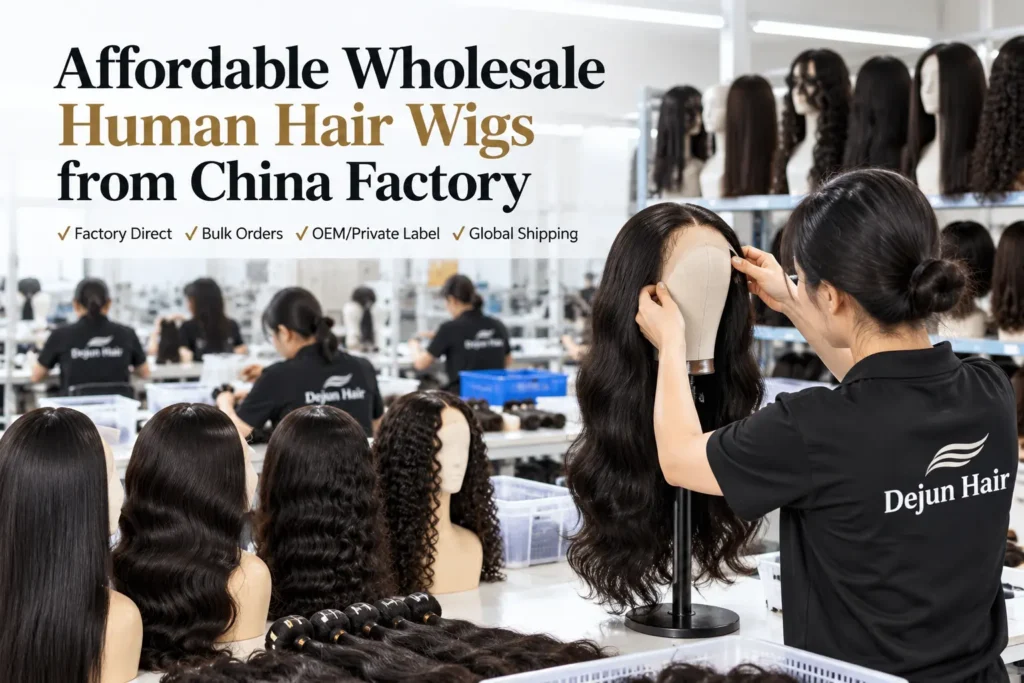
Custom Colored Wigs: How to Create Your Own Bob Wig Collection With an OEM Manufacturer
For a hair brand, selling the same wigs as dozens of other stores makes it difficult to compete on anything other than price. One way to build a more recognizable product line is to develop custom colored wigs around your own target customers, color palette, construction, packaging, and price positioning.
Colored bob wigs are particularly suitable for this strategy. A brand can build a coordinated collection around blonde, burgundy, ginger, brown, red, pink, highlight, or ombre colors while offering different lengths, lace constructions, densities, and materials.
However, turning an idea into a consistent wholesale collection involves much more than sending a supplier a reference photo.
You need to consider hair material, color consistency, cap construction, samples, MOQ, packaging, quality control, production capacity, and delivery requirements.
This guide explains how hair brands, salon owners, e-commerce sellers, and beauty entrepreneurs can work with an OEM manufacturer to develop a custom colored bob wig collection from initial concept to bulk production.
Why Create a Custom Colored Bob Wig Collection?
Ready-stock wigs are useful when you need to launch quickly or test a market. But as your business grows, relying entirely on products that other sellers can purchase from the same market may limit your ability to differentiate your brand.
With custom colored wigs, you have more control over the final product.
Instead of simply choosing an existing SKU, you can develop a collection around your target customer’s preferred colors, lengths, textures, lace types, densities, cap constructions, and price points.
For example, one brand might build a premium collection of colored human hair wigs with HD lace and natural hairlines. Another may focus on affordable synthetic bob wigs in trend-driven colors for social-commerce customers.
The important point is that customization should serve a commercial purpose. A successful collection is not necessarily the one with the largest number of colors. It is the one that matches the customers you already serve—or the market segment you plan to enter.
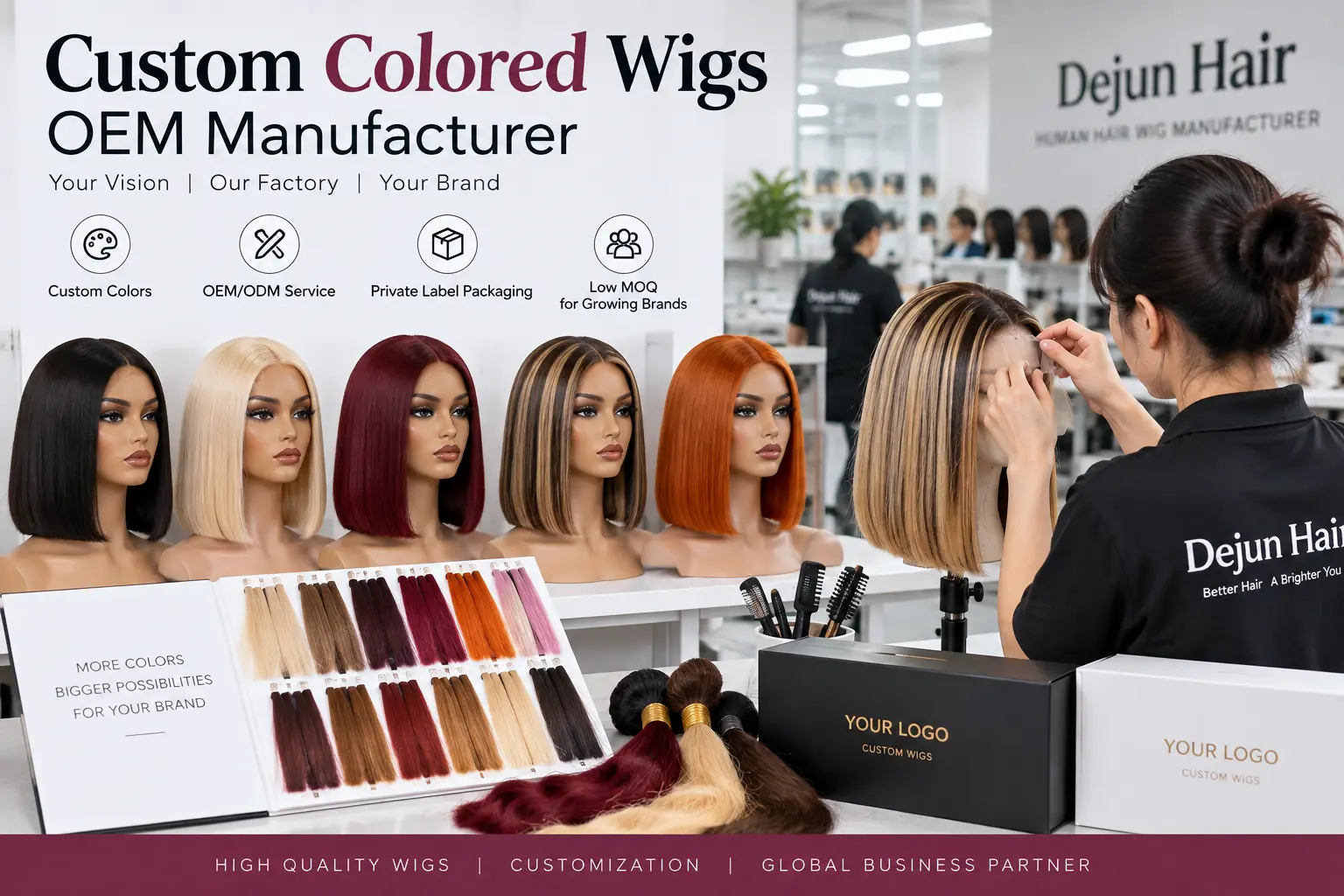
Step 1: Define Your Market Before Designing the Wigs
If you are researching how to create a wig brand with an OEM manufacturer, start with your customers rather than the factory.
Before requesting samples, define three things:
Who will buy the wigs?
Are you selling to salon customers, beauty supply stores, young social-media shoppers, premium human hair customers, or price-sensitive fashion buyers?
Where will you sell them?
An Instagram- or TikTok-focused brand may prioritize visually distinctive colors and easy-to-wear constructions. A salon may care more about hair quality, styling flexibility, and reliable repeat orders.
What price position do you want?
Your target retail price affects almost every manufacturing decision, including hair material, lace, density, cap construction, packaging, and customization level.
This planning helps prevent a common sourcing mistake: creating an attractive sample that becomes too expensive for your actual customers once all specifications are included.
For many brands, it is better to begin with a focused collection of proven colors and a few distinctive styles, then expand based on actual sales data.
Step 2: Choose Human Hair or Synthetic Fiber
The next decision is the material.
Both human hair and synthetic fiber can work for a colored bob collection, but they serve different customers and price segments.
Colored Human Hair Wigs
Human hair is generally the better fit for premium collections where customers expect natural movement, styling flexibility, and longer-term use.
For brands developing colored human hair wigs, hair quality becomes especially important because coloring and chemical processing can affect softness, strength, and longevity.
The sourcing and processing history of the hair therefore matters just as much as the final color.
A buyer should discuss with the manufacturer:
- Hair grade and source
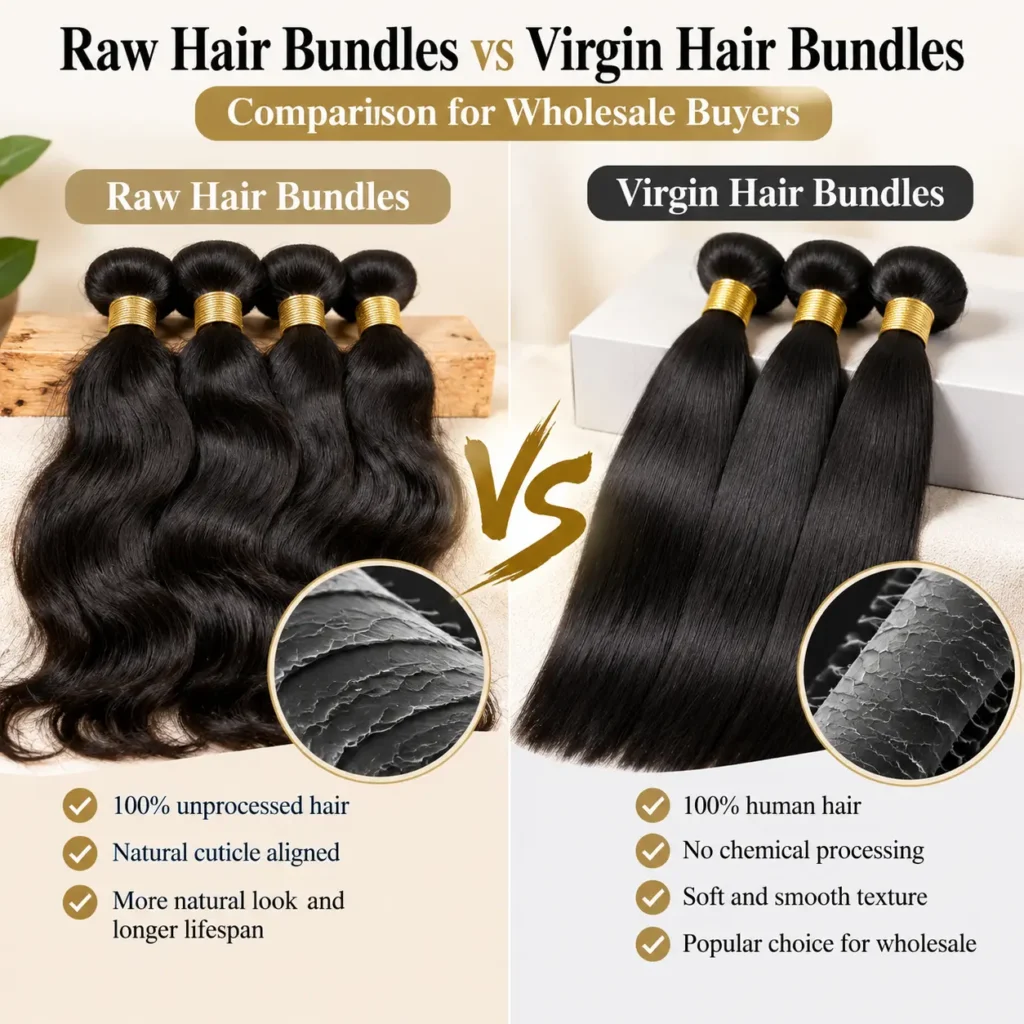
- Remy, virgin, or other hair specifications
- Previous chemical processing
- Color treatment
- Hair weight and density
- Expected styling and washing performance
Do not evaluate a colored human hair wig by appearance alone. A wig may look excellent when it leaves the factory but perform poorly after several washes if the underlying hair has been excessively processed.
Synthetic Colored Wigs
Synthetic fiber offers another advantage: color flexibility at a lower price point.
Heat-resistant synthetic fibers can be suitable for fashion-focused collections, entry-level products, promotional ranges, and markets where customers frequently change styles.
Synthetic production can also make it easier to create vivid fashion shades without applying the same chemical coloring processes required for human hair.
For a growing brand, offering both human hair and synthetic collections can create multiple price tiers without forcing every customer into the same product category.
If you are still deciding between the two materials, our guide to human hair vs synthetic colored wigs explains the differences in cost, durability, positioning, and wholesale applications.
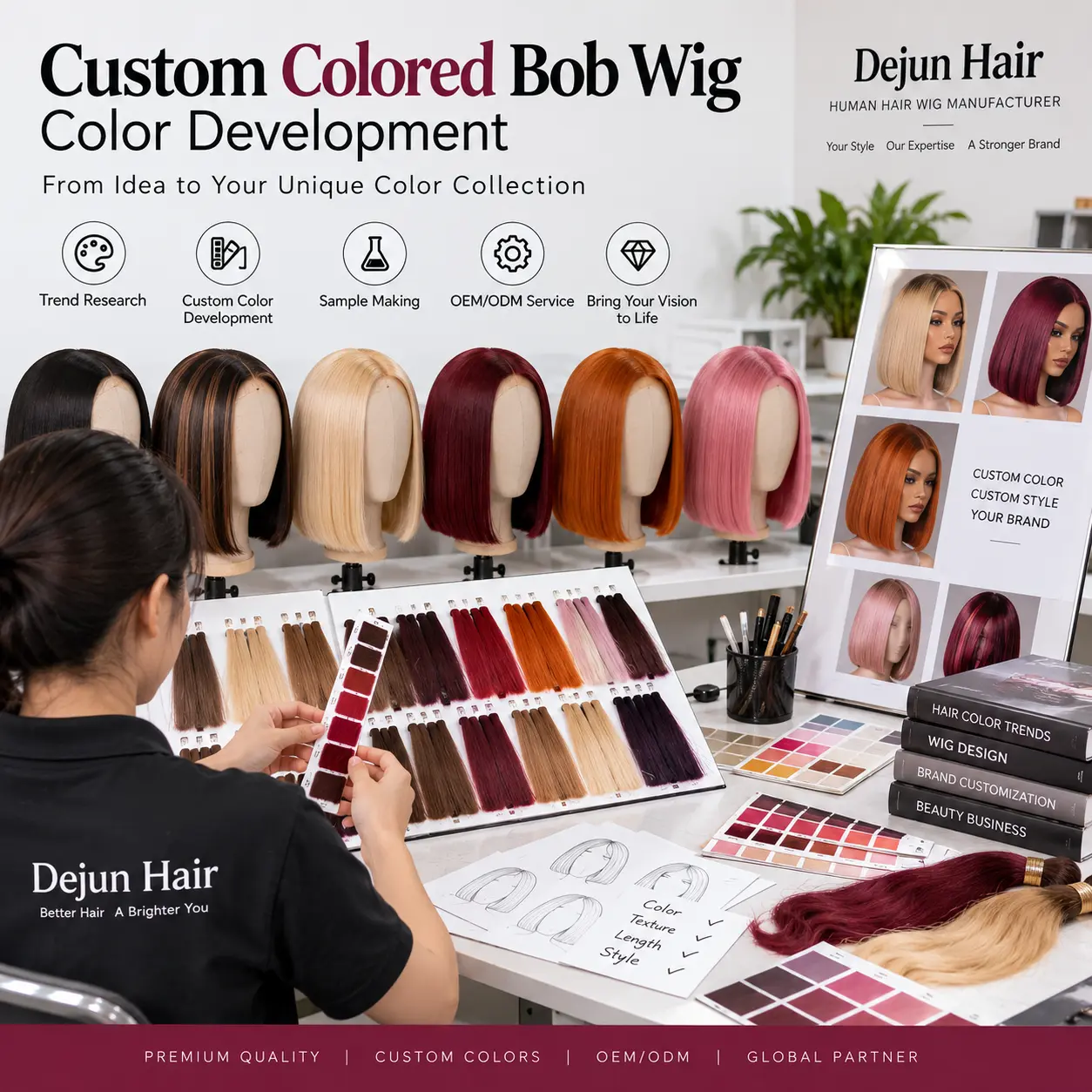
Step 3: Develop the Colors for Your Custom Colored Wigs
Color development is one of the most important parts of creating custom colored wigs.
A manufacturer may already have standard color references for popular shades such as:
- #613 blonde
- #27 honey blonde
- #30 auburn
- #4 chocolate brown
- 99J burgundy
- Ginger/copper
- Red
- Pink
- Blue
- Purple
- Ombre combinations
- Highlight combinations
For a basic collection, selecting from existing factory color references can simplify sampling and production.
If you want a proprietary shade, however, the development process becomes more detailed.
You may provide a physical hair sample, color reference, product photograph, or other agreed color specification. The factory can then produce a sample for confirmation before moving into bulk production.
Color Consistency Matters More at Wholesale Scale
A sample is only the beginning.
For custom color wigs wholesale, the more important question is whether the manufacturer can reproduce an acceptable color range across a larger batch.
Hair material, coloring conditions, processing time, and the starting shade can all influence the result. This is especially relevant for human hair.
Ask your custom colored bob wigs supplier how bulk color consistency is controlled and what tolerance should be expected between samples and production batches.
If a precise brand color is commercially important, define the approval standard before production rather than after the order has been completed.
Step 4: Design the Bob Wig Construction
OEM development should not stop at color.
Two wigs in the same shade can target completely different markets depending on their length, density, lace, texture, and cap construction.
When developing colored bob wigs, consider the following specifications.
Length
Popular bob lengths may include 8, 10, 12, and 14 inches, although the right range depends on the intended style.
A short blunt bob creates a different visual effect from a longer shoulder-length bob, even when the hair color is identical.
Texture
You may develop:
- Straight bobs
- Body wave bobs
- Curly bobs
- Layered styles
- Blunt-cut bobs
The texture should be tested together with the chosen color because both contribute to the final appearance.
Density
Higher density does not automatically mean a better wig.
Density should suit the length, hairstyle, target price, and customer preference. For some short bob designs, excessive density can make the finished product look unnecessarily bulky.
Lace Construction
Depending on your market and price level, options can include lace front, closure, full lace, and other constructions.
Brands developing custom lace front wigs should confirm not only lace dimensions but also lace material, color, knot appearance, hairline design, and parting requirements.
Cap and Glueless Features
Wear-and-go and glueless constructions can be particularly attractive to customers who want easier installation.
Possible customization can include:
- Adjustable straps
- Elastic bands
- Combs
- Different cap sizes
- Glueless constructions
- Pre-plucked hairlines
- Pre-cut lace, depending on the design
The goal is to define the entire user experience—not simply the color.

Step 5: Turn the Product Into Private Label Bob Wigs
Once the wig specifications are established, the next step is branding.
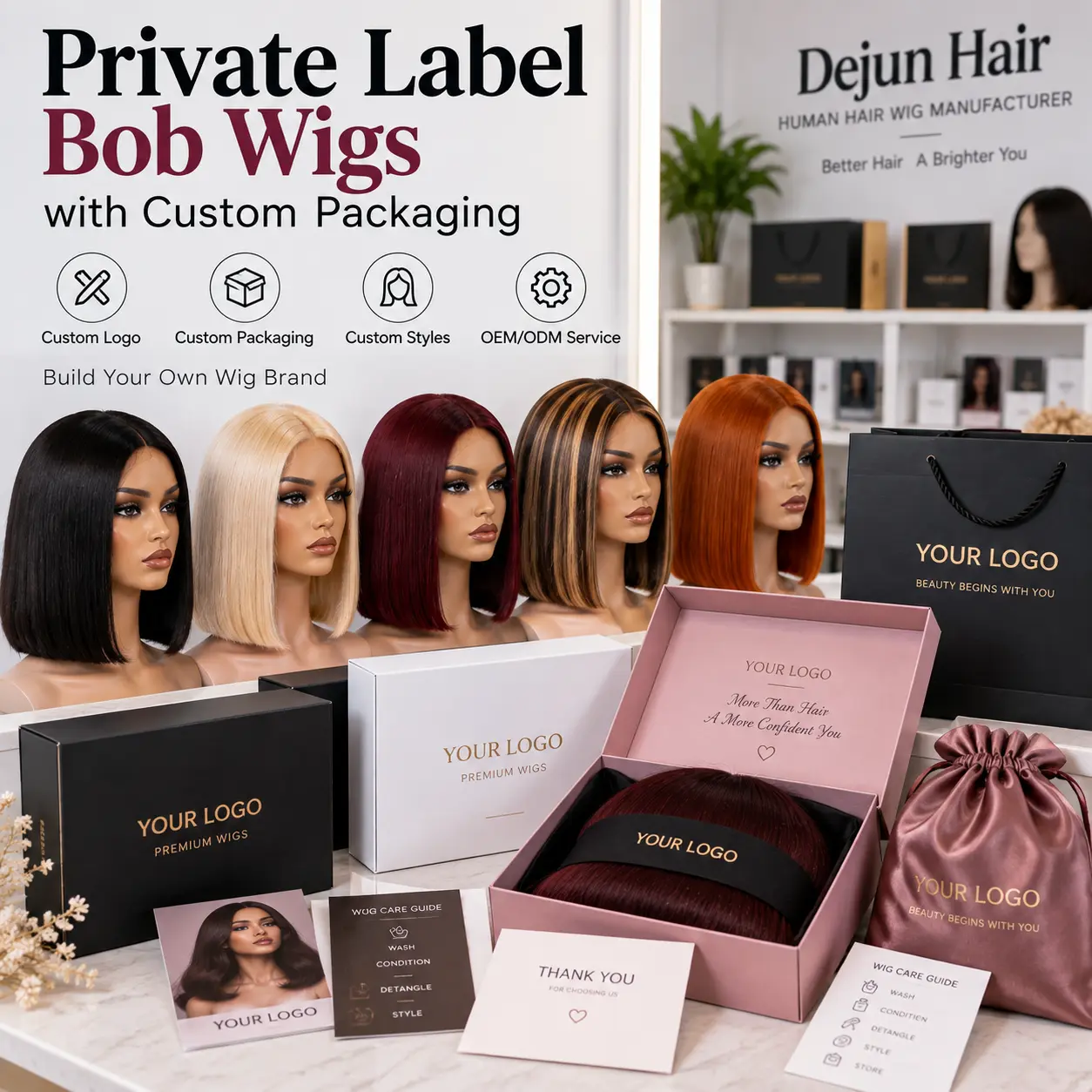
Private label bob wigs allow you to sell the collection under your own identity rather than presenting it as a generic factory product.
Depending on order requirements, private-label options may include:
- Brand logo
- Custom hang tags
- Wig labels
- Packaging boxes
- Satin bags
- Care cards
- Product inserts
- SKU or barcode labels
Packaging should match your market position.
A premium human hair collection may justify a more elaborate box and presentation. A price-sensitive online range may perform perfectly well with a branded bag, product label, and care card.
New brands do not necessarily need to invest heavily in packaging at the beginning. A simpler private label wigs program can reduce initial costs while still giving customers a consistent brand experience.
As order volume grows, the packaging can become more sophisticated.
Step 6: Request Samples Before Placing a Bulk Order
Never treat a product photo as a substitute for sample evaluation.
Sampling is particularly important for custom colored wigs because multiple variables—hair quality, color, cutting, lace, density, and construction—must work together.
When you receive a sample, evaluate it from both the customer’s and buyer’s perspectives.
Check the Color
Compare the sample with the approved reference under appropriate lighting. Look at the roots, middle sections, and ends rather than checking only the most visible surface.
For highlights and ombre styles, examine placement and transition consistency.
Check Hair Quality
For human hair, evaluate:
- Softness
- Tangling
- Shedding
- Ends
- Hair direction
- Odor
- Washing performance
- Heat-styling response where appropriate
Check Construction
Inspect:
- Cap dimensions
- Stitching
- Lace
- Hairline
- Knots
- Straps and bands
- Density distribution
- Overall fit
A good sample approval process creates a clear reference for bulk manufacturing and reduces misunderstandings later.
Step 7: Understand MOQ, Cost, and Production Requirements
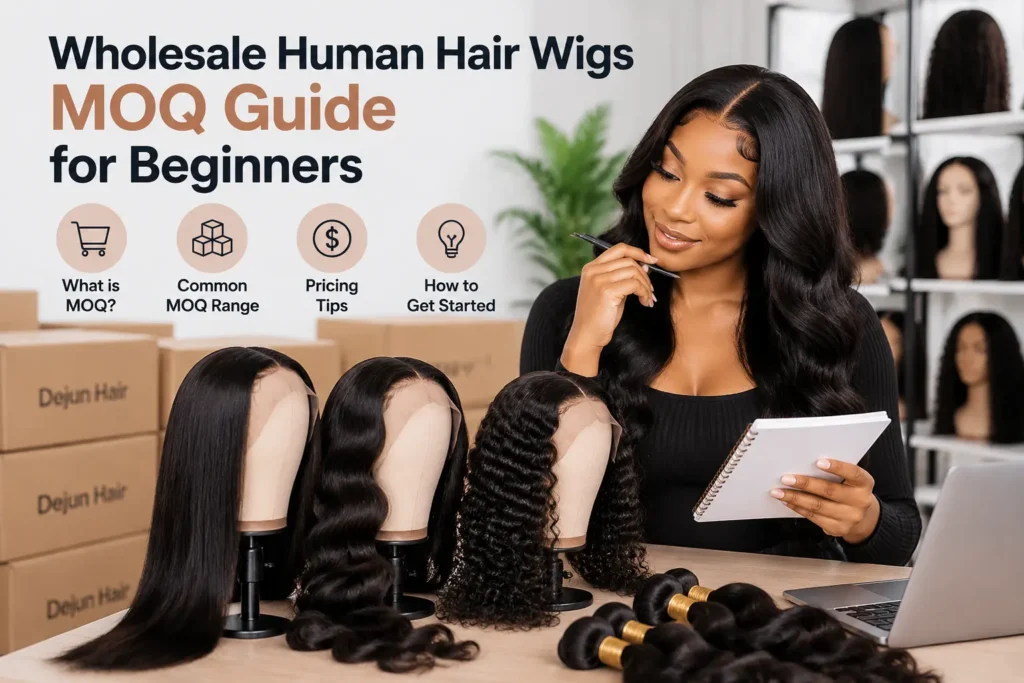
MOQ is one of the first questions many new hair brands ask, but there is rarely one universal MOQ for every OEM project.
The practical MOQ for custom colored wigs may depend on:
- Human hair or synthetic fiber
- Standard or proprietary color
- Number of colors
- Number of lengths
- Lace specifications
- Cap construction
- Packaging requirements
- Quantity per SKU
For example, ordering one design in several existing factory colors may have different production requirements from developing five completely new shades with customized boxes and labels.
This is why buyers should send the factory a clear specification sheet when requesting a quotation.
At Dejun Hair, we work with different types of overseas buyers, from smaller salons and growing hair businesses to established wholesalers. Ready-stock products can provide greater flexibility for smaller mixed orders, while customized OEM/ODM projects can be discussed according to their specifications and production requirements.
For a new brand, a sensible strategy is often to validate several core SKUs first rather than creating too many colors, lengths, and densities in the first production run.
Step 8: Approve the Sample and Move Into Bulk Production
Once the sample and commercial terms are confirmed, the project can move into manufacturing.
A typical OEM workflow looks like this:
Product Brief → Specification Confirmation → Quotation → Sample Development → Sample Approval → Bulk Production → Quality Inspection → Packaging → Shipment
The exact workflow varies by project, but written confirmation is important.
Your approved specifications should clearly state important requirements such as:
- Hair material
- Color
- Length
- Texture
- Density
- Lace
- Cap size
- Construction
- Logo
- Packaging
- Quantity
For an OEM human hair wigs manufacturer, controlling raw materials and production processes becomes especially important as order volume increases.
A beautiful sample has limited commercial value if the factory cannot reproduce it consistently in a bulk order.
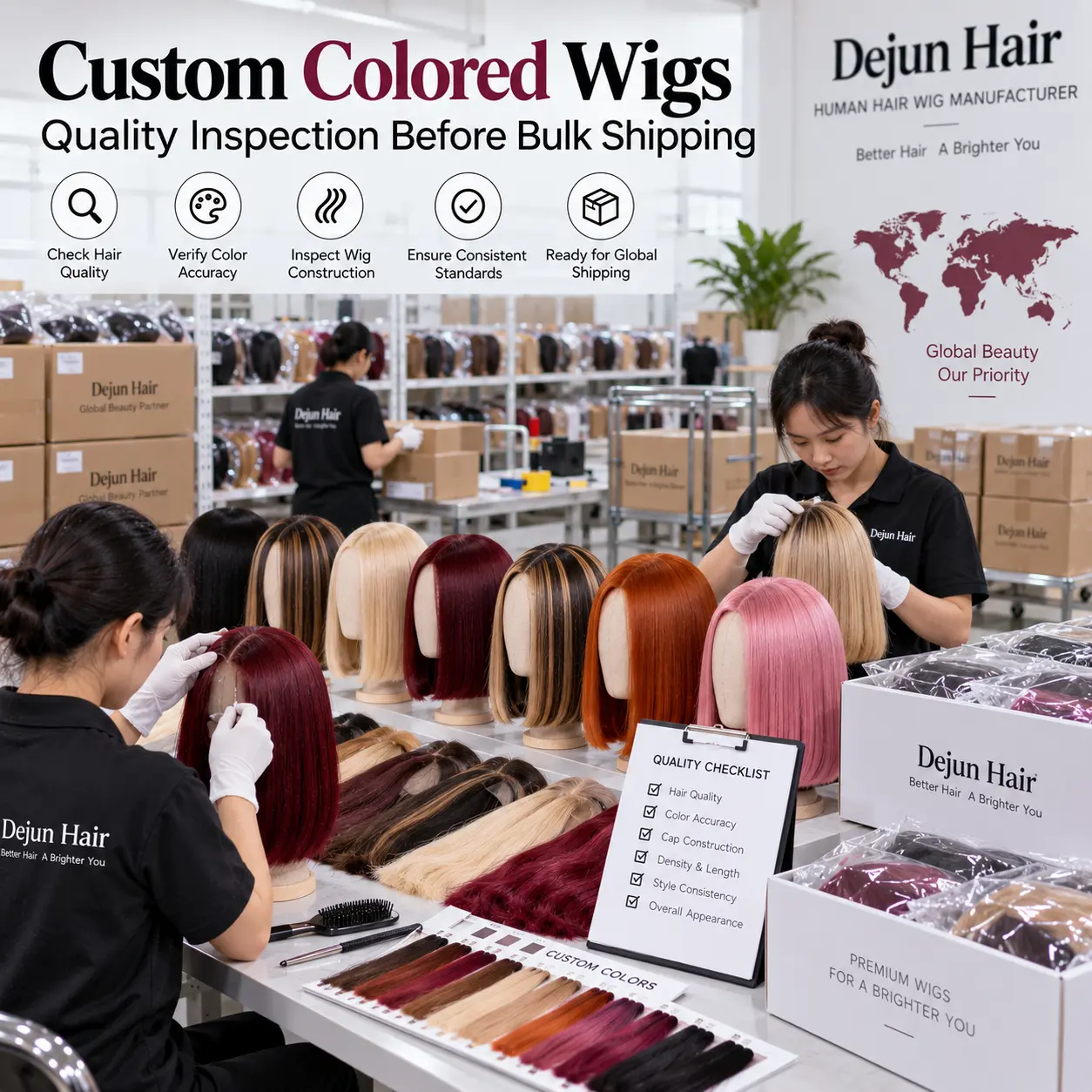
Step 9: Build Quality Control Into the Project
Quality control should not be something you discuss only when a problem occurs.
Before production, agree on what will be inspected.
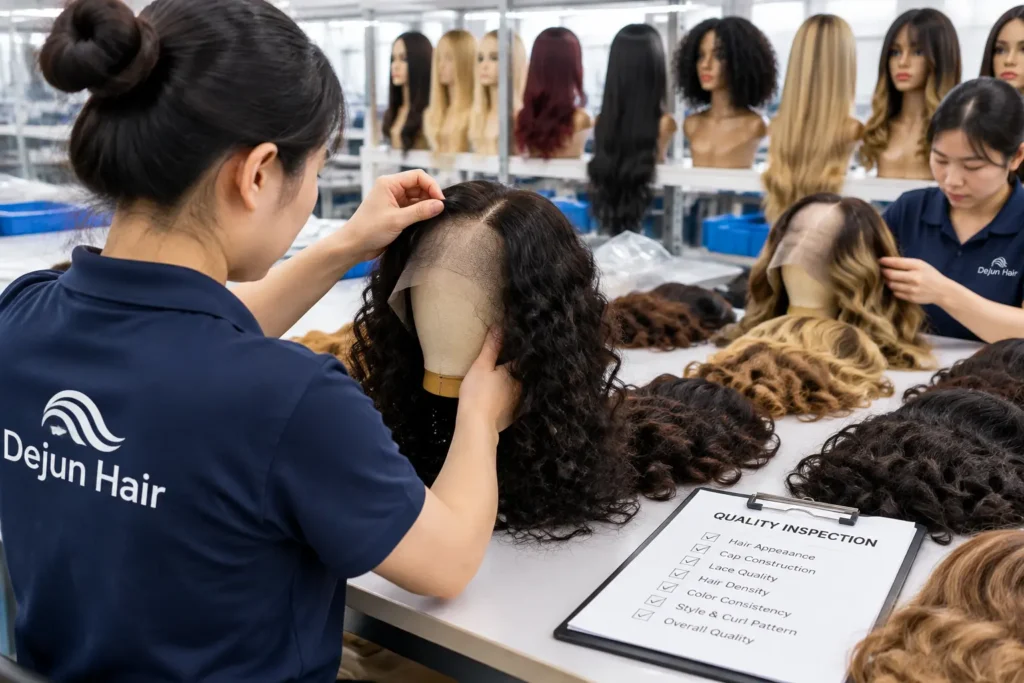
For colored bob wigs, useful inspection points include:
Color consistency: Does the finished batch stay within the approved color range?
Length and style: Does the cutting and finished silhouette match the approved design?
Hair quality: Is the hair smooth and consistent with the agreed material?
Density: Is hair distribution appropriate and consistent?
Shedding and construction: Are stitching, knots, wefts, lace, and cap components secure?
Size: Does the cap match the agreed measurements?
Packaging: Are logos, labels, SKUs, and packaging correct?
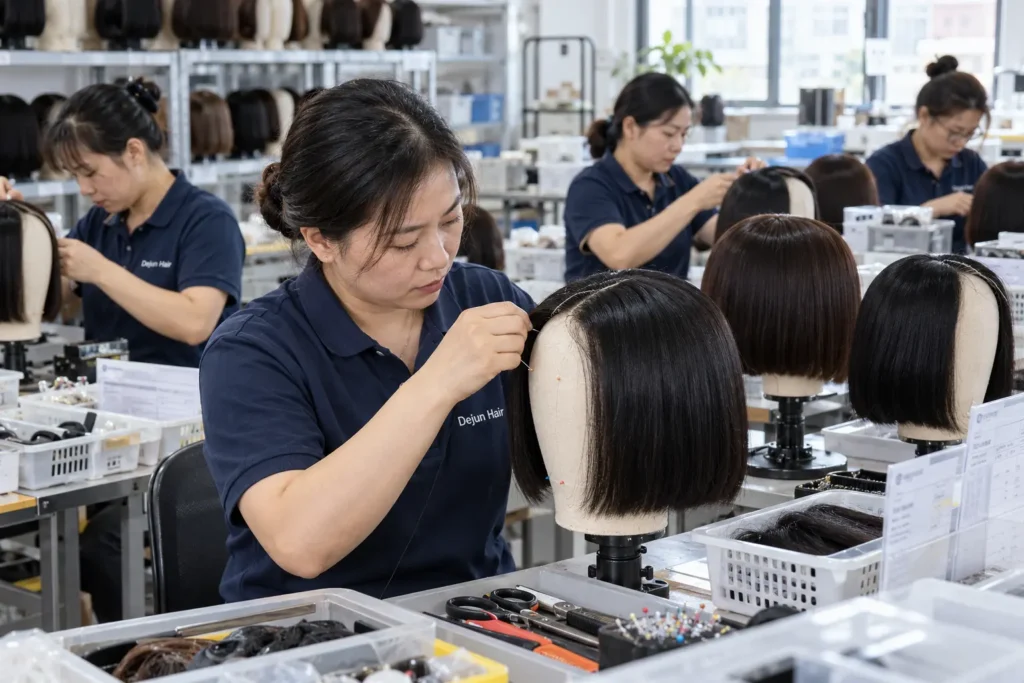
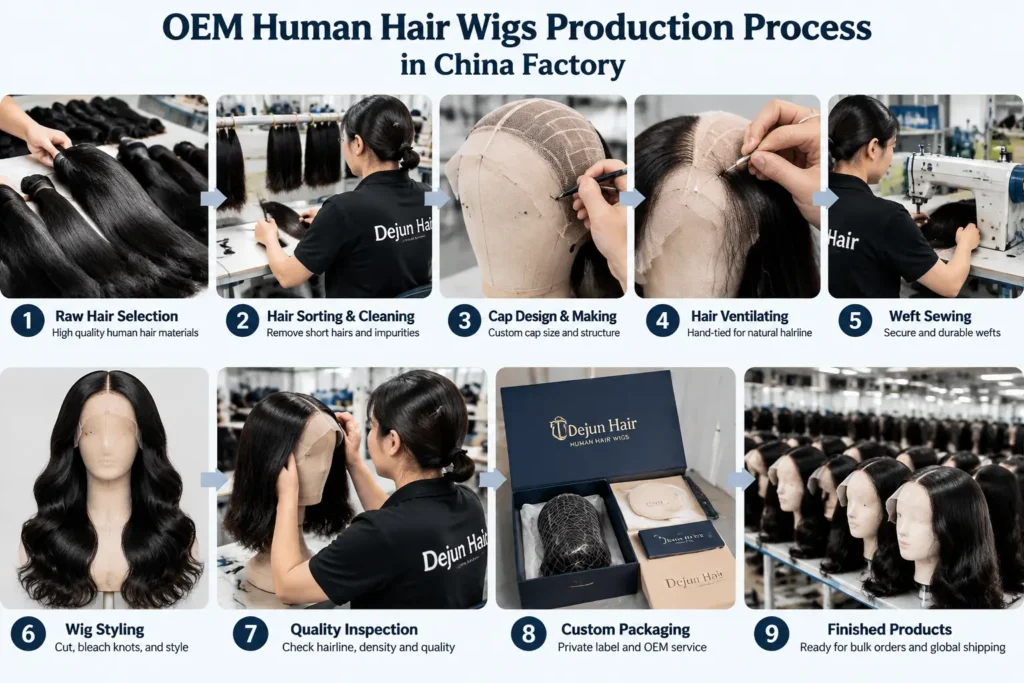
At Dejun Hair, our production process covers hair processing, cap making, lace sewing, styling, inspection, and warehousing. Keeping these processes under factory-level control helps us manage product consistency for both wholesale and OEM/ODM orders.
Step 10: Plan Your First Collection for Sell-Through, Not Just Variety
One of the easiest mistakes when launching a colored wig collection is creating too many SKUs.
Imagine launching six colors in four lengths and three densities. That already creates 72 combinations before considering different lace constructions.
For a new brand, that can create unnecessary inventory pressure.
A more practical strategy is to divide products into three groups.
Core colors are shades with broad, repeatable demand in your target market.
Trend colors respond to current fashion and social-media interest.
Test colors are purchased in smaller quantities to measure customer response before deeper stocking.
You can apply the same principle to wholesale bob wigs by concentrating inventory around a limited number of proven lengths and constructions.
Use sales data from the first collection to decide which colors should be reordered, expanded, or discontinued.
This turns OEM customization into an inventory strategy rather than simply a design exercise.
How to Choose a Custom Colored Bob Wigs Supplier
The right manufacturing partner should do more than quote a low unit price.
When comparing suppliers, examine whether the bob wig manufacturer can support the complete project from sampling through repeat production.
1. Verify Manufacturing Capability
Ask whether the company is a factory, trading company, or sourcing intermediary.
A factory with its own production processes can offer more direct control over customization and QC.
2. Evaluate Both Product and Color Experience
Producing a natural-black wig and producing a consistent colored human hair collection are not the same task.
Ask to see relevant samples and discuss how the factory controls coloring and processing.
3. Review OEM/ODM Capabilities
If your goal is brand differentiation, make sure the supplier can support the customization you actually need, such as:
- Custom colors
- Hair specifications
- Lace construction
- Cap design
- Logo
- Packaging
- Product labels
4. Ask About Flexible Ordering
A smaller hair business may need mixed styles or relatively small test quantities before scaling.
Discuss this before sample development so that the collection is designed around realistic purchasing volumes.
5. Consider Repeat-Order Capability
The first order is only one part of the relationship.
If one color becomes a bestseller, you need a wig factory that can understand the approved specifications and reproduce the product consistently.
Repeatability is often more valuable to a growing brand than having hundreds of catalog styles available once.
Working With Dejun Hair on Custom Colored Wig Projects
Dejun Hair is a wig manufacturer based in Shaoyang, Hunan, China, with approximately 20 years of local manufacturing experience.
Our product range covers both human hair and synthetic products, including bob wigs, lace front wigs, full lace wigs, glueless wigs, hair bundles, and fashion-colored wigs.
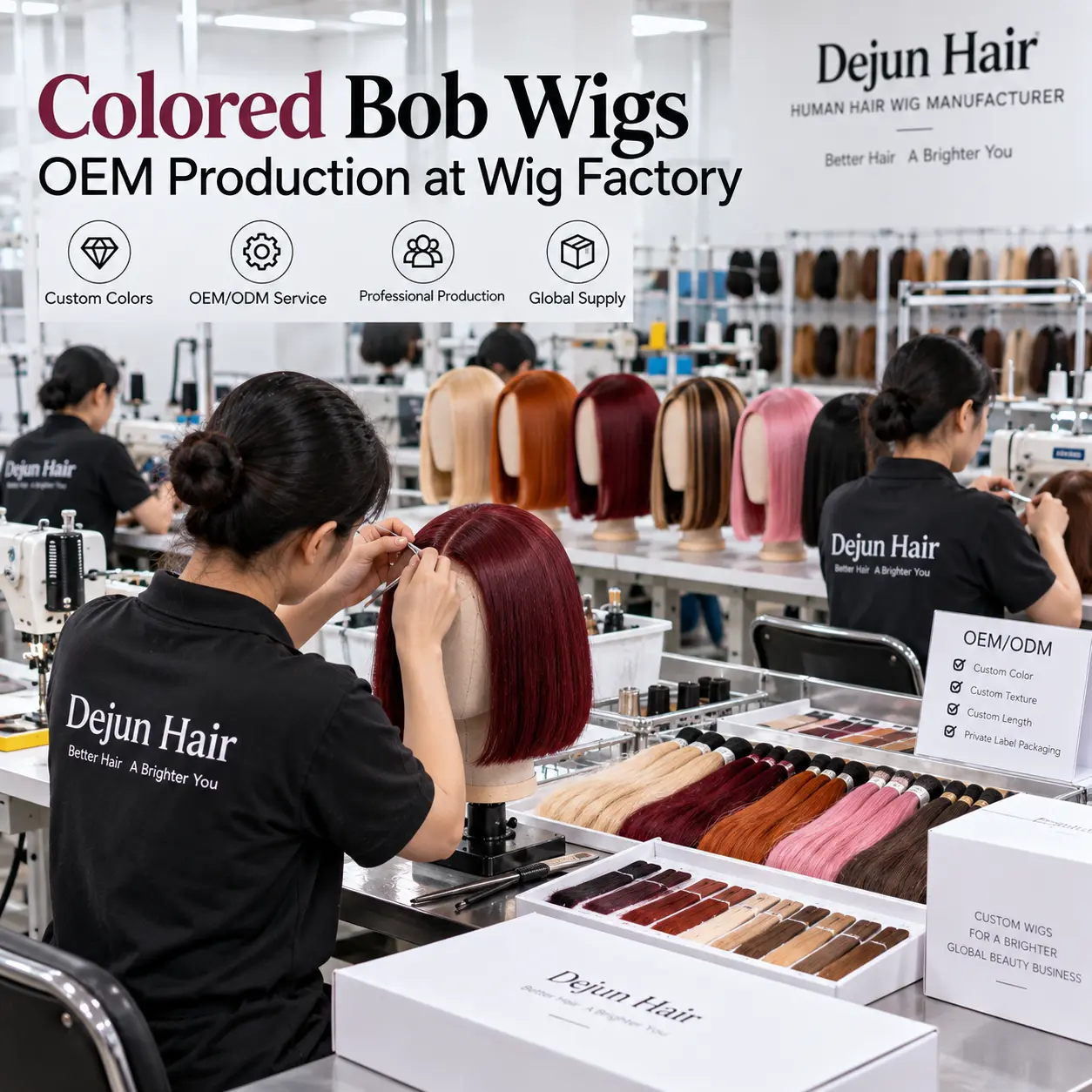
For OEM/ODM projects, customization can cover areas such as:
- Color
- Length
- Density
- Cap size
- Lace material
- Wig construction
- Logo
- Hang tags
- Packaging
Because different hair brands have different budgets and market requirements, we recommend discussing the intended customer, target price, order quantity, and specifications before developing a sample.
This allows the factory and buyer to determine whether an existing product can be adapted or whether a more complete OEM development process is required.
For overseas buyers, sourcing also continues beyond manufacturing. Export documentation, shipping options, packaging, and after-sales communication all affect the overall purchasing experience, particularly for repeat wholesale orders.
Conclusion: Build a Collection, Not Just a Colored Wig
Creating successful custom colored wigs involves much more than selecting an attractive shade from a color chart.
A commercially viable colored bob collection combines market positioning, appropriate hair material, controlled color development, practical construction, private labeling, sampling, quality control, and a realistic inventory strategy.
Start with your customer. Define a focused collection. Test samples carefully. Keep the first bulk order manageable, and use actual sales data to decide how the collection should expand.
Most importantly, choose an OEM partner based on its ability to reproduce your approved product—not simply its ability to make one attractive sample.
If you are planning a new colored bob wig collection, Dejun Hair can support human hair and synthetic wig development, OEM/ODM customization, private labeling, sampling, and wholesale production. Contact our team with your reference colors, target specifications, quantity, and packaging requirements to discuss your custom wig project.
Frequently Asked Questions
Industry reference resources for wholesale wig sourcing:
Dejun Hair
Direct from Chinese Wig Factories | One-Stop Wholesale Supplier of Wigs for International Trade.