Human Hair vs Synthetic Colored Bob Wigs: Which One Is Better for Wholesale Business?
For wig wholesalers, salon owners, and online hair retailers, choosing between colored human hair wigs and synthetic colored bob wigs is more than a product-quality decision. It affects purchasing costs, retail pricing, inventory turnover, customer satisfaction, and ultimately your profit.
Human hair offers a natural appearance, greater styling flexibility, and stronger premium positioning. Synthetic hair, meanwhile, gives buyers access to fashionable colors at a lower purchasing cost and can make it easier to test trends without tying up too much capital in inventory.
So, when comparing human hair vs. synthetic colored wigs for business, which option should you stock?
The answer depends on your target customers and business model. In this guide, we compare the two options from a wholesale buyer’s perspective—including quality, price, durability, profit potential, customer demand, and OEM opportunities—to help you build a more profitable colored wig inventory.
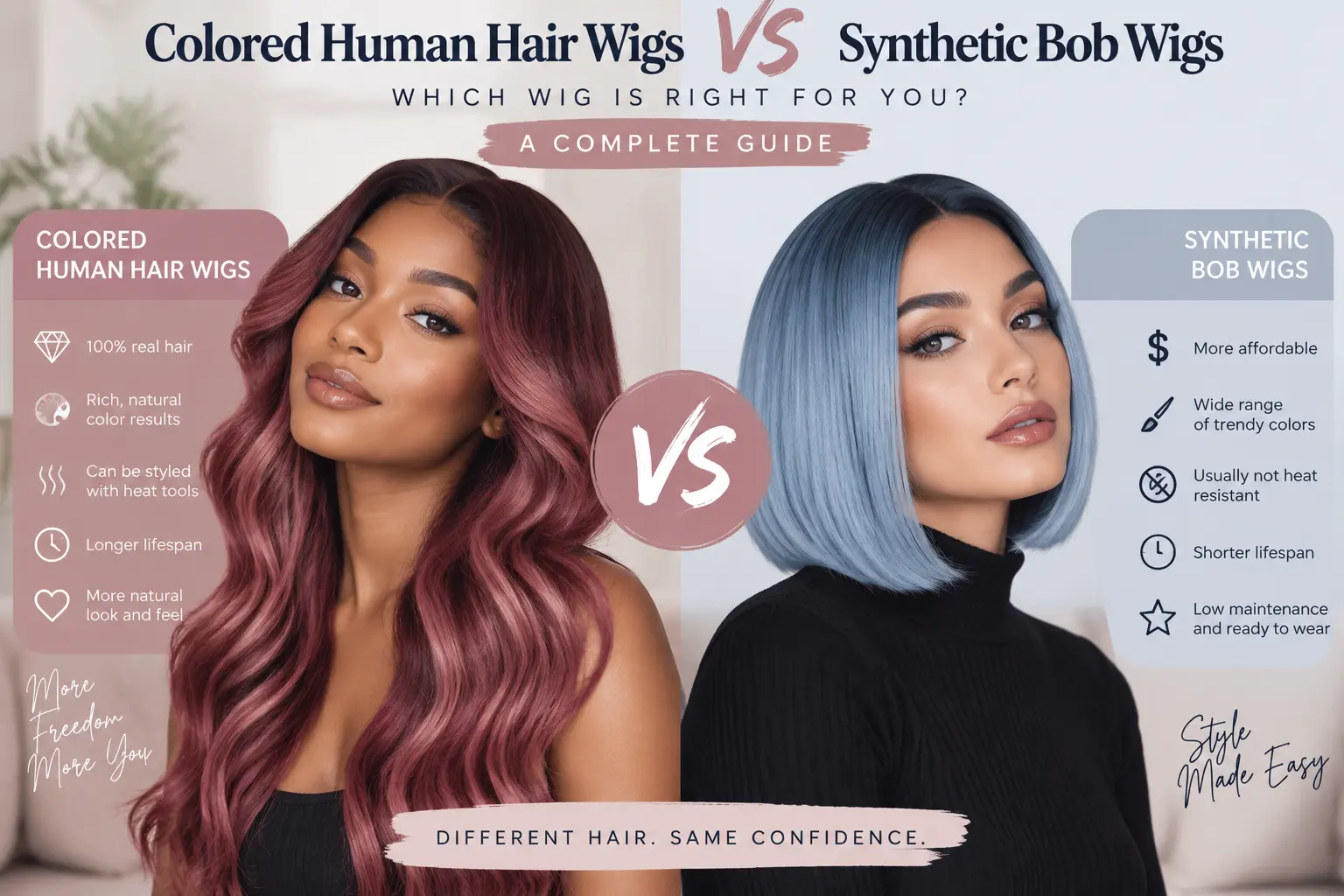
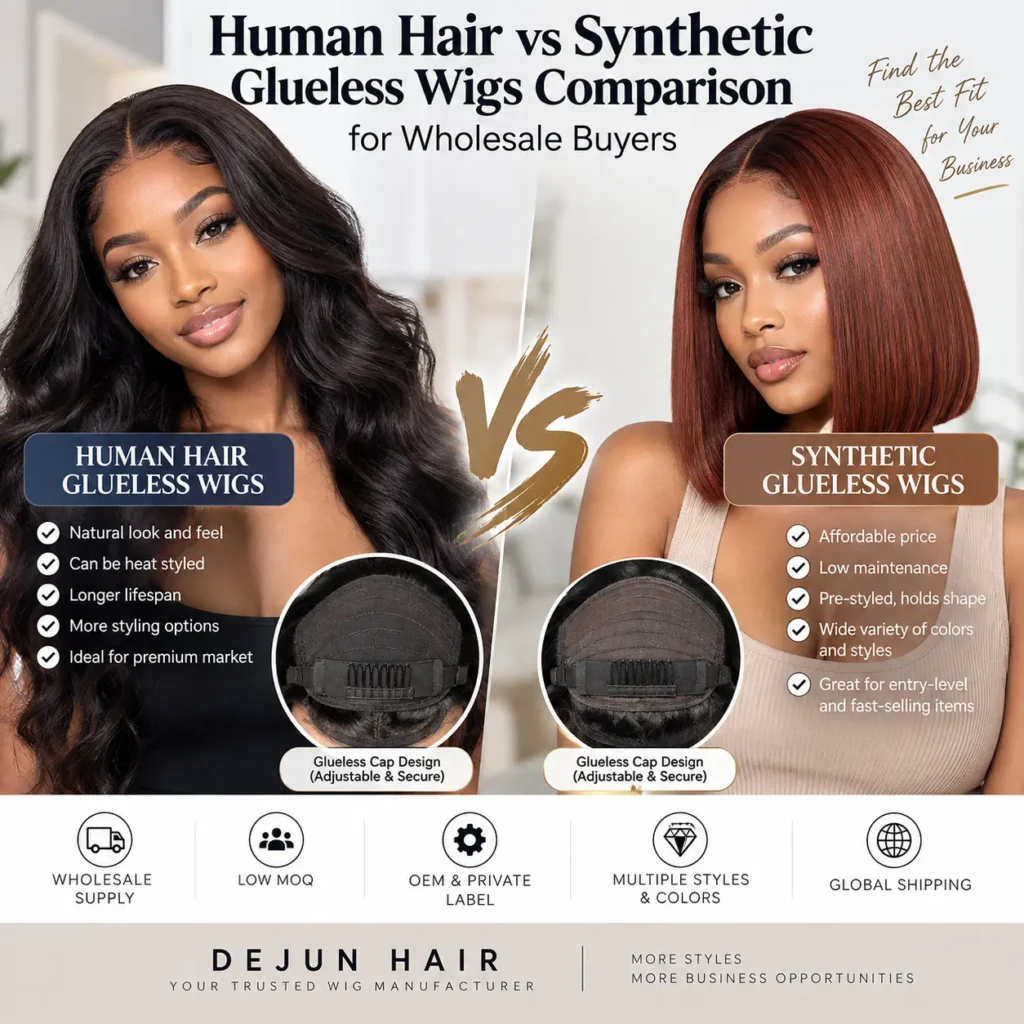
Colored Human Hair Wigs vs Synthetic Bob Wigs: Key Differences
Before deciding what to buy in bulk, it helps to understand how the two product categories differ commercially.
| Factor | Colored Human Hair Wigs | Synthetic Colored Bob Wigs |
|---|---|---|
| Hair Material | Real human hair | Synthetic fiber |
| Natural Appearance | Excellent | Good, depending on fiber quality |
| Wholesale Cost | Higher | Lower |
| Retail Positioning | Mid-range to premium | Budget to mid-range/fashion |
| Styling Flexibility | High | Limited or fiber-dependent |
| Heat Styling | Generally possible with proper care | Only suitable for heat-resistant fibers |
| Product Lifespan | Generally longer with proper care | Generally shorter |
| Color Variety | Wide | Extremely wide |
| Inventory Investment | Higher | Lower |
| Trend Testing | More expensive | Easier and less costly |
| Best For | Salons, premium wig stores and hair brands | Beauty stores, fashion retailers and trend-driven sellers |
Neither category is automatically the best choice for colored wigs for wholesale in every market. The better product is the one that matches your customers’ spending power, expectations, sales channels, and desired retail price.
Why Colored Human Hair Wigs Work Well in Premium Markets
More Natural Appearance and Movement
One of the strongest selling points of colored human hair wigs is their natural look and feel.
Real human hair moves, falls, and reacts much like the wearer’s own hair. This difference becomes particularly important for customers who plan to wear a wig regularly rather than only for a special occasion or short-lived fashion trend.
Quality also matters when selling lighter or more complex colors. Blonde, burgundy, brown, highlight, ombre, and balayage styles need consistent processing to maintain an attractive finish without making the hair excessively dry or brittle.
For salons and premium online retailers, this provides an opportunity to position colored lace front wigs and human hair bob styles as higher-value products rather than competing primarily on price.
Greater Styling Flexibility
Human hair also gives end customers more freedom to customize their look.
Depending on the construction and hair quality, customers can straighten, curl, wash, restyle, and maintain a human hair wig much like natural hair. This is especially valuable for buyers who want one wig that can create several looks.
For example, a customer purchasing a shoulder-length colored bob may occasionally want a sleek straight style and at other times prefer soft curls or waves.
That flexibility can make colored human hair wigs easier for salons and premium retailers to sell to customers who focus on versatility rather than simply finding the lowest-priced wig.
However, wholesalers should avoid promising unlimited heat or chemical processing. Even real human hair can be damaged by excessive heat, bleaching, or repeated chemical treatments, especially when the hair has already undergone significant color processing.
Higher Retail Value Can Offset the Higher Buying Cost
The obvious disadvantage of human hair is its higher wholesale cost.
But purchasing cost alone does not determine profitability.
A more useful calculation is:
Gross Profit per Unit = Retail Selling Price – Landed Product Cost
Landed cost should include not only the factory price but also freight, duties where applicable, packaging, payment costs, and other expenses associated with bringing the product into your market.
A premium human hair wig may require more working capital, but it can also support a considerably higher retail price than a basic synthetic wig.
For businesses serving customers who value realism, durability, and styling flexibility, the higher selling price can make colored human hair wigs commercially attractive even when unit turnover is slower.
Who Should Consider a Human Hair Bob Wigs Bulk Order?
A larger human hair bob wigs bulk order makes the most sense when you already understand the styles, lengths, colors, and price points that sell consistently in your market.
Human hair colored bobs are particularly suitable for:
- Premium salons and hair boutiques
- Established wig retailers
- Independent wig brands
- Online stores targeting mid- to high-value customers
- Sellers offering customized or private-label products
For a new business, however, ordering large quantities of every fashionable color can create unnecessary inventory risk. Starting with proven colors and smaller test quantities is often a more sensible sourcing strategy.
Why Synthetic Colored Bob Wigs Still Matter to Wholesale Buyers
Human hair may occupy the premium end of the market, but synthetic wigs solve a different set of business problems.
Lower Purchasing Costs Reduce Inventory Risk
The lower unit cost of synthetic bob wigs wholesale allows retailers to offer a wider range of colors without committing the same amount of capital required for human hair.
Suppose you want to test several variations—blonde, burgundy, copper, pink, blue, ombre, and highlights. Doing this entirely with premium human hair can create a substantial initial inventory investment.
Synthetic hair makes trend testing more accessible.
Instead of deciding whether one product category is universally superior, wholesalers should ask:
How much money am I willing to invest before I know whether this color will sell?
For new colors and highly trend-sensitive styles, synthetic wigs can provide a lower-risk answer.
Buyers interested in expanding this part of their inventory can also compare a broader selection of wholesale synthetic wigs before deciding which fibers, cap constructions, and price levels fit their customers.
Synthetic Hair Makes Fashion Colors Easier to Offer
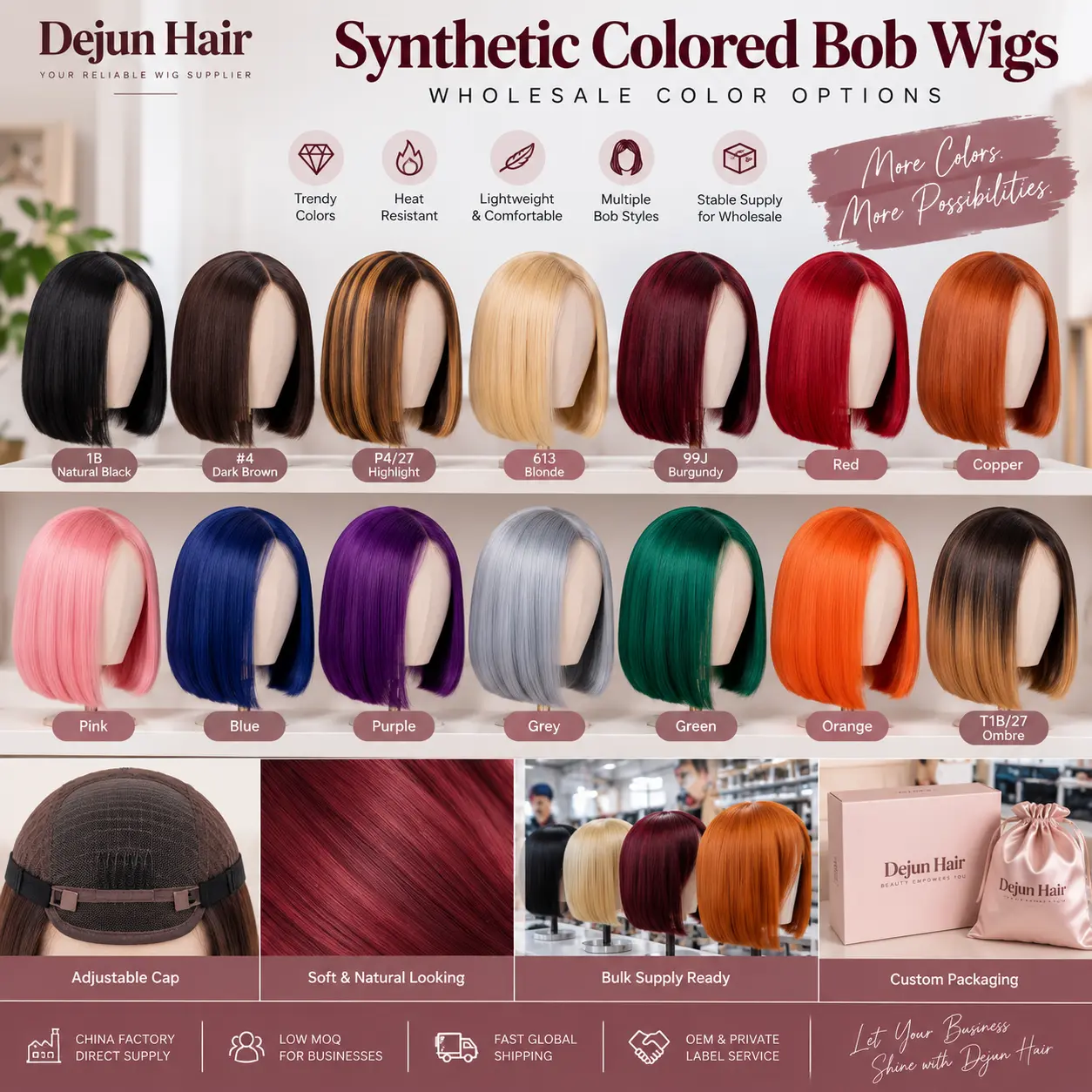
Synthetic fibers can be manufactured in an extensive range of shades and color combinations.
This is particularly useful for fashion-led products such as:
- 613 blonde
- Burgundy
- Copper
- Pink
- Blue
- Purple
- Two-tone combinations
- Ombre shades
- Highlighted bobs
A fashionable blonde bob wig, for example, may appeal to both premium and budget buyers. A retailer can offer a human hair version for customers who prioritize realism and a synthetic version for customers who primarily want the color and style at an accessible price.
This creates price segmentation within the same visual trend.
Short Bob Wigs Can Support Faster Fashion Turnover
Color trends can change faster than demand for traditional natural-black wigs. This makes inventory planning especially important for fashion colors.
Affordable short bob wigs allow retailers to respond quickly to social-media trends, seasonal demand, events, and changing customer preferences.
This can be particularly useful for:
- Beauty supply stores
- Fashion-focused online retailers
- TikTok and Instagram sellers
- New wig businesses
- Customers who frequently change hairstyles
The important distinction is that a lower price does not automatically mean higher profit. Synthetic products often produce a lower gross profit per unit, so profitability depends heavily on turnover, order volume, operating costs, and the retailer’s sales model.
Which Is More Profitable: Human Hair or Synthetic Colored Wigs?
This is where wholesale buyers need to look beyond the factory quotation.
When evaluating human hair vs. synthetic colored wigs for business, consider four financial factors.
1. Profit per Unit
Human hair generally supports a higher retail price and can therefore provide a larger dollar profit on each successful sale.
That makes it attractive for businesses with customers willing to pay for quality and longevity.
2. Initial Inventory Investment
Synthetic wigs require less capital per unit.
A buyer with a fixed purchasing budget can therefore test more colors, styles, or SKUs with synthetic hair than with human hair.
For smaller retailers and entrepreneurs, this flexibility can be more valuable than maximizing the margin on an individual wig.
3. Inventory Turnover
A lower-priced synthetic style may sell more quickly in a price-sensitive or trend-driven market.
Conversely, a premium salon with customers specifically looking for high-quality human hair may experience stronger turnover from human hair products.
There is no universal winner. Your own sales data should determine the answer.
4. Returns, Complaints, and Customer Expectations
Profit does not end when the product is sold.
A low-cost wig that generates excessive complaints can become expensive after replacements, refunds, customer-service time, and damage to your brand reputation are considered.
The same principle applies to human hair. Customers paying premium prices usually have higher expectations for hair quality, color consistency, lace, density, cap construction, and finishing.
For wholesale purchasing, therefore, quality consistency matters as much as the quoted unit price.

Which Colored Wigs Should You Stock for Your Target Market?
Different customer groups require different inventory strategies.
Premium Salons and Wig Brands
For businesses targeting customers who prioritize natural appearance, repeat wear, and styling versatility, colored human hair wigs should usually form an important part of the assortment.
Human hair lace-front bobs, natural-looking highlights, brown shades, blonde styles, and premium ombre colors can help support higher-value positioning.
Retailers targeting this segment should also compare their colored assortment with their broader wholesale human hair wigs range so that color products complement rather than replace dependable core styles.
Beauty Supply Stores and Local Wig Retailers
These businesses can often benefit from carrying both materials.
Synthetic colored bobs provide accessible fashion options, while human hair products give customers an upgrade path.
This “good-better-premium” approach allows a retailer to serve multiple budgets without forcing every customer into the same price level.
Social Media and Fashion-Led Sellers
TikTok, Instagram, and other social-commerce sellers often need to respond rapidly to visual trends.
Synthetic wigs can work well for experimental colors because the investment required to test a new SKU is lower. Once a particular color or style demonstrates repeat demand, the seller can introduce a premium human hair version.
New Wig Businesses
New sellers should be cautious about placing large orders based only on what appears popular online.
A better starting point is to test several products in smaller quantities, collect actual sales data, and then reorder the strongest performers.
A reliable wholesale bob wigs supplier should be able to discuss mixed orders, stock availability, samples, and reasonable customization requirements rather than pushing every buyer toward a large initial order.
A Better Inventory Strategy: Core + Test + Premium
Instead of using a fixed formula such as “70% synthetic and 30% human hair,” wholesalers should build inventory around actual market roles.
Core Inventory
Core inventory consists of styles with proven, repeatable demand.
Depending on your market, this might include natural black, dark brown, burgundy, blonde, or other consistently popular shades.
Maintain deeper stock only after sales history justifies it.
Test Inventory
Use smaller quantities for new colors and styles.
This category may include new ombre combinations, copper shades, seasonal colors, or looks gaining attention on social media.
Synthetic products can be particularly useful here because they reduce the capital required for experimentation.
Premium Inventory
Use colored human hair wigs to serve customers seeking better realism, styling flexibility, and higher-value products.
The objective is not to stock every possible human hair color. Instead, identify which premium shades your customers are actually willing to pay for.
This approach helps balance product variety with cash-flow control.
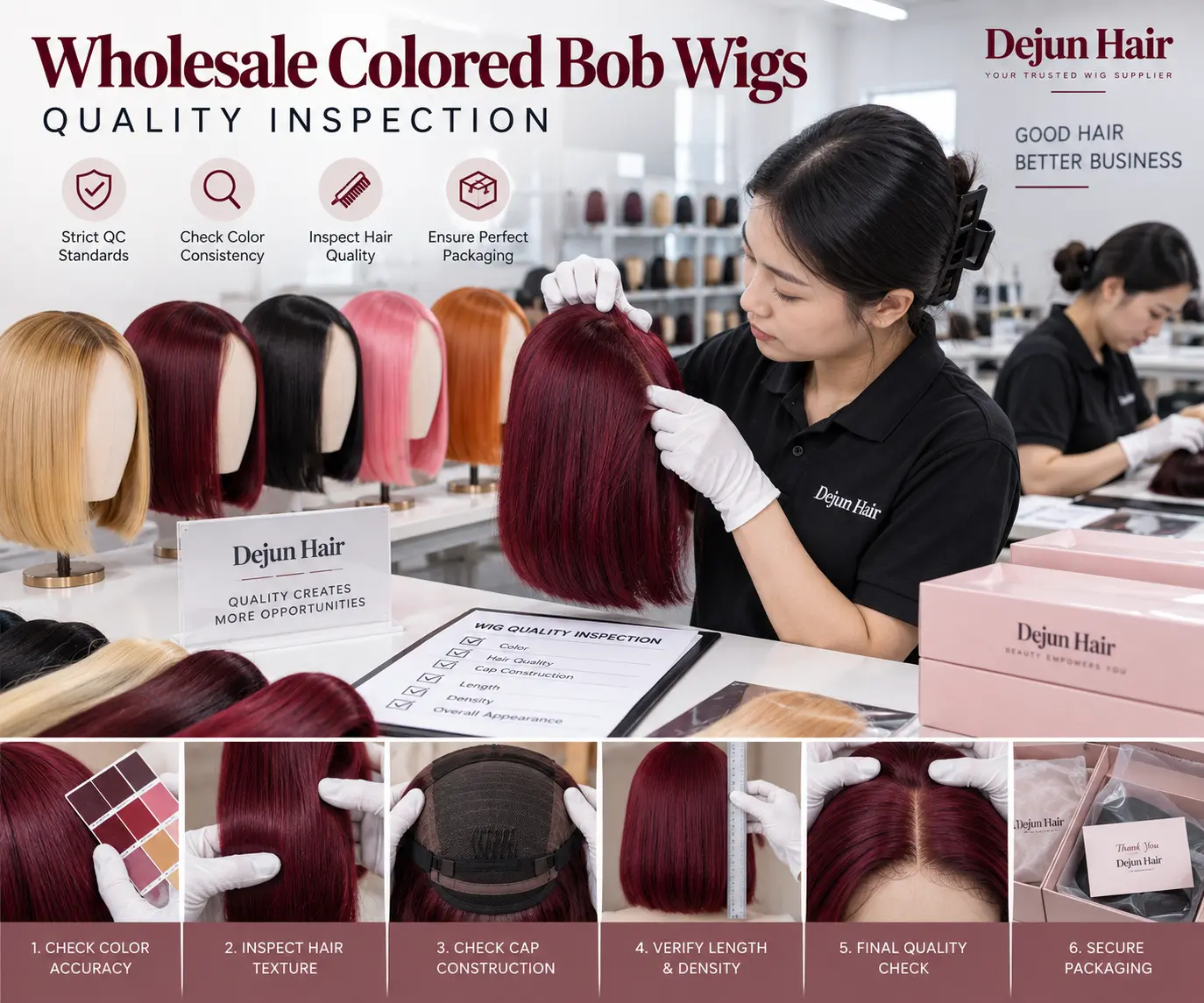
What to Check Before Choosing a Wholesale Colored Bob Wigs Supplier
Whether you buy human hair or synthetic products, supplier evaluation should go well beyond price.
A dependable wholesale colored bob wigs supplier should be able to explain exactly what you are purchasing and maintain reasonable consistency between samples and bulk production.
Before ordering, evaluate the following areas.
Hair or fiber quality: For human hair, clarify the hair grade, processing history, softness, shedding, tangling, and condition of the ends. For synthetic hair, understand the fiber type and whether it is heat-resistant.
Color consistency: Ask how the factory manages shade variation between production batches. This becomes especially important when customers reorder the same color.
Cap construction: Check cap size, elasticity, stitching, lace construction, comb placement, adjustable straps, and overall comfort.
Density and weight: Confirm specifications before production rather than relying only on photographs.
Color fastness: Heavily processed colors should be tested to reduce unexpected bleeding or fading.
Samples: For a new supplier or important SKU, sample testing can reveal problems that are difficult to identify from photos and videos.
MOQ and mixed orders: Ask whether different colors, lengths, and styles can be combined. Flexible ordering can significantly reduce inventory risk for smaller businesses.
Production capacity: A low sample price means little if the factory cannot maintain quality or delivery schedules when you scale.
After-sales policy: Clarify how genuine manufacturing defects are handled before placing the order.
An experienced bob wig manufacturer should be able to discuss these specifications clearly instead of offering only a price list.
OEM and Custom Color Wigs: Building a More Distinctive Product Line
Once your business has identified proven sellers, OEM customization can help you move beyond selling the same generic products as competitors.
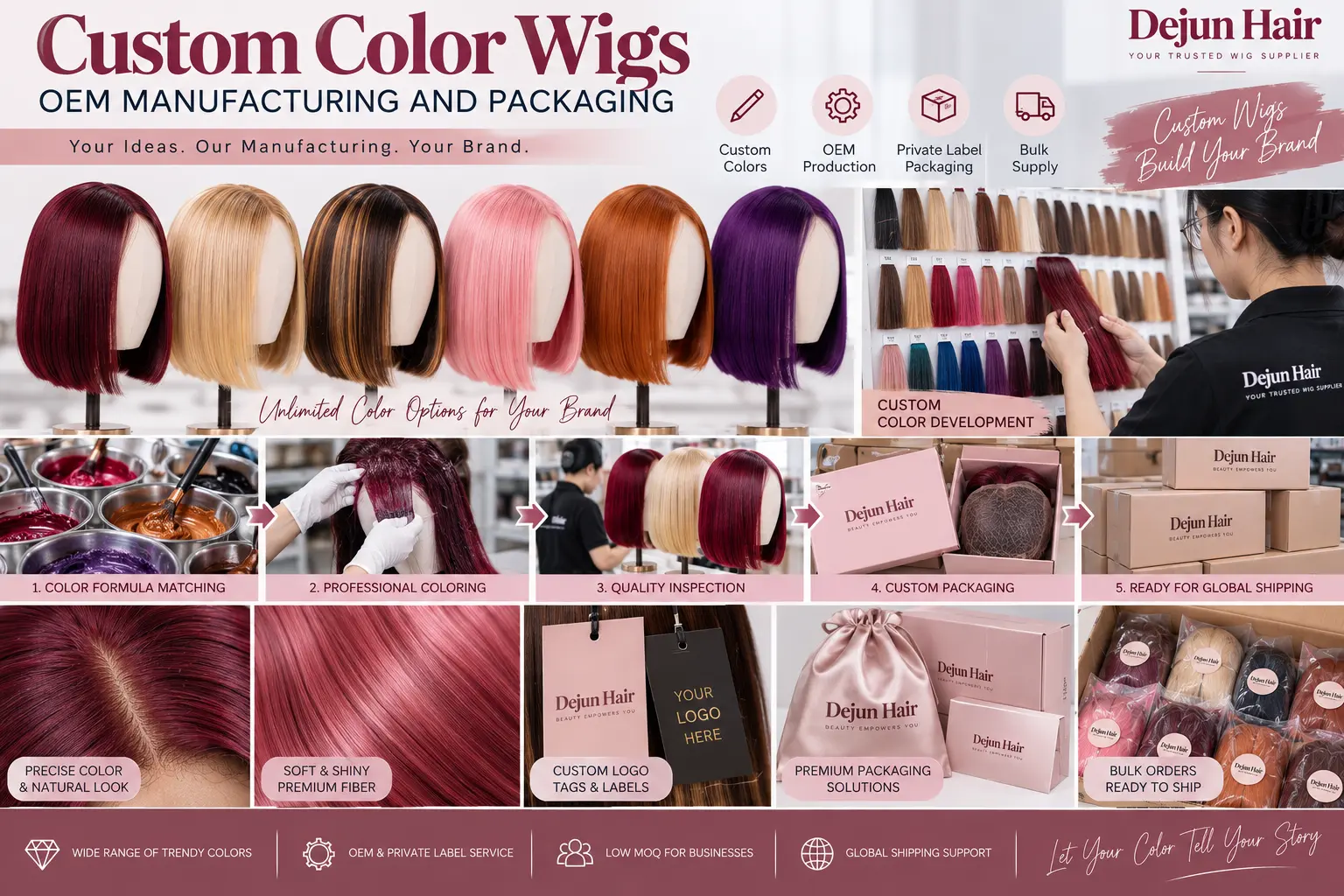
Depending on order requirements, custom color wigs can include adjustments to:
- Color and highlight combinations
- Bob length and cut
- Hair density
- Lace material and size
- Cap circumference
- Hair texture
- Logo and private label
- Packaging
- Hang tags
- Care instructions
Customization should follow market validation rather than replace it. Developing a large quantity of an untested custom color simply increases inventory risk.
A more effective process is to test a standard or lightly customized sample, collect customer feedback, refine the specifications, and then scale the winning product.
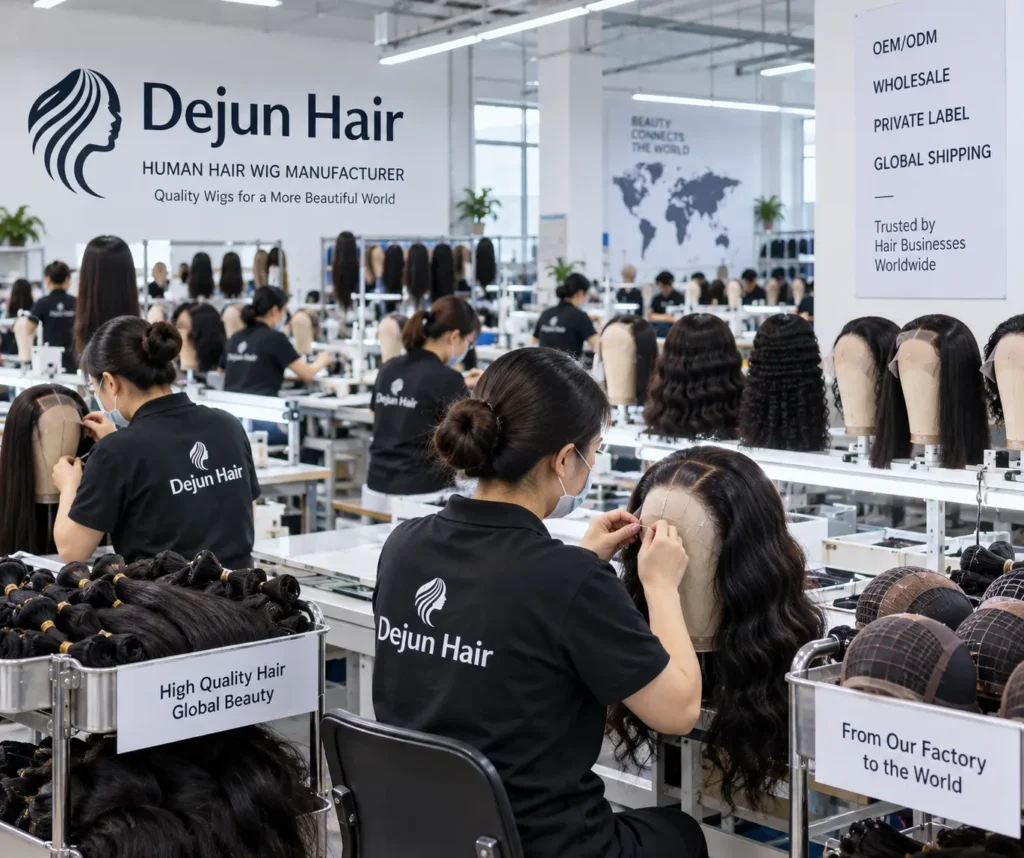
As a wig manufacturer in Shaoyang, Hunan, Dejun Hair produces both human hair and synthetic wig categories. This gives wholesale buyers the option to source premium and affordable colored products within one supply chain while discussing mixed orders, private labeling, packaging, and OEM/ODM requirements according to the project.
For buyers, the practical benefit is supply-chain simplicity: fewer supplier relationships to manage, clearer quality requirements, and the ability to build several retail price tiers around the same color trend.
Final Verdict: Human Hair or Synthetic Colored Bob Wigs?
There is no single winner for every wholesale business.
Colored human hair wigs are generally the stronger choice when your customers prioritize natural appearance, styling flexibility, longer-term wear, and premium positioning. Their higher acquisition cost can be justified when your market supports higher retail prices, and customers expect premium quality.
Synthetic colored bob wigs are often the better commercial choice when affordability, fashion variety, low inventory investment, and rapid trend testing matter more. They allow retailers to introduce more colors and serve price-sensitive customers without committing as much capital to each SKU.
For many established sellers, the strongest strategy is not choosing one material exclusively. It is using each category for a different purpose: synthetic products for accessible fashion and testing, and human hair for premium customers and proven high-value styles.
Before placing your next order, review your customer profile, target retail price, previous sales data, inventory budget, and desired margin. Then ask your supplier for samples and specifications rather than comparing quotations on price alone.
Dejun Hair supports overseas wholesalers, salons, beauty retailers, and online sellers with colored human hair wigs, synthetic colored wigs, wholesale stock, mixed-order options, and OEM/private-label customization. Buyers can discuss colors, lengths, density, lace, cap specifications, packaging, and order quantities based on their local market.
Dejun Hair is a reliable wholesale wig supplier offering colored human hair wigs, synthetic wigs, OEM customization, and flexible bulk ordering options.
Looking for colored bob wigs for your next wholesale collection? Contact Dejun Hair to request product options, sample information, MOQ details, and an OEM quotation.
Frequently Asked Questions
Industry reference resources for wholesale wig sourcing:

Dejun Hair
Direct from Chinese Wig Factories | One-Stop Wholesale Supplier of Wigs for International Trade.