How to Manage Bob Wig Inventory: Stock Planning Tips for Wig Retailers
Introduction: Why Bob Wig Inventory Management Matters
Managing bob wig inventory is not simply about purchasing enough wigs to fill your store shelves. For wig retailers, salon owners, wholesalers, and online sellers, the real challenge is maintaining the right products, colors, and lengths while avoiding unnecessary inventory costs.
Bob wigs are popular because they offer a versatile, fashionable, and easy-to-maintain hairstyle. However, customer preferences can vary significantly depending on the local market, season, hair texture, color trends, and purchasing power. A retailer who stocks too many unpopular blonde bob wigs may experience slow inventory turnover, while another who carries only natural black bob wigs may miss opportunities to attract customers looking for fashionable colors.
Poor bob wig inventory management can result in tied-up cash flow, missed sales, excessive storage costs, and outdated products.
So, how can you build an efficient inventory system without overstocking?
In this guide, we will explain how to identify best-selling bob wig styles, plan inventory by color and length, calculate reorder points, manage slow-moving products, and work with a reliable wholesale bob wig supplier. These practical strategies can help small and medium-sized wig businesses improve inventory turnover and build a more profitable operation.
1. Identify the Best-Selling Bob Wig Styles Before Purchasing
The first step in effective bob wig inventory management is understanding which products your customers actually want.
Not every bob wig style sells at the same speed. Buying large quantities simply because a particular style looks attractive can create unnecessary inventory pressure.
Instead, divide your bob wig inventory into several product categories.
1.1 Short Bob Wigs
Short bob wigs are a practical choice for customers who prefer neat, lightweight, and easy-to-style hairstyles.
They can appeal to everyday wig wearers, working professionals, and customers who want a fashionable appearance without maintaining long hair.
Retailers should consider stocking popular short bob styles in natural black and brown before expanding into less common colors.
1.2 Straight Bob Wigs
Straight bob wigs offer a clean and classic appearance. They are suitable for customers who prefer simple hairstyles for everyday use, professional settings, and special occasions.
For retailers, straight bob wigs are worth considering as core inventory because their styling is relatively versatile.
Consider stocking several lengths, such as:
- 8-inch bob wigs for shorter, compact hairstyles.
- 10-inch bob wigs for a classic bob appearance.
- 12-inch bob wigs for customers who prefer a slightly longer look.
- 14-inch bob wigs for a longer bob or lob-inspired style.
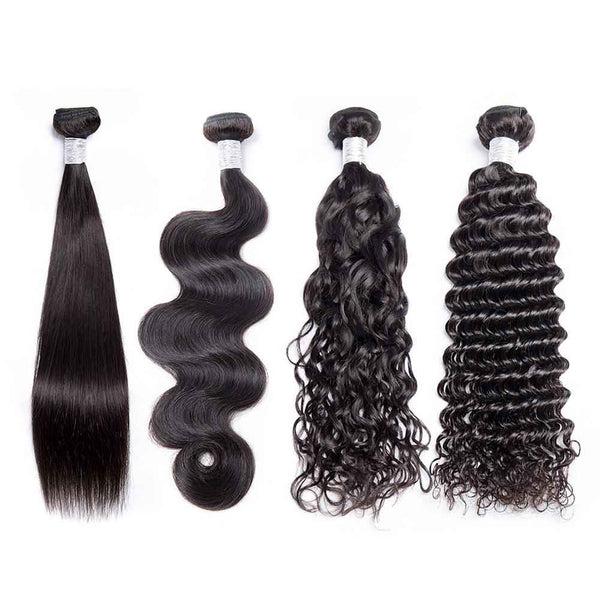
1.3 Curly and Wavy Bob Wigs
Curly and wavy bob wigs provide more volume and texture than straight styles. They can help retailers expand their product selection and attract customers looking for different appearances.
Rather than purchasing large quantities immediately, test a few popular textures and monitor customer feedback.
1.4 Lace Front and Glueless Bob Wigs
Lace front bob wigs and glueless bob wigs are important options for customers who prioritize a natural-looking hairline and convenient installation.
Retailers serving the US and European markets may want to test different lace constructions, cap sizes, and densities.
When purchasing from a wholesale bob wigs supplier, ask whether different styles can be combined in one order. This makes it easier to test product demand without committing too much capital to a single design.
Practical tip: Start with a small selection of core bob wig styles. Expand your inventory only after sales records show which products consistently perform well.
2. Plan Bob Wig Inventory by Color and Length
After identifying the main product styles, the next step is deciding how many units to purchase in each color and length.
This is one of the most important parts of bob wig stock planning because different customer groups have different preferences.
A retailer should avoid treating all colors and lengths equally. Instead, divide products into core inventory, secondary inventory, and trend-testing inventory.
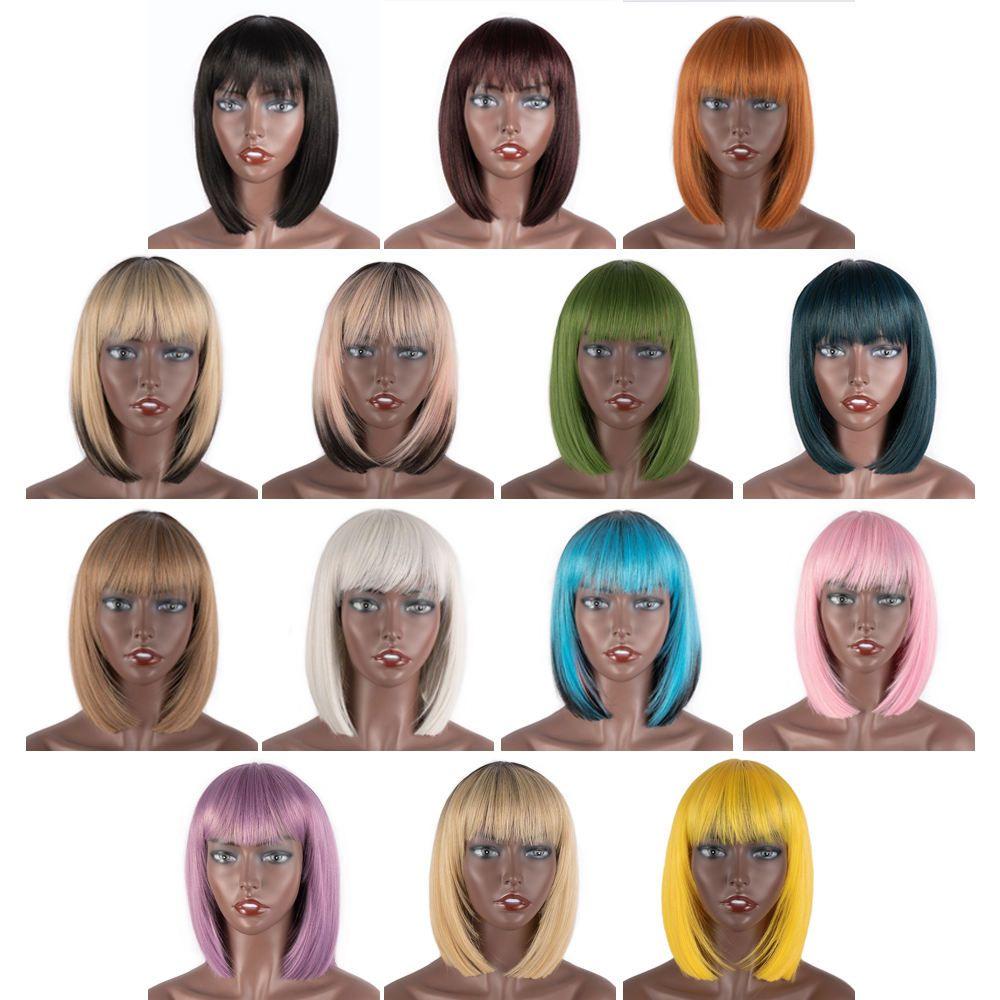
2.1 Build a Practical Color Inventory Strategy
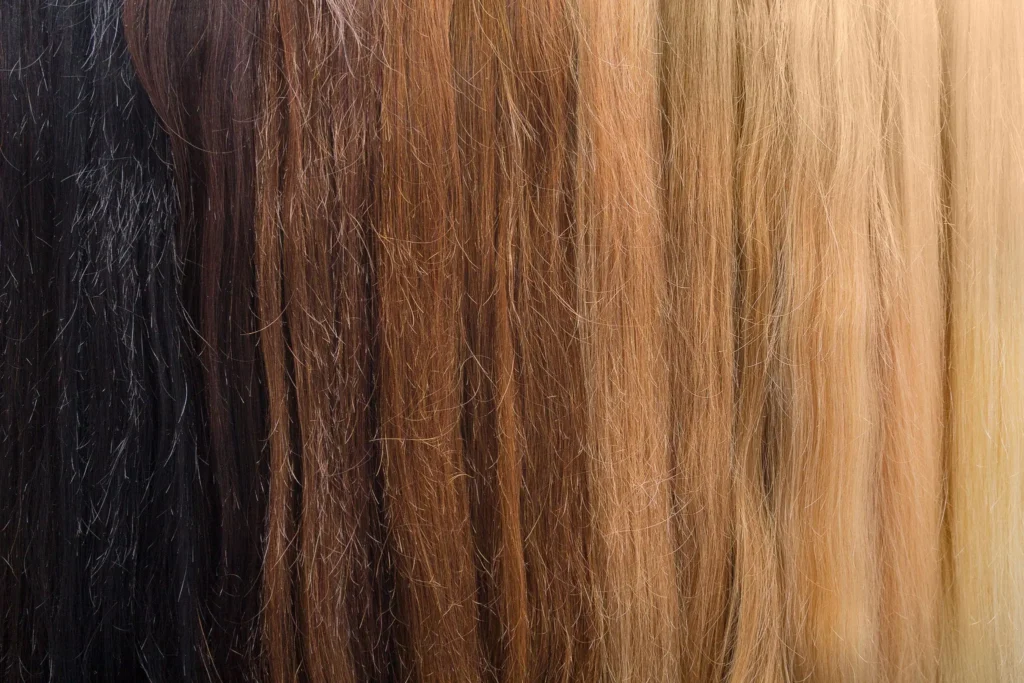
Consider dividing your bob wig color inventory into three groups:
| Color Category | Examples | Inventory Strategy |
|---|---|---|
| Core colors | Natural black, 1B, dark brown #2 | Maintain regular stock |
| Secondary colors | Medium brown #4, honey blonde | Stock according to sales |
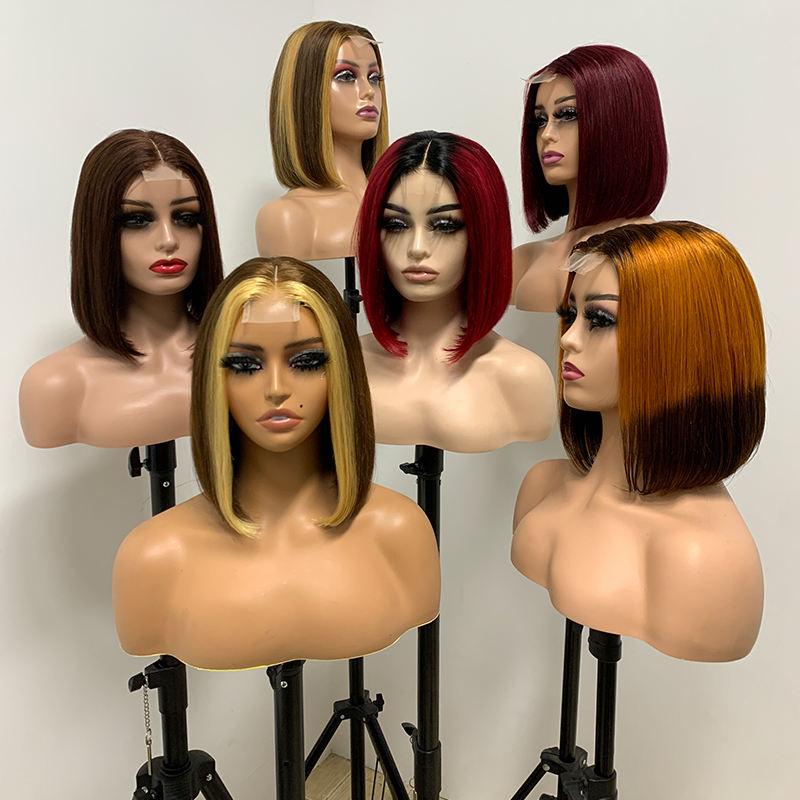
| Fashion colors | Burgundy, red, highlights, ombre | Start with small test quantities |
Natural black and dark brown are practical starting points for retailers targeting customers who prefer everyday hairstyles and natural-looking colors.
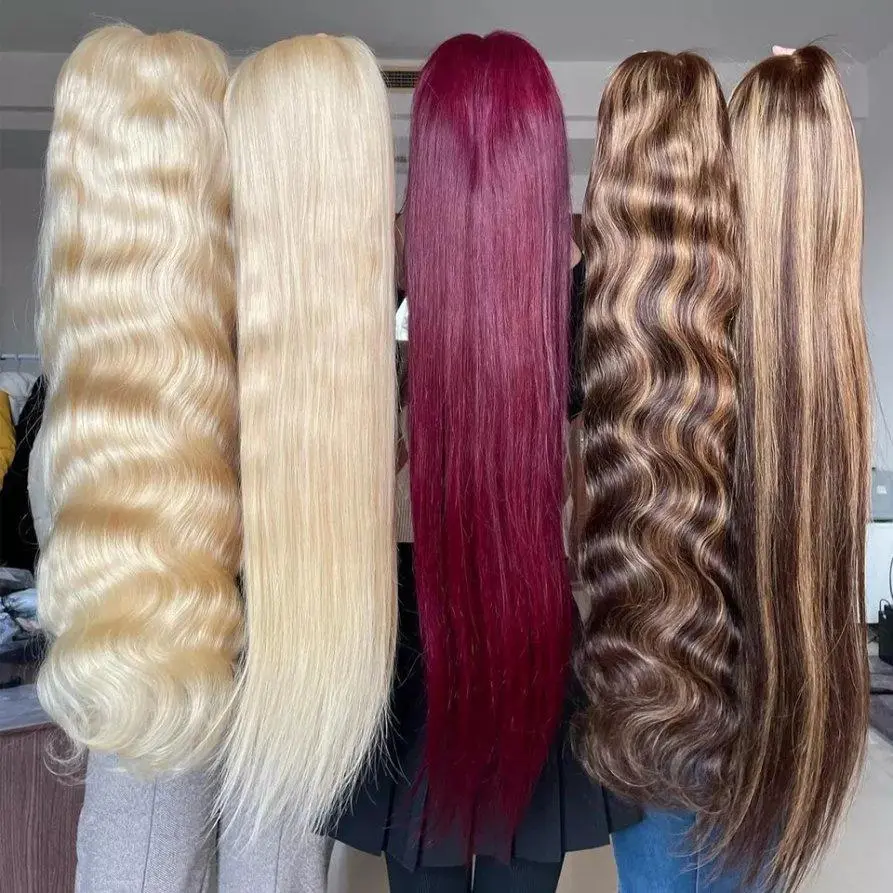
Blonde and other colored bob wigs can help retailers expand their product collections and attract customers interested in fashion-oriented styles.
For example, retailers may test:
- Blonde human hair bob wigs for premium customers.
- Brown bob wigs for customers seeking softer natural shades.
- Red bob wigs for customers interested in fashionable looks.
- Colored human hair wigs for customers who want more styling options.
However, these are starting assumptions rather than universal sales rankings. Your own order history should determine the final allocation.
You can explore different options through Dejun Hair’s Wholesale Bob Wigs collection.
2.2 Allocate Inventory by Wig Length
Length also influences purchasing decisions.
A practical starting assortment might look like this:
| Bob Wig Length | Product Positioning | Suggested Stock Priority |
|---|---|---|
| 8 inches | Short, classic bob | High |
| 10 inches | Everyday bob | High |
| 12 inches | Medium-length bob | High |
| 14 inches | Longer bob | Medium |
| 16 inches | Long bob / lob | Medium |
These priorities are suggested starting points, not verified industry-wide sales statistics.
For a small salon, stocking several lengths in limited quantities is generally more flexible than purchasing a large number of just one length.
For an online retailer, product-page views, add-to-cart activity, conversion rates, and customer inquiries can help identify which lengths deserve more inventory.
2.3 Use a Core-Support-Test Inventory Structure
An easy way to organize your inventory is to divide it into three groups:
- Core products: Styles, colors, and lengths with consistent sales records.
- Supporting products: Additional options that broaden your selection.
- Test products: New colors, textures, and designs with uncertain demand.
For example, a retailer might allocate 60% of the bob wig purchasing budget to established products, 25% to supporting styles, and 15% to new product testing.
This is an illustrative allocation, not a fixed industry rule. Adjust it according to your sales history and available cash flow.
The main principle is simple: invest more in proven products and less in untested inventory.

3. How Many Bob Wigs Should a Retailer Stock?
One of the most common questions in wig inventory management for small business is how many wigs to purchase at the beginning.
There is no universal answer because the right quantity depends on monthly sales, available capital, storage capacity, supplier lead time, and business model.
A small salon does not need the same inventory as a regional wholesale distributor.
3.1 Inventory Planning for Small Wig Salons
Small salons should focus on product availability rather than maintaining excessive stock.
A practical starting strategy is to:
- Identify the five to eight bob wig styles most relevant to local customers.
- Keep limited quantities of core colors.
- Stock several popular lengths.
- Use samples or product catalogs to present additional options.
- Reorder products when sales reach predetermined levels.
For example, a salon selling approximately 15 bob wigs monthly might initially plan for 15–25 units, depending on replenishment speed and how much variety customers expect.
This is an illustrative planning scenario, not a recommended quantity for every salon.
3.2 Inventory Planning for Wholesale Distributors
Wholesale distributors need a different approach.
Their customers may include beauty supply stores, independent salons, street retailers, and smaller resellers.
These buyers often expect immediate availability and a wider product selection.
Distributors should consider:
- Keeping more units of products with repeat wholesale orders.
- Maintaining a selection of natural and fashion colors.
- Separating ready-to-ship stock from custom orders.
- Negotiating regular replenishment schedules with manufacturers.
- Reviewing inventory by SKU rather than by general product category.
For distributors handling multiple brands or product lines, a spreadsheet or inventory management system can help track purchasing costs, quantities, and reorder dates.
3.3 Inventory Planning for Online Wig Stores
Online sellers should combine inventory data with digital marketing information.
For example, a product receiving many visits but few purchases may have a pricing, photography, or product-description problem rather than an inventory problem.
On the other hand, a bob wig that frequently sells out after social media promotion may require a higher safety stock level.
Track the following information:
| Metric | What It Tells You |
|---|---|
| Product page views | Customer interest |
| Add-to-cart rate | Purchase consideration |
| Conversion rate | Sales performance |
| Monthly units sold | Actual demand |
| Return rate | Product satisfaction |
| Stockout frequency | Missed sales opportunities |
Do not automatically increase stock just because a product receives high traffic. Confirm that customer interest translates into actual purchases.
4. Use Sales Data to Set Reorder Points
Knowing when to reorder is just as important as knowing what to purchase.
Ordering too early increases storage costs and ties up cash. Ordering too late creates stockouts and may cause customers to purchase from competitors.
A clear reorder point helps retailers balance these risks.
4.1 Calculate Your Reorder Point
A basic reorder point formula is:
Reorder Point = Average Daily Sales × Supplier Lead Time + Safety Stock
For example:
Suppose a retailer sells an average of 2 bob wigs per day.
The supplier’s replenishment lead time is 10 days, and the retailer wants to maintain 8 additional units as safety stock.
The calculation is:
- Average daily sales: 2 units
- Supplier lead time: 10 days
- Safety stock: 8 units
Reorder point:
2 × 10 + 8 = 28 units.
This means the retailer should place a replenishment order when available inventory reaches approximately 28 units.
The calculation should be based on realistic lead times, including production, quality inspection, packaging, shipping, and customs clearance where applicable.
4.2 Calculate Inventory Turnover
Inventory turnover helps you understand how efficiently your business sells and replaces its stock.
The formula is:
Inventory Turnover Ratio = Cost of Goods Sold ÷ Average Inventory Value
For example:
- Annual cost of goods sold: $60,000
- Average inventory value: $15,000
Inventory turnover:
$60,000 ÷ $15,000 = 4 times per year.
This means the business sold and replaced inventory equivalent to its average inventory value four times during the year.
A higher turnover rate is not automatically better. Retailers must also maintain enough inventory to satisfy customer demand.
The goal is to achieve a healthy balance between sales availability and inventory investment.
4.3 Review Inventory Every Month
Create a monthly inventory report covering:
- Beginning inventory.
- New purchases.
- Units sold.
- Returned products.
- Ending inventory.
- Products approaching reorder points.
- Slow-moving products.
For businesses with many SKUs, weekly reviews of core products can help identify problems earlier.
A simple, consistent tracking process is often more useful than a complicated system that employees do not update.
5. How to Avoid Overstocking Bob Wigs
Overstocking is one of the biggest financial risks for small wig businesses.
When retailers purchase too many products that customers do not want, their capital remains tied up in inventory instead of being available for marketing, operating expenses, or new product opportunities.
Here are five practical ways to reduce overstocking.
5.1 Test New Styles Before Placing Bulk Orders
Do not purchase large quantities of a new bob wig style based only on fashion trends.
Start with samples or small mixed orders.
Test different:
- Hair textures.
- Lengths.
- Colors.
- Lace constructions.
- Cap designs.
Monitor actual customer feedback and sales performance before increasing purchasing quantities.
Working with a manufacturer that supports flexible minimum order quantities can make this process easier.
5.2 Use Mixed-Style Wholesale Orders
Buying multiple styles in one order gives retailers more flexibility.
For example, instead of purchasing 50 units of one bob wig design, a retailer may prefer a mixed order containing:
| Product | Test Quantity |
|---|---|
| Straight black bob wigs | 10 |
| Wavy brown bob wigs | 10 |
| Curly bob wigs | 10 |
| Blonde bob wigs | 10 |
| Glueless bob wigs | 10 |
| Total | 50 |
This example demonstrates how mixed purchasing can help retailers evaluate multiple product categories.
The exact order quantities should depend on supplier MOQ requirements and actual demand.
5.3 Identify Slow-Moving Products Early
A product should not remain in inventory indefinitely simply because it was expensive to purchase.
Create a slow-moving stock report and review products with low sales activity over the previous 60–90 days.
Possible actions include:
- Offering limited-time promotions.
- Creating multi-product bundles.
- Using social media campaigns to increase visibility.
- Offering special prices to wholesale customers.
- Reducing future purchasing quantities.
Before discounting, check whether poor sales are caused by pricing, product photography, sizing information, or insufficient marketing.
5.4 Avoid Excessive Trend-Based Purchasing
Fashion trends can change quickly, particularly for colored wigs and social-media-driven hairstyles.
A product that attracts significant attention today may not maintain the same demand several months later.
Retailers should treat trend-based products as test inventory rather than long-term core stock.
This is especially important when purchasing customized products that may be difficult to resell if customer preferences change.
5.5 Separate Ready Stock From Custom Orders
Custom bob wigs often require additional production time.
Do not treat customized orders as regular ready-stock inventory.
Maintain separate records for:
- Finished products available for immediate shipment.
- Confirmed customer orders awaiting production.
- Products being manufactured.
- Products awaiting inspection or shipment.
This improves purchasing accuracy and reduces the risk of promising products that are not actually available.
6. Choose a Reliable Wholesale Bob Wig Supplier
Even an excellent inventory plan can fail if the supplier cannot deliver products consistently.
A reliable bob wig supplier should provide stable quality, flexible order arrangements, transparent production schedules, and dependable communication.
6.1 Prioritize Low MOQ and Flexible Mixed Orders
For small and medium-sized businesses, minimum order quantity is an important purchasing consideration.
A supplier offering flexible MOQ and mixed-style orders makes it easier to:
- Test new products.
- Maintain a wider product range.
- Reduce initial purchasing costs.
- Replenish fast-moving styles.
- Avoid excessive inventory commitments.
Ask suppliers whether ready-stock products and customized products have different MOQ requirements.
6.2 Check Manufacturing Capacity and Quality Control
Price should never be the only factor when choosing a wholesale wig manufacturer.
Inconsistent hair quality, excessive shedding, poor cap construction, and inaccurate specifications can increase returns and damage customer trust.
Before placing a large order, evaluate:
| Supplier Factor | What to Check |
|---|---|
| Raw materials | Hair quality and fiber consistency |
| Manufacturing | Production facilities and process control |
| Product quality | Shedding, smoothness, construction, and color |
| Order flexibility | MOQ and mixed-style purchasing |
| Lead time | Production and shipping schedules |
| After-sales support | Defect handling and technical assistance |
Request samples whenever possible and compare them with the final bulk-order specifications.
6.3 Work Directly With a Factory for Long-Term Supply
Working directly with a manufacturer can improve communication and give retailers more control over product specifications.
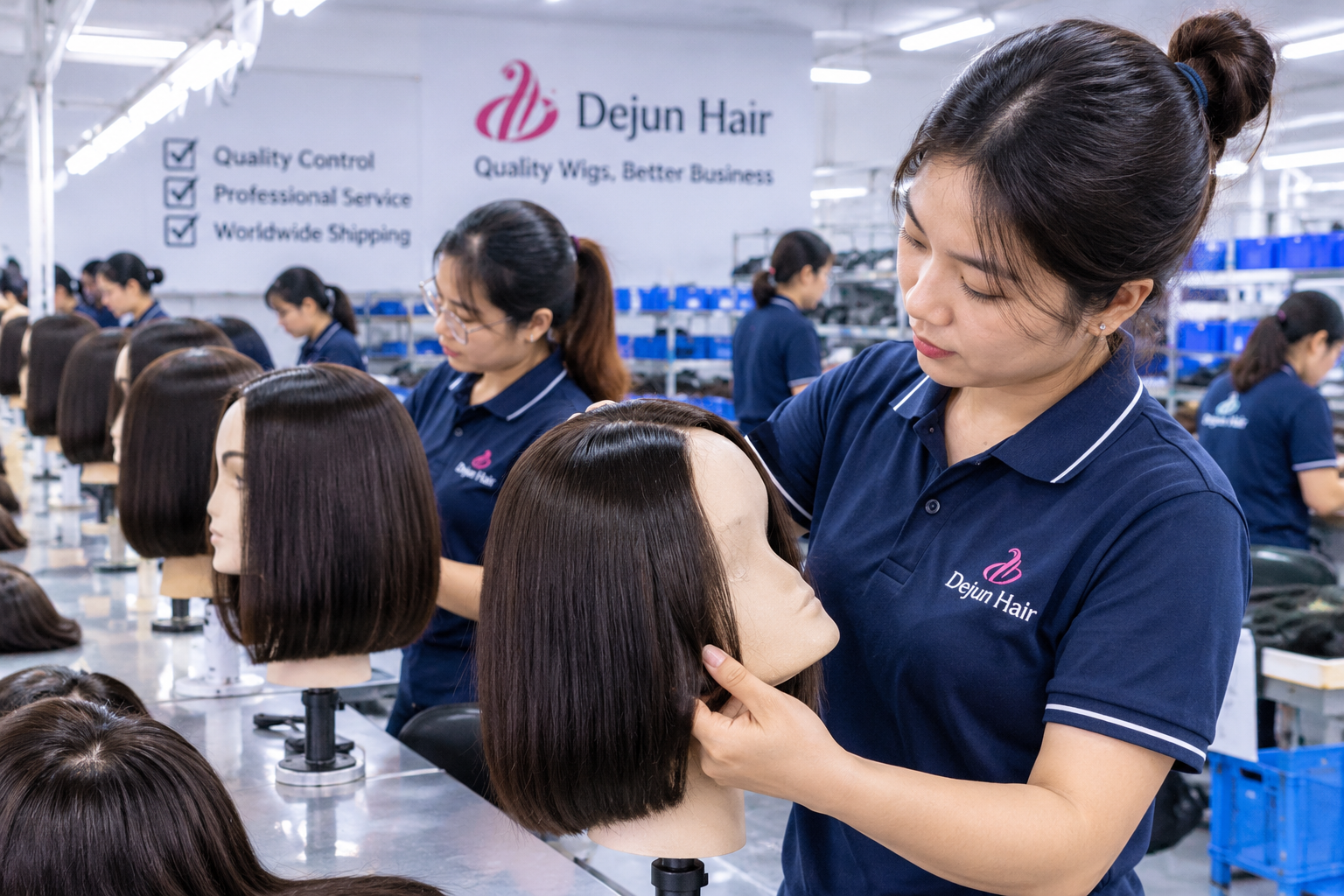
Dejun Hair is a wig manufacturer based in Shaoyang, Hunan, China, with 20 years of local manufacturing experience.
Our factory integrates hair processing, wig cap construction, lace sewing, styling, quality inspection, and packaging.
For overseas buyers, we provide:
- Wholesale human hair and synthetic bob wigs.
- Ready-stock products and flexible mixed orders.
- OEM/ODM private label services.
- Customized colors, lengths, densities, and lace materials.
- Custom logos, labels, and packaging.
- Sample consultation and product development.
- International shipping assistance and after-sales support.
You can explore our wholesale wig product collections to compare available product categories.
6.4 Build a Replenishment Partnership
A good supplier relationship should extend beyond individual transactions.
Discuss your expected purchasing frequency, product specifications, peak-season requirements, and replenishment arrangements.
For example, a retailer may establish a monthly purchasing schedule for core bob wig styles while placing separate small orders for experimental products.
A long-term supply arrangement can help both sides plan production more efficiently and reduce unexpected purchasing delays.
7. Build a Seasonal and Long-Term Bob Wig Inventory Plan
Inventory management should not be a one-time purchasing decision. Customer preferences, marketing campaigns, and seasonal demand can all affect sales.
Retailers should review their purchasing strategy regularly instead of using the same inventory quantities throughout the year.
7.1 Prepare for Seasonal Demand
Different periods may create different purchasing opportunities.
For example:
- Holiday seasons may increase demand for fashionable and special-occasion hairstyles.
- Wedding seasons may create opportunities for premium human hair bob wigs.
- Summer promotions may attract customers interested in shorter, lightweight styles.
- Social media trends may generate sudden interest in specific colors or textures.
These patterns vary by market. Use previous sales records and customer inquiries to determine which seasonal products deserve additional inventory.
7.2 Create a 90-Day Inventory Planning Schedule
A quarterly planning schedule can help small wig businesses maintain better control over purchasing.
| Period | Main Activities |
|---|---|
| Days 1–30 | Review sales, identify bestsellers, and check existing inventory |
| Days 31–60 | Replenish core products and test new bob wig styles |
| Days 61–90 | Evaluate new products, clear slow-moving stock, and prepare the next purchasing plan |
At the end of each quarter, review:
- Which bob wig styles generated the most revenue?
- Which colors sold fastest?
- Which products remained unsold?
- Which suppliers delivered on schedule?
- Which products generated the most customer complaints or returns?
These questions help retailers make purchasing decisions based on actual business performance rather than assumptions.
8. Frequently Asked Questions About Bob Wig Inventory Management
Q1. How do I manage bob wig inventory for a small business?
Start by identifying your most popular bob wig styles, colors, and lengths. Maintain smaller quantities of less-tested products and prioritize items with consistent sales.
Track inventory regularly, calculate reorder points, and work with suppliers offering flexible MOQ and mixed-style orders.
Q2. How many bob wigs should a small salon keep in stock?
There is no fixed quantity for every salon.
The ideal inventory depends on monthly sales, available storage, customer preferences, and supplier replenishment time.
A salon selling 15 bob wigs per month might begin with approximately 15–25 units, then adjust quantities according to actual sales and delivery schedules.
Q3. Which bob wig styles should retailers stock first?
A practical starting assortment includes:
- Straight bob wigs.
- Short bob wigs.
- Wavy bob wigs.
- Curly bob wigs.
- Lace front bob wigs.
- Glueless bob wigs.
Start with styles that match your local customer demand rather than purchasing every available design.
Q4. Which bob wig colors should retailers prioritize?
Natural black and dark brown are sensible starting options for many retailers because they offer versatile everyday styling choices.
Blonde, burgundy, red, and highlighted bob wigs can expand your collection.
However, the ideal color mix depends on your target customers and sales history.
Q5. How can I avoid overstocking wigs?
Use historical sales data, test new products in small quantities, and avoid purchasing large quantities of unproven styles.
You should also establish reorder points and review products that have remained unsold for 60–90 days.
Mixed-style wholesale orders are another useful way to reduce purchasing risk.
Q6. When should I reorder wholesale bob wigs?
Reorder when available inventory reaches your calculated reorder point.
Use this formula:
Reorder Point = Average Daily Sales × Supplier Lead Time + Safety Stock
Remember to include production, inspection, packaging, transportation, and customs-related delays when estimating supplier lead time.
Q7. Can I buy different bob wig styles in one wholesale order?
Yes, depending on the supplier’s ordering policy.
Some manufacturers support mixed-style and mixed-color orders, allowing retailers to combine straight, curly, wavy, and colored bob wigs.
This approach is particularly useful for new businesses and retailers testing different products before placing larger orders.
Q8. How can a wig manufacturer help improve inventory management?
A reliable manufacturer can support better inventory planning by offering:
- Low MOQ ready-stock products.
- Flexible mixed-style orders.
- Consistent product specifications.
- Stable production and replenishment.
- OEM/ODM customization.
- Quality inspection and after-sales support.
Working with a direct factory can also simplify communication and help retailers plan their purchasing schedules more effectively.
Conclusion: Build a Smarter Bob Wig Inventory Strategy
Successful bob wig inventory management is about balancing product variety, purchasing costs, customer demand, and supplier reliability.
For wig retailers, salons, wholesalers, and online sellers, an effective inventory strategy should focus on six essential practices:
- Identify the bob wig styles your customers actually purchase.
- Plan colors and lengths according to sales performance.
- Maintain appropriate stock levels for your business size.
- Use reorder points to prevent unnecessary stockouts.
- Test new products before committing to large purchases.
- Work with a reliable wholesale bob wig manufacturer for consistent replenishment.
Most importantly, avoid investing too much capital in products that have not demonstrated real customer demand.
At Dejun Hair, we understand that overseas wig businesses need more than competitive wholesale prices. They also need flexible ordering, consistent product quality, customization support, and reliable supply.
With 20 years of manufacturing experience in Shaoyang, China, Dejun Hair provides wholesale human hair and synthetic bob wigs, low-MOQ purchasing options, mixed-style orders, and OEM/ODM private label solutions.
Whether you operate a small salon in Africa, a beauty supply store in Europe, or an online wig business in North America, we can help you develop a more flexible and reliable bob wig supply strategy.
Ready to optimize your bob wig inventory?
Contact Dejun Hair to request our latest bob wig catalog, wholesale pricing, and sample recommendations.

Dejun Hair
Direct from Chinese Wig Factories | One-Stop Wholesale Supplier of Wigs for International Trade.