How Many Human Hair Bundles Should You Order for Your Hair Business? A Wholesale Buying Guide
Ordering bulk human hair bundles can be challenging when you are starting or expanding a hair business. Order too little, and your best-selling lengths may run out just when customers want them. Order too much, and cash that could support marketing, packaging, or new products becomes tied up in slow-moving inventory.
The difficult question is not simply, “How many human hair bundles should I order?” A better question is: How many bundles should I stock based on my expected sales, customer preferences, budget, product mix, and supplier lead time?
For hair vendors, salon owners, beauty supply stores, and online sellers sourcing wholesale human hair bundles, there is no single order quantity that works for every business. A small Instagram seller testing a new market has very different inventory needs from an established distributor supplying several salons. A small Instagram seller testing a new market has very different inventory needs from an established distributor supplying several salons.
This guide explains how to plan a human hair bundles bulk order, including how many bundles to start with, how to divide inventory across lengths and textures, how MOQ affects your decision, and when to reorder.
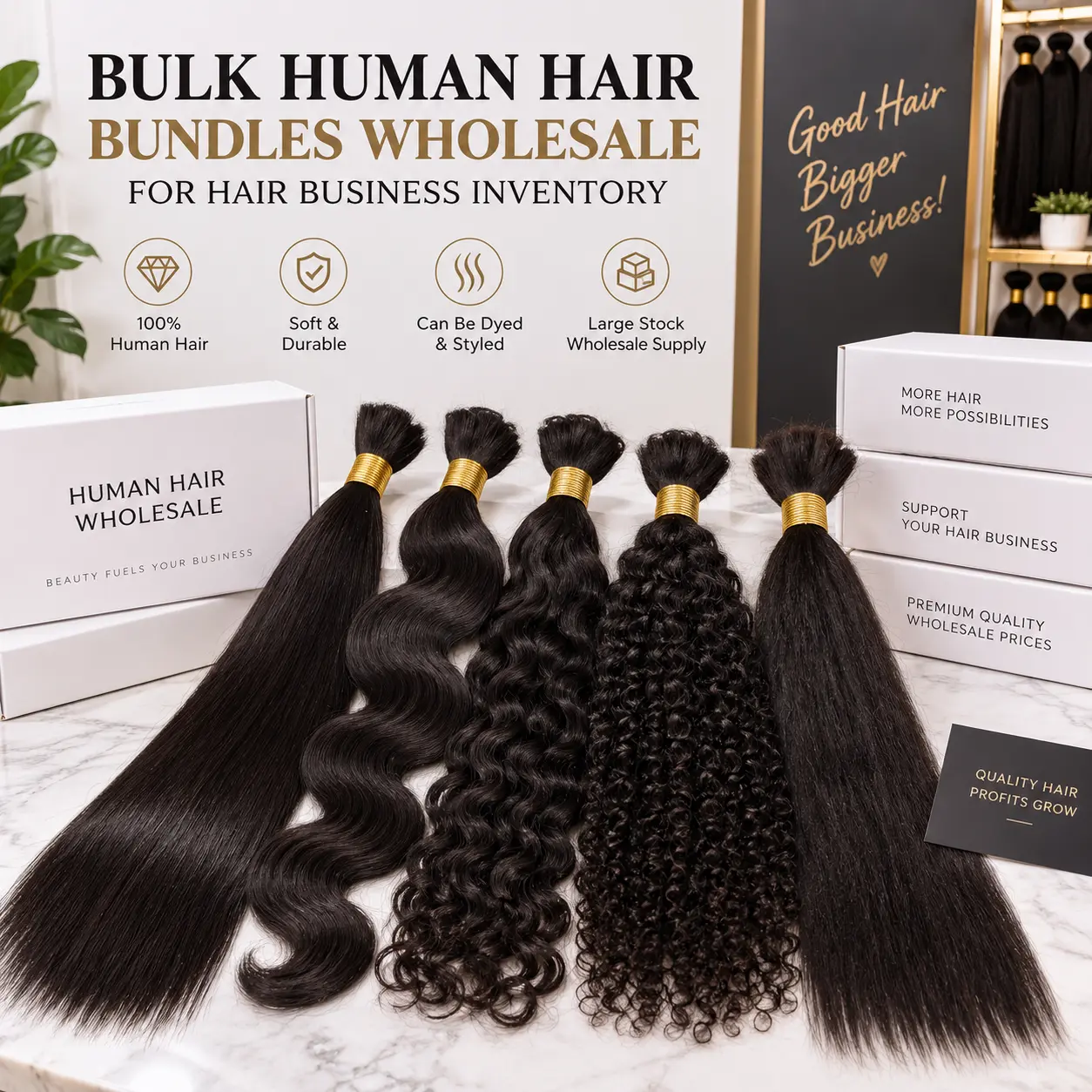
First, Know How Many Human Hair Bundles One Customer May Need
Before deciding how many bulk human hair bundles to purchase, estimate how many bundles your average customer uses per installation.
The required quantity varies according to hair length, desired fullness, hairstyle, texture, and whether the customer uses a closure or frontal. As a general planning reference:
| Hair Length | Typical Bundles per Installation | Inventory Consideration |
|---|---|---|
| 10–14 inches | 2–3 bundles | Fewer bundles may create sufficient fullness |
| 16–20 inches | Around 3 bundles | Common range for everyday installations |
| 22–26 inches | 3–4 bundles | More hair may be required for a full appearance |
| 28–30+ inches | 4 or more bundles | Longer lengths often require more bundles |
These figures are planning guidelines rather than fixed rules. A customer seeking extra volume may purchase more, while a closure or frontal can affect the number of bundles required.
For a wholesale buyer, however, the important point is the bundle consumption rate.
Suppose your store expects 40 installations or customer orders per month, and the average customer purchases three bundles. Your estimated monthly demand is:
40 customers × 3 bundles = 120 bundles per month
That number provides a much better starting point for inventory planning than simply copying another hair vendor’s order quantity.
How Many Bulk Human Hair Bundles Should a New Hair Business Order?
There is no universal first-order quantity. The right amount depends on how established your sales channel is and how much real customer data you already have.
For a new business, the goal should usually be to test demand without creating unnecessary inventory pressure.
Here is a practical planning framework:
| Business Stage | Example Order Range | Main Objective |
|---|---|---|
| Established wholesaler/distributor | 30–60 bundles | Test lengths, textures and customer response |
| Growing salon / online store | 100–300 bundles | Build deeper inventory around proven sellers |
| Established wholesaler / distributor | 300–1,000+ bundles | Support regular volume and broader SKU demand |
These are inventory-planning examples, not fixed wholesale MOQs. Your actual order should depend on your sales forecast, budget, supplier requirements, and market.
Starting with 30–60 bundles
A small test order can make sense if you are starting a hair business through TikTok, Instagram, a local salon, or an independent online store.
Instead of purchasing 50 bundles of one length, you might test several lengths and textures. This helps you discover what your customers actually buy before investing heavily.
Moving toward 100–300 bundles
Once sales data shows that certain products move consistently, you can increase inventory around those winners.
For example, if 18-inch, 20-inch, and 22-inch Body Wave products account for most of your orders, the next purchase should allocate more units to those SKUs rather than simply expanding every category.
Ordering 300–1,000+ bundles
Established wholesalers, distributors, and beauty supply businesses may require much larger quantities because they are serving more customers or multiple retail locations.
At this stage, buying bulk human hair bundles can also create better opportunities to negotiate volume pricing, packaging, private labeling, and production arrangements with the manufacturer.
The key principle remains the same: order according to proven demand, not simply because a larger quantity produces a lower unit price.
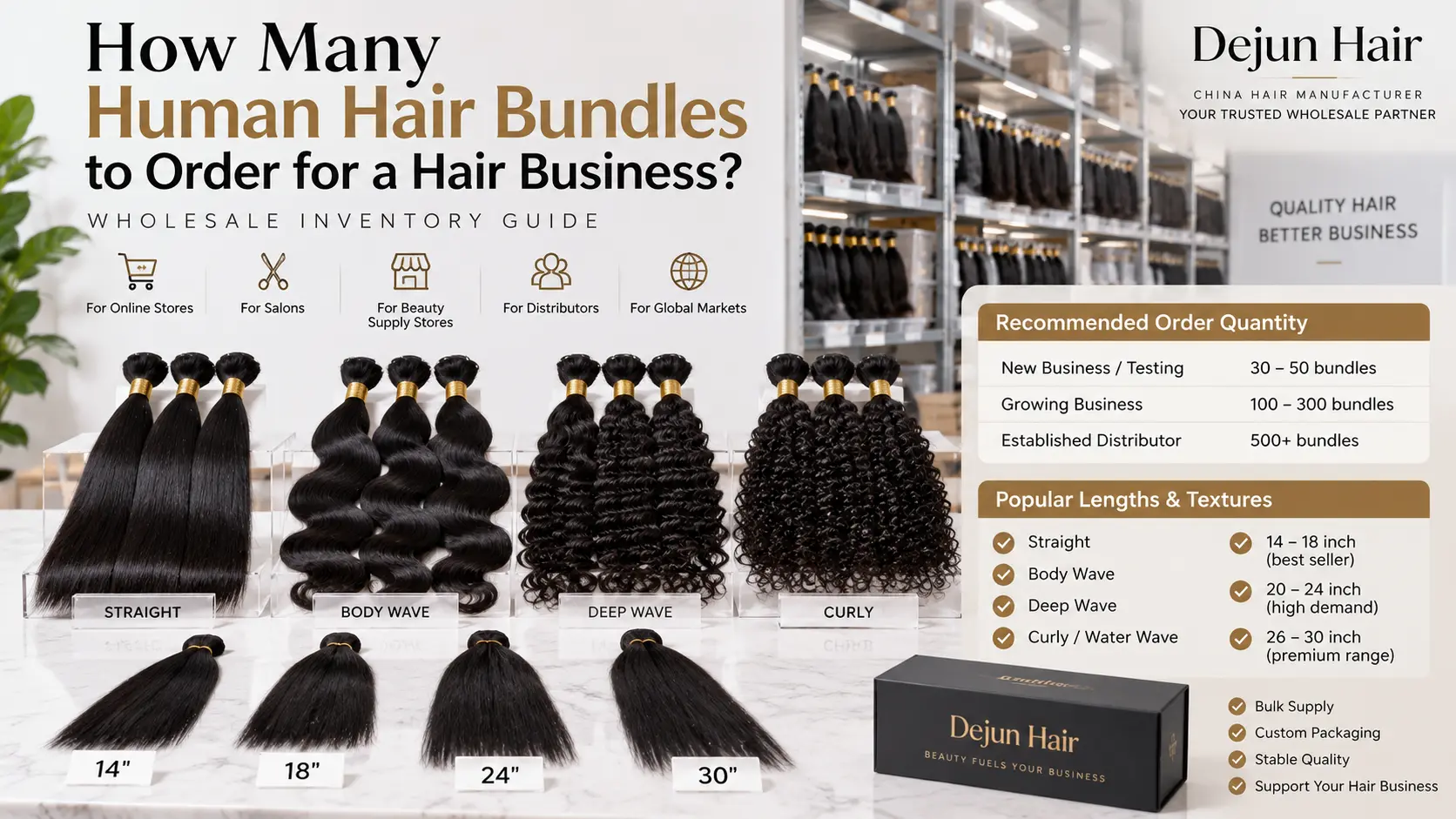
Use a Simple Formula to Calculate Your Wholesale Order
A practical way to estimate your first order is:
Recommended Inventory = Expected Customers × Average Bundles per Customer + Safety Stock
Suppose you expect 30 customers during your first month.
If the average customer buys three bundles:
30 × 3 = 90 bundles
If you add approximately 15–20% as safety stock, your planned inventory becomes roughly:
104–108 bundles
A first order of around 100–110 bundles could therefore be reasonable under these assumptions.
But there is an important second step: do not put all 100 bundles into one SKU.
Your next decision is how to divide the inventory between different hair bundle lengths and hair bundle textures.

Do Not Order Every Hair Bundle Length in Equal Quantities
One of the most common inventory mistakes is distributing the purchasing budget equally across every available length.
For example, a new seller may order the same quantity of:
14″, 16″, 18″, 20″, 22″, 24″, 26″, 28″, and 30″.
This creates a visually balanced inventory sheet, but it does not necessarily reflect customer demand.
A more effective approach is to divide lengths into three groups.
Core lengths
These are the lengths your customers purchase most frequently. They should receive the largest share of your inventory budget.
For one market, that might be 16″, 18″, 20″, and 22″. In another market, longer lengths may dominate.
Secondary lengths
These products generate regular demand but sell more slowly than your core lengths. Keep them available without stocking them as deeply.
Test lengths
New, extra-long, or less predictable lengths should initially receive a smaller allocation.
For example, if you are considering adding 30-inch human hair bundles, start by testing demand rather than assuming that their popularity on social media will automatically translate into high sales in your local market.
This core-secondary-test structure allows a hair business to offer variety while keeping more working capital in proven products.
How Hair Texture Changes Your Bulk Order
Length is only one inventory dimension. Texture can multiply your number of SKUs very quickly.
Suppose you offer:
- Straight
- Body Wave
- Deep Wave
- Curly
If you combine four textures with eight lengths, you already have 32 possible SKUs before considering colors, grades, closures, or frontals.
For a new business, stocking every combination deeply can create unnecessary inventory.
Instead, identify one or two core textures based on your target customers.
If Straight and Body Wave are responsible for most of your sales, allocate the majority of your purchasing budget there. Keep smaller quantities of Deep Wave or Curly products until their demand is proven.
As your customer data becomes clearer, you can expand your straight human hair bundles, deep wave human hair bundles, and other texture categories according to actual sell-through.
This is also why a flexible bulk hair supplier can be more useful to a growing business than a supplier that offers a low price only when you purchase a large quantity of the same SKU.
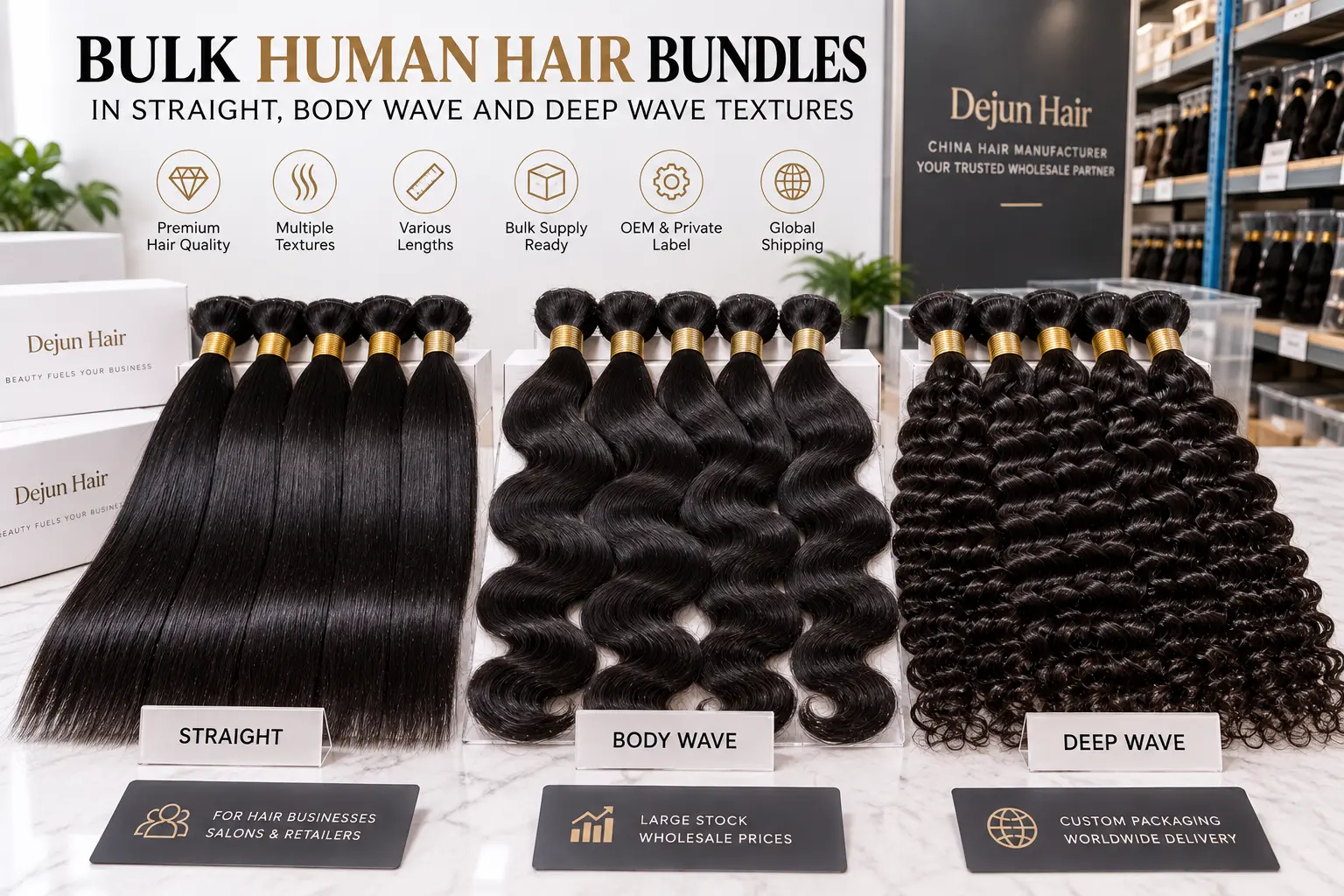
Should You Stock Bundles Only or Bundles with Closures?
Another important question is whether customers normally purchase bundles alone or prefer a complete installation set.
Some customers may purchase:
3 bundles + closure
Others may prefer:
3 bundles + frontal
For longer hairstyles:
4 bundles + closure
If complete sets are popular in your market, stocking only loose bundles may limit your ability to fulfill customer orders quickly.
Offering human hair bundles with closure can also simplify purchasing for salon clients and consumers because they can buy the components required for a complete look together.
However, closures and frontals create additional SKUs. Before building large inventory, examine your sales history or test a limited number of combinations.
The goal is not to stock every possible option. It is to identify which combinations your customers repeatedly purchase.
Hair Bundles MOQ: Why the Lowest MOQ Is Not Always the Best Deal
When buyers compare wholesale hair vendors, one of their first questions is usually:
“What is your MOQ?”
MOQ matters, particularly for a startup with limited capital. But the lowest advertised MOQ does not automatically mean the lowest inventory risk.
Consider two suppliers.
Supplier A allows a low order quantity but requires you to buy the same length and texture.
Supplier B has a similar total order requirement but lets you combine multiple lengths and textures.
For a new hair business, Supplier B may provide much greater flexibility.
This is why buyers should ask several questions when discussing hair bundles MOQ:
Can I mix different lengths? Can I mix textures? Can I combine closures with bundles? Does custom packaging have a separate MOQ? Does the MOQ change for custom colors? Can I test samples before placing the full order?
A flexible mixed hair bundle order lets you spread your purchasing budget across more sellable SKUs without overstocking a single product.
At Dejun Hair, we generally recommend discussing the intended market, product mix, order volume, and customization requirements before finalizing the purchasing plan. Stock products and customized orders can have different production and MOQ considerations.
Sample Order vs. First Bulk Order vs. Restocking Order
Not every purchase should follow the same strategy. A more controlled approach separates sourcing into three stages.
Stage 1: Sample testing
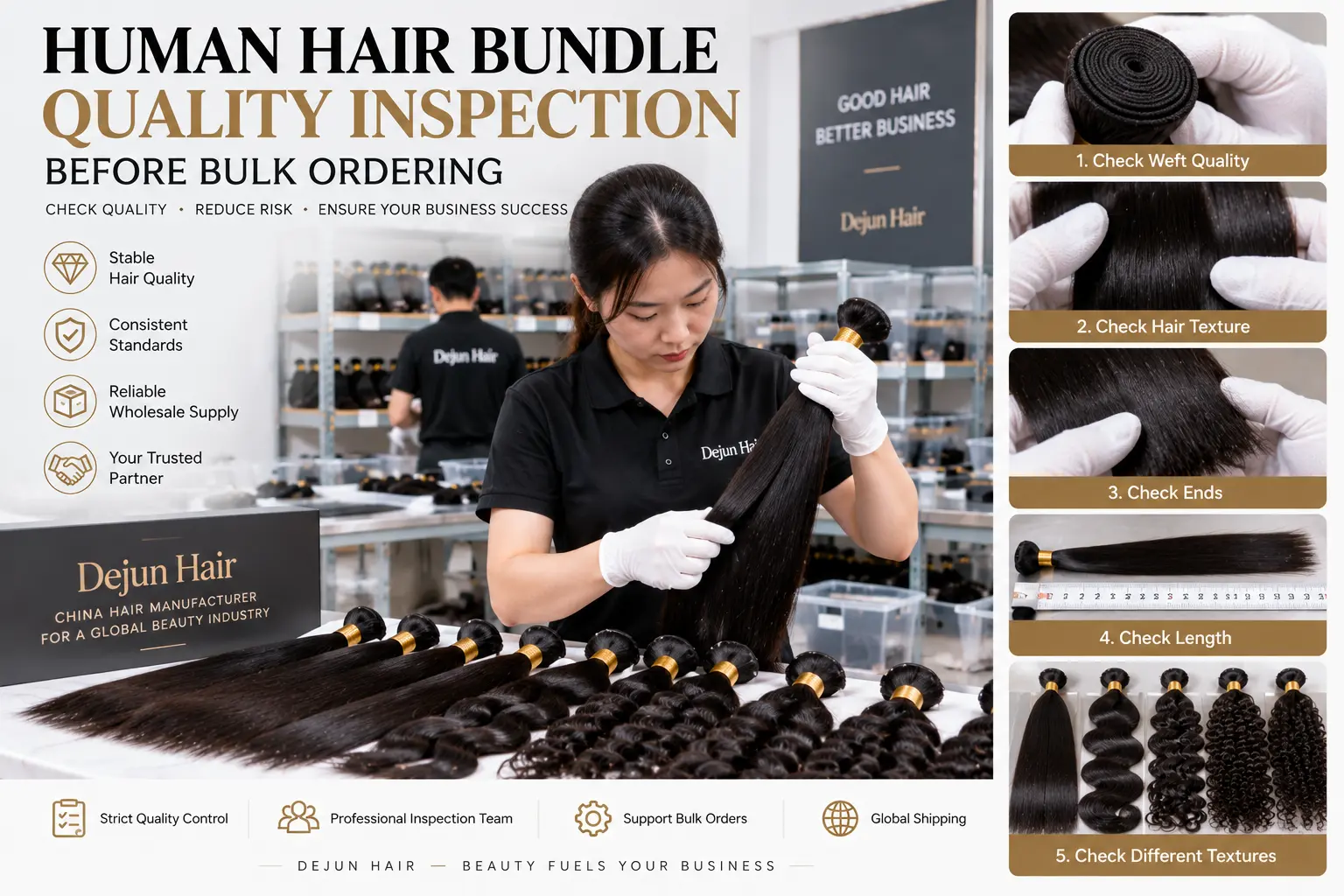
Before placing a significant human hair bundle bulk order, evaluate the supplier and product.
Check factors such as:
- Hair feel and consistency
- Bundle weight
- True length
- Ends
- Shedding
- Tangling
- Odor
- Color consistency
- Performance after washing
For a more detailed inspection process, buyers should learn how to check human hair bundle quality before buying in bulk and committing to larger quantities.
A sample should help answer a basic question: Would I feel confident selling this hair to my own customers?
Stage 2: First wholesale order
Once quality is confirmed, the first commercial order should test the market rather than attempt to predict every future sale.
Use a mix of your expected core lengths, textures, and a limited number of experimental SKUs.
Stage 3: Data-based restocking
After several weeks or months, your own sales data becomes more valuable than general market assumptions.
Track which products:
- Sell fastest
- Produce the highest margin
- Receive repeat orders
- Generate the fewest complaints
- Frequently sell out
- Remain in inventory too long
Your next order can then concentrate more heavily on proven winners.
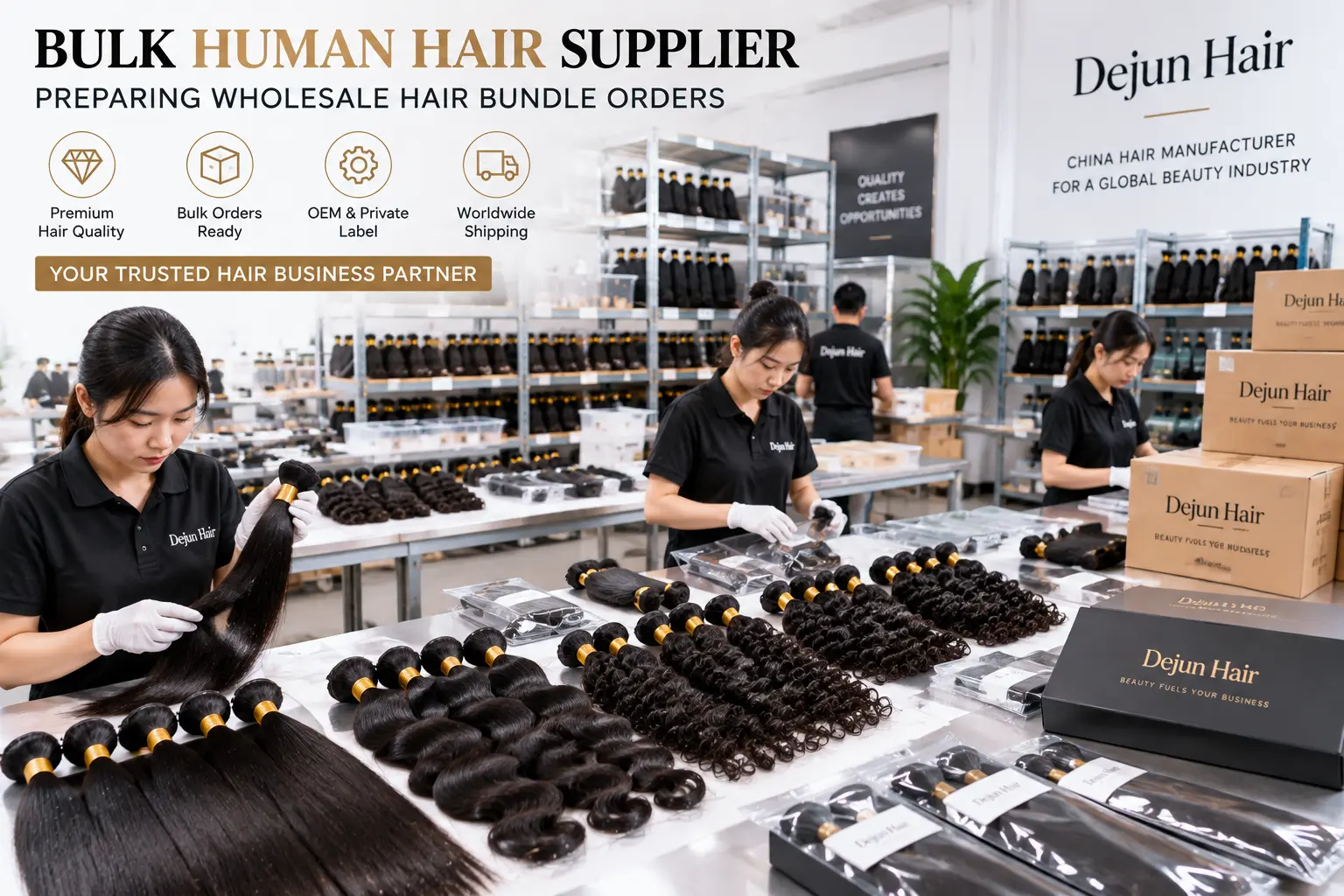
How to Stock Human Hair Bundles Without Tying Up Too Much Cash
Inventory is money sitting on a shelf.
This is especially important for human hair because longer lengths and premium virgin human hair bundles or raw hair bundles can require more purchasing capital.
A new business therefore needs to balance product availability against cash flow.
One practical approach is to divide the purchasing budget into three categories:
60–70%: Proven core products
Allocate most of your budget to lengths and textures you expect to sell consistently.
20–30%: Secondary products
Maintain enough variety for customers without building excessive stock.
10–15%: Test products
Use a smaller portion of the budget to experiment with new textures, lengths, colors, or product combinations.
These percentages are examples rather than universal rules. Your actual allocation should reflect your own sales data.
The important principle is to avoid putting an equal amount of money into every SKU.
Human Hair Wholesale Price vs. Inventory Turnover
It is tempting to purchase a larger quantity simply because the human hair wholesale price decreases with volume.
But unit price is only one part of purchasing profitability.
Imagine that Product A costs slightly less per bundle when you buy 500 units, but it takes 12 months to sell the inventory. Product B has a slightly higher unit cost at 150 units but sells out every six weeks.
Depending on margins and operating costs, Product B may produce healthier cash flow.
When comparing hair bundle deals, ask yourself:
How quickly can I turn this inventory back into cash?
This is particularly important for small salons and new online sellers. A few cents or dollars saved on purchasing can be less valuable than keeping capital available for fast-moving inventory, advertising, shipping, packaging, and customer acquisition.
For established distributors with predictable demand, larger volume purchases can make much more sense because inventory turnover is easier to forecast.
When Should You Reorder Bulk Human Hair Bundles?
Running out of your best seller can be almost as costly as overstocking.
A simple reorder formula is:
Reorder Point = Average Weekly Sales × Replenishment Lead Time + Safety Stock
Suppose your store sells 15 bundles of a particular 20-inch Body Wave product each week.
If replenishment takes three weeks:
15 × 3 = 45 bundles
Now assume you want to maintain 15 bundles as safety stock:
45 + 15 = 60 bundles
When inventory approaches 60 bundles, it is time to consider the next purchase.
This method is especially valuable as your business grows because it turns inventory decisions into a repeatable process.
Keep in mind that lead time can change during busy seasons, major promotions, holidays, large custom orders, or international shipping disruptions. Discuss production and shipping schedules with your human hair supplier before running inventory too close to zero.
A Practical Example: Planning a 150-Bundle First Order
Suppose an online hair vendor wants to purchase 150 bulk human hair bundles.
Instead of ordering 15 bundles each across ten random SKUs, the buyer could start by examining expected customer demand.
For illustration only, the inventory might be structured like this:
| Product Group | Share | Approx. Quantity |
|---|---|---|
| Core lengths and textures | 65% | 98 bundles |
| Secondary products | 25% | 37 bundles |
| Test products | 10% | 15 bundles |
| Total | 100% | 150 bundles |
Within the 98 core bundles, the seller could further prioritize the two or three lengths and textures most likely to sell.
The exact numbers are less important than the method.
Instead of asking a supplier to choose 150 random bundles, tell them:
your target market, sales channel, customer price range, preferred lengths, preferred textures, and purchasing budget.
An experienced supplier should be able to discuss a more practical product mix with you.
Choosing a Bulk Hair Supplier for Flexible Inventory Planning
Choosing a reliable wholesale human hair bundles supplier involves more than comparing price lists. The right supplier should also provide consistent quality, flexible ordering options, reliable production capacity, and clear lead times as your business grows.
When sourcing bulk human hair bundles, evaluate whether the supplier can support your business as order volume changes.
Look for consistency in hair quality, bundle weight, lengths, and texture from one batch to another. Ask about production capacity and whether the supplier can maintain quality when your order grows from dozens to hundreds or thousands of bundles.
For smaller businesses, flexibility is particularly important. A reliable supplier should be able to explain available MOQ options, mixed orders, samples, packaging requirements, and lead times clearly.
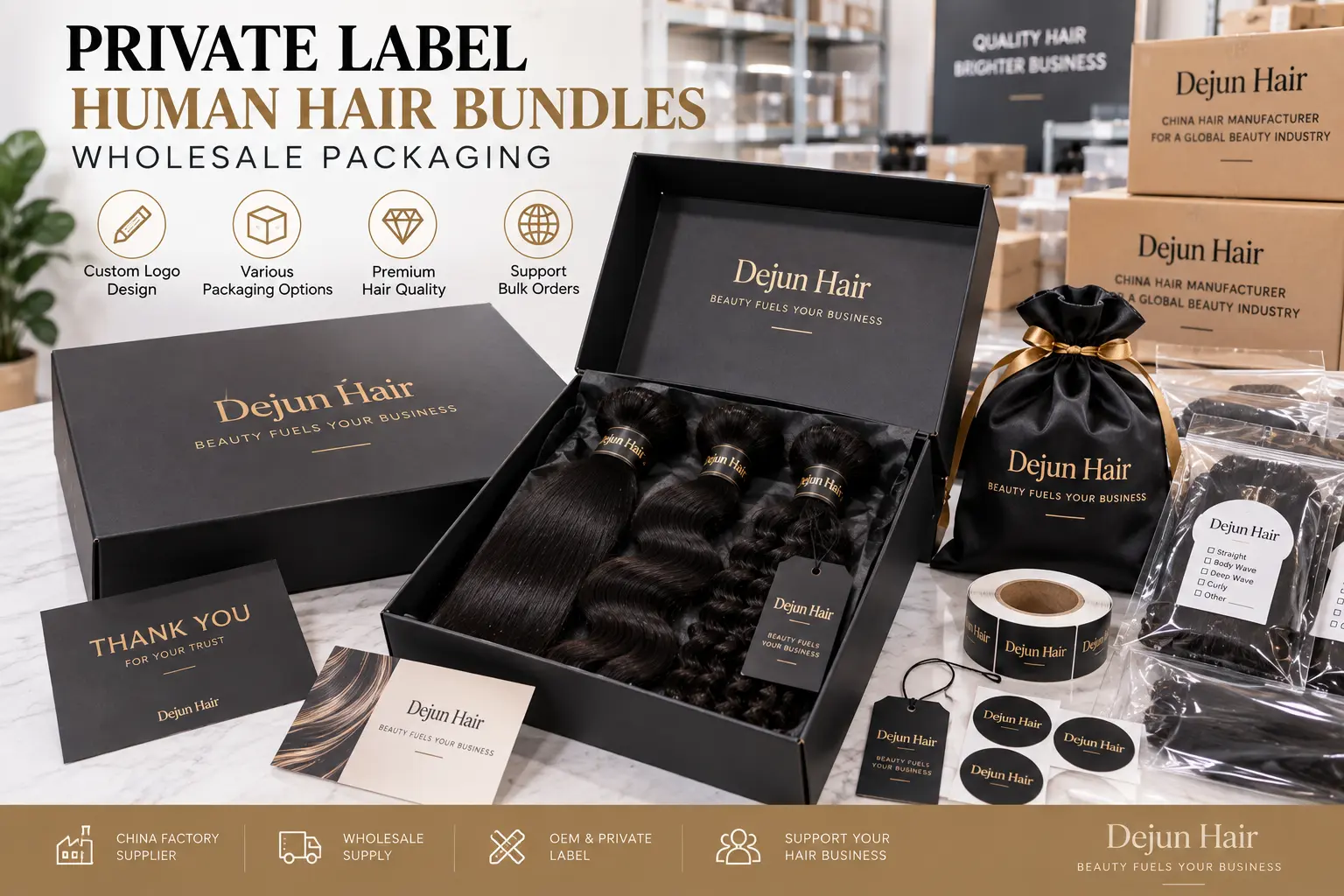
If you plan to develop your own brand, also evaluate OEM and private-label capabilities. Custom packaging, logo printing, tags, colors, lengths, and other specifications may have different MOQs and production requirements.
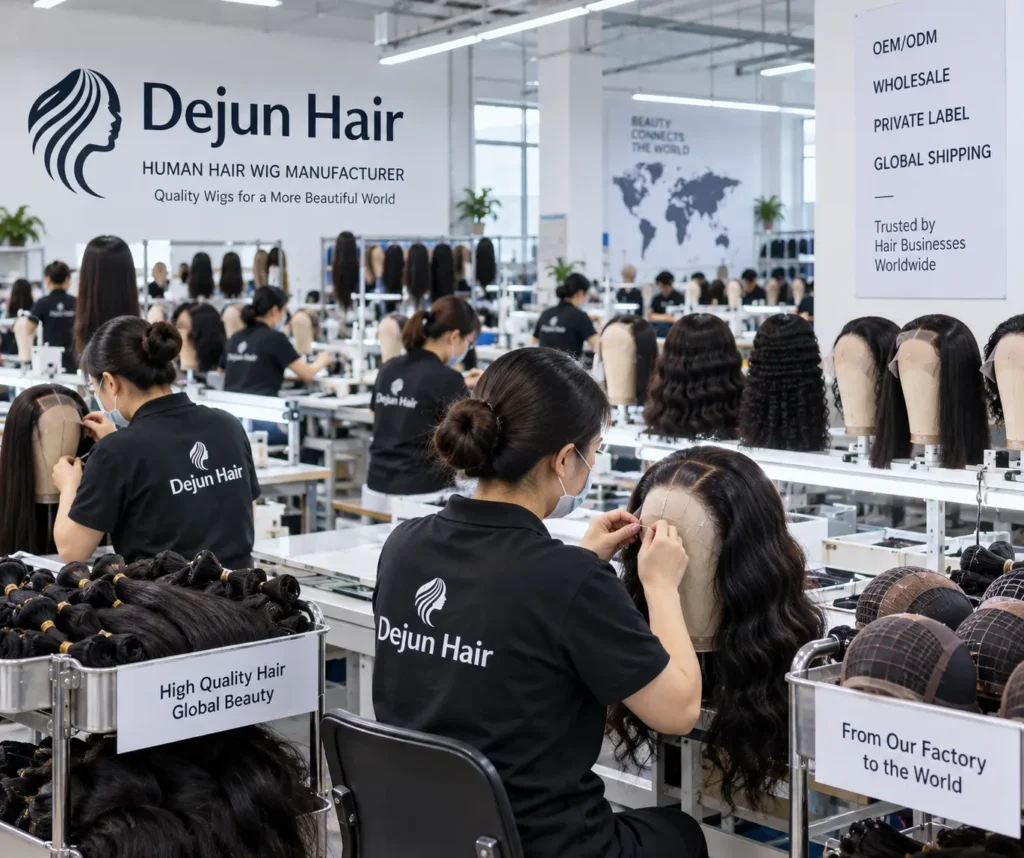
Dejun Hair operates its own wig and human-hair production facilities in Shaoyang, China, with around 20 years of manufacturing experience. Our production process covers hair processing, product manufacturing, quality inspection, and warehousing, allowing us to support both inventory-based wholesale purchasing and customized OEM/ODM projects.
For overseas buyers, the objective should be to find a human hair supplier that can grow with the business—from samples and mixed initial orders to repeat wholesale purchases and larger-volume supply.
Frequently Asked Questions About Bulk Human Hair Bundles
How many human hair bundles should I order to start a hair business?
There is no fixed number. A small new seller may test approximately 30–60 bundles across several core lengths and textures, while a growing store may require 100–300 or more. Base the final quantity on expected sales, budget, customer demand, and supplier lead time rather than another seller’s inventory.
How many bundles does one customer usually need?
Many installations use approximately 2–4 bundles, while longer or fuller hairstyles may require more. Length, texture, desired volume, and whether a closure or frontal is used all affect the quantity.
What lengths should I stock when buying bulk human hair bundles?
Start with the lengths that best match your target customers. Allocate more inventory to proven core lengths, smaller quantities to secondary lengths, and limited quantities to new or experimental lengths.
What is the MOQ for wholesale human hair bundles?
There is no industry-wide MOQ. Requirements vary according to the supplier, hair type, order size, customization, packaging, and color. Stock and custom orders may also have different minimum quantities. Ask the supplier specifically about mixed-order options rather than looking only at the total MOQ.
Can I mix different lengths and textures in one wholesale order?
Many manufacturers offer some form of mixed ordering, but policies vary. Confirm which lengths, textures, closures, colors, and other products can be combined before placing your order.
Should I buy raw hair bundles or virgin human hair bundles?
It depends on your target price point and customer expectations. Rather than relying only on labels such as “raw” or “virgin,” request samples and evaluate actual hair quality, consistency, processing, weight, shedding, tangling, and wash performance.
When should I reorder human hair bundles?
Calculate your average sales during the supplier’s replenishment period and add safety stock. Do not wait until a best-selling SKU reaches zero before placing the next order.
Final Thoughts: Order Based on Demand, Not Guesswork
The best quantity of bulk human hair bundles is not necessarily the largest quantity your budget allows or the smallest quantity a supplier accepts.
A healthier purchasing strategy connects four things:
customer demand + average bundle consumption + supplier lead time + safety stock.
New hair businesses can begin with a diversified test order, identify the lengths and textures customers actually purchase, and gradually increase inventory around proven sellers. Established salons and wholesalers can use sales history and reorder points to manage larger purchases more efficiently.
Most importantly, discuss MOQ, mixed orders, wholesale pricing, samples, lead times, and customization before committing to a large order.
For buyers planning a first order or restructuring their current inventory, Dejun Hair can help evaluate a suitable product mix based on your market, preferred hair bundle lengths and textures, purchasing budget, and private-label requirements.
Contact Dejun Hair to request current MOQ information, wholesale pricing, samples, or a mixed bulk human hair bundle quotation.

Dejun Hair
Direct from Chinese Wig Factories | One-Stop Wholesale Supplier of Wigs for International Trade.